
A dog-friendly patio works when you treat it like a system: rules for behavior, rules for hygiene, design choices that enforce both, and a quick check of what your HOA or local code actually requires. Get those four things lined up and you stop putting out daily fires (stains, smells, scratches, complaints from neighbors) and start actually enjoying the space with your dog.
Dog-Friendly Patio Rules: Safety, Hygiene, Design, Compliance

Miles Sutton
4 May 2026
What 'dog-friendly patio rules' actually covers
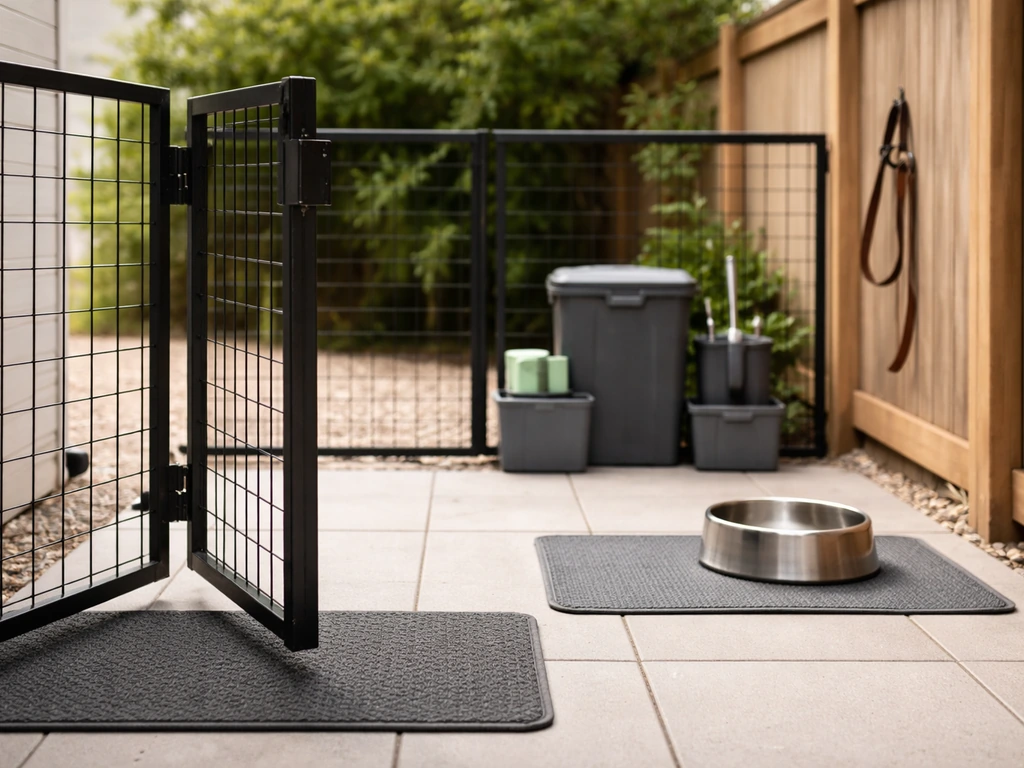
Most people search this phrase thinking about one thing: can my dog be out here, and what do I need to do to make it work? But the real answer covers four overlapping areas. First, behavior rules: where the dog can go, whether it's on or off leash, how you handle jumping, chewing, digging, and barking. Second, hygiene rules: waste pickup schedules, how to clean and disinfect surfaces properly, odor control, and food/water bowl management. Third, design constraints that become rules in practice: non-slip surfaces, gating, shade, heat exposure, and durable finishes that hold up to a dog using the space every day. Fourth, legal and HOA compliance: local leash laws, waste ordinances, noise rules, and building or association guidelines that apply to your property specifically. This guide covers all four, so you end up with one coherent setup rather than a patchwork of fixes.
Legal, HOA, and neighborhood compliance: check this first
Before you invest in any patio upgrades or set up a routine, spend 20 minutes checking what your property is actually subject to. This part is easy to skip and expensive to ignore.
Local ordinances
Most U.S. cities have ordinances requiring immediate fecal pickup, not just 'eventually.' Baltimore, Austin, Cleveland, and Raleigh all have specific code language requiring owners to carry means of removal and clean up on the spot, whether on public property or any private property they don't own. If your patio connects to shared outdoor space, a common area, or a sidewalk, those rules apply to you. Noise ordinances matter too: counties like Palm Beach have formal reporting processes for dog barking complaints, with fines up to $500 per violation. Will County, Illinois, explicitly classifies excessive barking as a public nuisance. Look up your city or county code before a neighbor complaint turns into an enforcement issue.
HOA rules
If you live in a community with an HOA, your pet rules are likely buried in a supplemental policy document, not the main CC&Rs. Common HOA requirements include keeping dogs on a leash held by someone capable of controlling the animal at all times outside a private fenced area, immediate fecal removal from any common area, and prohibition of urination or defecation in shared spaces without a designated elimination area. Violations typically carry fines, and repeated violations in some HOA documents (like the Courtyards at Quail Lake rules) can result in mandatory removal of the pet from the property entirely. Some HOAs also include indemnity clauses that put all liability for pet-caused damage squarely on the owner, which has insurance implications. Pull your full HOA pet rules document now, not after the first fine. Pull your full HOA pet rules document now, not after the first fine.
Insurance and liability
If guests, dog walkers, or repair workers use your patio and a dog incident happens (a bite, a trip, a knocked-over person), your homeowner's policy is the first line of defense. Some policies exclude certain breeds or cap dog-bite liability. Check with your insurer now if you haven't recently. This isn't a reason to keep the dog off the patio; it's just a reason to know your coverage before you need it.
Daily safety rules: access, supervision, leash, and boundaries
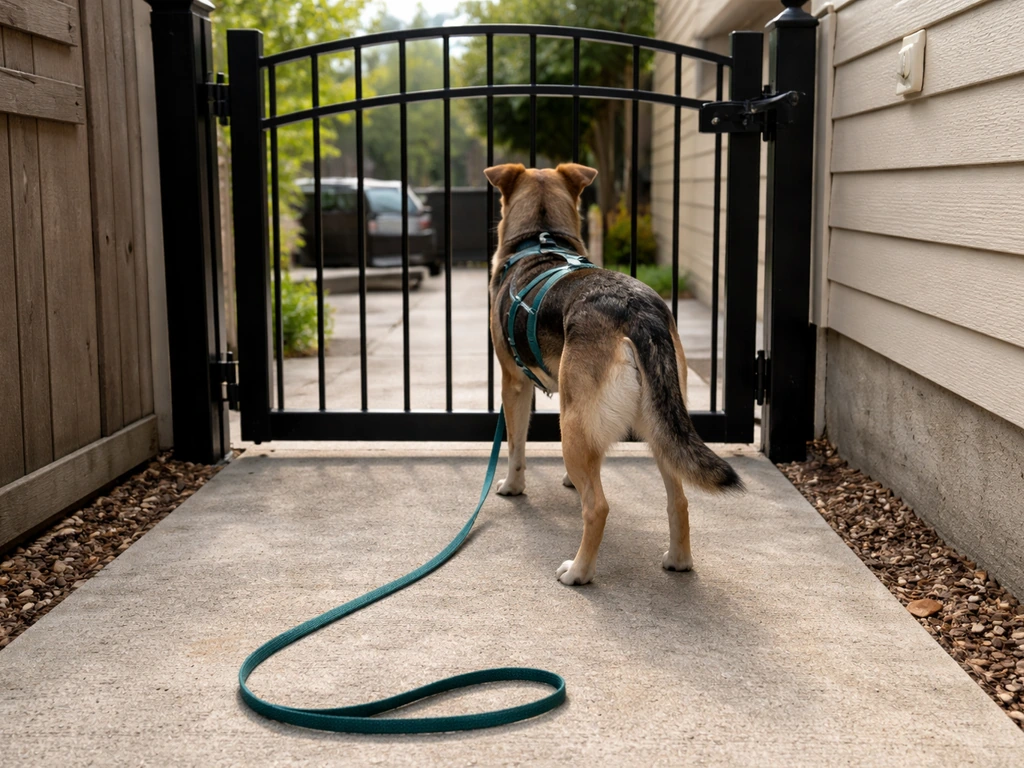
These are the rules you actually enforce every day, whether for yourself, housemates, or guests.
- Define access zones clearly: which parts of the patio are open to the dog, which are not. If you have a grill, a built-in bar, or outdoor furniture you care about, those areas need a physical boundary, not just a verbal one.
- Leash rule for guests: even if your dog is reliable off-leash with you, leash it when guests arrive. This prevents jumping and gives you control during the transition. The AKC recommends pairing guest arrivals with treats placed on the floor, so the dog learns 'greet from the ground' rather than jumping as the default.
- Supervision rule: no dog on the patio unsupervised unless it's a fully enclosed, escape-proof space. Patios are not crates. An unsupervised dog can chew, dig, overheat, or become a nuisance to neighbors in minutes.
- Furniture rules: decide now whether dogs are allowed on patio furniture and enforce it consistently. Mixed signals from different family members are the number-one reason dogs ignore furniture rules.
- No unattended leash tethering: several HOA policies specifically prohibit leaving a dog tied to a leash unattended outside. It's also a welfare and safety issue regardless of HOA rules.
- Barking management: if your dog barks at fence lines, street traffic, or neighboring yards, block access to those sightlines rather than correcting after the fact. Move furniture, add screening, or use a designated spot away from the trigger.
Hygiene rules: keeping the patio sanitary and preventing long-term damage
This is where most dog owners underinvest. A patio that looks clean can still harbor bacteria and odor compounds that build up over time and damage surfaces. The CDC notes that animals can carry harmful germs even when they appear healthy, and zoonotic disease risk is real enough to take hygiene seriously as a structural part of your routine, not an afterthought.
Waste pickup
Pick up feces immediately, every time, and dispose of it in a sealed bag. AVMA guidance on zoonotic disease prevention includes tight sealing of pet waste as a core step. Don't let waste sit on patio surfaces, in planters, or near outdoor seating. If your dog uses a grass or gravel section of the patio as a bathroom, establish a single designated zone for elimination and clean it daily.
Urine and surface disinfection
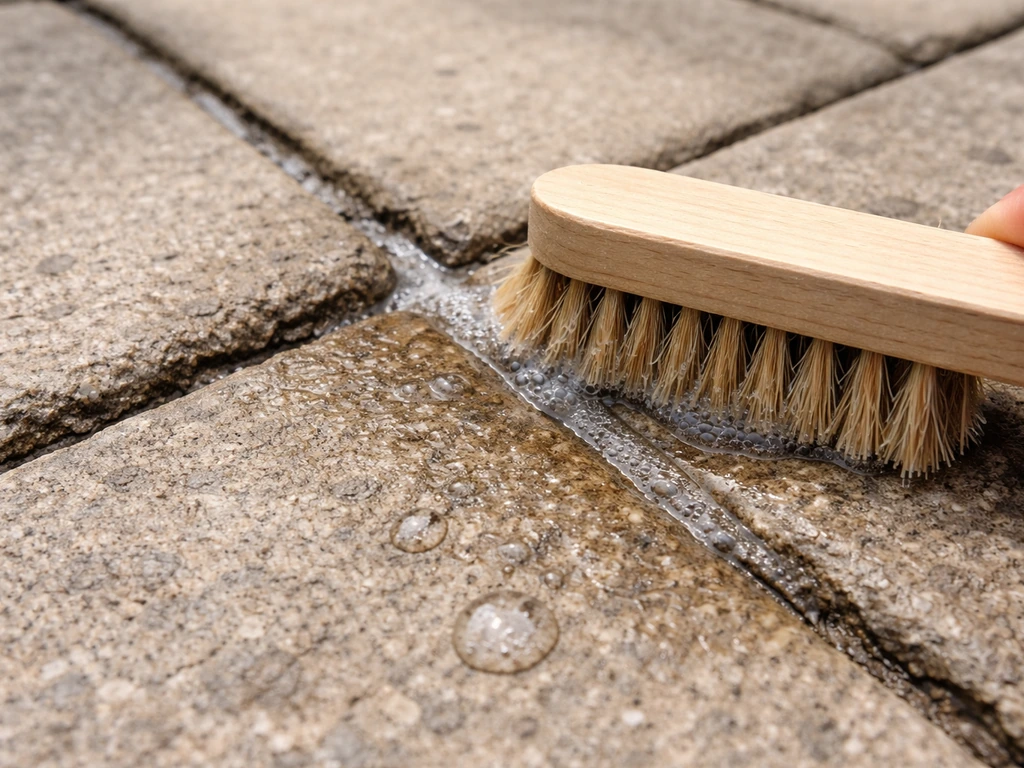
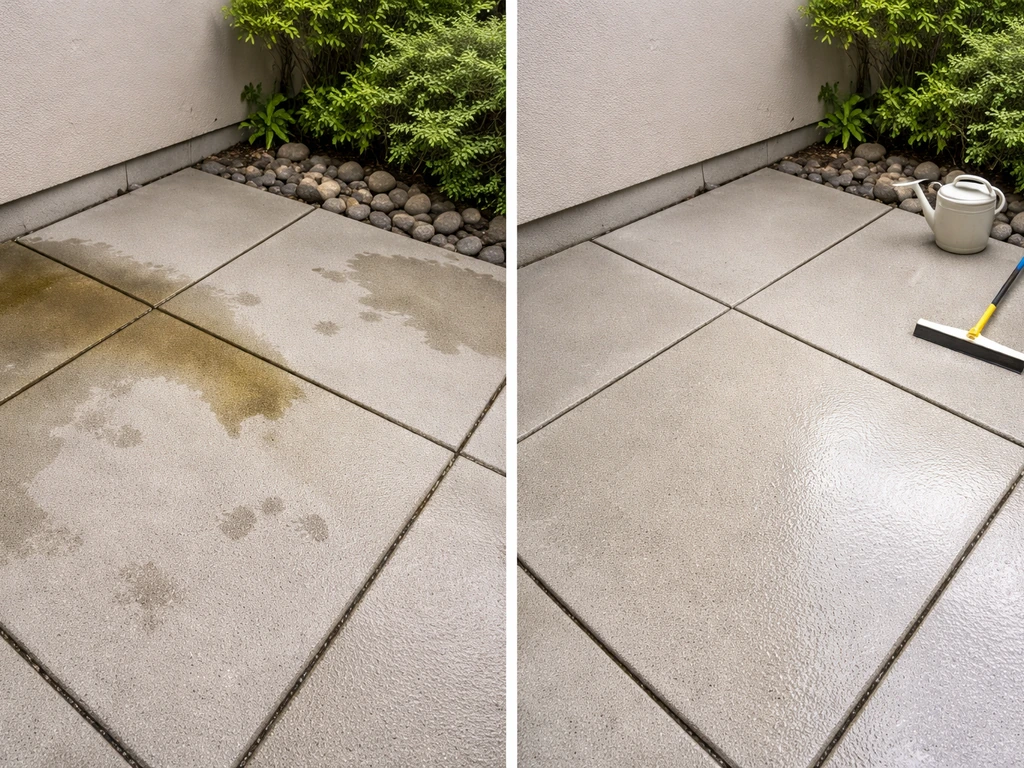
Dog urine is the hardest thing to manage on a patio. It discolors pavers, damages grout, kills grass, and produces persistent odor as uric acid crystals build up in porous materials. For routine disinfection of any surface that may have been in contact with urine or feces, the CDC recommends a diluted bleach solution of 1 part household bleach to 10 parts water. Apply it after cleaning visible contamination, let it sit for at least 10 minutes (contact time matters for disinfection to work according to EPA guidance), then rinse. For sealed pavers or concrete, this is safe to do weekly or after any visible contamination. For wood decks, use an EPA-registered disinfectant appropriate for wood rather than bleach, which can damage sealants. Wash your hands after any cleanup, even if you wore gloves.
Food and water bowl hygiene
If your dog eats or drinks on the patio, bowls should be washed daily, not just rinsed. Standing water in bowls is a mosquito breeding site in warm months. Food spills attract ants, wasps, and other pests. Keep a dedicated patio bowl that comes inside for daily washing rather than leaving it outside permanently.
Shedding and paw tracking
Put a coarse doormat at every patio entry point. Wipe paws before the dog goes inside, especially after rain or after the dog has been on grass. A quick-dry microfiber mat near the door handles most of the mud. Sweep or blow out dog hair from patio surfaces weekly; it accumulates in furniture crevices and surface joints faster than you'd think.
Design features that make the rules easier to keep
Good design does half the work of behavioral rules. When the physical setup already redirects the dog toward safe behaviors and makes cleaning easy, you spend less time enforcing and more time relaxing. Here are the features that actually matter.
Surfaces
Smooth concrete, polished porcelain pavers, and composite decking without texture are all problematic for dogs. They get slippery when wet, which means paw injuries and dogs avoiding the space. Brushed or broom-finished concrete, natural stone with grip, or textured composite decking give dogs enough traction to move confidently. Avoid rubber mats as your primary patio surface: a King County public health design document flags rubber mats specifically as difficult to clean and maintain in outdoor settings. Natural turf integrated into patio areas also causes problems, as dogs wear it down quickly and create muddy patches in wet weather. Pea gravel or decomposed granite in a designated elimination zone is easier to maintain than grass for that purpose.
Gates and enclosures
A latching gate is the single most effective dog-management feature you can add to a patio. It creates a physical boundary that doesn't require active supervision every second. For a partially open patio, pressure-mounted baby gates work for smaller dogs. For larger or more determined dogs, a permanent gate with a self-closing latch is worth the investment. If you plan a full patio enclosure, factor in minimum height based on your dog's jump height plus about 12 inches of clearance.
Shade and temperature
Dogs overheat much faster than people on sun-exposed surfaces. A patio that reaches 130 to 150 degrees Fahrenheit on a hot day (which concrete and dark pavers can) is dangerous even for short exposure. Permanent shade structures, sail shades, or a covered pergola section are safety features, not just aesthetics. Always provide a shaded resting area and a water source when the dog is on the patio in warm weather. In cold climates, a covered area protects the dog from precipitation and wind exposure when they need to go outside.
Surface sealing and durable finishes
Unsealed pavers and concrete absorb urine and staining compounds into the substrate, making them almost impossible to fully deodorize. Sealing concrete or pavers with a penetrating or film-forming sealer creates a cleanable barrier. Reapply sealant every one to three years depending on traffic. For wood decks, a high-quality exterior sealant or paint system resists urine penetration and makes disinfection more effective.
Layout
Think about sight lines when you position seating and define zones. If the dog's resting spot faces a fence line where neighborhood activity happens, barking becomes a daily problem. Orient the dog's designated spot toward quieter parts of the yard. Keep grilling and food prep areas physically separated from dog zones. Think of your patio as a space made for sippin grillin and chillin, but set up so your dog-safe rules keep it enjoyable. If you have guests regularly, design a clear path that doesn't require walking through the dog's space to reach seating.
Fixing the most common dog-patio problems
| Problem | Likely cause | Fix |
|---|---|---|
| Urine stains on pavers or concrete | Urine soaking into unsealed or porous surface | Seal surface (clean and neutralize with an enzymatic cleaner first, then seal). Disinfect weekly with 1:10 bleach solution after sealing. |
| Persistent odor even after cleaning | Uric acid crystals in substrate | Use an enzymatic cleaner specifically for pet urine (not just soap). Enzymatic products break down the uric acid compounds that bleach and soap leave behind. Re-treat twice before resealing. |
| Paw slipping on wet patio | Smooth surface with low friction when wet | Add anti-slip strips to deck boards, apply non-slip additive to concrete sealer, or switch to textured pavers. Address this now before a slip injury. |
| Muddy paw prints tracked inside | Dog moving from lawn or gravel to interior without a barrier | Add a coarse mat at every entry point. Wet-wipe paws before entry on rainy days. Consider a quick-dry microfiber mat inside the door as a second layer. |
| Digging at patio edges or under gates | Boredom, prey drive, or escape behavior | Bury a concrete border or hardware cloth 6 to 12 inches below the patio edge where digging occurs. Provide enrichment on the patio (a chew, a toy, a sniff zone) to reduce boredom digging. |
| Chewing furniture or patio accessories | Teething, boredom, or anxiety | Restrict access to chewable items when unsupervised. Provide an appropriate chew. For persistent chewers, use bitter spray deterrent on furniture legs and edges. |
| Grass dead spots from urine near patio | Concentrated urine nitrogen burning turf | Designate one elimination zone in a non-lawn area (gravel, mulch, or pavers). Flush grass areas with water immediately after urination to dilute nitrogen. |
| Barking at neighbors or street | Unrestricted sight line to trigger | Block the trigger view with privacy screening, a trellis with plants, or a solid fence panel. Redirect dog to a spot facing away from the trigger and reward quiet behavior there. |
Your setup checklist and simple house rule sheet
Use this as your go-to reference when setting up the patio for the first time or refreshing it for a new season. Share the rule sheet portion with housemates or guests so everyone enforces the same expectations. You can also turn your patio rules into a simple pillow-friendly checklist so guests and housemates follow the same expectations patio rules pillow.
One-time setup checklist
- Pull your local municipal code and HOA pet policy. Note leash requirements, waste rules, noise ordinances, and any designated elimination area requirements.
- Check your homeowner's insurance policy for dog-related liability coverage and breed restrictions.
- Assess your patio surface: is it non-slip when wet? If not, add grip or plan a resurfacing project.
- Seal all porous patio surfaces (concrete, natural stone, unglazed pavers) if not already done. Use a penetrating sealer appropriate to the material.
- Install a self-latching gate or other physical barrier that defines the dog's access zone.
- Create or designate a shaded resting area with enough room for the dog to lie down comfortably.
- Set up a water station (fresh water, washed daily) in the shade zone.
- Establish a single elimination zone in a non-lawn, easy-to-clean area (pea gravel works well). Mark it clearly.
- Place coarse doormats at every patio entry that leads inside.
- Identify any sight lines to barking triggers and plan privacy screening if needed.
- Stock cleaning supplies: enzymatic pet urine cleaner, household bleach, measuring vessel for 1:10 dilution, disposable gloves, poop bags and a sealed waste bin.
- Decide and document your furniture rules (on or off) and assign enforcement to all household members.
Daily and weekly maintenance rules
- Pick up feces immediately every time. Seal in a bag and dispose of properly.
- Flush elimination zone with water daily if your dog uses it frequently.
- Wipe paws before any indoor entry.
- Wash outdoor food and water bowls daily.
- Check and refill water in the shade zone before any patio session in warm weather.
- Weekly: sweep or blow out hair and debris, mop or hose down patio surface, apply disinfectant solution (1 part bleach to 10 parts water) to high-contact areas, rinse after 10 minutes.
- Monthly: inspect gate latches, check surface sealer for wear, re-treat any urine staining with enzymatic cleaner before it sets into the substrate.
- Annually: reapply surface sealer as needed (typically every 1 to 3 years depending on traffic and climate).
The guest and housemate rule sheet (post it or share it)
- Dog is allowed in the defined patio zone only. Keep the gate latched.
- Leash the dog when guests arrive until everyone is settled.
- If the dog jumps: ignore the behavior, put treats on the floor, reward four paws on the ground.
- Pick up any feces immediately using bags in the bin by the gate.
- Do not leave the dog alone on the patio without someone watching.
- Do not feed the dog scraps on the patio without permission from the owner.
- If the dog is barking at the fence: move it to the designated quiet spot, do not engage or yell at the dog.
If your patio is part of a shared outdoor space or you're thinking about patios where dogs are allowed in a broader community or rental context, it's worth understanding how common-area rules and HOA guidelines interact with your private patio setup. If you are allowing dogs in a shared patio space, keep the same behavior and hygiene expectations consistent for everyone using the area patios where dogs are allowed. Similarly, if your HOA has general patio rules (beyond just pets), reviewing those at the same time as your pet policy makes sense so you're working from one complete picture rather than two separate documents.
The most important next step is the one most people skip: actually read the ordinance and HOA documents before spending money or building habits that conflict with them. Every other part of this guide, the surface choices, the cleaning routine, the gate, the shade structure, builds on a foundation of knowing what you're actually required to do. Get that part done this week, then work through the setup checklist in order. Most of it costs nothing and takes an afternoon.
FAQ
What should I do if my dog accidentally pees on the patio before I can clean it?
Clean up as soon as you can, then disinfect after removing visible contamination. For porous areas, the longer urine sits, the more it bonds to the substrate and the harder it is to fully deodorize. If you cannot clean immediately, blot first, keep the dog off the spot, and plan a full rinse plus disinfectant contact time (about 10 minutes) once you’re back.
Can I use enzyme cleaners instead of bleach for disinfection?
Enzyme products can help with odor, but they are not the same as disinfecting. If your goal is kill-step disinfection after feces or urine, use a product and instructions meant for disinfection, and match the surface type. Wood decks often need an EPA-registered wood-appropriate disinfectant instead of bleach, because bleach can harm sealants.
How do I handle a dog walker who uses my patio but is not as strict about rules?
Write down your patio-specific expectations (leash status, elimination zone, waste pickup, and where the dog can rest) and share them before any first visit. If your HOA or city rules emphasize “on-the-spot removal,” make that part of the instructions, not a general request.
Is it okay to let my dog stay on the patio while I’m inside, briefly unattended?
It’s risky even for short periods, especially for jumping, chewing, barking, and sudden accidents. Use the latching gate concept, but also set a policy for unattended time, such as only allowing it when a door sensor or camera reminder keeps you aware, or only allowing supervised patio time during the adjustment period.
What’s the safest way to manage barking on a dog-friendly patio near neighbors?
Control the dog’s sight lines, not just the volume. Position the resting zone away from fence lines and configure seating so the dog is not facing the most active neighbor direction. Also separate the grill or food prep area from the dog zone to reduce “attention triggers” that start barking.
How often should I disinfect the patio, not just clean visible messes?
Base frequency on contact risk. If the dog uses the patio daily, do a disinfecting cycle after any feces or urine events, plus a periodic whole-area clean to prevent odor buildup in porous joints and furniture crevices. Spot-check high-contact areas like door entries, water bowl placement, and the designated elimination zone.
Do I need separate bowls for patio use versus indoors?
A dedicated patio bowl that comes inside for daily washing reduces leftover residue and pests. In humid or warm months, standing water can create mosquito breeding risk, so the key is wash daily and store dry, not just rinse.
What if my dog tracks mud in after rain, and I’m worried about slips and hygiene?
Use doormat coverage at every entry and add a consistent paw-wipe step before the dog crosses inside. For hygiene, don’t let wet paws mix with previously contaminated areas, especially near the bowl zone. If you get persistent slipping, upgrade to textured, non-slip surfaces rather than relying only on mats.
How do I choose an elimination zone if my patio has pavers or limited space?
Pick a single area that is easy to clean and that matches your surface. For hardscape, use a zone where you can quickly remove waste and apply disinfectant, and consider using pea gravel or decomposed granite where appropriate. Avoid letting elimination happen around seating paths, because residue and odor will spread into traffic areas.
What if my HOA or local rules use different wording than “leash laws” (like nuisance or common area use)?
Treat “nuisance” and “common area” rules as enforceable the same way as leash rules. If there is language about noise, waste pickup, or designated elimination areas, those typically apply even when your patio is technically private but connects to shared walkways or courtyards.
Does dog shedding affect compliance or hygiene rules, beyond cleanliness?
Yes, indirectly. Hair buildup in crevices and furniture joints can increase odor and make cleanup more difficult, which can trigger neighbor complaints if the patio looks messy or smells over time. Include weekly hair removal and deep-cleaning of furniture crevices as part of your rule system, not just occasional sweeping.