
If you need a patio builder in Fort Worth, TX, here is what to do right now: get at least three written bids from licensed-and-insured contractors, confirm they will pull any required permits through Fort Worth's Development Services Department, and ask specifically about drainage and base prep before anyone lifts a shovel. Choosing the right team for fort worth patio construction also means confirming they can handle permits, drainage, and base prep patio contractor. Those three steps alone will separate the serious contractors from the ones who will cause you problems six months after the job is done.
Patio Builder Fort Worth TX: How to Choose and Hire

Miles Sutton
21 May 2026
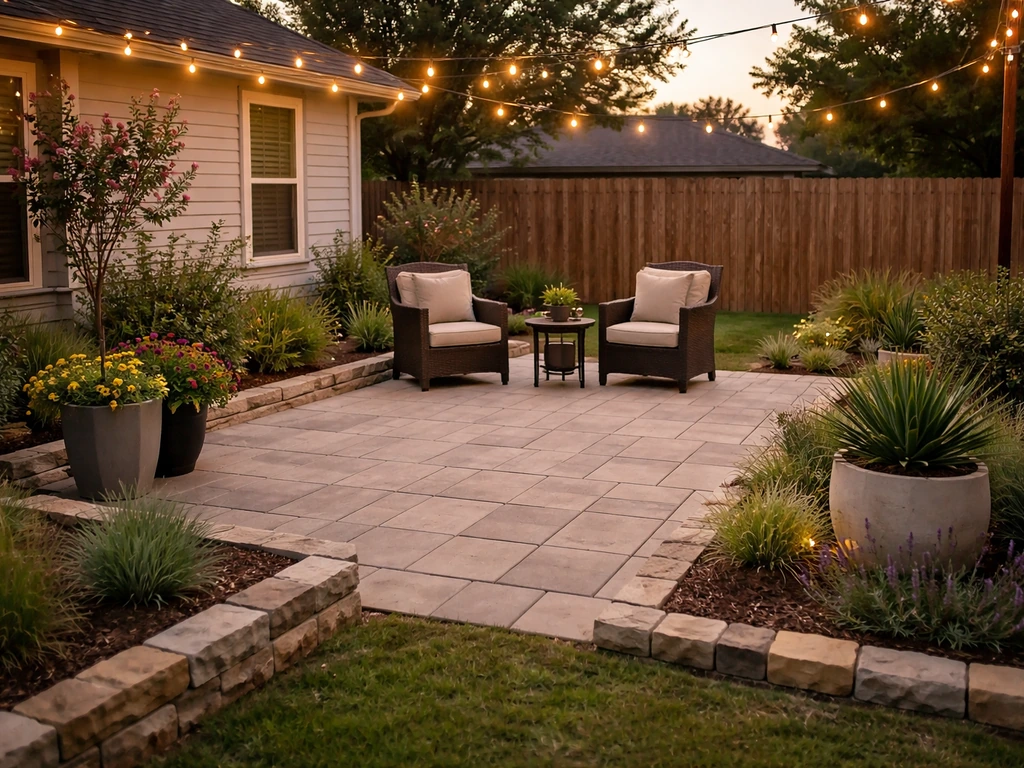
What a Fort Worth patio contractor actually does
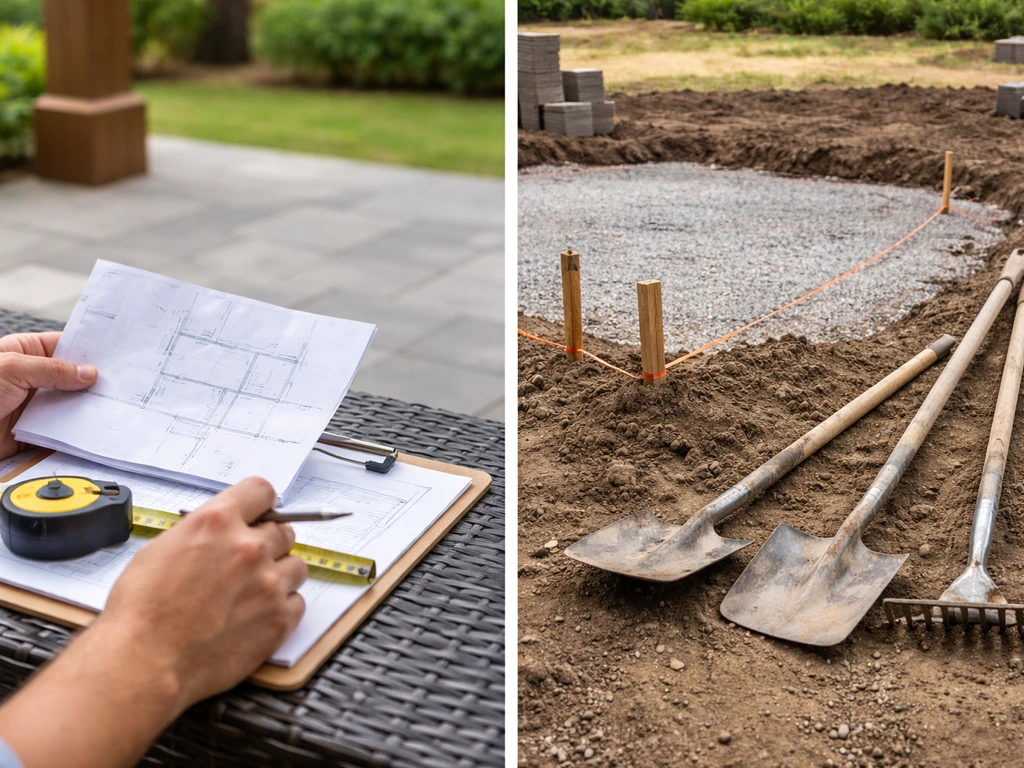
The terms 'patio builder,' 'patio contractor,' and 'patio installer' get used interchangeably, but the scope can be very different depending on who you call. It helps to understand what each role actually covers before you start making phone calls.
Design
Some contractors offer full design services: they will visit your property, measure the space, discuss how you want to use the patio (entertaining, dining, grilling, kids playing), and produce a layout with material options and a cost estimate. Others just show up and build what you describe. If you already know exactly what you want, you may not need formal design services. But if you are starting from scratch, a contractor who offers design-build under one roof can save you a lot of back-and-forth. Full-service outdoor living contractors in the DFW area often handle HOA approval submissions and permit applications as part of the design package.
Build and install
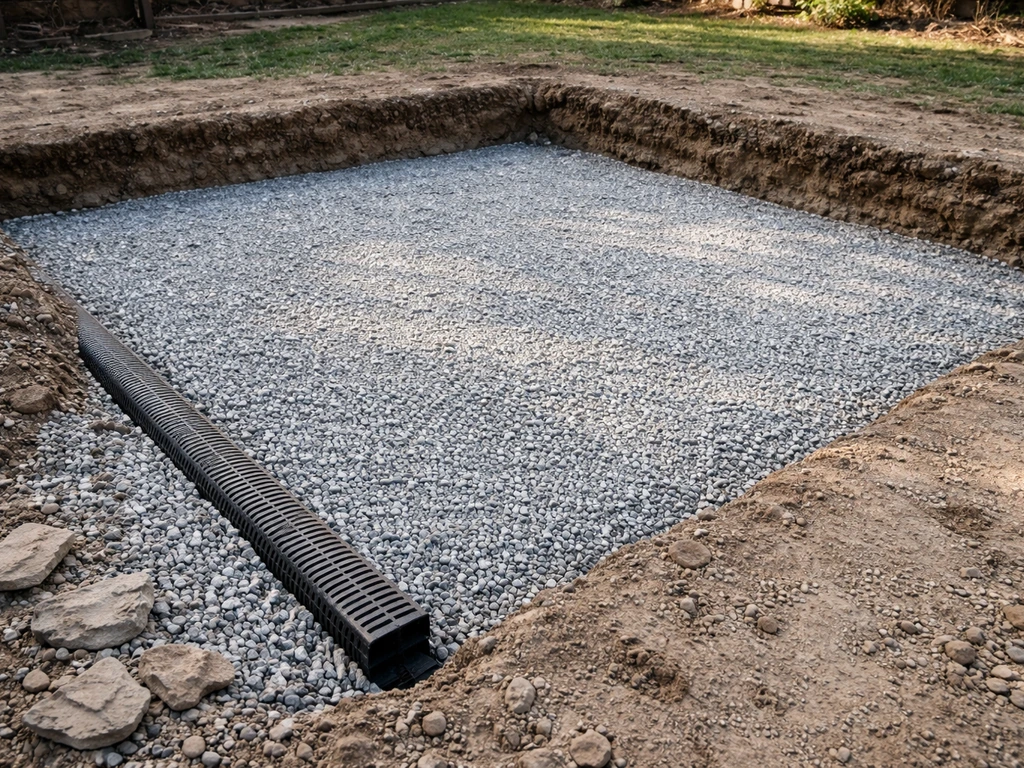
Installation is the physical work: site preparation, excavation, base compaction, drainage, laying the surface material (concrete, pavers, stone), and finishing. Most patio contractors in Fort Worth handle this in-house. What they may subcontract are specialty trades: if your patio includes electrical outlets, lighting circuits, or a gas line for an outdoor kitchen, those portions must be handled by licensed electricians and plumbers under Texas law. The TDLR regulates electrical licensing in Texas, so if your contractor says their guy will 'handle the wiring,' ask to see his license.
Covered structures and add-ons
A simple open concrete or paver slab is one thing. Add a pergola, a solid roof cover, an awning, or an enclosure and the project scope (and permit requirements) changes considerably. Covered patios with solid roof structures in Fort Worth can require a building permit and inspections. If you are thinking about patio awnings, patio enclosures, or a full outdoor room, make sure your contractor has experience with those structures specifically, not just flatwork.
How to choose the right patio builder in Fort Worth
Texas does not require a statewide general contractor license for most patio construction work, which means technically anyone can call themselves a patio contractor. That makes your vetting process more important, not less. Here is how to filter the field.
- Verify they carry general liability insurance and workers' compensation. Ask for a certificate of insurance, not just their word.
- Check for a physical business address in the Fort Worth or DFW area. A local contractor is easier to hold accountable and more likely to know Fort Worth's specific permit and zoning requirements.
- Look at completed projects, not just portfolio photos. Ask for addresses of recent jobs you can drive by or homeowners you can call.
- Confirm they pull permits. Contractors who skip permitting are cutting corners that can cost you when you sell the house or file an insurance claim.
- Ask how long they have been operating under the same business name. Contractors who regularly rebrand to escape bad reviews are a known problem in the trades.
- Get a sense of their subcontractor relationships if your project includes specialty work like electrical or plumbing.
Review platforms like Google, Houzz, and the BBB are useful starting points, but pay more attention to how a contractor responds to negative reviews than to the star rating itself. A contractor who resolves complaints professionally is usually a better bet than one with a suspicious string of five-star reviews and no negatives at all.
Questions to ask before you hire anyone

When you are getting bids, use the conversation to learn as much as you are deciding. A contractor who cannot or will not answer these questions clearly is telling you something important.
- What is the exact scope of this bid? What is included and what is not? (Grading, hauling away excavated soil, sealing, and cleanup are common omissions.)
- Will you pull the permits, and which permits does this project require? For Fort Worth, that means checking with Development Services. The city adopted the 2021 ICC codes effective April 1, 2022, and those standards govern what gets inspected.
- What materials do you recommend for this site, and why? Push them to explain drainage considerations specific to your yard.
- What is your timeline from signed contract to project completion, and what could push that out?
- What does your warranty cover? Get the duration and what is and is not included in writing. Some Fort Worth-area contractors offer 10-year workmanship warranties; others offer nothing beyond a handshake.
- Who does the work? Your crew, or subcontractors? If subcontractors, are they licensed for their specific trade?
- Have you worked in my neighborhood or HOA before? Some subdivisions in Fort Worth have approval requirements beyond the city's permit process.
How patios are designed and priced in Fort Worth
Patio pricing in Fort Worth depends on size, material, site conditions, and what features you add. Here are realistic numbers to work with when you are comparing bids or setting a budget.
| Material | Installed Cost (per sq ft) | Notes |
|---|---|---|
| Plain concrete | $8 – $13 | Reinforced; Fort Worth-specific estimate range |
| Decorative/stamped concrete | $12 – $18+ | Color, texture, and pattern add cost |
| Concrete or clay pavers | $10 – $17 | Standard installed range; higher-end materials push $20–$50 |
| Permeable pavers | $15 – $25+ | Fort Worth/TRWD drainage specs may apply; ASTM C936 material standard |
A common starter patio in Fort Worth runs around 200 to 300 square feet, which puts a basic concrete patio in the $1,600 to $3,900 range before any covered structure. Um patio do tijolo pode custar mais ou menos do que um patio de concreto, dependendo do seu tamanho e do preparo da base. blank" rel="noopener noreferrer">A mid-size paver patio at 400 square feet with good base prep and drainage can run $4,000 to $7,000 or more. Add a pergola or patio cover and you are looking at an additional $5,000 to $20,000 depending on materials and size.
Layout choices affect cost too. A simple rectangle is cheaper to install than an irregular shape with curves or steps. If your yard has significant slope, expect to pay more for grading and drainage work. Fort Worth's Trinity River Authority (TRWD) has local guidance that can influence drainage design choices, particularly if you are considering permeable pavers as a stormwater management tool. ASTM lists C936 as the standard specification for solid concrete interlocking paving units, which can be used in interlocking and permeable paver applications permeable pavers as a stormwater management tool.
When you get bids, make sure each contractor is quoting the same scope: same square footage, same material, same base depth, and same site conditions. Bids that look dramatically cheaper are usually missing something, and finding out what after you sign is not fun.
What actually happens during a patio installation
Understanding the installation process helps you catch problems before they become expensive. Here is how a properly executed patio installation in Fort Worth should go, step by step.
- Site prep and layout: The contractor marks the patio footprint, checks for underground utilities (call 811 before any excavation in Texas), and confirms grades and drainage direction.
- Excavation: For a paver patio, expect excavation of roughly 10 inches to accommodate the base layers. Concrete slabs require shallower excavation but still need proper subgrade prep.
- Base compaction: A minimum of 6 inches of compacted aggregate base is standard for most patio applications. This step is where most budget contractors cut corners, and it is the leading cause of patio failures.
- Drainage correction: If your yard has drainage issues, they need to be addressed at the base level, not patched afterward. A good contractor grades the base so water moves away from the house.
- Bedding layer (for pavers): A roughly 1-inch layer of bedding sand is screeded smooth over the compacted base. This is not a leveling fix for a bad base; it is a precision layer on top of a solid one.
- Surface installation: Pavers are set, concrete is poured and finished, or stone is laid according to the design.
- Joint sand and sealing: For paver installations, polymeric joint sand is swept in and compacted. Sealing can be done immediately or after a curing period depending on the material.
- Cleanup: Excavated soil hauled away, site cleaned up, and any disturbed lawn areas addressed.
If a contractor skips or rushes the base compaction step because 'the soil here is good,' that is a red flag. Failures almost always come from the base and drainage, not the surface material. Ask specifically how many inches of compacted base they plan to install and whether they will compact the subgrade before adding aggregate.
DIY vs hiring a pro: how to decide
Some patio work is genuinely DIY-friendly. A lot of it is not, and being honest with yourself about the difference will save you money and frustration.
When DIY makes sense
- You are installing a small patio (under 150 sq ft) with standard pavers on relatively flat ground.
- You have access to a plate compactor (rent one, do not skip it) and basic masonry tools.
- You have time to do the base prep properly, meaning you will not rush the compaction steps.
- The project does not require permits (open, uncovered patio in Fort Worth on a flat lot with no drainage concerns) — but confirm with Development Services before you assume.
- You are comfortable with the physical work: excavation, hauling, compacting, and precise leveling.
When to hire a pro
- Any patio over 300 sq ft, or any irregular shape with curves, steps, or elevation changes.
- Projects involving drainage problems, significant slope, or proximity to the house foundation.
- Covered patios, pergolas, awnings, or enclosures that require permits and structural engineering.
- Patio resurfacing over existing concrete that has heaved, cracked, or settled unevenly.
- Any project that includes electrical, gas, or plumbing for an outdoor kitchen or lighting.
- Situations where you need the work warrantied and completed on a firm schedule.
Custom patio builds and patio resurfacing projects are areas where professional expertise pays for itself quickly. Custom patios in Fort Worth are typically priced based on your layout, materials, site conditions, and the features you want to add custom patios Fort Worth. The margin for error on a concrete pour or a complex paver design is small, and redoing the work costs more than getting it right the first time. For anything beyond a straightforward small slab, the pro route is usually the smarter financial decision in Fort Worth's climate, where summer heat and occasional freeze-thaw cycles can punish a poorly prepped base.
What to check in contracts, insurance, and reviews before you sign

The contract is where good intentions become enforceable commitments. Do not sign anything that does not include these elements.
Contract basics
- Full written scope of work: materials specified by name and grade, square footage, base depth, drainage approach, and any exclusions stated explicitly.
- Payment schedule tied to project milestones, not arbitrary dates. Never pay more than 10–30% upfront.
- Start date and projected completion date with language about what happens if the timeline slips significantly.
- Change order process: any scope changes should be in writing and priced before work proceeds.
- Permit responsibility: the contract should state who pulls permits and who is responsible if work fails inspection.
- Warranty terms in writing: what is covered, for how long, what voids it, and what the claim process looks like.
Insurance verification
Ask for a certificate of insurance showing general liability coverage and workers' compensation. The certificate should list your name and address as the certificate holder, and you can call the insurance company directly to verify it is active. A contractor without workers' comp means you could be liable if a worker is injured on your property.
Permits and code compliance
Fort Worth adopted the 2021 ICC codes effective April 1, 2022. Permits are managed through the city's Development Services Department, and homeowners can check permit status through the city's Permit Assist and Accela self-service portal. If your contractor says a permit is not required for your project, ask them to confirm that in writing or call Development Services yourself. Covered patio structures, including solid-roof additions, almost always require a permit. Unpermitted work can cause problems when you sell the home or file a homeowner's insurance claim.
Reviews and references
Read reviews on multiple platforms and look for patterns, not just the most recent ones. Watch for complaints about abandoned jobs, unexpected cost increases, or warranty claims that went nowhere. A contractor who offers a 10-year workmanship warranty means nothing if they are out of business in two years or have a history of ignoring warranty calls. Ask for two or three references from Fort Worth-area jobs completed in the last 12 months, and actually call them. Ask the references specifically whether the contractor showed up on schedule, kept the site clean, and resolved any post-completion issues promptly.
Once you have done your homework, the process moves quickly. Get your three bids, compare them line by line against the same scope, verify insurance, and confirm the permit plan. A good Fort Worth patio contractor will welcome those questions because it shows you know what you are looking for, and that usually brings out their best work. Many builders also specialize in patio homes across Fort Worth, Texas, so you can ask about that style if you want the home and patio to match patio homes Fort Worth, Texas.
FAQ
What should I do if my patio design changes after I sign the contract?
Yes, you can. Start by asking the contractor to provide a written change order process (how they price additions, timelines, and what approvals are needed from you). Also require that all changes are reflected in an updated scope and total price before work starts, so you are not forced to pay for extras that were never agreed to.
How should patio builders handle deposits and progress payments?
Request a detailed payment schedule tied to milestones (for example, deposit, base prep inspection, material delivery, installation completion). Avoid large upfront payments, and confirm the final payment is withheld until punch-list items are completed and debris is removed.
What technical details should I ask for to prevent paver or concrete failures?
For pavers and many concrete jobs, ask about base depth, edge restraints (like concrete headers or plastic restraints), and the jointing method (sand type and compaction). Then ask what they do to prevent common failures in Fort Worth, like sand washout, uneven settling, and standing water at the patio edges.
What happens if the contractor finds soil or drainage problems during excavation?
You should ask whether they will test or evaluate soil conditions on-site (and what they do if drainage requires regrading). If they only rely on general assumptions, it is a red flag. Specifically ask what they will do if they discover soft subgrade, utility conflicts, or unexpected slope changes during excavation.
Will the contractor repair yard damage, landscaping, or sprinkler lines after patio installation?
Confirm who is responsible for protecting nearby landscaping, fences, and existing utilities. Ask whether they include restoration, such as replacing sod, re-staking edging, repairing sprinkler heads, and disposing of spoil. Make sure these responsibilities are written into the scope so you are not surprised by restoration costs afterward.
How do permits and inspections work for covered patios and solid roof structures?
Get clarity on what your inspection and permit coverage includes. Ask if they handle inspection scheduling, required documentation, and whether you will receive permit numbers or inspection dates. If the project is covered (solid roof or an enclosed structure), confirm the inspection plan before construction begins.
What should I look for in a patio workmanship warranty (and how do I avoid a useless warranty)?
Inquire about a warranty that is specific to workmanship and what it covers, along with a claim process and response timeline. Then verify whether the warranty is backed by the company that will still be operating when the defect appears, and get any warranty terms in writing.
If I want outdoor lighting or an outdoor kitchen, what parts should be subcontracted and documented?
Ask who will handle electrical and gas work, and require proof of the licensed contractor for each specialty (electrician for outlets and lighting circuits, plumber for gas lines to outdoor kitchens). Then confirm their work is integrated with the patio install so trenching, setbacks, and rough-in timing do not delay your schedule.
How can I tell whether bids are comparing the same scope and materials?
Yes. Ask if the quoted price includes mobilization, excavation, hauling, base materials, compaction equipment, and cleanup. Then require the bid to specify thicknesses (like base depth and concrete slab thickness) and materials (like paver thickness and setting bed depth) so bids are truly comparable.
Should I consider drainage choices differently if I want the patio to be easy to maintain and more resale-friendly?
If you are planning for resale, ask how the patio affects lot drainage and grading from a buyer perspective. Also ask whether permeable pavers are appropriate for your site and local stormwater guidance, because the drainage approach can impact maintenance expectations later.