
For most patios, a polypropylene outdoor rug is the better all-around choice. It looks great, handles foot traffic well, and comes in enough sizes to anchor a dining set or define a lounge area. A patio mat is the smarter pick when you need serious drainage, heavy-duty slip resistance, or a no-fuss option for a high-moisture zone like a pool deck, grill station, or back door entry. Both work outdoors, but they're built for different jobs, and putting the wrong one down leads to mildew, bunching, or a soggy mess under your furniture.
Patio Mat vs Outdoor Rug: How to Choose for Your Patio

Miles Sutton
13 May 2026
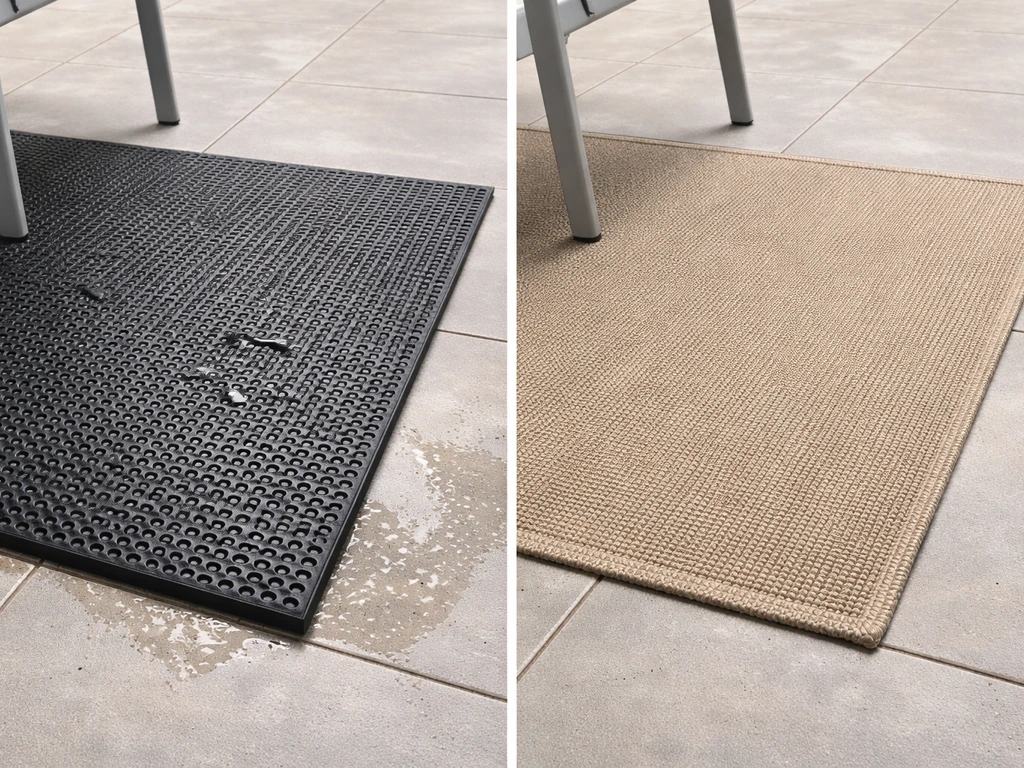
What 'patio mat' actually means vs what 'outdoor rug' means
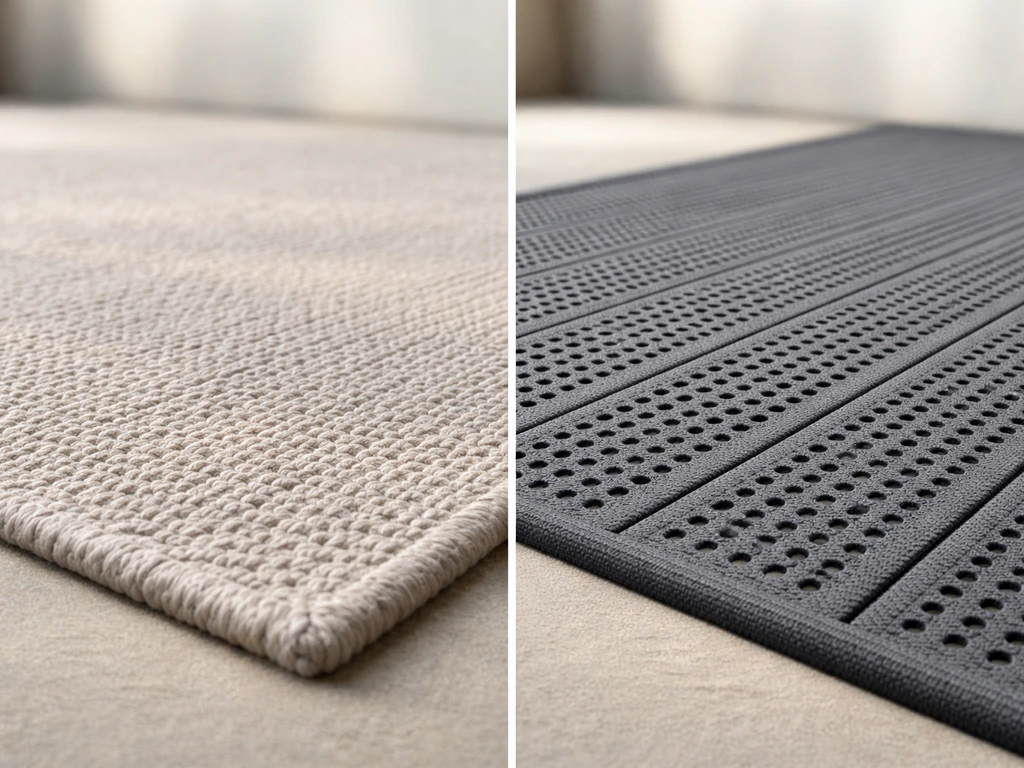
The terms get mixed up constantly in product listings, which is part of why this comparison is so confusing to shop. Here's how to think about them in practical terms.
An outdoor rug is a textile product designed to look like an indoor area rug but built to survive outside. It has woven or tufted fibers (usually polypropylene or polyester), comes in decorative patterns, and is sized to go under furniture groupings. The goal is comfort and style, with weather resistance built in through material choice and construction. Most outdoor rugs are flat-woven or have a low pile so water doesn't pool in the fibers.
A patio mat is more of a utility product. Think of the ribbed, perforated, or interlocking plastic/rubber mats you'd put at a back door, under a grill, or around a pool. They prioritize drainage, grip, and durability over appearance. They're usually smaller, thicker in terms of structural rigidity, and designed to let water pass through rather than resist it.
Some patio mats are made from recycled materials or PVC and are easy to hose off and replace cheaply. Brands like Ruggable also use a two-part doormat system where a fabric cover sits on a rubber mat that handles the drainage and anti-slip function separately. Ruggable describes its two-part doormat system as a fabric cover paired with a rubber mat, where the rubber component provides anti-slip performance and enables water drainage [Ruggable’s two-part doormat system](https://support. ruggable.
com/hc/en-us/articles/1500002810081-What-is-the-Doormat-made-of).
The practical takeaway: if aesthetics and furniture definition matter, you're shopping for a rug. If you need drainage, grip on a wet surface, or a tough mat for a specific zone, you're shopping for a patio mat.
Key differences that actually matter: materials, drainage, and construction
| Feature | Outdoor Rug | Patio Mat |
|---|---|---|
| Primary material | Polypropylene, polyester, or natural fiber blends | PVC, rubber, recycled plastic, or polypropylene mesh |
| Construction | Woven, tufted, or flat-weave textile | Ribbed, perforated, interlocking tiles, or loop construction |
| Drainage | Depends on backing; open/mesh backing drains better than solid rubber | Built-in via perforations or gaps in the material |
| Slip resistance | Varies; often needs a separate rug pad underneath | Usually built into the structure or backing |
| Size range | Small accent to 9x12 ft and larger | Typically small to medium (door, grill, pool zone) |
| Style/decor value | High; wide range of patterns and colors | Low to moderate; mostly functional appearance |
| Price range | Wider range; $30 to several hundred dollars | Generally lower cost; $15 to $80 for most options |
| UV fade resistance | Available in solution-dyed or UV-stabilized fibers | Varies; often UV-stabilized PVC or rubber |
| Replacement frequency | Seasonal to multi-year if maintained well | High-use zones may need replacement annually |
One thing worth understanding about drainage: it's not just about whether the material itself is waterproof. Nourison points out that water resistance alone isn't enough. The backing design matters just as much. A solid rubber backing can trap moisture between the rug and your deck or concrete, creating the exact mildew problem you're trying to avoid. An open or mesh backing lets water drain through and air circulate underneath, which keeps both the rug and the surface below in better shape. If you're buying an outdoor rug and it has a solid rubber backing, you should be lifting and drying it regularly or using it in a covered area.
Choosing based on your patio conditions
Sun and UV exposure
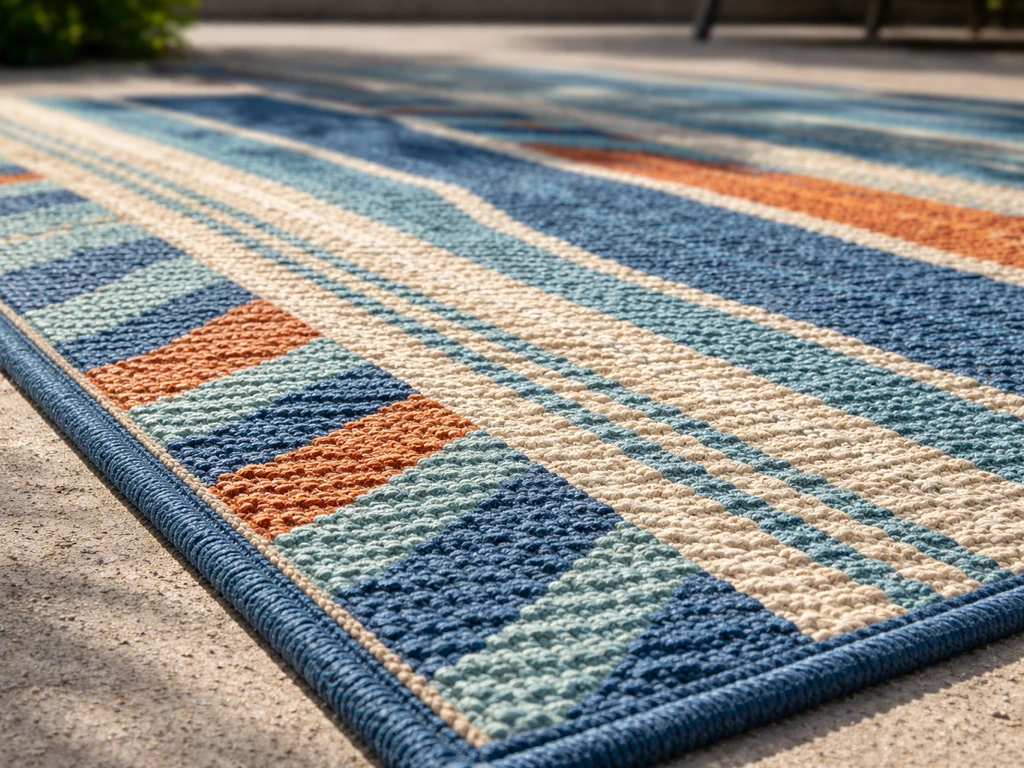
For a fully exposed patio that bakes in direct sun most of the day, UV degradation is your biggest enemy. Solution-dyed polypropylene or polyester is the answer here. Solution-dyed means the color is locked into the yarn before it's even woven, rather than applied to the surface afterward. The difference shows up after a summer or two: surface-dyed rugs fade noticeably, while solution-dyed ones hold their color far better. Look for 'solution-dyed' specifically on the product label, not just 'UV-resistant.'
Rain, standing water, and puddle-prone areas
If your patio puddles after rain or you're near a pool or outdoor shower, drainage is the priority. A perforated patio mat beats a textile rug in this situation because water passes through it rather than sitting on top or underneath. If you prefer the look of a rug, choose one with a mesh or open backing and make sure there's enough slope on your patio surface for water to escape. Any rug sitting in standing water regularly will develop mold under it, even if the fibers themselves are mold-resistant.
Freeze-thaw climates
If you're in a climate with hard winters, the best practice is to bring your rug or mat inside before the first freeze. Leaving a textile rug frozen for extended periods shortens its lifespan noticeably. Patio mats made from rigid PVC or interlocking plastic can handle freezing a bit better than woven rugs, but neither is truly made for months of snow and ice. Rolling up and storing your rug in the garage before winter is one of the most effective things you can do to extend its life.
Covered patios and low-moisture zones
Under a covered patio or in a screened porch with limited rain exposure, you have more flexibility. You can use outdoor rugs with denser weaves, thicker pile, or even indoor/outdoor transitional rugs without worrying as much about drainage. Sun exposure through screens is still real, so UV resistance still matters, but moisture management is less critical.
Choosing based on how you use the space
Dining areas
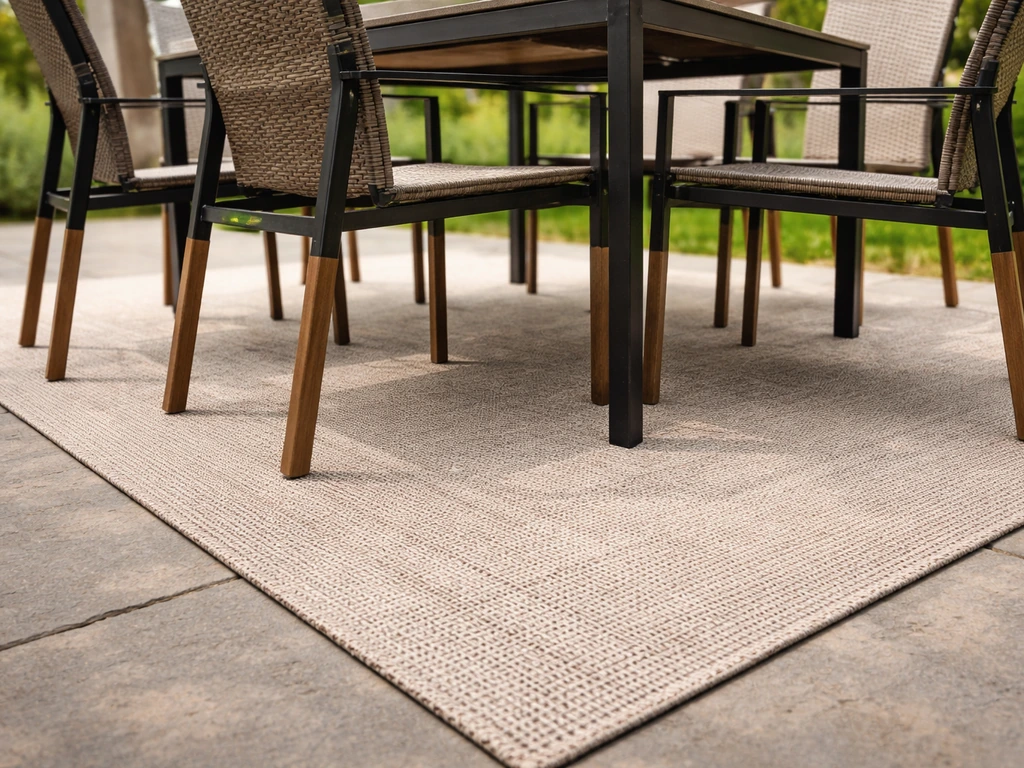
A large outdoor rug is the right call for an outdoor dining setup. Using the right patio rug size guide for your dining layout helps you pick dimensions that keep every chair leg fully supported, even when chairs are pulled out A large outdoor rug. It anchors the table and chairs visually, protects the patio surface underneath, and makes the space feel intentional.
The sizing rule here is practical: all four legs of every chair need to sit fully on the rug even when the chairs are pulled out. If the rug is too small, chairs will catch on the edge constantly and the rug will bunch up or flip. Aim for at least 6 inches of rug extending beyond the chair legs in all directions when seats are pulled back.
This typically means going up one or two sizes from what looks right in a product photo.
Lounge and seating areas
For a sofa, sectional, or lounge chair grouping, an outdoor rug works exactly like it does indoors: all front legs (at minimum) on the rug, ideally the whole furniture group sitting on or near the rug. This defines the zone and keeps the space from looking scattered. A patio mat doesn't usually come in sizes large enough for a full lounge setup, so rugs are the practical choice here.
Entryways and back doors
This is where patio mats shine. A perforated or ribbed mat at an entry catches dirt, drains rain water, and handles the constant foot traffic of people going in and out. Ruggable’s rubber doormat product page similarly highlights water drainage ability and a textured anti-slip grip to help keep the cover secure, dry, and mildew-free perforated or ribbed mat. It's also easier to hose off quickly than a textile rug. If you want something that looks better, a two-part doormat system (fabric cover on a rubber drainage mat) gives you both the visual appeal and the functional drainage underneath.
Grilling zones
Put a patio mat under or in front of a grill, not a rug. Embers, grease splatter, and high heat make textile rugs a fire and staining risk. A heat-resistant rubber or PVC mat handles the zone safely and cleans up with a hose. Check that whatever you use is rated for contact with hot surfaces if your grill setup runs close to the ground.
Kids, pets, and high-traffic areas
Both options can work, but your priority shifts to durability and ease of cleaning. For pets, a flat-woven polypropylene rug resists fur embedding and cleans up with a hose. For kids who track mud and water constantly, a perforated mat near a door or pool is more practical than a rug. Whichever you choose, look for something you can fully rinse and dry quickly. Anything that stays damp under a pet's bed or play area will smell fast.
Sizing, placement, and installation: avoiding the common mistakes
Measure your patio space before you buy anything. It sounds obvious but most rug regrets come from eyeballing it. Measure the seating or dining footprint you want to cover, then add at least 12 to 18 inches on each side for an outdoor rug so there's visual breathing room and enough coverage for furniture placement. For a doormat or entryway mat, measure the width of the door including trim and buy a mat that's at least as wide as the door opening itself.
Door clearance is something people forget until the door won't open. Before laying down any rug or mat, open your door fully and measure the gap between the door bottom and the floor. Most outdoor rugs are thin enough not to cause issues, but thicker mats can absolutely block a door swing. Check this before you cut the tags off.
For slip prevention, don't assume any outdoor rug will stay put on its own. On smooth concrete or tile, a rug pad or non-slip backing is essential. On wood decking, check that the rug pad material is compatible with the finish since some rubber compounds can stain or discolor certain wood sealers. On pavers or textured concrete, the texture itself provides some grip, but securing the edges with furniture legs or rug corner weights helps on windy days. The biggest trip hazard is a curled or bunching edge, so smooth the rug flat when you lay it and check the edges occasionally.
If you're working on sizing for a specific furniture setup or patio footprint, a patio rug size guide can help you work through the exact measurements before you buy. If you're trying to decide on patio size recommendations for your exact layout, measure the seating or dining footprint first and then plan for extra coverage around it patio size guide. Once you know your measurements, you can use this patio deck size guide logic to choose an outdoor surface that fits comfortably patio rug size guide. Working through a patio rug size guide helps you match the right dimensions to your furniture layout before you buy.
Buying checklist and material recommendations
Before you add anything to a cart, run through this checklist:
- Measure your patio zone and furniture footprint first, including door clearance if applicable.
- Identify your main weather challenge: UV/sun, rain/moisture, freeze-thaw, or wind.
- Decide whether drainage is critical (pool deck, entryway, grill zone) or secondary (covered patio, lounge area).
- Choose polypropylene for the best balance of UV resistance, water resistance, mold resistance, and affordability. Solution-dyed polypropylene is the top pick for fade resistance.
- If going with a rug, check the backing: open/mesh backing is better for drainage than solid rubber backing.
- If going with a mat, confirm it has built-in anti-slip texture or grip, especially for wet surfaces.
- For dining areas, size up: chairs need to stay on the rug when pulled out.
- For entryways, confirm the thickness won't block the door swing.
- Look for UV-stabilized labeling, not just 'outdoor use' on the tag.
- Budget for a rug pad separately if the rug doesn't include one and your surface is smooth.
On materials specifically: polypropylene is the strongest recommendation for most outdoor rugs. It's water resistant, UV stable, mold resistant, and the most affordable synthetic option. Solution-dyed polyester is a close second for color vibrancy and softness underfoot, but can be slightly less durable in full sun over multiple seasons. Natural fibers like jute or sisal look beautiful but are genuinely not suited for wet or fully exposed outdoor use. They'll deteriorate quickly and are better reserved for covered, dry-climate applications.
Maintenance, cleaning, drying, and preventing mildew
The main enemy of both rugs and mats is trapped moisture. You can buy the most weather-resistant rug available and still end up with a mildewed mess if you never let it dry properly. Here's how to stay ahead of that.
Routine cleaning
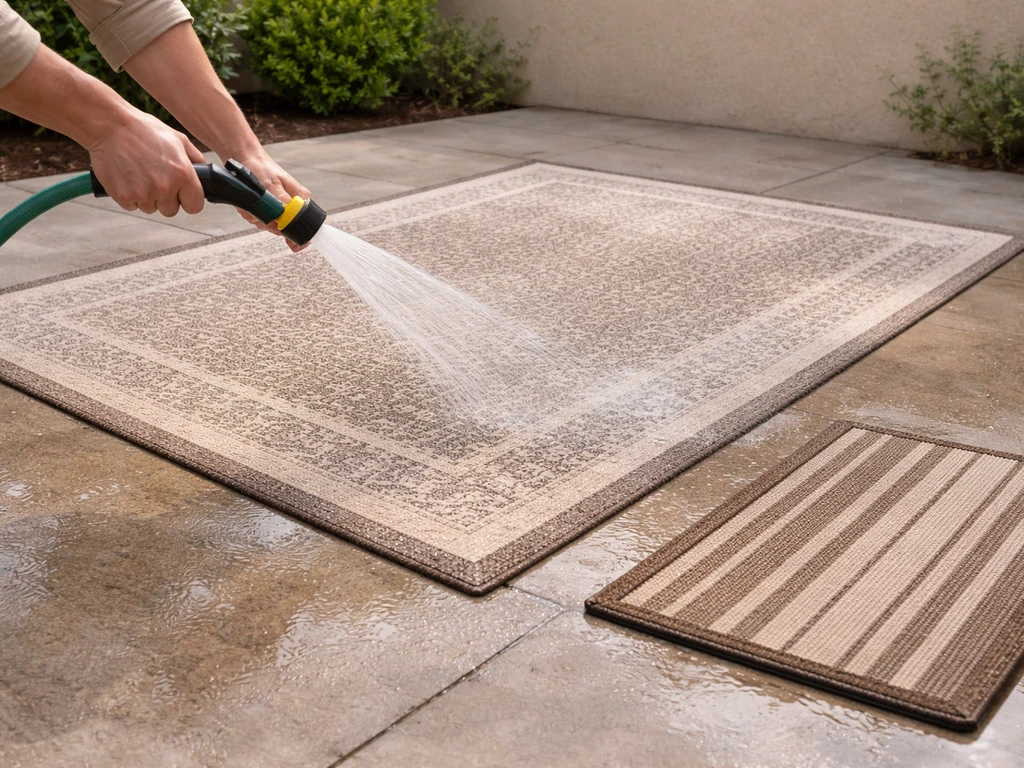
For most outdoor rugs and patio mats, a garden hose is your best cleaning tool. Spray the top surface thoroughly, flip the rug over and rinse the back and the patio surface underneath, then let both sides dry completely before putting the rug back down. Drying both sides matters because the underside is where mold actually starts. Draping the rug over a railing or fence in direct sunlight speeds up drying significantly. After a full wash and rinse, allow roughly 24 to 48 hours before the rug is completely dry depending on humidity and airflow.
For spot cleaning, a mild dish soap or outdoor fabric cleaner with a soft brush handles most food, dirt, and mud stains. Avoid bleach on colored rugs unless the manufacturer specifically says it's safe, as it can strip even solution-dyed fibers over time.
Before and after rain
Ideally, roll up your outdoor rug before heavy rain and store it in a garage or dry area. This is the single most effective way to prevent mildew buildup and extend the rug's life. It sounds inconvenient but it becomes a habit quickly if you're serious about keeping the rug looking good for more than one season. Patio mats are generally more tolerant of rain since they drain, but they should still be flipped and dried periodically to prevent growth on the underside.
End of season storage
Before storing for winter, clean the rug thoroughly, let it dry completely on both sides, then roll it up (don't fold, which causes permanent creases) and store it somewhere dry and off the floor. A plastic storage tube or wrapping it in breathable fabric helps keep pests and dust out. Storing a damp rug is the fastest way to ruin it over winter.
When to replace it
Replace a rug or mat when you see: fiber breakdown or shedding that won't brush out, permanent mold staining that cleaning doesn't remove, edges that have permanently curled or frayed creating a trip hazard, or significant color fading that makes it look worn out. Most quality polypropylene outdoor rugs last three to five years with reasonable care. Budget patio mats in high-traffic entryways may need replacing annually.
Quick guide: when to buy a mat vs when to buy a rug
Here's a straightforward way to decide today:
| Your Situation | Best Choice | Why |
|---|---|---|
| Outdoor dining set on concrete or pavers | Outdoor rug (large) | Anchors furniture, defines space, all chair legs need to fit on it |
| Lounge area with sofa and chairs | Outdoor rug (large) | Creates zone, looks intentional, polypropylene handles weather well |
| Back door entryway with rain exposure | Patio mat (perforated or rubber) | Drainage built in, handles constant foot traffic and wet shoes |
| Pool deck or outdoor shower area | Patio mat (perforated/mesh) | Water drains through rather than pooling; anti-slip grip |
| Grill zone | Patio mat (rubber or PVC) | Handles heat, grease, embers; easy to hose off |
| Covered porch or screened-in area | Outdoor rug | Less moisture exposure; style and comfort are the priority |
| Balcony with limited drainage | Outdoor rug with open/mesh backing | Drainage backing prevents moisture trapping on enclosed surface |
| High-traffic zone with kids or pets | Flat-woven polypropylene rug or ribbed mat | Easy to hose clean, durable, resists fur and mud embedding |
| Winter climate with freeze-thaw cycles | Either, but store before first freeze | Neither handles months of ice well; storage extends life significantly |
If you're still on the fence, go with a polypropylene outdoor rug in a flat-weave or low-pile construction with a mesh backing. It covers the most use cases, handles most weather conditions reasonably well, looks good, and is easy to maintain. Save the purpose-built patio mat for specific zones where drainage, heat, or grip are the primary concern rather than appearance.
One last thing: getting the size right is just as important as getting the material right. A beautiful rug that's too small for your furniture group will look awkward and perform poorly. If you're unsure about sizing for your specific patio layout, working through a proper patio size guide or rug sizing guide before you shop will save you a return shipment. If you're unsure about sizing for your specific patio layout, working through a proper patio size guide can help you avoid buying something that's too small or too big for your space.
FAQ
Can I use an outdoor rug as a doormat at a high-traffic door?
It’s usually a bad fit because most rugs are designed for surface water shedding, not constant wet traffic. If you must use one near a door, choose a very low-pile outdoor rug with an open or mesh backing and keep it angled or on a slight slope so it can drain and dry quickly. For daily door traffic with rain, a perforated or ribbed patio mat drains and grips better.
What should I do if my patio has standing water even after rain?
Treat it as a drainage problem before picking a mat or rug. Even the most mold-resistant textile will suffer if it sits in pooled water. Improve slope or redirect runoff, then use a patio mat in the wetest zone because it lets water pass through instead of trapping it above or underneath.
Will an outdoor rug trap moisture if it has a rubber backing?
Yes, a solid rubber backing can reduce airflow and trap moisture between the rug and the surface, which increases mildew risk. If your rug has solid rubber backing, plan to lift and dry it periodically or keep it in a more sheltered location. An open or mesh backing is usually safer for damp patios.
Do patio mats and outdoor rugs shed or leave residue on decks?
They can. Some rubber compounds can discolor certain wood sealers, and rough-backed mats can grind debris into soft finishes. Before installing permanently, test a small corner for a few days, especially on sealed or stained wood. If you see darkening, use a compatible rug pad or switch to a mat/backing designed for that surface.
Should I add a rug pad under an outdoor rug?
Often yes for slip control, but pick the right type. On smooth surfaces, a purpose-built outdoor rug pad helps prevent bunching and curling, but ensure the pad material is compatible with your patio surface (especially wood decking). If the rug already has a stable non-slip backing, you may not need an extra pad, but you still should secure edges in windy areas.
Is it safe to put a patio rug under a grill or close to open flames?
Avoid placing textile outdoor rugs where heat, embers, or grease splatter can reach them. Use a heat-rated rubber or PVC mat for grill zones, and check the mat’s rating if your grill sits low to the ground. Grease stains often penetrate fibers, and heat can damage or discolor rug coatings.
How often should I hose off and rinse outdoor rugs or mats?
For normal use, a thorough rinse every couple of weeks or after heavy dirt accumulation helps keep odor down and prevents grime from holding moisture. If you have pets, a pool area, or frequent rain, rinse sooner and also rinse underneath when possible. The key is drying completely on both sides after any wet weather.
How can I tell when my outdoor rug is beyond cleaning?
Replace it when mold staining persists after a full rinse and dry cycle, when fibers break down or shed in a way you cannot brush out, or when edges stay curled and keep lifting to create a trip hazard. Significant fading that keeps worsening after cleaning is also a sign the fibers or dyes are no longer holding up in your sun exposure.
What’s the best way to store an outdoor rug over winter?
Clean it first, dry both sides completely, then roll it for storage (folding can create permanent creases). Store in a dry, off-floor spot, ideally in a breathable wrap or a storage tube to reduce dust and pests. Damp storage is the fastest route to mildew and odors by spring.
Can I cut a patio mat or rug to fit a custom space?
Sometimes, but do it carefully. Some interlocking or ribbed patio mats are designed to be trimmed with tools, while many woven outdoor rugs should not be cut because fraying and edge curl can start quickly. Measure twice, and if trimming is necessary, confirm the specific product’s instructions before cutting any fibers.