
A patio performance spa cover is a purpose-built cover for your outdoor hot tub or swim spa that keeps heat in, weather out, and uninvited guests (kids, debris, critters) away from the water. The right cover can cut your monthly heating costs noticeably, extend the life of your spa, and make it genuinely safer to leave unattended outdoors. The wrong one leaks heat, sags within a season, and ends up in the trash. This guide walks you through exactly how to pick the right cover for your specific setup, measure for a proper fit, install it safely, and keep it performing for years.
Patio Performance Spa Cover: Choose, Fit, Install, Maintain

Miles Sutton
20 Jun 2026
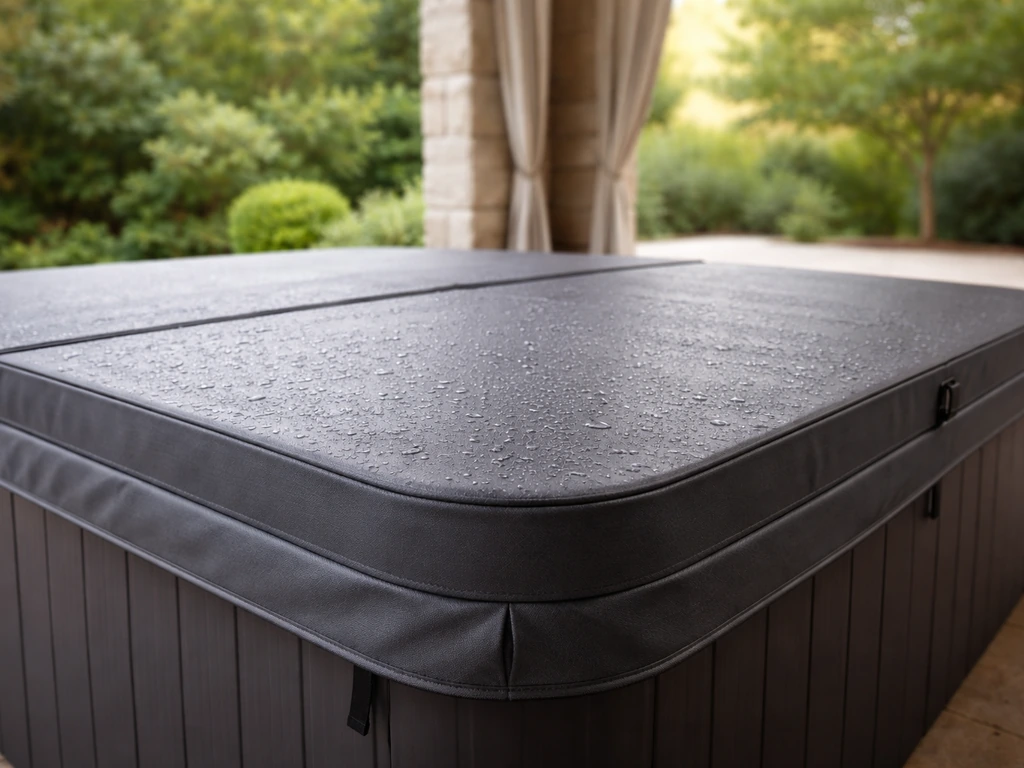
What 'spa cover' actually means in a patio context
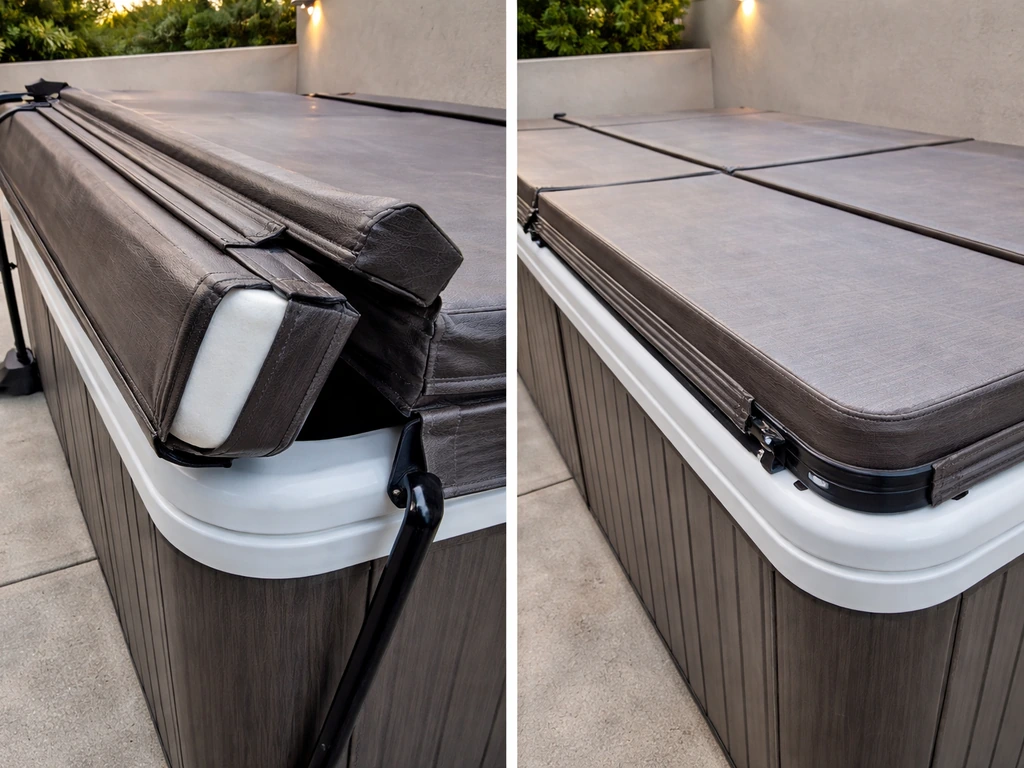
The phrase 'patio performance spa cover' can mean a few different things depending on your setup, so it's worth being specific before you buy anything. Most of the time, people mean a hard foam-core cover that sits directly on top of a hot tub or swim spa to seal in heat. But sometimes people are also thinking about a larger patio enclosure or shelter that surrounds the spa unit itself. Those are very different products with different goals, costs, and installation requirements.
- Hot tub cover: A hinged or lift-off vinyl-wrapped foam cover that sits flush on a standard hot tub (typically 6–8 feet square). This is the most common product people are searching for.
- Swim spa cover: A longer, often sectional cover designed for swim spas that can run 12–21 feet in length. These are heavier, more complex, and usually require a dedicated cover lifter.
- Patio enclosure or shelter: A structural addition (pergola, gazebo, or hard-wall enclosure) built around the spa to provide shade, wind protection, and privacy. This works alongside a spa cover, not instead of one.
- Cover lifters and assist systems: Hardware that mounts to the spa cabinet and makes removing or folding back a heavy cover manageable for one person.
If your spa is outdoors on a patio, you need all three elements working together: a well-fitted spa cover for insulation and safety, a lifter so you can actually use it daily, and ideally some overhead shelter to reduce UV degradation and wind load on the cover. This guide focuses mainly on the spa cover itself, but I'll flag where the enclosure piece matters for your decision-making.
Choosing the right cover type for your setup
Before you start looking at products, get clear on what you're actually trying to solve. Most people want better heat retention (lower electric bills), better safety (especially if kids are around), or both. A smaller number are dealing with extreme weather and need something built for wind, snow load, or intense UV exposure. Your climate and how often you use the spa should drive the decision as much as the spa dimensions.
Hot tub covers
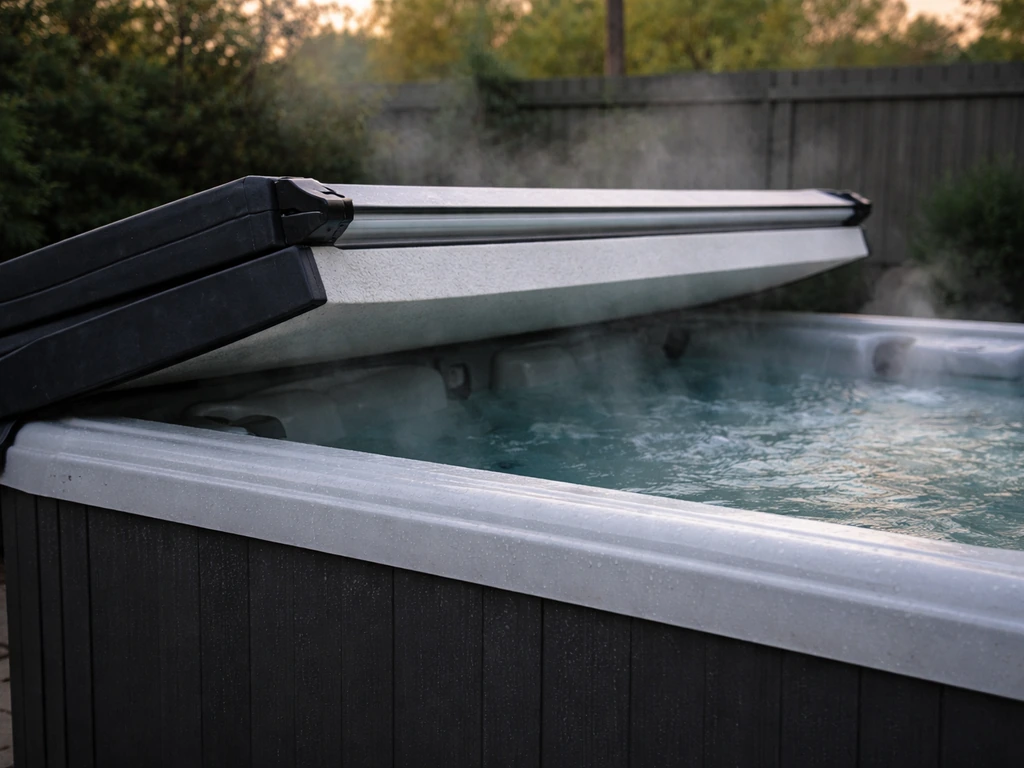
For a standard square or rectangular hot tub, you want a tapered foam-core cover in the 4–6 lb density range for most climates. The taper (typically 4 inches at the center down to 3 inches at the edges) sheds rain and snow load rather than letting it pool. If you're in a region with heavy snow, go with a 6 lb density foam core and a 4-inch taper minimum. The vinyl shell should be marine-grade with UV-resistant treatment baked in, not just a surface coating.
Swim spa covers
Swim spa covers are a different animal. A 17-foot swim spa cover can weigh 100–150 lbs as a single piece, which is why most come in two or three sectional panels. Jacuzzi, for example, designs their swim spa covers with both heat retention and ASTM safety standards in mind, and they strongly recommend OEM or authorized third-party covers to keep the manufacturer's warranty intact. Jacuzzi® also notes that OEM or authorized third-party swim spa covers are more likely to meet ASTM safety standards and help keep the swim spa manufacturer's warranty intact OEM or authorized third-party covers are more likely to meet ASTM safety standards. This matters practically: a non-compliant cover that fails could void coverage on a $15,000–$25,000 swim spa, which is a painful lesson. Stick with covers that explicitly meet ASTM F1346 (the standard for safety barriers that prevents entrapment and unauthorized access).
Enclosures and shelters
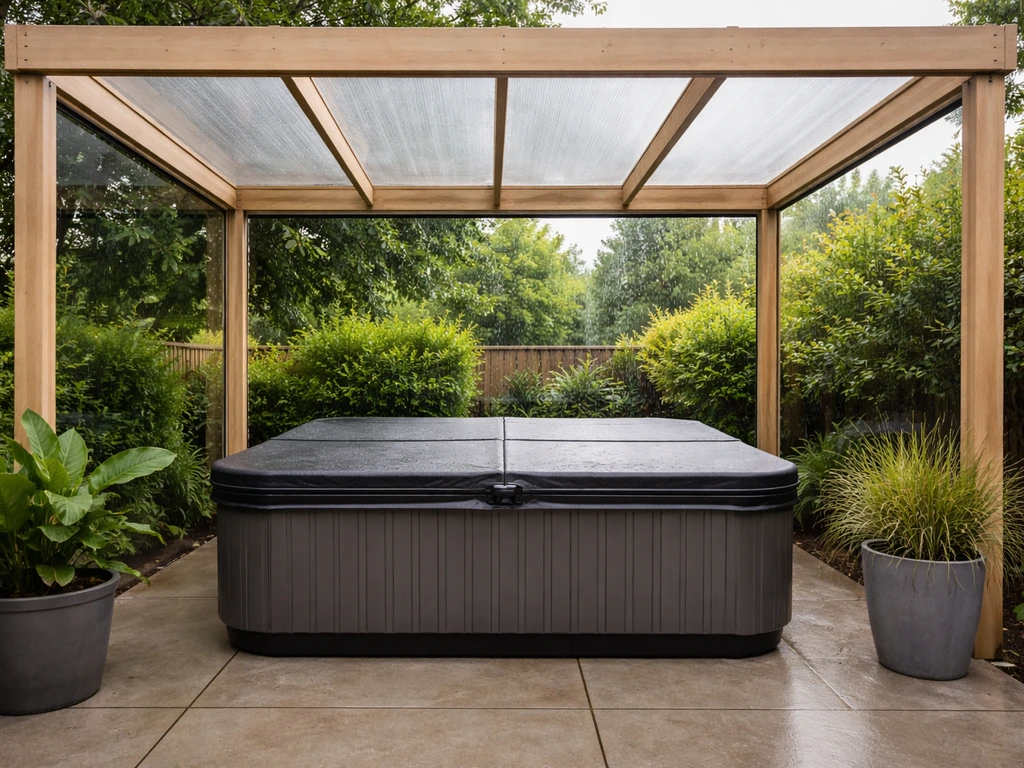
If your spa is exposed to full sun, prevailing winds, or heavy seasonal rainfall, a patio enclosure or pergola over the spa makes the cover's job much easier. An enclosure reduces direct UV on the cover vinyl (extending its lifespan by years), cuts wind load, and makes getting in and out of the spa far more comfortable in shoulder seasons. This is also where other protective products become relevant: a good patio armor-style sealant or patio shield coating on the surrounding deck surface complements the spa cover system by protecting the overall patio environment. If you want to compare brands and see how well different options hold up in real-world conditions, look up patio armor reviews before you buy a good patio armor-style sealant.
| Cover Type | Best For | Typical Weight | Avg. Cost Range | Lifter Needed? |
|---|---|---|---|---|
| Standard hot tub cover (hinged) | Hot tubs up to 9 ft | 30–60 lbs | $300–$800 | Recommended |
| Swim spa cover (sectional) | Swim spas 12–21 ft | 80–200 lbs total | $600–$1,800 | Essential |
| Hard cover / roll-up | Commercial or heavy-use spas | Varies | $500–$2,500 | Often built-in |
| Patio enclosure | Full weather/privacy protection | N/A (structure) | $1,500–$10,000+ | N/A |
Getting the sizing and fit right
This is where most DIY cover purchases go wrong. People assume they can order by model name or generic dimensions and get a cover that fits. Sometimes that works, often it doesn't. A gap of even half an inch around the perimeter means constant heat loss and a cover that will waterlog faster. Measure your spa carefully before you order anything.
How to measure your spa correctly
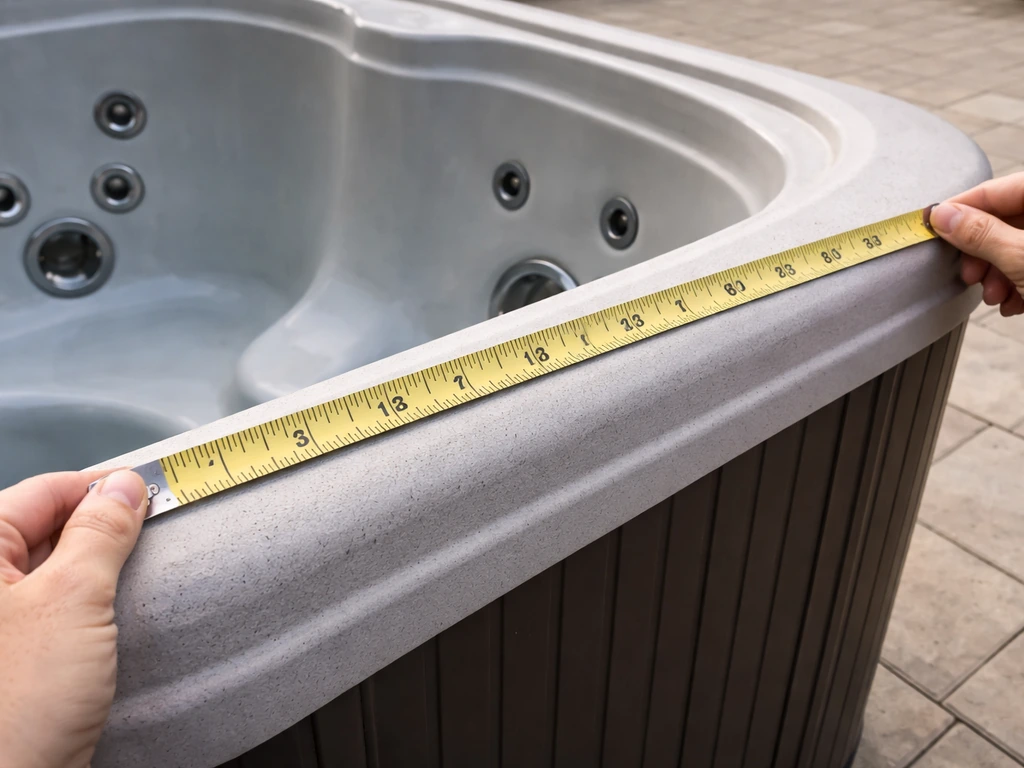
- Measure the full length and width of the spa shell at the top lip, not the cabinet exterior. Most covers sit on the lip, not the outside edge.
- Note any radius corners. Measure the corner radius (common sizes are 3, 4, 5, and 6 inches) and confirm it with your spa manual if possible.
- Check for any obstructions on the top lip: topside controls, jets, or auxiliary fittings that could affect how the cover sits flush.
- Measure the underside skirt depth you'll need. Most covers come with a 3–5 inch skirt. If your lip is recessed, you may need a longer skirt to get a good seal.
- For swim spas, measure each section span if you're ordering a two- or three-panel cover. Confirm where the center fold line falls relative to any internal wall or divider.
- Note the location of any anchor strap channels or tie-down points on the cabinet so you can confirm the cover you order includes matching buckle hardware.
Clearance and access checks
Before buying, think through how the cover comes off in daily use. With a hinged hot tub cover and a standard fold-back lifter, you need roughly 18–24 inches of clear space behind the spa (away from any fence, wall, or patio structure) for the cover to fold back fully. If your spa is tucked against a wall or patio enclosure, measure that clearance now. Some lifters allow the cover to stand nearly vertical rather than fold back horizontally, which is the better option for tight spaces. For swim spa sectional covers, each panel needs to be stored somewhere when the spa is in use, so plan that out before you install.
Installation essentials and safety
Most standard hot tub covers don't require professional installation. Two people can seat a cover in 20–30 minutes. But there are real safety and warranty considerations that are easy to overlook, so don't skip the details.
Step-by-step installation
- Clean the top lip of the spa thoroughly before placing the new cover. Old debris or mineral buildup prevents a flush seal.
- If installing a cover lifter, attach the mounting brackets to the cabinet first (before placing the cover). Follow the lifter manufacturer's torque specs on the hardware or you risk stripping the cabinet.
- Place the cover on the spa and check that it sits flush and level all the way around. If one corner sits high, check for debris or a warped foam insert.
- Attach all safety straps and buckles across the underside of the spa cabinet. Most covers ship with 4 safety straps minimum. All of them need to be used, not just two.
- Test the locking clips or child-safety locks on each strap. If the cover is meant to meet ASTM F1346 safety standards, the locks have to be engaged for the cover to qualify as a safety barrier.
- If installing a cover lifter, have a second person hold the cover in position while you attach and adjust the support arms.
- Do a water-seal check after the first rain or hose test: run your hand around the perimeter skirt and feel for gaps or areas where the skirt isn't making contact with the spa shell.
Safety notes that matter
If children have any access to your patio, those safety straps and locking clips are not optional. ASTM F1346 exists specifically because spa drowning incidents involving unsupervised children are tragically common. A cover that sits on top of the spa without being strapped and locked does not constitute a safety barrier. Also important: never let anyone stand or sit on a spa cover. Even a dense foam core is not designed to bear body weight, and a person falling through a degraded cover into a 104°F spa is a real hazard.
Performance factors that actually matter outdoors
Not all covers perform equally in an outdoor patio environment. Indoor or lightly sheltered spas can get away with a basic cover, but an exposed patio spa in a real climate needs a cover engineered for the conditions it'll actually face.
Insulation and heat retention
The foam density (in pounds per cubic foot) is the single biggest driver of heat retention. A 2 lb density foam core is entry-level and fine for a covered, sheltered spa in a mild climate. For an exposed outdoor patio spa, you want 4–6 lb density. The R-value of a 4-inch 6 lb foam core is roughly R-14 to R-17, which is meaningful. A vapor barrier sealed around the foam insert also prevents waterlogging, which is the main reason covers degrade fast: once the foam absorbs water, it loses insulating value and gets progressively heavier until it can't be lifted at all.
Wind and rain resistance
Wind is hard on spa covers in two ways: it can physically blow the cover off in a storm, and constant wind across the cover accelerates heat loss even when the cover is seated. Good safety straps with buckles rated to at least 100 lbs of force each handle the first problem. For the second, an enclosure or windbreak (a fence, pergola wall, or privacy screen) on the prevailing-wind side of the spa makes a measurable difference in heating costs. If you're in a coastal or high-wind area, look for covers with a double-stitched reinforced hinge and stainless-steel buckle hardware rather than the plastic clips that come on budget covers.
UV and weatherproofing
UV is what kills the vinyl on most spa covers. A good marine-grade vinyl with UV inhibitors built into the material (not a surface spray) should last 4–7 years in direct sun exposure before the vinyl starts to crack and dry out. Covers marketed as 'marine vinyl' or with a denier rating of 30 oz or higher are your benchmark. If your spa is in direct afternoon sun with no overhead shelter, the vinyl will age faster regardless of quality. This is one of the best arguments for adding a pergola or patio roof over your spa area: it protects not just you but your equipment investment. If you're evaluating options, you may also want to look up patio roof riser reviews to see how different riser setups perform in real conditions.
Daily heat management
A well-fitted, dense cover on a properly maintained spa should hold temperature loss to about 0.5–1°F per hour in cold weather. With a poor or degraded cover, that can jump to 3–5°F per hour, which means your heater runs nearly constantly and your electric bill reflects it. If your heater is running more than a few hours a day in mild weather, a cover problem is often the culprit before a heater problem.
Maintenance and replacement planning
A spa cover is a consumable. Even a high-quality cover will need to be replaced every 5–10 years depending on climate exposure and how well you maintain it. The goal of a maintenance routine is to stay ahead of the two main failure modes: vinyl degradation and foam waterlogging.
Cleaning routine
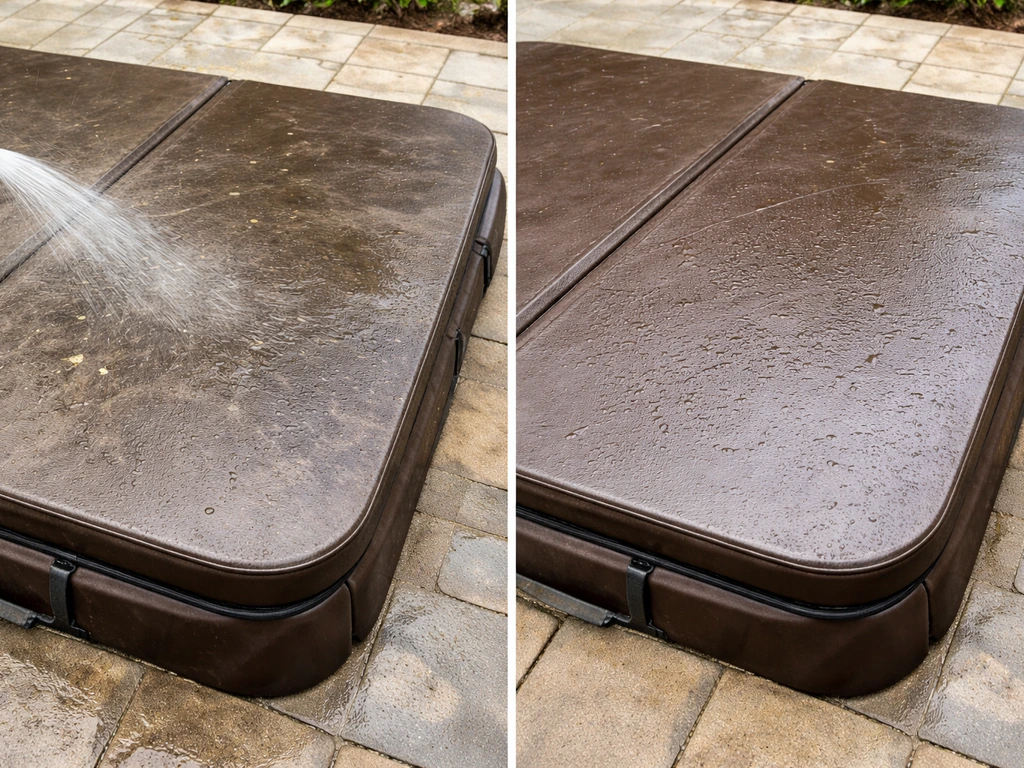
- Rinse the cover exterior monthly with a hose to remove pollen, bird droppings, and debris that break down vinyl over time.
- Clean the vinyl surface with a dedicated spa cover cleaner (not bleach or petroleum-based cleaners, which dry out the material) every 2–3 months.
- Apply a UV protectant conditioner specifically formulated for vinyl covers every 3–4 months if the cover is in direct sun. This alone can add 2–3 years to the cover life.
- Clean the underside of the cover and the foam inserts 2–3 times per year. Mold and mildew on the underside are indicators that chemical balance in the water is off, not just a cover problem.
- Check all safety straps, buckle hardware, and lifter arm attachment points quarterly. Tighten any loose hardware before it causes premature wear.
Signs it's time to replace the cover
- The cover feels noticeably heavier than when it was new (waterlogged foam).
- Visible cracks, bubbling, or peeling in the vinyl surface.
- The cover sags in the middle when seated on the spa.
- A persistent musty or chemical smell from the underside that cleaning doesn't eliminate.
- The hinge tears or develops holes that tape can't reliably fix.
- Your heating costs have increased without a change in use patterns or weather.
Warranty considerations
This is worth taking seriously. Manufacturers like Master Spas include blank" rel="noopener noreferrer">explicit cover care and installation requirements in their warranty documentation, and damage resulting from improper installation or handling can void warranty claims on the entire spa unit, not just the cover. Keep your installation records, use the covers and hardware that meet the manufacturer's specifications, and hold onto any warranty documents that came with your spa. If you bought a used spa with no documentation, contact the manufacturer directly with the serial number to get the original spec sheet.
Budgeting, buying tips, and when to call a pro
The good news is that most hot tub cover replacements are straightforward DIY projects. The bad news is that the price range is wide and it's easy to under-buy on quality and end up replacing the cover again in two years. If you're comparing options, patio paint reviews can also help you spot common quality issues and what owners like or dislike.
What to budget
| Setup | Cover Cost | Lifter Cost | Pro Installation | Total Estimate |
|---|---|---|---|---|
| Standard hot tub, mild climate | $300–$500 | $150–$300 | Optional ($100–$200) | $450–$1,000 |
| Standard hot tub, harsh climate/full sun | $500–$800 | $200–$400 | Optional ($100–$200) | $700–$1,400 |
| Swim spa, 12–17 ft | $700–$1,200 | $300–$600 | Recommended ($200–$400) | $1,200–$2,200 |
| Swim spa, 18–21 ft | $1,000–$1,800 | $400–$800 | Strongly recommended ($300–$500) | $1,700–$3,100 |
Smart buying tips
- Buy from a manufacturer or authorized dealer rather than a generic marketplace listing. OEM and authorized covers are more likely to meet ASTM safety standards and won't jeopardize your spa warranty.
- Always order with the exact dimensions you measured, not the model name or a 'standard size.' Spa dimensions vary more than people expect, even within the same model family.
- Spend the extra $50–$100 on a vapor barrier-wrapped foam core. It's the single best upgrade for longevity.
- Factor in the lifter when you budget. A 60 lb cover without a lifter will be used less often and abused more, shortening its life significantly.
- Ask about lead times before you commit. Custom-sized covers from quality manufacturers typically take 2–4 weeks to ship. Plan accordingly if you're replacing a cover that's already failing.
When professional help is worth it
Most hot tub cover swaps don't need a pro. Two people, 30 minutes, done. But there are situations where calling in professional help is the smarter move. If your spa sits on an uneven patio surface and the cover isn't sealing flush, a technician can identify whether it's a spa leveling issue or a cover fit issue before you order the wrong solution. If you're installing a large swim spa cover with a motorized lifter system, having a certified spa technician handle the mounting and alignment avoids costly installation mistakes that could crack the spa cabinet or strip the mounting points. And if you're adding an enclosure or patio shelter at the same time (which is a great combined project), a structural contractor needs to be involved for anything load-bearing or roof-connected. Similarly, if your patio surface itself needs attention before the spa area is truly set up for performance, looking into proper patio sealing and surface protection is worth doing before the new cover goes on, not after. If you want to sanity-check what to buy for that step, compare patio sealer reviews from trusted sources before you apply anything to your patio surface proper patio sealing and surface protection.
The bottom line: buy quality once, measure carefully, install the safety hardware fully, and maintain the cover on a schedule. A well-chosen patio performance spa cover will pay for itself in heating costs alone within a year or two, and it makes the spa genuinely safer and more enjoyable every single day you use it. If you’re weighing options, patio shield reviews can help you compare real-world performance, durability, and safety features before you buy patio performance spa cover.
FAQ
How do I know whether I need a hot tub cover or a swim spa cover (since both are “covers”)?
Check whether your unit is a hot tub or swim spa and whether the cover is designed for sectional panels. Swim spa covers are often multi-panel and much heavier, so storage space and lifter compatibility matter. If you have a model-specific warranty, also confirm the cover is explicitly allowed by the manufacturer to avoid coverage issues.
What’s the best way to measure for a patio performance spa cover when my spa shape isn’t perfectly square?
Measure inside dimensions (not just the outer lip) at multiple points and use the smallest perimeter measurement to verify clearance. If your cover uses a taper or hinges, also measure how the cover sits at the corners, because small corner gaps can still create heat-loss channels even if the center looks tight.
Can I use a patio performance spa cover from a different brand or a generic cover on my spa?
You can, but generic covers frequently mismatch hinge geometry, lifter travel, and corner fit, leading to perimeter gaps. For swim spas, brand mismatch can also run into ASTM safety compliance and warranty requirements. When in doubt, verify the cover matches the spa’s approved dimensions and safety standard, and keep installation records.
My cover looks like it fits, but I still feel cold air around the edges. Is that normal?
A tight seal matters, even if the cover visually lands flat. Cold air at the perimeter usually means the cover is slightly undersized, the patio surface is uneven, or the cover has sagged or waterlogged. Re-check strap tension, check for uneven contact points, and inspect the hinge or lifter so the cover seats squarely each time.
How often should I replace a patio performance spa cover, and how can I tell it’s nearing end-of-life?
Most covers last about 5 to 10 years depending on sun, wind, and maintenance, but the early warning signs are weight increase (foam waterlogging), visible vinyl cracking or flaking, and straps that no longer hold tension without slipping. If the cover becomes noticeably harder to lift or starts to hold moisture inside, plan replacement sooner rather than later.
What’s the proper way to install or tighten the safety straps and locking clips?
Straps and clips should be secured so the cover cannot lift or shift enough for a child to gain access. Use the rated buckle hardware and ensure both sides are evenly tightened. If your straps are loose after tightening, the cover may be undersized or the hinge alignment may be off, and you should address fit before relying on straps.
Is it ever okay to let someone stand on a spa cover?
No. Even dense foam-core covers are not designed to support body weight, and a fall into the spa is a serious injury risk, especially with water temperatures near 104°F. If someone needs to access the spa area, use a proper step ladder or a designated access method, not the cover.
What type of lifter works best if my patio is tight behind the spa?
Look for lifters that can raise the cover to near-vertical or provide storage without requiring large clearance behind the spa. If your space is constrained, measure the “cover travel” clearance with the cover in place, not just the space behind the cabinet. For sectional swim spa covers, confirm where each panel will rest during daily access.
Why does my heater run more than expected, even though the cover is on?
Common causes are perimeter gaps, wind-driven heat loss, and a cover that has absorbed water (foam waterlogging) which reduces insulation. If heating runtime jumps suddenly, inspect the cover for sagging, check strap tension and seating, and consider whether an enclosure or windbreak would reduce wind across the cover.
How can I prevent waterlogging and extend the life of the foam core?
Keep the cover sealed around the perimeter, avoid leaving it partially open in rain, and ensure the foam cavity stays protected from trapped moisture. If the cover has been flooded or stored wet, drying should be done according to manufacturer guidance, since forcing airflow incorrectly can warp vinyl. Also inspect for seam or shell damage, because tiny leaks accelerate foam saturation.
What climate-specific features should I prioritize for a patio performance spa cover?
For heavy snow regions, choose higher foam density and a taper that prevents pooling. In high-wind coastal areas, prioritize reinforced hinges and stainless or corrosion-resistant buckle hardware rated for higher strap loads. For intense sun exposure, require UV inhibitors built into marine-grade vinyl (not just a surface spray), since direct afternoon UV will shorten vinyl life.
Should I add a patio enclosure or is the cover alone enough?
If your spa is in full sun, frequent rain, or steady prevailing winds, an overhead structure or partial enclosure typically improves performance by reducing UV and wind load. The cover still matters for safety and insulation, but shielding the cover helps slow vinyl cracking and can reduce heating costs more consistently than relying on insulation alone.
When is it worth hiring a pro for patio performance spa cover installation or related work?
Hire help if your spa area is uneven and you cannot get a flush seal, if you are installing a motorized lifter system on a swim spa, or if you are adding a roof or enclosure that is load-bearing or roof-connected. A structural contractor should be involved when modifications affect framing, not just aesthetics. Professional setup can prevent misalignment that leads to cracking or poor sealing.