
If you search 'Patio Shield,' you'll land on two very different products: Thermacell's mosquito-repelling device and various contractor businesses that use PatioShield as a brand name for patio enclosure and cover systems. This article covers both, and it goes further by comparing the full range of patio-protection options, roof risers, armor panels, sealers, exterior paints, and spa covers, so you can figure out which solution actually fits your patio, your climate, and your budget.
Patio Shield Reviews: Top Picks, Alternatives & Buyer Guide

Miles Sutton
28 Jul 2026
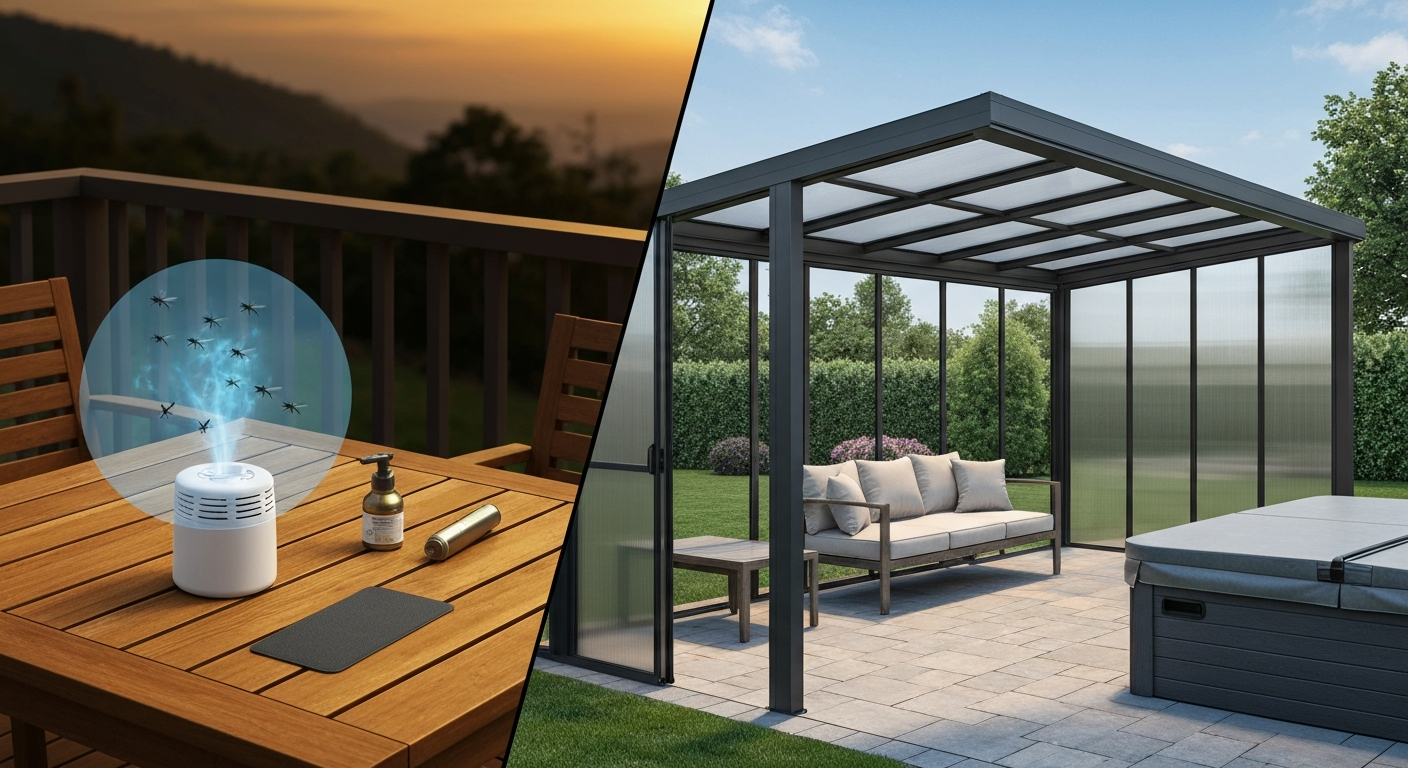
Top picks and quick verdicts by product type
Before diving into the detail, here's where each category lands after comparing specs, consumer feedback from retailer review pages (Home Depot, Lowe's, Amazon), and published technical data.
- Patio Shield (Thermacell mosquito repeller): Best pick for open-air bug protection on decks and patios up to roughly 225 square feet. The MRPSL and PS1 series are the most widely reviewed. Verdict: effective when wind is calm, but running costs add up with mat and fuel refills.
- Patio Shield (structural cover services): PatioShield contractor-installed aluminum patio covers (Elitewood/Alumawood-style systems) offer durable, insulated coverage. Verdict: high upfront cost ($5,000–$20,000+ installed) but near-permanent protection.
- Patio roof risers: Best for homeowners who want to raise an existing patio roof to increase headroom or airflow without rebuilding. Verdict: excellent DIY-friendly fix for a specific problem, but not a standalone weather solution.
- Patio armor panels: Polycarbonate or aluminum screen/panel systems that enclose or partially shield a patio. Verdict: great for side-wind and rain protection, with polycarbonate offering the best balance of visibility and durability.
- Patio sealers: Penetrating silane/siloxane sealers (like Siloxa-Tek) are best for concrete and pavers that need water and stain resistance without changing the surface look. Film-forming acrylics (like Foundation Armor AR500) add sheen and can intensify color. Verdict: penetrating sealers win for low-maintenance longevity; acrylics win for aesthetics.
- Patio paints and coatings: Behr Porch & Patio, Sherwin-Williams INSL-X Sure Step, and Benjamin Moore Porch & Floor Enamel are the most-reviewed options. Verdict: best for refreshing tired concrete or wood surfaces, especially when slip resistance matters.
- Spa and patio covers: Tapered vinyl foam-core covers (including Hydro-Armor style and manufacturer-supplied covers from brands like CalSpas) protect hot tubs and uncovered patio furniture. Verdict: invest in a cover with a reinforced C-channel and at least a 1.5 lb foam density for real insulation value.
At-a-glance comparison scorecard
Scores below are on a 1–5 scale based on aggregated consumer ratings, published specs, and material data. Cost ranges reflect DIY or retail purchase pricing unless noted.
| Product Type | Weather/UV Protection | Ease of Install | Longevity | Typical Cost Range | Overall Score |
|---|---|---|---|---|---|
| Thermacell Patio Shield (bug repeller) | N/A (pest only) | 5 — plug and go | 2 — consumables every 4–12 hrs | $30–$60 device + refills | 3.5/5 |
| Structural patio cover (PatioShield / Elitewood) | 5 — full roof | 1 — pro install required | 5 — 20–30+ years | $5,000–$20,000+ installed | 4.5/5 |
| Patio roof risers | 2 — raises clearance only | 3 — moderate DIY | 4 — hardware-dependent | $50–$400 DIY | 3.5/5 |
| Patio armor panels (polycarbonate) | 4 — rain/wind/UV | 3 — moderate DIY | 4 — 10–15 years UV-stabilized | $200–$1,500 DIY | 4/5 |
| Patio armor panels (aluminum) | 3 — wind/rain, no UV light | 2 — framing needed | 5 — 20+ years | $300–$2,000 DIY | 4/5 |
| Penetrating sealer (silane/siloxane) | 4 — water/stain/freeze-thaw | 4 — roll or spray | 4 — 5–10 years | $0.10–$0.40/sq ft | 4.5/5 |
| Film-forming sealer (acrylic) | 3 — surface film | 4 — roll or spray | 3 — 2–5 years | $0.05–$0.25/sq ft | 3.5/5 |
| Exterior patio paint/coating | 3 — surface only | 4 — brush/roll | 3 — 3–7 years | $0.15–$0.50/sq ft | 3.5/5 |
| Spa/patio cover (vinyl foam-core) | 4 — moisture/UV/insulation | 5 — drop-in | 3 — 5–8 years avg | $150–$600 | 3.5/5 |
What to look for when choosing patio protection
Not all patio protection solves the same problem. Before you buy anything, run through these criteria so you're comparing products on the dimensions that actually matter for your situation.
Durability and material quality
For structural products like panels and cover systems, material spec sheets tell the real story. UV-stabilized polycarbonate (Palram Sunlite, Covestro Makrolon-family resins) maintains impact strength over time because the UV-stabilizer package is built into the resin, not just a surface coating. Published tensile strength for UV-stabilized polycarbonate runs roughly 55–65 MPa, with Izod impact values that far exceed glass or acrylic. HDPE panels are a lower-cost alternative (density ~0.94–0.965 g/cm³, tensile yield ~20–33 MPa depending on grade) that handle moisture well but are less transparent. Aluminum systems (Elitewood, Alumawood) use extruded aluminum profiles that essentially last indefinitely if the finish coating is maintained.
Weather, UV, and mildew resistance
Meaningful weather resistance claims should reference recognized test standards. For coatings and paints, ASTM D2247 (100% relative-humidity water resistance) and ASTM G154 (accelerated UV/fluorescent UV exposure) are the accepted benchmarks. For structural panels and overhead systems, wind-load ratings follow ASTM E330. When a product page doesn't cite any test standard, that's a red flag. Mildew resistance in humid climates is often the first failure mode for patio covers and paints, look for products that specifically list mildewcide additives or use inherently mold-resistant materials like aluminum and UV-stabilized polycarbonate.
Installation complexity
Be honest with yourself here. A Thermacell Patio Shield is genuinely zero-skill to set up. Polycarbonate panel systems and roof risers are moderate DIY projects, they require measuring, drilling into existing structures, and sometimes working at height. Full structural patio covers (insulated aluminum systems) require permits in most jurisdictions, proper footing attachment, and roof-load calculations. Labor cost data from Angi and HomeAdvisor puts professional patio-cover installation at roughly $45–$90 per hour for labor alone, with total installed costs for aluminum patio roofing running $5,000–$20,000 depending on size and complexity. If you're a confident DIYer, roof risers and panel systems are realistic weekend projects; full structural covers are generally not.
Warranty and long-term value
Warranty terms vary widely. Four Seasons Building Products (Elitewood) and Alumawood-authorized dealers typically offer 10- to 20-year structural warranties on aluminum cover systems, with finish warranties of 5–10 years. Polycarbonate panels from reputable brands carry 10-year UV warranties. Sealers and paints carry 2–10 year performance warranties depending on chemistry. Thermacell's device carries a limited 1-year warranty. Always read the fine print: warranties on installed products are often voided by improper installation or failure to use authorized contractors.
Price and true cost of ownership
Sticker price and true cost of ownership diverge quickly in this category. A Thermacell Patio Shield device costs $30–$60, but mat and butane fuel cartridge refills add up to $50–$100 per season of regular use. A silane/siloxane penetrating sealer might cost $80–$150 for a 400-square-foot patio application but lasts 7–10 years before reapplication. An aluminum patio cover has the highest upfront cost but essentially zero material cost for decades after. Think in 10-year total cost of ownership, not just purchase price.
In-depth review: Patio Shield products
The Thermacell Patio Shield is a butane-powered mosquito repeller, not a structural cover or coating. It's important to be clear about that upfront because the name causes genuine confusion when homeowners are searching for patio protection solutions.
Models and key specs
The most commonly reviewed models are the MRPSL (standard Patio Shield) and the PS1 series, which includes scented variants (PS1CITRUS, PS1FOREST). All models use the same core mechanism: a butane cartridge heats a pad saturated with allethrin (a synthetic version of a naturally occurring repellent), creating an invisible protection zone. Published specs list a 15-foot protection radius, roughly 225 square feet, which is about right for a small seating area. Mat runtime is approximately 4 hours per mat; fuel cartridges last about 12 hours. Retailers including Best Buy and Lowe's list these specs consistently across SKUs.
Pros
- Genuinely effective in calm-wind conditions — independent hands-on reviews (The Kitchn, TODAY) and aggregated Lowe's/Amazon ratings consistently confirm mosquito reduction in the claimed zone
- No setup required — lights in seconds, no wiring or mounting
- Portable — move it from patio to campsite or dock
- Scented variants are pleasant; the device itself is odorless to most users
- Widely available at major hardware retailers
Cons
- Wind sensitivity is the most common complaint in retailer reviews — even a light breeze can disperse the protection zone and reduce effectiveness significantly
- Ongoing consumable cost of $50–$100 per season is real; budget for it
- Only covers a small area — useless for large patios without multiple units
- Allethrin is a pesticide; not suitable around fish ponds or in homes where allethrin sensitivity is a concern
- Doesn't address any structural, moisture, or UV protection need
Verdict: The Thermacell Patio Shield earns its place as a practical accessory for bug-prone evenings on a modest patio or deck. It's not a patio protection product in the weatherproofing sense, so don't let the name mislead you. If structural or surface protection is what you need, read on.
PatioShield structural cover services
Several regional contractors and enclosure companies operate under a PatioShield or Patio Shield business name and install aluminum and insulated-panel patio roofing systems, often using products from manufacturers like Four Seasons Building Products (Elitewood and Elitewood Ultra lines) or Alumawood. These are legitimate, high-quality systems. Elitewood Ultra panels are insulated aluminum, available in solid or vented configurations, and carry substantial structural warranties through authorized dealers. If you're in the market for this type of system, the contractor's authorization status matters as much as the product itself: factory-authorized dealers provide installation warranties that independent contractors cannot.
In-depth review: Patio roof risers
Roof risers are hardware components (typically steel or aluminum post risers, beam extenders, or ledger adjusters) that allow you to raise the height of an existing attached or freestanding patio cover. They're a niche but genuinely useful product for a specific problem: you have an existing patio roof that's too low, and you want more headroom or better airflow without tearing it down and starting over. For product-specific comparisons and user feedback, see patio roof riser reviews that summarize performance, materials, and installation experiences for popular riser models.
When risers make sense
- Existing patio cover feels oppressive or blocks light more than expected
- You want to add ceiling fans or pendant lighting but the current height makes it impractical
- An extension or deck addition has changed the proportions of the covered area
- Local code requires a minimum 7-foot clearance and existing structure is marginal
Pros and cons
- Pro: Significantly less expensive than rebuilding — materials typically $50–$400 depending on number of posts and riser height needed
- Pro: Preserves existing roofing material and avoids a full demolition project
- Pro: Moderate DIY difficulty; most homeowners with basic framing skills can complete the work
- Con: Does not improve weatherproofing, UV protection, or insulation on its own
- Con: Raising a roof can affect existing flashings, gutters, and attachment points — these need to be properly addressed or leaks result
- Con: Structural changes to a patio roof may require a permit in many jurisdictions — check before starting
Verdict: Roof risers are a smart, cost-effective fix for a clearance problem but do nothing for weather protection or surface condition. If you're already raising a cover, it's a good opportunity to simultaneously consider adding polycarbonate armor panels on the sides or upgrading the roofing material, the two projects pair well together.
In-depth review: Patio armor panels
Patio armor generally refers to rigid panel systems, polycarbonate, aluminum, or tempered glass, installed on the sides or overhead of a patio to block wind, rain, and UV without fully enclosing the space. For product-specific ratings and user feedback, see recent patio armor reviews for brand comparisons and real-world performance. Polycarbonate is by far the most popular material for DIY patio armor projects, and it's where the most useful spec data exists.
Polycarbonate panels
UV-stabilized multiwall polycarbonate panels (Palram Sunlite and comparable products from Covestro's Makrolon family) are the go-to for covered patio roofing and side panels. The key numbers to know: tensile strength around 55–65 MPa, impact resistance roughly 250 times greater than glass of the same thickness, and UV coatings that are co-extruded (not painted on) in quality grades. A 6mm twin-wall panel is the most common thickness for overhead patio use; 10mm or 16mm for higher snow-load or wind-load environments. These panels are lighter than glass (roughly 0.9 kg/m² for 6mm) and can be cut with standard carbide-tipped blades. Expect 10–15 years of UV warranty from name-brand manufacturers.
Aluminum panels
Solid aluminum panels (as used in Elitewood Ultra insulated roofing) are opaque, thermally insulated, and extremely durable. The trade-off is that they block all light transmission. They're ideal for overhead use where shade rather than light diffusion is the goal, and they dramatically outperform polycarbonate on longevity, a well-installed aluminum panel system can realistically last 30+ years with minimal maintenance.
Pros and cons
- Pro (polycarbonate): Light, workable, UV-stable, allows natural light through — best for overhead or side panels where transparency matters
- Pro (aluminum): Effectively permanent, high wind-load capacity per ASTM E330 testing, excellent insulation value
- Con (polycarbonate): Scratches more easily than glass; lower grades yellow over time despite UV coating claims
- Con (aluminum): Requires more robust framing; DIY feasibility drops significantly for larger spans
- Con (both): Side panels that fully enclose a patio may require a building permit as they change the structure's classification
Verdict: For most DIYers, twin-wall polycarbonate from a recognized brand is the best patio armor choice, it's workable, genuinely UV-stable if you buy a quality grade, and transforms a wind-exposed patio into a usable space in three seasons or more. Aluminum panels are worth the extra cost and complexity if you're going for a permanent installation or live in a high-wind area.
In-depth review: Patio sealers
Patio sealers protect concrete, pavers, and natural stone from water intrusion, staining, freeze-thaw damage, and UV-related color fade. For comparative patio sealer reviews and buyer ratings, see our patio sealer reviews to compare performance, longevity, and coverage recommendations. The most important distinction is penetrating vs. film-forming chemistry, and this choice drives every other consideration.
Penetrating sealers (silane and siloxane)
Silane/siloxane penetrating sealers (Siloxa-Tek being a well-reviewed example) soak into the pore structure of concrete or stone and chemically bond with the substrate. They leave no surface film, so the patio looks essentially unchanged, no gloss, no darkening. Water beads off, but vapor can still escape through the surface. This matters in freeze-thaw climates because trapped moisture is what causes spalling. Coverage rates run approximately 100–300 square feet per gallon depending on substrate porosity. Reapplication is typically needed every 5–10 years, and the process is straightforward (clean surface, spray or roll, let cure).
Film-forming sealers (acrylic and polyurethane)
Acrylic film-forming sealers (Foundation Armor AR500, Quikrete Wet Look) create a surface coating that intensifies color and adds sheen, anywhere from a satin to a high-gloss finish. They look great on decorative concrete and stamped pavers. The trade-off is that the film traps moisture underneath if applied too thick or to damp concrete, which leads to whitening and delamination, one of the most common complaints in retailer reviews. They also require reapplication every 2–5 years and can become slippery when wet unless you add a non-slip aggregate. Rust-Oleum RockSolid is a polymerizing floor coating that sits between a sealer and a full floor paint and performs better on abrasion than standard acrylics.
Pros and cons at a glance
| Sealer Type | Appearance Change | Longevity | Slip Risk | Vapor Permeable | Best For |
|---|---|---|---|---|---|
| Silane/siloxane penetrating | None — natural look | 5–10 years | Low | Yes | Freeze-thaw climates, natural stone, pavers |
| Acrylic film-forming | Medium–high gloss/wet look | 2–5 years | Moderate–high when wet | No | Decorative concrete, stamped surfaces |
| Polyurethane/polymerizing (e.g., RockSolid) | High gloss | 4–7 years | Moderate | No | Garage-adjacent patios, high-traffic concrete |
Verdict: For most outdoor patio surfaces, especially in climates with freeze-thaw cycles or regular rain, a silane/siloxane penetrating sealer is the more forgiving, longer-lasting choice. Save the film-forming acrylics for decorative surfaces where the wet-look finish is a deliberate aesthetic choice, and always add a slip-resistant additive if you go that route.
In-depth review: Patio paints and coatings
Patio paints and coatings are best thought of as surface refreshers and light-duty protectors rather than deep weatherproofers. They're ideal for concrete patios that have lost their original finish, wood decking that needs a color refresh, or situations where you want to add slip resistance alongside a color change. For detailed comparisons and user feedback on specific products, see our patio paint reviews.
Best-use scenarios and top products
Behr Porch and Patio Floor Paint is one of the most widely available and reviewed options at major retailers. It's a 100% acrylic latex formula with solid color options, suitable for both concrete and wood, and it's tintable. Published technical data sheets indicate good adhesion per ASTM D3359 tape testing and UV resistance per accelerated weathering. Sherwin-Williams INSL-X Sure Step is specifically formulated for slip resistance, it contains rubber-grit particles mixed into the paint itself, making it a logical choice for pool decks and any patio surface that gets wet regularly. Benjamin Moore Porch and Floor Enamel is an oil-based alternative that traditionally outperforms latex on wear resistance and hard surfaces, though longer dry time and cleanup with mineral spirits are real practical trade-offs.
Slip resistance, the detail most reviews skip
Any paint that sits on top of concrete creates a smoother surface than bare concrete, which means slip risk goes up when wet unless you address it deliberately. Options: use INSL-X Sure Step (slip resistance built in), add fine sand or non-skid additive to your top coat before it dries, or apply a separate anti-slip coating layer. This is especially important around covered patios where rain and condensation can make the surface unexpectedly wet. I'd consider slip resistance a non-negotiable if you have older family members using the patio, children running, or any area near a pool or spa.
Pros and cons
- Pro: Lowest cost of any patio surface treatment — materials for a 400-square-foot patio typically run $60–$200 depending on product and coats
- Pro: Wide color selection transforms the look of a patio completely
- Pro: Easy DIY application — clean, prime (on bare concrete), roll on two coats
- Con: Surface-only protection — paint does not prevent moisture intrusion or freeze-thaw spalling the way a penetrating sealer does
- Con: Wear life is limited; expect to recoat every 3–5 years on a patio that gets regular foot traffic
- Con: Peeling and bubbling are common failure modes when applied to damp or improperly prepped concrete — surface prep is the most commonly skipped step and the most critical one
Verdict: Patio paints are a practical, affordable way to visually transform and lightly protect a patio surface. If your goal is purely protection, pair a penetrating sealer with a paint coating or use a paint product with a urethane top coat for better abrasion resistance. Never skip the surface prep, this is where most DIY patio painting failures begin.
In-depth review: Spa and patio covers
Spa covers and patio furniture covers are a separate but closely related protection category that matters especially when your patio includes a hot tub, built-in seating, or high-value outdoor furniture. For detailed comparisons and buying guidance, see patio performance spa cover for spa-cover specs, longevity data, and recommended suppliers. Vinyl foam-core spa covers (the type sold by CalSpas and major hot tub manufacturers under names like blank" rel="noopener noreferrer">Hydro-Armor) protect the water from debris and heat loss while shielding the spa shell from UV degradation.
What the specs actually mean
Foam density is the most important spec in a spa cover. A 1.5 lb per cubic foot foam core is the minimum worth buying for a hot tub cover that will be exposed to the elements year-round; 2.0 lb is noticeably better. Higher density foam resists waterlogging, the primary reason spa covers fail over time is that the foam absorbs water and becomes too heavy to lift. Marine-grade vinyl with double-stitched seams and UV inhibitors in the material is the right exterior material spec. C-channel aluminum reinforcing along the fold (the hinge point of a hinged cover) extends the cover's functional life significantly. R-value claims on spa covers vary widely; most quality 4-inch tapered covers (4 inches at center, 2 inches at edge) achieve approximately R-12 to R-14 in practice.
Pros and cons
- Pro: Dramatically reduces hot tub heating costs — a quality cover can cut monthly energy use by 25–40% compared to running uncovered
- Pro: Protects spa shell and plumbing from UV-related degradation and freeze damage
- Pro: Drop-in installation — no tools required for standard replacement covers
- Con: All foam-core vinyl covers eventually waterlog, typically after 5–8 years; budget for replacement
- Con: Cheap covers with low foam density fail much faster — often within 2–3 years in sun-exposed climates
- Con: Custom sizing adds 2–4 weeks lead time for non-standard spa shapes
Verdict: Don't cheap out on a spa cover. The energy savings from a quality 2.0 lb foam-core cover with C-channel reinforcement pay back the higher upfront cost within two heating seasons in most climates. Replacing a failed cover every 3 years costs more over a decade than buying a quality one upfront.
Choosing by patio type and climate
The right protection combination depends heavily on where you live and what your patio is made of. Here's a practical matrix to help you prioritize.
| Climate / Condition | Primary Risk | Top Recommendation | Secondary Add-On |
|---|---|---|---|
| Hot, sunny (Southwest US) | UV degradation, heat | UV-stabilized polycarbonate or aluminum cover | Penetrating sealer on surface |
| Freeze-thaw (Midwest/Northeast) | Spalling, water intrusion | Silane/siloxane penetrating sealer | Patio roof or cover for snow load |
| Humid/subtropical (Southeast) | Mildew, moisture | Mildewcide-treated paint or aluminum panels | Spa cover with UV-resistant vinyl |
| High wind (coastal, Plains) | Structural stress, debris | Aluminum panels (ASTM E330-rated) or solid cover | Roof risers to optimize clearance |
| Mild/temperate (Pacific Northwest) | Rain, moss, algae | Penetrating sealer + polycarbonate overhead | Slip-resistant patio paint coating |
| Mixed/variable | Multiple | Penetrating sealer + polycarbonate panels | Thermacell Patio Shield for bug season |
Installation overview: DIY vs. pro
Most sealers and paints are legitimate DIY projects for any homeowner who can clean a surface and handle a roller. Polycarbonate panel systems and roof risers move into moderate DIY territory, you need basic carpentry skills, comfort working at height, and accuracy with measurements. Full structural patio covers (insulated aluminum systems from authorized dealers) almost always require professional installation, both because of permit requirements and because the warranty is typically tied to factory-authorized labor.
DIY sealer and paint application: key steps
- Clean the surface thoroughly — pressure wash at 2,500–3,000 PSI for concrete, remove all efflorescence and previous coating residue
- Allow the surface to dry completely — at least 24–48 hours for concrete in warm weather; longer in cool or humid conditions
- Test a small area first, especially with film-forming sealers, to check for adhesion and appearance
- Apply per manufacturer directions — most penetrating sealers are spray or roll applied in a single flood coat; most paints require two coats with 4–8 hours between coats
- For film-forming sealers, do not apply thicker than recommended — thin, even coats prevent the whitening/bubbling failure mode
- Allow full cure time before foot traffic — typically 24 hours for paint, 72 hours for polyurethane coatings in mild weather
Safety notes
- Many solvent-based sealers and paints have significant VOC content — apply in a ventilated area and wear an appropriate respirator (not just a dust mask)
- When working on overhead panel installation, use a rated ladder and have a helper present
- Check for buried utilities before any post footing work — call 811 (US) before you dig
- Always wear safety glasses when cutting polycarbonate or aluminum — fine chips are generated at speed
Maintenance and realistic lifespan expectations
No patio protection product is truly 'install and forget,' but some come much closer than others. Aluminum structural covers need little more than an annual wash-down and occasional inspection of fasteners and flashings, realistically 20–30 year lifespans. UV-stabilized polycarbonate panels need annual cleaning with mild soap (never abrasive cleaners, which scratch the UV coating) and inspection of seals; expect 10–15 years before any meaningful UV yellowing occurs with a quality brand. Penetrating sealers need reapplication every 5–10 years, you'll know when water stops beading and starts soaking in. Film-forming sealers need reapplication every 2–5 years and strip-and-recoat if they begin to peel. Patio paints need the most frequent attention: plan to scuff and recoat every 3–5 years in a traffic area. Spa covers have the shortest typical lifespan, 5–8 years, primarily due to foam waterlogging.
Where to buy and what to budget
For sealers and paints, Home Depot, Lowe's, and Walmart carry the most commonly reviewed products (Foundation Armor, Siloxa-Tek, Quikrete, Rust-Oleum, Behr, INSL-X) and allow you to compare consumer reviews across large sample sizes. See The Home Depot, retail product pages & customer reviews (example marketplace for patio materials and sealers) for large-sample consumer feedback on sealers and paints The Home Depot — retail product pages & customer reviews (example marketplace for patio materials and sealers). For Thermacell Patio Shield devices and refills, Best Buy, Lowe's, and Amazon are the most reliable sources. For polycarbonate panels, specialty suppliers like Palram's dealer network or roofing-supply distributors give you better size selection than big-box stores. For aluminum patio cover systems, you must go through authorized dealers, direct manufacturer dealer locators (Four Seasons, Alumawood) are the right starting point, and getting two or three installation quotes is worth the time given the cost range. For spa covers, the spa manufacturer's replacement cover program or a reputable aftermarket cover supplier (measured to your spa's exact dimensions) are both solid options.
The bottom line: which product type is right for you
If you want zero-hassle mosquito protection for small outdoor gatherings, the Thermacell Patio Shield device is genuinely worth the $30–$60, just accept its limitations. If you want to weatherproof a concrete or paver patio surface, start with a penetrating sealer and add a slip-resistant coating if aesthetics matter. If you're dealing with wind and rain exposure on a covered patio, polycarbonate armor panels are the most accessible DIY upgrade. If you're ready to invest in permanent overhead coverage, an aluminum insulated roof system through an authorized dealer is the best long-term value despite the upfront cost. And if you have a spa on the patio, buy a quality cover with 2.0 lb foam density, the energy savings alone justify it. Each of these solutions addresses a different layer of patio protection, and for most homeowners, the ideal setup combines two or three of them working together.
FAQ
What primary questions must the research answer to compare Patio Shield products with roof risers, armor panels, sealers, paints, and spa covers?
Identify exact products and manufacturers (which 'Patio Shield' is meant), intended function (mosquito repellent vs structural shield), and comparable alternatives. For each product type collect: materials and construction, published performance specs (UV, impact, water resistance, R‑value for covers), installation requirements (DIY vs pro, tools, time), longevity/warranty, price (product and installed), typical failure modes, and suitable patio types and climates. Also determine user tradeoffs: protection level, aesthetics, maintenance burden, and lifecycle cost.
Which source types are essential to consult for accurate, objective specifications and manufacturer claims?
Manufacturer product pages and PDF datasheets (technical specs, installation manuals, warranty text), authorized dealer pages, and factory-authorized installation guides. Also consult material-resin datasheets (polycarbonate, HDPE, aluminum), coating technical data sheets, and spa-cover manufacturer specifications to verify numeric material properties and application limits.
What industry standards and lab-test protocols should I reference when designing objective tests?
Use ASTM/ISO standards relevant to weathering and structural performance: ASTM G154 and D4329 for accelerated UV/weathering, ASTM D2247 for humidity resistance of coatings, ASTM D3359 for adhesion, ASTM E330 for wind-load/static pressure, and relevant ISO equivalents. Use accredited lab procedures (Q‑Lab, Intertek, SGS) and cite exact test cycles and acceptance criteria.
How should field testing be designed to supplement lab tests for reader-focused reviews?
Combine controlled lab tests with multi-location field trials: install representative samples on actual patios in at least three climate zones (sun-southern, wet-coastal, freeze‑thaw continental) for 6–24 months. Track durability, color/UV fade, mildew/biological growth, water intrusion, and installation wear. Use standardized scoring rubrics for durability, aesthetics, and ease of use, and record objective measures (tensile/impact where applicable) and time/labor for installation.
What consumer-feedback sources are required to capture real-world issues?
Aggregate large-sample retail reviews (Home Depot, Lowe’s, Amazon, Best Buy), professional review sites (The Kitchn, TODAY), review platforms (Trustpilot, Google Reviews), and Q&A threads on retailer pages. Extract common praise/complaint themes, frequency of complaints (installation, leaks, fade), and reported lifespans. Supplement with homeowner forum threads and social media posts for anecdotal edge cases.
Which technical material datasheets are necessary to compare durability and weather resistance?
Polycarbonate datasheets (Palram, Covestro/Makrolon) for UV‑stabilized grades, HDPE/PE resin datasheets (ExxonMobil) for panels and hardware, aluminum alloy/finish specs for frames (coating type, anodizing), and coating/sealer technical data sheets (coverage, VOCs, cure temps, adhesion) for paints and sealers.