
Lowe's is a solid first stop for a patio trash can, and for most homeowners the Suncast 30-gallon Trash Hideaway (model GH1732J) or the Rubbermaid BRUTE 32-gallon covers 90% of use cases. simplehuman, product support (how to clean stainless steel trash cans) notes that Stainless‑steel outdoor cans (common for decorative patio or small outdoor step cans) resist corrosion but require grade‑specific care (304 OK for most inland use; 316 better for coastal/salt‑air). Manufacturers advise weekly/periodic washing with mild soap and avoiding abrasive cleaners to preserve the passive oxide layer simplehuman — product support (how to clean stainless steel trash cans). The Suncast is a tidy, hinged-lid resin bin that blends into a deck or patio without looking industrial; the BRUTE is tougher, handles more volume, and works hard in garages, side yards, and high-traffic spots alike. Both are available for in-store pickup or same-day delivery through Lowe's fulfillment partners. The rest of this guide helps you narrow down which style, size, and material actually fits your patio, your hauler's rules, and your budget before you click 'Add to Cart.'
Patio Trash Can Lowe's Buying Guide: Types, Size, Care & Tips

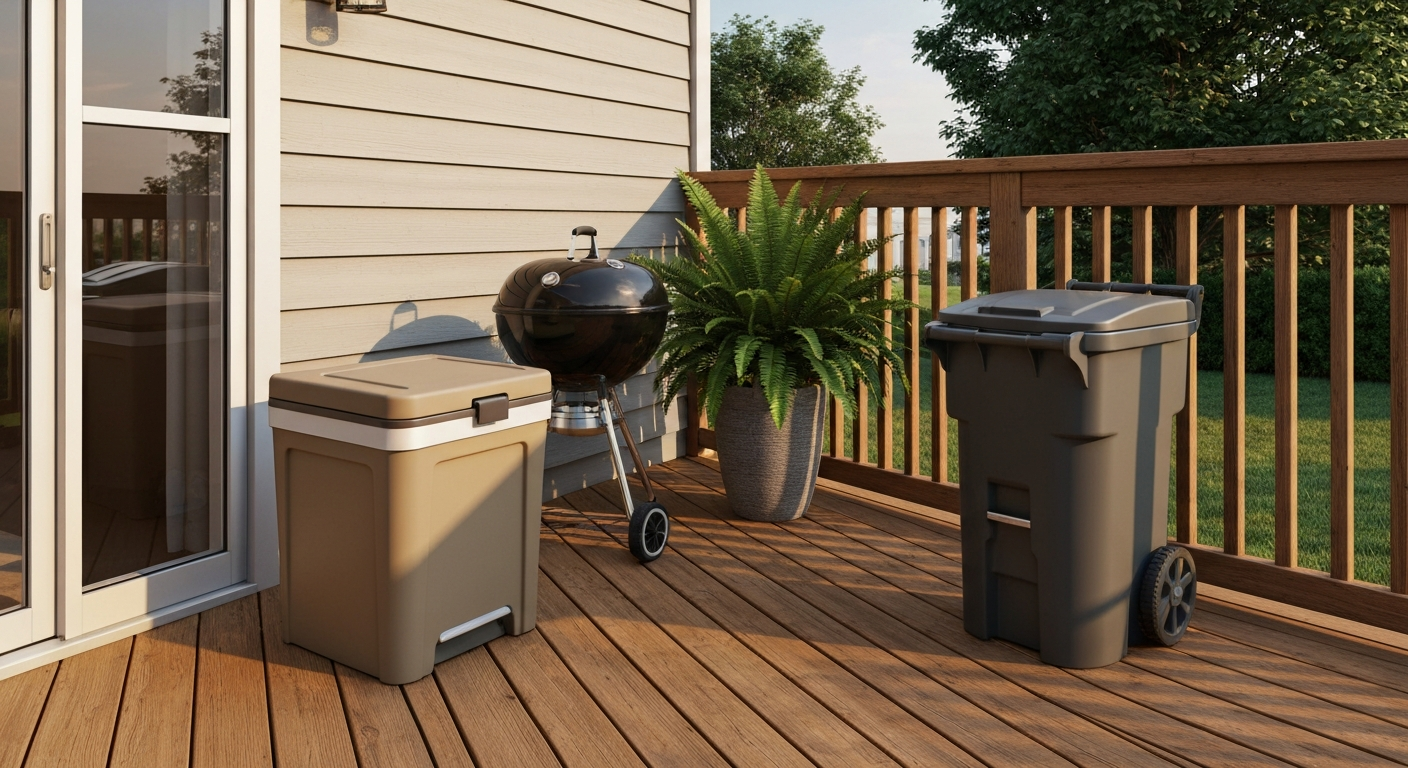
Who this guide is for and what you'll learn
Whether you're furnishing a small apartment balcony, outfitting a large backyard entertaining space, or trying to find a bin that plays nicely with your neighborhood's curbside cart rules, this article walks you through the whole decision. You'll get a Lowe's-focused quick-buy summary, a plain-English breakdown of outdoor-capable materials, a sizing guide keyed to real municipal cart standards, a feature checklist covering lids, locks, odor control, and pest-proofing, plus honest comparisons to Home Depot, Costco, and local hardware stores. There's also practical advice on placement, anchoring, and maintenance so your patio can stays looking good and functioning well for years.
Lowe's quick-buy summary
Before diving deep, here's a fast cheat sheet for common patio situations based on what Lowe's actually stocks. Use the 'Find My Store' or 'Get Pricing & Availability' button on each product page to check real-time local stock, and look for the BOPIS (Buy Online Pick Up In Store) option if you need it today. Lowe's same-day delivery through Instacart, DoorDash, or Shipt is also available in many markets. Most new, unused items qualify for returns within 90 days, and some MyLowe's account holders get a 365-day window, so you're not locked in if the bin doesn't work out.
| Situation | Recommended Pick at Lowe's | Why |
|---|---|---|
| Small patio or deck, want it to look nice | Suncast 30-gal Trash Hideaway (GH1732J) | Hinged lid, neutral resin color, compact footprint |
| High-volume use or garage/side yard combo | Rubbermaid BRUTE 32- or 44-gal | Heavy-duty, UV-resistant, easy to clean, top-rated reviews |
| Two-stream recycling on a large patio | Sunnydaze 78-gal dual-compartment resin can | Two 39-gal sections, weather-resistant polypropylene, 1-year limited warranty |
| Budget-conscious, basic outdoor use | Any 20-32 gal HDPE round can in-store | Low cost, widely available, functional |
| Decorative focal point or upscale patio | Decorative resin or faux-wood enclosure at Lowe's | Blends with patio furniture; check dimensions before buying |
Patio trash can types and outdoor-capable designs
Not every trash can is built for outdoor life. Rain, UV exposure, temperature swings, and curious wildlife make the outdoors genuinely demanding on materials and hardware. Here's how the main types stack up for a patio context.
Open-top cans
Open-top cans are the simplest option: no lid means easy one-hand tossing, which makes them popular near outdoor kitchens and dining areas. The trade-off is obvious: rain fills them, wind blows debris in, and insects or animals can access the contents freely. If you go open-top outdoors, keep the can under a covered overhang and use a bag at all times. These are better suited to covered patios than fully exposed yards.
Closed-lid and hinged-lid cans
A hinged lid is the minimum I'd recommend for any can sitting outdoors. The Suncast Trash Hideaway is a classic example: a molded resin body with a lid that swings on a hinge and stays closed between uses. Swing-top lids (spring-loaded to return to center) are another option, though they don't seal as tightly and can let rain water down the sides of bag. For patios with kids, pets, or local wildlife pressure, a snap-lock or latch-style lid is worth the extra few dollars.
Wheeled carts and roll-out cans
Wheeled cans in the 32-96 gallon range are practical when you need to roll the bin to the curb on pickup day. They typically have a single rear axle, two wheels, and an integrated handle. Most municipalities supply their own wheeled cart, so you'd use a patio can as a secondary container that you empty into the city cart. If your hauler does allow personal wheeled cans at the curb, confirm size and color requirements first, some franchises restrict non-standard bins.
Decorative and enclosure-style cans
These are the options that double as patio decor. Resin cans molded to look like wood or stone, slatted metal receptacles, and wicker-style enclosures all hide the utilitarian reality of a trash can inside a more attractive shell. The Sunnydaze 78-gallon dual-compartment at Lowe's falls in this category: it looks intentional on a patio rather than just functional. Decorative options tend to cost more and have smaller actual capacity for their footprint, so measure carefully.
Built-in and concealed storage
Built-in trash pulls, cabinet-integrated bins, and deck-box concealment are the highest-integration option. These require some carpentry or purchasing an outdoor storage cabinet with a bin insert. They look the best and offer the most protection from elements and pests, but they're a fixed commitment: the bin doesn't move easily once built in. If you're planning or renovating a patio with an outdoor kitchen or bar area, it's worth budgeting for a built-in option. For more ideas on integrating outdoor waste management into your space, the patio trash can ideas topic is a good companion read.
Materials explained: what actually holds up outdoors
This is where most people get tripped up. 'Outdoor' on a label doesn't always mean the same thing, and material choice has a real impact on longevity, maintenance, and cost.
Plastic and HDPE
High-density polyethylene (HDPE) is the workhorse of outdoor trash cans. It's lightweight, impact-resistant, won't rust, and cleans up easily with soap and water. The critical detail: HDPE must be UV-stabilized for outdoor use. Unstabilized polyethylene can start losing mechanical integrity within months of direct sun exposure, becoming brittle and cracking. Look for products that specifically mention UV inhibitors, carbon-black pigment, or UV-stabilized resin (like Marlex C513UV-grade HDPE) in their specs. The Rubbermaid BRUTE, for example, is made with UV-resistant materials, that's worth verifying on any budget HDPE can before you buy.
Resin and composite
Resin is a broad term that covers polypropylene, polyresin, and composite blends, often used in decorative cans and enclosures. The Suncast Trash Hideaway and Sunnydaze dual-compartment bin at Lowe's are both resin-based. Good resin products are weather-resistant, hold color reasonably well, and resist warping in heat. They're generally lighter than metal, easier to move, and more forgiving on patio surfaces. The downside is they can crack under hard impact and may degrade over many years even with UV stabilizers. Budget for eventual replacement after 5-10 years of heavy outdoor use.
Metal: galvanized steel and stainless steel
Galvanized and powder-coated steel cans look great and feel solid, but they require more maintenance outdoors than plastic. Stainless steel (304 grade) resists corrosion well in most climates; if you're near the coast, 316-grade stainless handles salt air significantly better. For powder-coated steel, check regularly for chips in the finish, because exposed bare steel rusts fast. Both types benefit from periodic washing with mild soap and a soft cloth, avoid abrasive cleaners or steel wool, which break down the protective surface layer. Commercial decorative cans with metal slatting (like the Suncast Commercial model at Costco) often include anchor hardware, which is a practical bonus for patio use.
Wood and wicker
Natural wood and rattan wicker are almost never a good idea for a primary outdoor trash can. They absorb moisture, harbor mold, attract insects, and deteriorate fast. What you'll more commonly find are resin wicker or resin wood enclosures that mimic the look without the maintenance headaches. These faux-wood and faux-wicker options are far more practical for patios. If you love the natural look, a teak enclosure with a proper liner insert can work, but it needs regular sealing and careful placement out of standing water.
| Material | Outdoor Durability | Maintenance Level | Cost Range | Best For |
|---|---|---|---|---|
| UV-stabilized HDPE | Excellent | Low | $15-$80 | Everyday outdoor use, utility areas |
| Resin/composite | Very good | Low-medium | $30-$150+ | Decorative patio use, enclosures |
| Galvanized/powder-coated steel | Good (watch for chips) | Medium | $50-$200+ | Commercial-look patio, parks-style |
| Stainless steel (304/316) | Very good to excellent | Medium | $60-$300+ | Modern patio design, coastal areas |
| Faux-wood/resin wicker | Good | Low | $40-$180 | Aesthetic-first patio integration |
| Natural wood/real wicker | Poor | High | Varies | Not recommended for outdoor primary use |
Sizing guide and curbside compatibility
Getting the size wrong is one of the most common mistakes I see. Too small and you're emptying it constantly; too large and it dominates your patio. There's also the curbside question: most U.S. municipalities supply their own wheeled cart and may not accept private bins at the curb.
Standard capacities and what they mean in practice
For a small patio or apartment balcony, a 10-20 gallon can is usually plenty. For a standard outdoor entertaining space with regular use, 30-33 gallons is the sweet spot, it's large enough to handle a weekend cookout without being so big it dominates the corner. For larger properties, pool decks, or dual-stream recycling setups, 44-78 gallons (or a dual-compartment unit like the Sunnydaze) makes more sense. Commercial and park-style cans typically run 32-55 gallons.
Measuring your space
Before ordering anything, measure the footprint where the can will live. A 32-gallon round BRUTE is roughly 22 inches in diameter; the Suncast Trash Hideaway is about 18 x 18 inches square and stands around 30 inches tall. If you're placing the can in a cabinet enclosure, measure the interior clearance including lid swing height, some hinged lids need 6-10 inches of clearance above the can to open fully. Lid swing is an especially common oversight with built-in installations.
Curbside rules: what your hauler actually allows
Most U.S. residential curbside programs use standardized cart sizes: 20, 32, 64, and 96 gallons are the most common tiers, with associated weight limits (Seattle Public Utilities and similar municipal systems, for example, use exactly these increments). In many cities, the hauler supplies the cart and only that cart gets collected. Your patio can is a secondary container that you empty into the city cart before rolling it to the curb. Some franchise haulers (like Recology in certain California and Oregon jurisdictions) specifically list 20/32/64/96-gallon as the only approved cart sizes. If you're hoping your 30-gallon Suncast can replace the city cart entirely, check with your local waste hauler first, many won't collect it. The practical approach: use your patio can for day-to-day convenience and consolidate into the municipal cart on collection day.
Key features and accessories to prioritize
Lids and locking mechanisms
A hinged, close-fitting lid is non-negotiable for outdoor use in my opinion. Beyond basic hinged lids, look for cans with a latch or bungee-compatible lid rim if you live in a windy area or have wildlife pressure. Raccoons, bears, and even determined crows can defeat a standard lid quickly. Lockable cans with over-center latches or keyed locks add real protection but also add cost. The Rubbermaid BRUTE lid is sold separately and snaps on firmly; animal-resistant lid attachments (like the Rubbermaid Universal lid lock) are available as add-ons and are worth the small extra investment in wildlife-heavy areas.
Odor control
A tight-fitting lid does most of the odor work. Beyond that, a good-quality can liner (thick, 1.2+ mil) prevents leaks from soaking into the can body. Baking soda sprinkled in the bottom of the can between uses helps, as do activated charcoal odor-absorbing discs that attach inside the lid, these are sold as accessories at most hardware stores. Rinsing the can with diluted white vinegar or a mild bleach-and-water solution every few weeks keeps odors from building up in the can itself.
Pest-proofing
Beyond a locking lid, a few extra steps help significantly. Keep the can off the ground slightly (on a paver or rubber feet) to deter ants and prevent moisture pooling underneath. Store cans away from fences or structures that give raccoons a climbing advantage. For areas with significant pest pressure, a can with a foot pedal or motion-sensor open function removes the need to touch the can at all, which keeps hands cleaner and the lid interaction more controlled.
Wheels and mobility
Wheels matter a lot if your can is 32+ gallons or if you're rolling it across a patio surface regularly. Look for wide-base wheels on hard, flat surfaces; smaller wheels can catch in patio joints or gravel. Some cans have two wheels plus a front stabilizer foot, which works well. If your can is a dedicated patio can that rarely moves, wheels are less critical and you might prefer a stable flat-base model that won't roll on a sloped patio.
Liners and liner dispensers
Bag dispensers built into the can base or handle area are a convenience feature I've come to appreciate. The Rubbermaid BRUTE has an optional liner dispenser insert. Heavy-duty contractor bags (30-33 gallon, 2+ mil) are worth using outdoors because patio waste often includes sharp items like skewers, bottle caps, and wood splinters that blow through standard kitchen bags. Always use a liner in any outdoor can to protect the can body and make cleaning easier.
Placement and patio design integration
Where and how you position your patio trash can has a real impact on both aesthetics and functionality. A bin stuffed behind the grill in an awkward corner invites overflowing and odor buildup; one that's too visible dominates the look of an otherwise nice patio.
Concealment and enclosures
The simplest concealment is a lattice or solid fence panel tucked into an unused corner of the patio, creating a small utility zone for the trash can (and the hose, if needed). Prefabricated outdoor storage boxes with trash can inserts are another low-commitment option, they look like deck boxes but open to reveal one or two bin slots. If you're doing a larger patio renovation, a routed cabinet section with a swing-out or pull-out bin drawer is the cleanest look and the best at odor containment.
Built-in placement tips
If you're framing a built-in trash enclosure, size the rough opening with at least 3 inches of clearance around the can for ventilation, a sealed box concentrates odors and moisture. Include a small drain hole or gap at the floor of the enclosure. Leave enough vertical clearance for the lid to open at least 90 degrees (measure your specific can's hinge behavior before building). Ventilation matters more than most people realize; a small gap at the back of the enclosure goes a long way.
Anchoring for safety and wind
Even on a covered patio, a full or partially full 30-gallon can is stable enough on its own. An empty or lightweight can on an exposed patio in a storm is another story. Many commercial-style powder-coated metal cans (like those from Alpine Industries) ship with anchor kits, lag bolts and base plates for securing to a concrete pad. For residential patio use, the simplest anchoring method is a concrete anchor block or a heavy paver placed on the can's base ring. Alternatively, a bungee cord to a fixed post or railing works well for smaller cans that need to stay put but aren't permanently installed.
Matching patio aesthetics
Color and material continuity matter more than you'd expect. A black resin can reads as neutral and disappears visually against most fencing or dark patio furniture. A gray or espresso bin works with contemporary concrete or composite decking. If your patio has a warm wood theme (teak furniture, cedar decking), the faux-wood resin enclosure options at Lowe's and other retailers bridge the look well without requiring real wood maintenance. For more inspiration on integrating the can into a broader patio design, the patio trash can ideas topic covers creative and aesthetic approaches in detail.
Lowe's vs Home Depot vs Costco vs local stores
Each retailer has real strengths and some genuine gaps. Here's an honest comparison based on selection, price, availability, and buying experience. If you're also comparing Home Depot specifically for your patio trash can purchase, the patio garbage can Home Depot guide goes deeper on that side; and if Costco's commercial-style offerings interest you, the patio trash can Costco article covers those in more detail.
| Retailer | Selection Depth | Typical Price Range | Brands Available | Pickup/Delivery Options | Return Policy | Best For |
|---|---|---|---|---|---|---|
| Lowe's | Good — decorative, utility, commercial | $15-$150+ | Suncast, Rubbermaid, Sunnydaze | BOPIS, same-day via Instacart/DoorDash/Shipt, standard shipping | 90 days (365 days for some accounts) | Most homeowners; easy returns, local stock checks |
| Home Depot | Very good — broadest SKU count | $15-$200+ | Suncast, Rubbermaid, Toter, Alpine, Adir | In-store today, free 1-2 day, same-day delivery | 90 days | Comparison shopping, commercial/heavy-duty options |
| Costco | Limited, seasonal/special buys | $30-$120+ | Suncast Commercial, bulk accessory options | Warehouse pickup, standard shipping (membership required) | Generous (generally no stated time limit) | Commercial-style or bulk; not reliable for everyday stock |
| Ace/True Value (local) | Moderate — 20-50 gal focus | $20-$100+ | Rubbermaid Roughneck/BRUTE, Toter, Behrens | In-store today, limited delivery | Varies by location | Same-day need, limited big-box access, community support |
My practical recommendation: start at Lowe's or Home Depot using their 'Find My Store' / 'In Stock at Store Today' filters to confirm local availability before driving anywhere. Both sites let you check real-time inventory by zip code, which saves the frustration of showing up for a specific model that's out of stock. If you need it today and the big-box options are picked clean, Ace or True Value local co-ops are genuinely useful and often stock Rubbermaid and Toter lines. Costco is worth checking for commercial-style decorative cans if you're outfitting a larger patio or want a premium look at a lower unit cost, but treat it as an opportunistic purchase rather than a reliable source. If you're hunting for a patio trash can at Costco, check seasonal and warehouse deals, they often carry commercial-style decorative bins at competitive prices. If you'd rather find patio trash can options available right in your area, the patio trash can near me guide covers how to search and compare local inventory efficiently.
Installation, anchoring, and setup
Most patio trash cans don't require 'installation' in a formal sense, but there are setup steps that make a real difference. If you're placing a freestanding can, put a rubber mat or a couple of flat pavers underneath it to prevent the base from staining the patio surface and to keep moisture from pooling. Level ground matters more than people realize: a slightly tilted surface causes wheeled cans to drift and non-wheeled cans to wobble when the lid is opened.
For anchored commercial-style cans, the process is straightforward: drill anchor bolt holes into a concrete pad using a hammer drill and masonry bit, insert expansion anchors, and secure the base plate. Most anchor kits that come with commercial bins include hardware for 3/8-inch concrete anchors. Always drill at least 2.5 inches deep into concrete for secure hold, and use anchor bolt sizes appropriate to the can's weight and wind exposure. For a simple enclosed cabinet build, cedar or pressure-treated lumber for the frame is worth the upgrade over standard framing lumber, given the moisture exposure.
Maintenance, cleaning, and weatherproofing
Outdoor trash cans get genuinely dirty and need regular attention to stay functional and hygienic. A quick rinse with a garden hose every two to four weeks handles most of the buildup in a resin or HDPE can. For deeper cleaning, a solution of mild dish soap or diluted white vinegar (about 1 cup per gallon of water) scrubbed with a long-handled brush works well. Rubbermaid's own use-and-care guidance specifically recommends mild soap and avoiding harsh chemical cleaners, which can degrade the resin over time and void manufacturer warranties.
For stainless steel cans, use a non-abrasive cloth or sponge and wipe in the direction of the grain. Avoid steel wool or abrasive scrubbers, which scratch the passive oxide layer that gives stainless its corrosion resistance. For powder-coated steel, inspect the finish annually for chips or rust spots; touch up with a matching powder-coat spray paint before rust spreads. In winter climates, emptying and bringing lightweight resin cans into a garage or shed prevents the brittle fractures that can occur when thin plastic is exposed to freeze-thaw cycles while under physical stress.
Pest and odor management is an ongoing maintenance task. Spray the inside of the can with a diluted bleach solution (1 tablespoon per gallon of water) once a month during warmer months to kill odor-causing bacteria. Let it air dry fully before inserting a new bag. If ants are a recurring problem, a thin line of diatomaceous earth around the base of the can discourages them without chemicals that could contaminate the surrounding garden or patio surface. Keeping lids latched and bags double-knotted eliminates most wildlife issues; if bears are a local concern, a properly rated bear-resistant can (certified by the Interagency Grizzly Bear Committee) is the only truly reliable solution.
Cost overview and warranties
Budget resin and HDPE patio cans in the 20-30 gallon range run $15-$40 at Lowe's, Home Depot, and local stores. Mid-range decorative resin or commercial-style units (30-55 gallons) land between $50-$130. Premium dual-compartment or large-capacity decorative cans like the Sunnydaze 78-gallon at Lowe's sit in the $120-$175 range. Commercial powder-coated or stainless steel bins with anchor hardware typically start around $150 and can run over $300 for premium models. Warranties vary widely: the Sunnydaze at Lowe's carries a 1-year limited warranty on its product page, Rubbermaid commercial products often have longer warranties on the can body, and budget resin cans may carry no stated warranty at all. Check the product page before purchasing, if no warranty is listed, ask customer service or look up the manufacturer's product support page directly.
Your pre-purchase checklist
Run through these questions before clicking Buy. They catch most of the avoidable mistakes.
- What's the footprint I have available, and does the can (plus lid swing clearance) fit it?
- Is the material UV-stabilized for outdoor exposure, and does the manufacturer confirm this?
- Does my local waste hauler accept personal cans at the curb, or do I need to empty this into a city-supplied cart?
- Does the lid close securely enough for my pest and weather conditions?
- Do I need anchoring or just a stable flat placement on a level surface?
- Is the model in stock at my local Lowe's (check 'Find My Store') or available for same-day delivery?
- What's the return/warranty policy for this specific product?
- Have I sized the liner I'll need and do I have a supply of appropriately sized bags?
A patio trash can is a small purchase but a surprisingly impactful one for the day-to-day function and look of an outdoor space. The right size in the right material, placed thoughtfully and kept clean, quietly does its job without drawing attention to itself, which is exactly what you want. For a broader view of outdoor trash can options beyond what Lowe's stocks, the patio outdoor trash can guide covers the full market across styles, features, and price points.
FAQ
Lowe’s quick-buy summary — which patio trash cans at Lowe’s are best for homeowners and renters?
Lowe’s carries three practical categories: (1) Decorative/resin patio cans (Suncast, Sunnydaze) — good for hideaway style, weather‑resistant resin, sizes ~30–78 gal; (2) Heavy‑duty utility cans (Rubbermaid BRUTE/Roughneck) — HDPE/resin, commercial‑grade, 32–55 gal for rough use; (3) Large dual/compartment or commercial decorative units (Sunnydaze, Suncast commercial) for high‑capacity or recycling. Use Lowe’s product pages to check ‘Find My Store’ availability and BOPIS pricing. For most patios start with a UV‑stabilized resin 30–39 gal for everyday use; upgrade to 50–78 gal or dual compartments for hosting/entertaining or when you need recycling separation.
Which outdoor materials and designs hold up best on a patio?
Top outdoor materials: UV‑stabilized HDPE/polyethylene (resin) — durable, lightweight, resists cracking if colorants/UV inhibitors included; stainless steel (304 inland, 316 coastal) — corrosion resistant and premium look; powder‑coated or galvanized steel — durable for decorative/commercial cans with anchor options. Look for product wording like ‘UV‑stabilized’, carbon‑black/UV inhibitors, or manufacturer weather warranties. Avoid unstabilized polyethylene or thin untreated metals in sun/salt environments.
How do I choose the right size and make sure it’s curbside‑compatible?
Measure typical waste volume and match to common municipal cart sizes. Patio bins 20–39 gal are convenient for nightly use and easily bagged into standard curbside carts. Confirm your hauler’s allowed sizes (many use 20/32/64/96 gal). If you use a private patio can for curb placement, check local pickup rules—most municipalities require transfer into the city/hauler cart rather than hauling private cans to the curb. For entertainers, pick 50–78 gal or dual compartments to reduce frequent emptying.
What lid, lock, odor‑control and pest‑proof features should I prioritize?
Essential features: tight‑sealing hinged or lift lids to limit odors; locking or latchable lids if wildlife, raccoons, or kids are a concern; built‑in gasket or carbon filter cartridges (for specialty cans) for odor control; foot pedals or hands‑free openings for hygiene. For pest resistance choose heavy‑gauge lids and skirted bases or internal retainers that keep animals from prying bags out. Consider add‑on accessories: bungee/latch straps, lock kits, drip trays, and mesh liners to keep critters away.
How does Lowe’s compare to Home Depot, Costco and local stores for selection and delivery?
Selection: Lowe’s and Home Depot have similar broad selections (Suncast, Rubbermaid, Toter, Sunnydaze) and store inventory tools. Costco offers fewer SKUs but sometimes has higher‑end or commercial special buys (seasonal). Local Ace/True Value/independent hardware may stock different styles quickly and are good when big‑box stock is low. Delivery/Pickup: Lowe’s and Home Depot support BOPIS, same‑day delivery via third‑party partners (Instacart/Shipt/DoorDash), and product‑level ‘in stock at store’ filters. Costco uses its delivery/warehouse model and shipping for members. Local stores often offer same‑day pickup or local delivery. For best availability check each retailer’s product page and use ‘Find My Store’ or ‘In Stock at Store Today’ filters.
How to search ‘near me’ and check real local availability?
Use the retailer’s product page and click ‘Find My Store’, ‘Get Pricing & Availability’, or ‘In Stock at Store Today’. For broader ‘near me’ checks: search the product name plus your ZIP code (e.g., “Suncast 30 gallon trash can 02139 near me”), enable location services, and filter results by ‘pickup today’ or ‘same‑day delivery’. Call local stores to confirm stock and ask if they’ll hold an item for pickup. For independent stores, check their website inventory pages (Ace/True Value often show local stock) or call directly.