
When you search 'patio trash can near me,' you want a useful bin on your patio within a day or two, not a two-week shipping wait. The fastest path is checking Home Depot, Lowe's, and Costco for in-store or same-day pickup using each store's inventory tool, then confirming local stock with a quick call before you drive. This guide walks you through exactly that process, plus a practical buying guide covering materials, sizing, lids, and mounting so you pick the right can on the first trip.
patio trash can near me: local buying & DIY guide, placement

Miles Sutton
26 Jul 2026
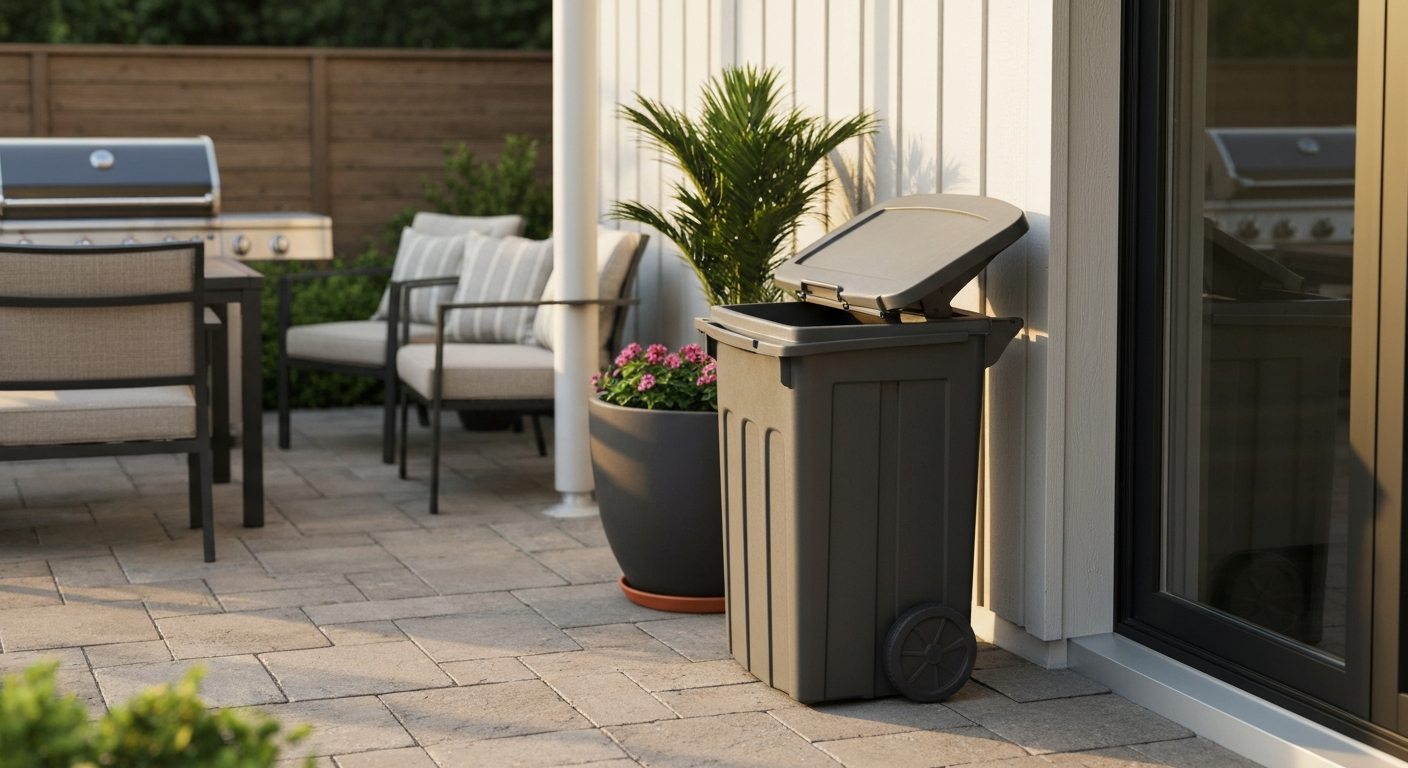
Your local-shopping checklist for finding a patio trash can nearby
Before you head to any store, spend five minutes online to avoid a wasted trip. Retailers keep their inventory systems reasonably accurate, but 'available online' does not always mean 'on the shelf.' Here is a checklist that has saved me multiple trips over the years.
- Start with a broad search: type 'outdoor trash can' or 'patio trash can' directly into homedepot.com, lowes.com, and costco.com, then filter by 'In Stock at Store' or 'Pickup Today' to narrow to local results.
- Set your store location first: on Home Depot, click the store name at the top-left to select your nearest location before checking inventory; on Lowe's, the pickup lines on every product page update automatically once your ZIP code is entered.
- Note the Item/Model number and Store SKU from every product page you are seriously considering — you will need these numbers if you call the store.
- Use the 'Check Store Availability' or 'Pick Up' button on the product page to confirm the specific unit shows 'In Stock at Store Today' rather than just 'Available Online.'
- If the count looks high but you are skeptical, call the store's main line, ask for the relevant department (garden, outdoor storage, or hardware), and read the Store SKU or Internet number to a sales associate for a real shelf check.
- Sign up for inventory alerts on the retailer's app or website if your preferred can is currently out of stock — both Home Depot and Lowe's support email or app alerts when an item returns to your store.
- Check Costco.com and compare the warehouse listing versus the 'Same Day' (Instacart) channel, since same-day pricing is often higher to cover service fees.
- Search local hardware stores, feed-and-supply shops, and garden centers using Google Maps with the filter 'Open now' for any gaps the big-box stores cannot fill.
Pickup vs delivery: how to check stock and choose the right option step by step
Once you have a shortlist of cans, the decision between in-store pickup, curbside, and delivery comes down to urgency, item size, and your schedule. Here is how I work through it at each major retailer.
In-store or curbside pickup
- On the product page, click 'Pick Up' and enter your ZIP code or select your preferred store — the page will show 'In Stock at Store Today' or a specific date if stock is expected soon.
- Add to cart and choose 'Store Pickup' (or 'Curbside Pickup' if offered) to place a hold on the unit — this is more reliable than just assuming it will be there when you arrive.
- Wait for the 'Ready for Pickup' confirmation email or app notification before driving; Home Depot and Lowe's both send these within a few hours for in-stock items.
- Bring your order confirmation and a form of ID; for large outdoor carts, pull your vehicle to the curbside bay and an associate loads the item.
Same-day delivery
- Lowe's same-day delivery is available within roughly 20 miles of the fulfilling store — look for the 'Same Day' or 'Next Day' line under 'Pickup & Delivery Options' on the product page.
- Home Depot offers same-day delivery on eligible items; check item-level delivery options at checkout because not every outdoor can qualifies depending on store proximity and item weight.
- Costco's same-day option runs through Instacart — compare the Instacart checkout total (including service and delivery fees) against the warehouse price plus your drive time before committing.
- For bulky items like 64- or 96-gallon wheeled carts, same-day delivery is less commonly available; scheduled or standard delivery (UPS Ground through Costco, or Home Depot's scheduled window service) is the more realistic option.
Standard and scheduled delivery
When pickup and same-day are not options, Lowe's product pages display an estimated arrival date alongside 'Check Fee in Cart' language so you know the full cost before ordering. Home Depot documents multiple delivery tiers including scheduled windows and next-day service depending on your area. Home Depot's delivery options page (Delivery Services: Same‑Day, Next‑Day, Scheduled & Bulk - The Home Depot) lists free/standard, scheduled-window, same‑day, next‑day, and white‑glove/in‑home delivery where available and advises checking item-level delivery options during checkout to see which services and windows apply to your order. Costco ships many trash can SKUs via UPS Ground and quotes expedited fees at checkout. For a patio trash can that is not a rushed purchase, standard shipping is usually fine and often free above certain order thresholds.
Comparing prices at Home Depot, Lowe's, Costco, and local retailers
I keep a simple price-comparison log whenever I am shopping for outdoor furniture or storage, and patio trash cans are worth the same five-minute effort. Prices shift with promotions, and the cheapest option is not always obvious at first glance.
| Retailer | Example Product | Listed Price (approx.) | Pickup Option | Notes |
|---|---|---|---|---|
| Home Depot | NineStars 13-gal motion sensor can | ~$94.97 | In-store / curbside | Check Store SKU for local availability; Toter 96-gal wheeled cart ~$119 |
| Lowe's | Kraus 13-gal motion sensing can | ~$99.95 | In-store / same-day delivery | Product page shows exact pickup date and 'Check Fee in Cart' for delivery |
| Costco | EKO 47L stainless motion sensor can | Varies by region/membership | Warehouse pickup or UPS Ground | Same-day via Instacart may cost more; compare both channels |
| Local retailers | Varies by store | Varies widely | Immediate in-store | Garden centers and hardware stores may carry cedar, composite, or niche designs unavailable at big-box |
To log prices efficiently, open each retailer's product page in a separate browser tab, note the full price including any membership fees (Costco requires a membership), and add each to cart without checking out to see whether delivery fees apply. Then compare the total landed cost, not just the sticker price. Promotions at Home Depot and Lowe's often run on long weekends, so if you are not in a hurry, waiting for a sale on a $100+ can is reasonable. For more detail on what each big-box retailer stocks in this category, the dedicated guides on patio trash cans at Home Depot and patio trash cans at Lowe's go deeper into SKU selection and seasonal availability, and the Costco-specific guide covers membership pricing nuances. Search 'patio trash can lowes' on Lowe's site to view current SKUs and local availability. See the patio trash can Costco guide for Costco-specific availability and membership pricing.
Materials: which one actually holds up on a patio
The material question is where most people make their first mistake. They buy a basic plastic can because it is cheap, then replace it every two years because UV light and heat have cracked it. Here is an honest breakdown of every common material and where each one makes sense.
| Material | Pros | Cons | Best For |
|---|---|---|---|
| Plastic (polyethylene / HDPE) | Lightweight, inexpensive ($20–$60), UV-resistant grades available, easy to clean, many sizes | Lower grades crack in sun/cold within 2–3 years, looks utilitarian, can warp near grills | Budget builds, rental properties, utility areas out of direct sight |
| Stainless steel | Durable, rust-resistant with proper grade (304 preferred), sleek look, resists odor absorption | Heavier, can dent, fingerprints show, more expensive ($80–$200+), can get very hot in direct sun | Modern or contemporary patios, covered/shaded areas, sensor and step cans |
| Powder-coated steel | More affordable than stainless, color options match patio furniture, sturdy | Coating chips over time exposing base metal to rust, avoid power washing seams | Patios with existing powder-coated furniture for a matched look |
| Wood / cedar | Attractive natural look, naturally insect-resistant (cedar), great for traditional/cottage patios | Requires annual sealing, can rot if water pools at base, usually an enclosure not a standalone can | Concealment cabinets or enclosures around a plastic liner can |
| Composite / resin wicker | Looks like wood or wicker, fully weatherproof, no sealing required, lightweight | More expensive than basic plastic, can fade in harsh UV climates over 5+ years | Decorative patios where looks matter and low maintenance is a priority |
My personal preference for an exposed patio in a sunny climate is a powder-coated or stainless steel can under a partial shade structure, or a composite resin can if aesthetics matter more than budget. For a fully covered patio or a screened porch, almost any material works well because UV and rain exposure are limited. If you are more interested in the visual side of the decision, the patio trash can ideas guide covers enclosure and concealment designs across all these materials.
Sizes and capacity: matching gallons to your actual household
Most people either buy too small and find themselves emptying the can every day during cookouts, or buy a 96-gallon monster that is overkill for a two-person household. The right size depends on three things: how many people use the patio regularly, how often your trash is collected, and whether this can is supplementing an indoor bin or replacing it.
| Capacity | Typical Use Case | Household Size | Pickup Frequency |
|---|---|---|---|
| 7–13 gallons (26–50L) | Supplemental patio can, light entertaining | 1–2 people | Every 1–2 days or when full |
| 20–32 gallons (75–120L) | Primary outdoor can for daily use, moderate entertaining | 2–4 people | 2–3 times per week |
| 64 gallons (240L) | High-use patios, frequent BBQs, larger families | 4–6 people | Weekly municipal collection compatible |
| 96 gallons (360L) | Curbside/municipal cart, high-volume households or small businesses | 6+ people or rental | Weekly automated truck collection |
The 32, 64, and 96-gallon sizes are standard U.S. municipal cart capacities and are built to be compatible with automated curbside lifters used by most collection trucks. If you want your patio can to double as your curbside collection cart, stick to one of those three sizes and confirm compatibility with your municipal waste program before buying. A 96-gallon Toter-style cart (available at Home Depot for around $119) makes sense for this dual purpose, but it is bulky and not particularly attractive on a patio, so many homeowners keep a smaller decorative can on the patio and use a separate curbside cart stored in the garage or behind a gate.
Lids and openings: which style actually works outdoors
The lid is arguably the most important feature on an outdoor trash can. A bad lid means odors, pests, and rain-soaked garbage. Here is how the main options stack up in real outdoor conditions.
Flap and swing lids
Swing lids and butterfly-flap lids are the most common on basic outdoor cans. They are hands-free for quick tossing and work fine in mild climates. The downside: they do not seal, so raccoons and other animals can nudge them open, and wind can blow them off entirely. If pests are a concern in your area, a swing lid alone is not enough.
Foot pedals
Foot-pedal lids are great for hands-free operation when you are carrying food scraps or barbecue waste. The mechanism holds up well on covered patios but can corrode or jam if exposed to heavy rain and debris. Look for stainless steel pedal hardware rather than plastic if the can will be in a semi-exposed location.
Gasketed lids
Gasketed (sealed) lids are the best choice for odor control and pest prevention. They create an actual seal between the lid and the body of the can, which keeps odors in and animals out. Many animal-proof outdoor cans use a gasketed lid combined with a latch or lock. The trade-off is that you have to actively open and close the lid, which is a minor inconvenience but worth it if you live anywhere with raccoons, bears, or other wildlife.
Motion sensor lids
Sensor cans open automatically as your hand approaches. Products like the NineStars 13-gallon (around $94.97 at Home Depot) and the Kraus 13-gallon (around $99.95 at Lowe's) use infrared sensors and require batteries (typically 4–6 AA depending on the model; the EKO 47L at Costco uses 6 AA batteries, for example). These work well on covered patios where rain and insects will not interfere with the sensor. Direct sun and extreme heat can cause false triggers, and batteries need replacing every few months with regular use. Sensor cans are a genuine convenience upgrade, particularly near a grill or outdoor kitchen where your hands are often full.
| Lid Type | Hands-Free | Pest Resistance | Weather Resistance | Price Impact |
|---|---|---|---|---|
| Flap / swing | Yes | Low | Low (no seal) | None (standard) |
| Foot pedal | Yes | Medium | Medium | +$10–$30 |
| Gasketed / latch | No | High | High | +$15–$50 |
| Motion sensor | Yes | Low (opens for any movement) | Low–Medium (cover recommended) | +$40–$120 |
Mobility and mounting: wheels, casters, fixed mounts, and anchoring
How your can is mounted or moved matters more than most buyers realize, especially on patios where you are constantly rearranging for parties or need to roll a heavy can to the curb.
Wheels and casters
Standard wheeled curbside carts (like the Toter 96-gallon available at Home Depot) use large-diameter polyethylene wheels on a fixed axle and are built for rolling over pavement and gravel to the curb. They work fine on smooth patio surfaces but can leave scuff marks on light-colored pavers. For smaller decorative patio cans, swivel casters (locking or non-locking) let you reposition the can easily and lock it in place when you want it to stay put. Always choose locking casters for any patio application so wind or an accidental bump does not send the can rolling.
Fixed mounts and built-in pull-outs
Fixed-mount cans attach directly to a wall, post, or deck railing using brackets. They keep the can off the ground (reducing pest access from below), free up floor space, and look intentional. The limitation is capacity: wall-mounted outdoor cans are typically 7 to 13 gallons, so they work best as secondary cans near a grill or outdoor bar rather than as primary waste collection. Built-in pull-out drawer systems, similar to under-cabinet trash drawers in kitchens, can be incorporated into outdoor kitchen cabinetry. These are typically custom-built or added with aftermarket cabinet inserts and can accommodate standard 13-gallon liners.
Anchoring for safety and wind resistance
Any outdoor trash can in a wind-exposed area needs to be anchored or weighted. Lightweight plastic cans can blow over easily, and a tipped can in a storm creates a mess and attracts pests. Options include: securing the can to a post or railing with a bungee cord or purpose-built strap mount; using a ground anchor stake through the bottom handle loop on standard carts; placing the can inside a decorative frame or enclosure that is anchored to the patio surface; or simply choosing a heavier stainless or powder-coated steel can that has enough mass to resist moderate wind on its own. For covered patios, wind is rarely an issue, but for fully exposed patios in coastal or high-elevation areas, anchoring is worth the extra five minutes of setup.
Placement, installation, and patio setup tips
Where you put the can on your patio affects everything from odors to traffic flow to pest pressure. Near the grill is the obvious choice for food waste during cookouts, but keep at least 3 feet of clearance from any open flame or heat source and never store a half-full can of greasy food waste directly under a grill overhang where dripping fat can contact the bag. For recycling, a second can or dual-compartment unit near the outdoor dining area makes sorting easy; the HDX 32-gallon blue recycling can at Home Depot is a good entry-level option for this purpose. If you have an outdoor kitchen, built-in pull-out or under-counter mounting keeps trash off the floor and out of sight. For patios with access to a side yard, positioning the can near the gate that leads to the curb saves steps on collection day. For a broader selection and quick shopping tips, see the patio outdoor trash can guide.
Design and concealment: making the trash can part of the patio, not an eyesore
A functional trash can does not have to look like one. The most popular concealment approaches I have seen on well-designed patios include cedar or composite enclosure cabinets with a hinged or lift-off lid, decorative screens or lattice panels that surround a standard plastic can, planter-and-can combos where a raised planter box frames the trash area on two or three sides, and built-in outdoor cabinetry with pull-out trash and recycling drawers. For a simple DIY enclosure, a three-sided cedar frame with a pressure-treated base, exterior-grade hinges, and a lid cut from 3/4-inch cedar boards can be built in a weekend for $80 to $150 in materials. The patio trash can ideas guide covers these concepts with more design detail if you want inspiration before committing to a specific approach. And if you want a more complete selection of standalone outdoor trash cans before adding any concealment, the outdoor trash can guide covers a broader product range.
Maintenance, odor control, and pest-proofing routines
An outdoor trash can needs more attention than an indoor one because heat accelerates decomposition and pests are more aggressive outdoors. A simple monthly routine keeps things manageable.
- Rinse the interior with a garden hose every 2 to 4 weeks and scrub with a diluted bleach solution (1 tablespoon bleach per gallon of water) to kill odor-causing bacteria.
- Sprinkle a half-cup of baking soda at the bottom of the can under the bag to absorb odors between cleanings.
- Use contractor-grade bags (3-mil thickness or higher) for heavy food waste to prevent tears and leaks that soak the can interior.
- Keep a tight-fitting lid or gasketed seal at all times; even a 30-second gap during a party is enough for flies to lay eggs in warm weather.
- Apply a light coat of cooking spray or mineral oil to the interior walls of plastic cans annually to prevent waste from sticking.
- For raccoon and pest prevention, use a latch or bungee lock on the lid; for bear-country patios, look for cans certified to the Interagency Grizzly Bear Committee (IGBC) standard.
- Store the can in a shaded spot when possible; direct sun significantly accelerates odors and plastic degradation.
- Check and tighten any mounting hardware, wheel bolts, or bracket screws at the start of each outdoor season.
Realistic costs and when to hire a pro
Most patio trash can purchases are straightforward DIY decisions, but there are a few scenarios where professional help is genuinely worth it. Here is an honest look at cost ranges and when to make the call.
| Scenario | Typical Cost Range | DIY or Pro? |
|---|---|---|
| Basic plastic outdoor can (13–32 gal) | $20–$60 | DIY: no installation needed |
| Stainless or sensor can (13–47L) | $80–$200 | DIY: set up in minutes |
| Wheeled curbside cart (64–96 gal) | $60–$130 | DIY: assemble axle and lid |
| Wall-mounted bracket can | $40–$120 including hardware | DIY if comfortable with a drill; 30 min job |
| Built-in outdoor cabinet with pull-out trash | $300–$900+ depending on materials | Pro recommended for built-in outdoor cabinetry with waterproofing |
| Cedar or composite enclosure (DIY build) | $80–$200 in materials | DIY with basic carpentry skills; one weekend |
| Custom outdoor kitchen trash integration | $500–$2,000+ as part of full build | Hire an outdoor kitchen contractor or deck builder |
For most homeowners, the $20 to $130 range covers everything from a basic patio can to a full-size wheeled cart, and none of those purchases require professional installation. The pro threshold kicks in when you are integrating a trash solution into built cabinetry, a masonry outdoor kitchen, or a pergola structure. In those cases, a local deck builder or outdoor kitchen contractor can incorporate trash and recycling into the design from the start, which is almost always cleaner and more durable than retrofitting later. Get at least two local quotes if you are going that route, and ask to see examples of past outdoor kitchen or storage projects specifically.
For the straightforward purchase cases, the local-shopping steps at the top of this guide get you to the right product at the right price with minimal hassle. Start with your preferred retailer's in-store inventory tool, confirm stock by SKU if needed, and choose pickup or same-day delivery based on your timeline. Note that Costco's blank" rel="noopener noreferrer">Same Day | Costco (Instacart) listings may show higher same‑day prices than in‑warehouse prices to cover service and delivery fees, so check both the warehouse and Same Day listings and compare checkout fees. Once you have the can in hand, the material, size, lid, and mounting guidance here should mean you only have to make this decision once.
FAQ
How do I search for 'patio trash can near me' and verify local stock at big retailers (Home Depot, Lowe’s, Costco)?
Start with each retailer’s product page and use their store‑availability tools: Home Depot: click 'Check Store Availability' or select a store at the top‑left to see 'In Stock at Store Today' and note the Store SKU/Internet #. Lowe’s: view the 'Pickup' and 'Delivery' lines and copy the Item/Model number shown. Costco: use the warehouse pickup vs 'Same Day' (Instacart) controls and compare warehouse vs same‑day pricing. If availability looks unclear, call the specific store and read the Store SKU/Item/Model or Internet # so staff can confirm real shelf stock before you go.
Should I choose pickup (BOPIS) or delivery for a patio trash can?
Pick up when the item is available 'in store' to avoid delivery fees and to guarantee you get the exact SKU — place the order for store pickup (BOPIS) to hold it. Choose delivery if the item is bulky, heavy, you need white‑glove/in‑home setup, or same‑day delivery is available and worth the fee (Lowe’s and Costco same‑day options can be convenient). Always check checkout for final delivery windows and fees.
What product identifiers should I record before calling a store?
Record the product’s Store SKU, Internet #, Model/Item number, full product name, and dimensions/capacity. These let associates look up exact inventory and confirm pickup eligibility.
What patio trash can materials and their pros/cons should I consider?
Plastic (rotationally molded polyethylene): lightweight, weather‑resistant, often animal‑resistant and affordable. Stainless steel: stylish, durable, resists rust (look for powder coating or marine grade for outdoors), but can dent and be pricier. Powder‑coated metal: sturdy and design‑friendly but may chip and rust over time. Wood: blends with decks and concealment builds but needs sealant and pest maintenance. Composite: good weather resistance and look‑alike wood durability. Choose based on climate, aesthetic, and maintenance willingness.
What sizes and capacities are typical and how do I match them to my needs?
Common capacities: 7–13 gallons for small patio/indoor cans; 32, 64, 96 gallons for curbside carts used by municipalities. Match size to household and pickup frequency: 1–2 people = 7–13 gal or a 32‑gal cart; 3–4 people = 13–32 gal or 64‑gal cart; 5+ or heavy yard/packaging waste = 64–96 gal. Also confirm municipal compatibility: many collectors use 32/64/96 gal carts; check local collector specs for dimensions if you plan to use your own wheeled cart.
Which lid, wheel, sensor, and animal‑proof features should I look for?
Lids: tight‑fitting hinged lids or locking lids reduce pests and odor. Wheels: at least two durable wheels or four casters for portability on patios; check wheel material for decking (soft rubber to protect surfaces). Sensors: useful for hands‑free operation — verify battery type and weather sealing for outdoor use. Animal‑proof: look for locking latches, spring‑loaded lids, and heavy construction; for raccoons or bears, confirm 'bear‑resistant' certification or heavy steel lockable lids. Ensure features are rated for outdoor exposure if the can sits on an uncovered patio.