
The best patio alternative material for your yard depends on three things above everything else: how your ground drains, whether you get hard frosts, and how much prep work you're willing to do. Composite decking, porcelain paving, resin-bound gravel, permeable concrete block paving, and loose-fill gravel are the five options most homeowners actually land on when they're moving away from standard concrete or traditional paving slabs. Each one works brilliantly in the right conditions and fails badly in the wrong ones, so the material choice really does start with your site, not a Pinterest board.
Patio Alternative Materials: Best Options, Costs, Pros/Cons

Miles Sutton
6 Jun 2026
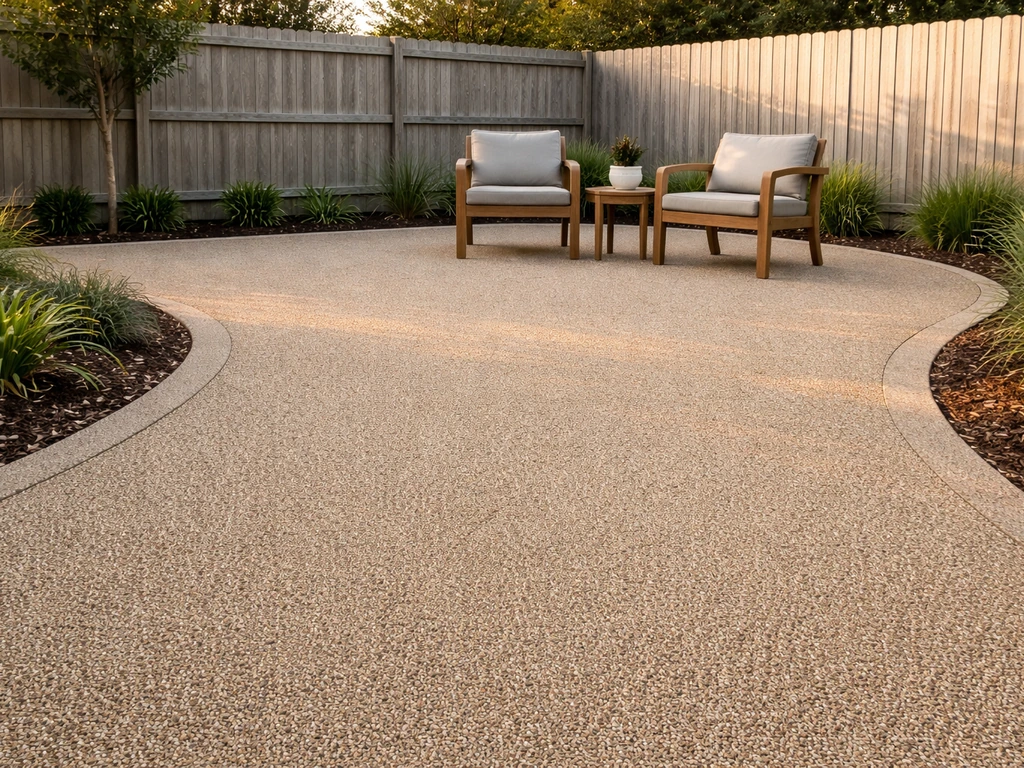
Start by reading your yard before you pick a material
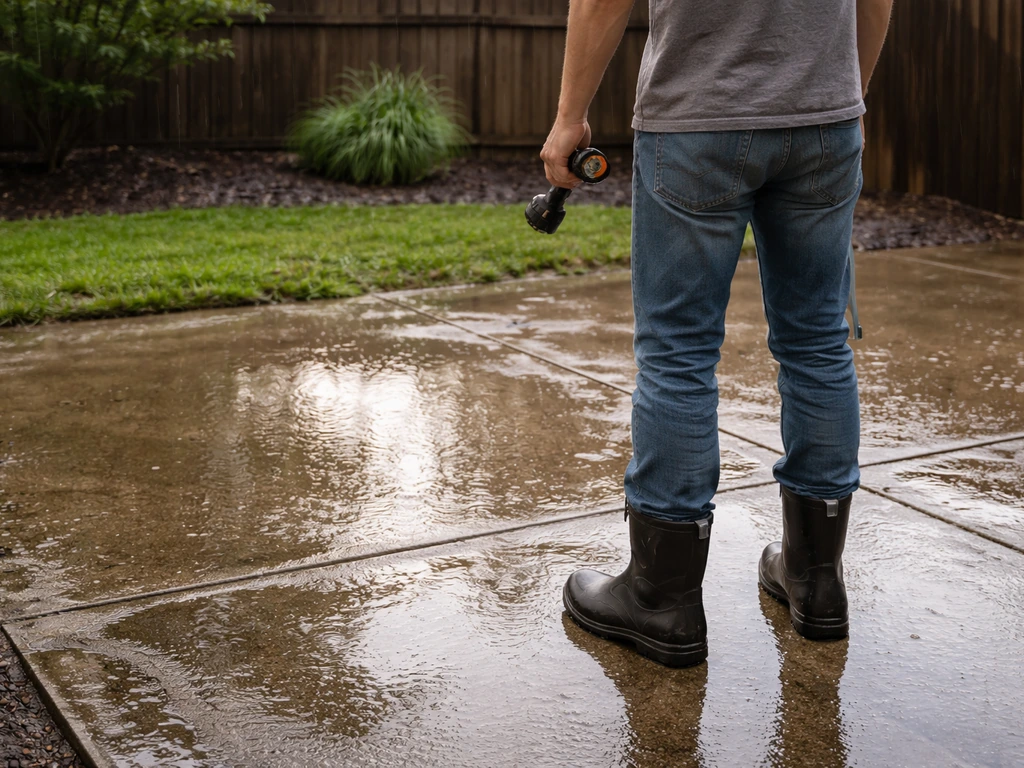
Before you get attached to any specific look, spend 20 minutes assessing the ground you're working with. This isn't just about aesthetics, it determines whether a material will last five years or twenty-five.
Walk the area after heavy rain and see where water pools. If you've got standing water after 30 minutes, you have a drainage problem that needs to be solved at the sub-base stage, not patched over by your surface material. Any solid-bedded surface (think mortar-set porcelain or concrete) laid on poorly draining ground will heave, crack, and lift within a couple of seasons.
Check your slope. UK guidance recommends a minimum fall of 1:60 away from the house for any paved surface. If your ground is flat or falls toward the building, you'll need to establish the correct gradient at sub-base level, not just hope the surface material handles it. On clay-heavy soil, a geotextile membrane between the clay and your sub-base is standard practice to stop the clay migrating upward into your hardcore over time.
Think about freeze-thaw cycles too. If you're in a part of the UK or a colder climate where hard frosts are common, any material with water-retaining joints or a porous surface needs to be rated for that use. Outdoor porcelain specified for external use is frost-proof, but a cheaper tile that isn't rated for exterior use will shatter. Resin-bound systems cope well with freeze-thaw when correctly installed. Composite decking is largely unaffected. Natural stone and concrete block paving are generally fine with the right sub-base drainage underneath.
- Standing water after rain: prioritise permeable block paving or resin-bound gravel over solid-bedded options
- Clay soil: always use a geotextile membrane between clay and sub-base hardcore
- Slope toward house: establish a 1:60 fall at sub-base stage, not at surface level
- Hard frost zone: specify frost-rated materials only; avoid non-rated porcelain or standard pavers
- Existing concrete slab: composite decking on pedestals, or porcelain on pedestals, can often work on top without full excavation
- High weed pressure: resin-bound gravel and mortar-jointed paving significantly reduce breakthrough compared to loose materials
The main material options: what they actually look and feel like
Here's an honest walk through each material. Not just what they look like in the brochure, but what they feel like underfoot, how they perform in real UK conditions, and where they tend to disappoint.
Composite decking
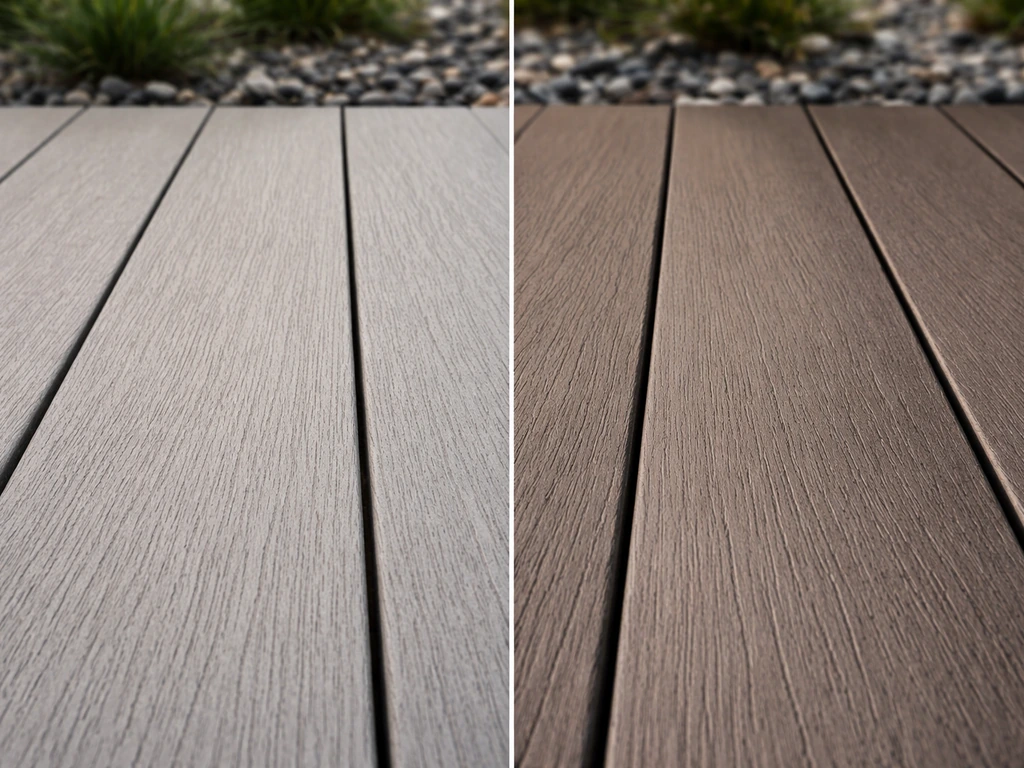
Composite decking is a blend of wood fibre and recycled plastic, and it's become one of the most popular patio alternative materials for good reason. It looks warm and natural, feels comfortable underfoot even barefoot in summer (it doesn't heat up the way porcelain or dark concrete does), and it requires almost no maintenance beyond an occasional wash down. The boards expand and contract with temperature, so proper spacing is critical: a minimum 5 mm gap between boards, increasing to 10 mm in hot, humid, or poorly ventilated areas. The substructure needs at least 25 mm clearance from the ground for airflow and drainage, and the subframe must be fixed down properly for structural integrity. Skipping ventilation can void the manufacturer warranty, so this isn't a detail to cut corners on.
Porcelain paving
Outdoor porcelain tiles are hard, dense, and virtually impervious to staining. When they're specified for external use and installed at the correct thickness (typically 20 mm for patios), they're frost-proof and handle UK weather well. They can be laid on a mortar bed with slurry primer, or lifted off the ground entirely on a paving pedestal system. The pedestal route is particularly useful when you're working over an existing concrete slab or need a level surface over an uneven base. One honest caveat: porcelain is harder to cut than standard paving, and it's unforgiving if you get the bedding or falls wrong. It can also be slippery when wet unless you choose a textured finish or apply an anti-slip treatment.
Resin-bound gravel
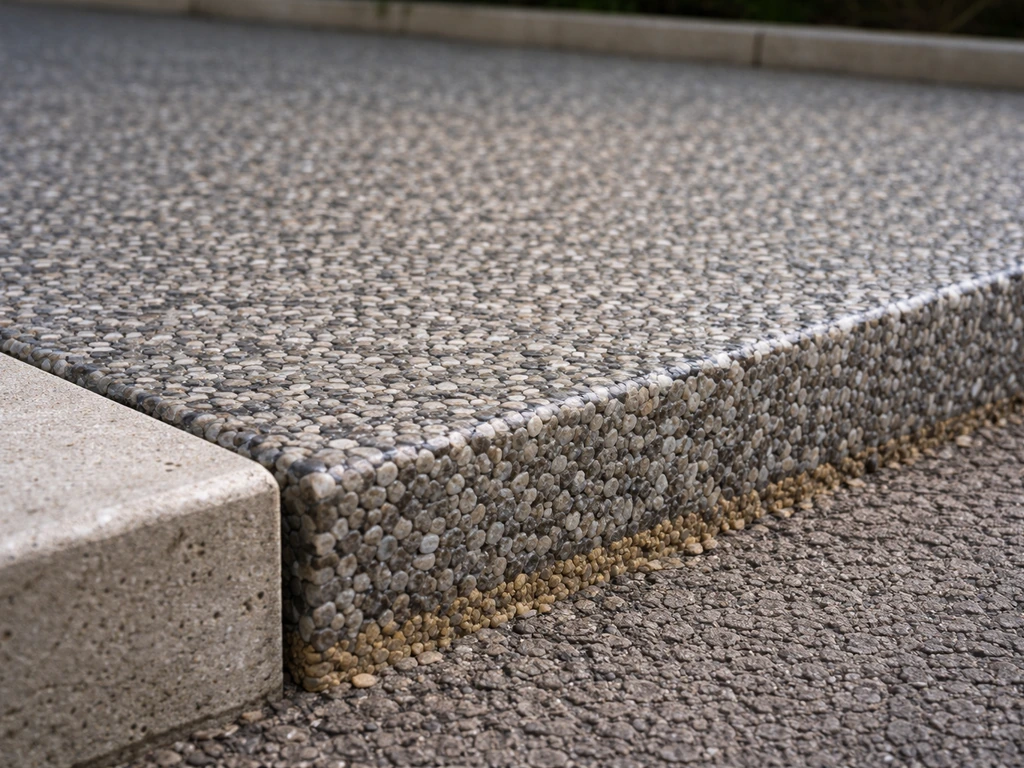
Resin-bound is a mixture of small aggregate stones and clear resin, trowelled over a prepared base to create a smooth, permeable surface. It's genuinely attractive, comes in a wide range of aggregate colours, and because it's permeable, surface water drains straight through rather than running off. It handles freeze-thaw well when installed correctly. The finish is relatively comfortable underfoot, though it's harder than composite decking. The key limitation is that it must be installed by an experienced team in suitable weather conditions (typically above 5°C and dry), making it a job for professionals rather than DIYers in most cases.
Permeable concrete block paving
Permeable block paving uses purpose-designed blocks with wider joints (or infiltration blocks with built-in drainage channels) that allow water to pass through the surface into a free-draining sub-base below. Installation follows BS 7533-13:2009 for permeable systems, or BS 7533-3:2005 for standard flexible block paving. A Tobermore guidance document for unbound concrete block paving summarizes these detailed standards, referencing BS 7533:101:2021 and BS 7533:102:2025 references BS 7533:101:2021 and BS 7533:102:2025. Joints between standard adjacent blocks should be no more than 5 mm. The system is durable, repairable (individual blocks can be lifted and relaid), and works particularly well on larger areas or where planning authorities require permeable paving. It's a solid choice for driveways-turned-patio spaces or any area with serious drainage requirements.
Loose-fill gravel
Gravel is the simplest, cheapest option on this list. Lay landscape fabric, add 50-75 mm of decorative gravel, and you're done. It drains perfectly, works on almost any ground condition, and is genuinely easy for a confident DIYer to install in a weekend. The downsides are real though: it's not great for furniture stability, it migrates toward edges and lawns, it needs periodic raking and topping up, and it doesn't give you a flush level surface. It's best used as a budget starter option, or in combination with other materials (stepping stones through gravel, for example).
Real costs: upfront price versus what you'll spend over time
The upfront-versus-lifetime cost gap is bigger with patio materials than almost any other home project. A cheap surface that needs replacing in five years costs more than a quality surface that lasts twenty-five. Here's a realistic breakdown based on current 2025-2026 UK pricing.
| Material | Material cost (supply only) | Fully installed cost | Expected lifespan | Maintenance cost (annual est.) |
|---|---|---|---|---|
| Composite decking | £45–£110 per m² (boards) | £80–£230 per m² | 25+ years | Very low: clean annually |
| Porcelain paving | £25–£55 per m² | £95–£165 per m² | 30+ years (if installed correctly) | Low: occasional seal/clean |
| Resin-bound gravel | ~£43 per m² (DIY kit) | £70–£120 per m² installed | 10–15 years | Low: reseal around year 10 |
| Permeable block paving | £20–£50 per m² | £60–£150 per m² | 20–30 years | Low: joint replenishment |
| Loose-fill gravel | £5–£15 per m² | £10–£25 per m² (DIY) | Indefinite (with top-ups) | Low-medium: rake, top up |
Porcelain and composite decking look expensive upfront but are genuinely low-maintenance for a decade or more after installation. Resin-bound is mid-range in cost but will need resurfacing eventually. Gravel is the cheapest to start but needs the most ongoing attention. If you're thinking about patio alternatives on a budget, gravel, DIY block paving, and mid-range composite boards are typically the best starting points.
What the ground actually needs: base prep, drainage, and leveling
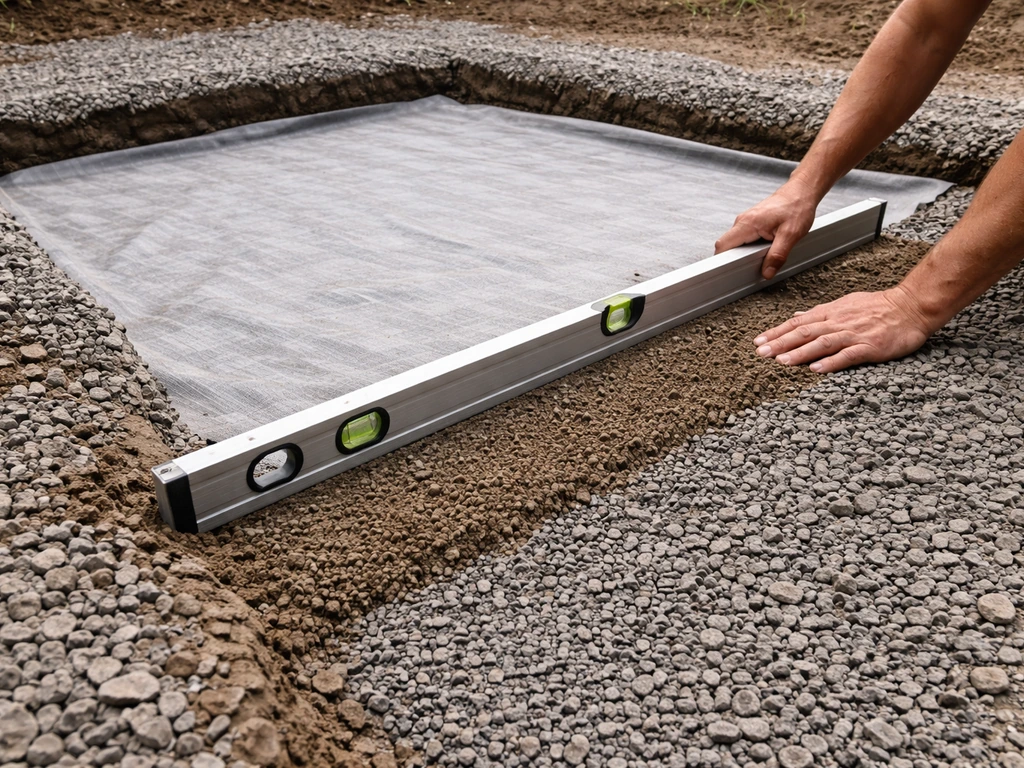
This is the section most guides skip over, and it's the one that determines whether your patio is still looking good in ten years. Every material has a base requirement, and cutting corners here is the number-one reason patios fail early.
The standard sub-base for most solid surfaces
For porcelain paving, block paving, and resin-bound gravel, the standard UK sub-base material is MOT Type 1 (compacted crushed stone or hardcore). You excavate to the required depth (typically 150-200 mm for a residential patio including the surface material), compact the Type 1 in layers, establish your 1:60 drainage fall, and then lay the surface material on top. On clay soil, put a geotextile membrane between the clay and the Type 1 to prevent clay migration. For permeable systems, the sub-base design needs to accommodate water storage and infiltration, which may mean a deeper or more open-graded sub-base material.
Composite decking substructure
Composite decking doesn't sit on a compacted hardcore base the way paving does. It sits on a treated timber or aluminium subframe, which itself needs to be fixed down properly to firm, level ground. The critical requirement is 25 mm minimum clearance between the subframe and the ground below, plus free drainage underneath so water doesn't pool and cause the subframe to rot or the boards to swell. If you're building over an existing concrete slab, you can fix the subframe directly to the slab with suitable fixings, which simplifies the groundwork considerably.
Porcelain on pedestals
If you have an existing slab or need a level surface over a slightly uneven base, porcelain on a paving pedestal system is a genuinely clever solution. The pedestals sit on the existing surface and the tiles rest on top, with drainage happening between the tiles and through the pedestal gaps. It avoids excavation entirely in some cases. The limitation is that pedestals are not appropriate in every situation (some manufacturers specifically note they're not recommended for certain load or slope conditions), so check the manufacturer's guidance for your specific tiles before committing to this approach.
Gravel base prep
For loose-fill gravel, excavate 100-150 mm, lay a weed-suppressing membrane, and add your gravel on top. Edge restraints (metal or plastic) are important to stop migration. The drainage argument for gravel is simple: it's naturally permeable, so as long as your ground drains at all, the surface will too.
DIY or hire a pro: how to split the work sensibly
The honest answer is that some of this work is perfectly achievable for a motivated DIYer, and some of it really isn't. Getting this call wrong costs money, so here's a clear breakdown.
| Material | DIY feasibility | Where to draw the line | When to hire a pro |
|---|---|---|---|
| Composite decking | High for confident DIYers | Subframe levelling on sloped ground is tricky | When there's significant slope or a load-bearing requirement |
| Porcelain paving | Medium (mortar bed) to High (pedestal system) | Mortar-bed porcelain requires experience; cutting porcelain needs a good wet saw | Any large mortar-bed installation, or where drainage falls are complex |
| Resin-bound gravel | Low: mixing and laying resin correctly requires experience and the right conditions | Not a realistic DIY job for most people | Always hire a specialist with proven track record |
| Permeable block paving | Medium to High: block laying itself is achievable | Sub-base compaction and grading is critical; hire for this stage if unsure | Larger areas, or where specific BS 7533 compliance is needed |
| Loose-fill gravel | Very High: straightforward for most homeowners | Edge restraints and membrane installation are simple | Rarely needed unless ground shaping is significant |
Resin-bound is the one I'd push hardest for professional installation. The mixing ratio, ambient temperature, and trowelling technique all affect the finished surface significantly, and a poorly laid resin surface looks bad quickly. For composite decking, a confident DIYer with basic carpentry skills and a weekend free can produce a result as good as many contractors. For porcelain on pedestals over an existing slab, it's genuinely manageable if you're comfortable with the levelling process. For mortar-bed porcelain from scratch, honestly consider paying for at least the base prep and first course if it's a large area.
On the permit question: most residential patio surfaces don't require planning permission in the UK, but if you're covering more than 5 m² with a non-permeable material in a front garden, permitted development rules require a permeable surface. The composite decking price list PDF from Composite Gardensheds includes example composite decking line items priced per m² and notes an installation minimum order size (for example, 10 m²) COMPOSITE DECKING Price List. This is another reason permeable block paving and resin-bound are worth considering beyond just drainage performance.
Keeping it looking good: maintenance, repairs, and weed control
Every material on this list needs some level of ongoing attention, but the amount varies dramatically. Here's what you're actually signing up for.
Composite decking
Wash it down once or twice a year with a mild detergent and a soft brush or low-pressure wash. High-pressure washing can damage the surface texture of some composite products, so check your manufacturer's guidance. Composite generally doesn't need sealing, staining, or sanding. Board-level repairs are possible but involve matching the product batch, so keep a few spare boards from the original install.
Porcelain paving
Porcelain is very low maintenance: it doesn't absorb staining, doesn't need annual sealing, and cleans easily with a patio cleaner and brush. The main maintenance point is the pointing between slabs. Repoint any cracked or loose joints promptly to prevent water ingress and frost damage underneath. Weed breakthrough between joints is possible if pointing degrades, so check annually and repoint as needed.
Resin-bound gravel
Generally low maintenance: sweep leaves and debris, occasionally jet wash. Weeds can establish on top of the surface (seeds blowing in and germinating in debris) rather than growing through it, so a quick weed once a year is usually enough. Around year 10-15, the resin binder can start to degrade and the surface may need a fresh coat or resurfacing. Budget for this in your long-term cost planning.
Permeable block paving
The joints in permeable block paving can silt up over time, gradually reducing drainage performance. A periodic inspection and top-up of joint aggregate (or kiln-dried sand for non-permeable systems) keeps the system performing as intended. Individual blocks that crack or move can be lifted and relaid without disturbing the whole surface, which is a genuine advantage over monolithic surfaces like resin or concrete. Weed control in the joints is usually manageable with a path weed killer applied once or twice a season.
Loose-fill gravel
Gravel needs the most regular attention. Rake it level every few months, top it up annually as stones migrate or settle, and address any weed breakthrough (membrane helps significantly, but some weeds will still find a way through over time). A weed-suppressing membrane underneath is non-negotiable. Without one, you'll be constantly fighting weed regrowth from below.
Picking your winner and planning the actual build
Here's a quick decision filter. Match your situation to the recommendation, then use the steps below to plan your build.
- Best all-rounder for DIY: composite decking on a treated timber subframe. Low maintenance, comfortable, suits most UK climates, and a motivated DIYer can achieve a professional result
- Best for longevity and low maintenance: porcelain paving on a properly prepared mortar bed or pedestal system. Lasts 30+ years with minimal care if installed right
- Best for drainage problems: permeable concrete block paving or resin-bound gravel. Both allow surface water to infiltrate rather than run off
- Best budget option: loose-fill gravel for a starter patio, or DIY concrete block paving for a durable mid-budget result
- Best for an existing slab you can't excavate: porcelain or composite on pedestals/subframe directly over the existing surface
Your next steps: measure, estimate, and build
- Measure your area accurately in square metres (length x width), then add 10% for cuts and wastage. For composite decking, check the manufacturer's boards-per-m² conversion figure to calculate how many boards you need
- Assess drainage before ordering anything. Do the post-rain test and identify your soil type. This determines sub-base depth and whether you need a geotextile membrane
- Get three supply quotes for your shortlisted material, specifying the exact product thickness, finish, and any anti-slip rating you need. For porcelain, confirm it's rated for external use and frost-resistant
- Decide on DIY versus professional installation for each stage. Consider hiring a pro just for sub-base prep and grading, then completing the surface yourself if budget is a factor
- Check whether your project falls within permitted development rules, particularly if you're covering a large area with a non-permeable surface in a front garden
- Order samples before committing to anything. Colours and textures look different in person than on a screen, especially for resin aggregate and block paving colours
- Build a simple timeline: groundwork and base prep (day 1-2), surface installation (day 2-4 for a medium DIY patio), curing or setting time before use (typically 24-72 hours for mortar-set surfaces, immediate for dry-laid or composite)
The surface alternatives to standard concrete and paving slabs are genuinely good, and several of them outperform traditional materials on specific criteria. If you're comparing patio alternatives UK homeowners actually use, start by matching the material to your drainage, frost risk, and maintenance tolerance. The goal isn't to find the 'best' material in the abstract, it's to find the right match for your ground conditions, your budget, and the amount of effort you want to put in over the next decade. A quick way to start comparing options is to look at patio vs alfresco styles, since how you intend to use the space often affects material choice. Get the base prep right, choose a material that fits your drainage and climate reality, and you'll have a patio that's better in ten years than it is on day one.
FAQ
What patio alternative materials work best if I already have an existing concrete slab?
If you want the easiest “swap” from old slab to a new patio surface, the most practical options are resin-bound (over a suitable prepared base), porcelain on pedestals (minimal excavation over an existing slab in the right situation), and loose gravel (over excavation or localized levelling). Composite decking also goes over slabs, but you still need correct clearance for airflow and water, plus a stable fixing plan for the subframe.
Which patio alternative materials are least slippery when wet?
For slippery conditions, the biggest difference is finish texture and safety rating, not just the material type. Porcelain can be slippery if you choose a smooth finish, composite can become slippery when wet but usually offers better traction than highly polished porcelain, and resin-bound is generally grippy when installed correctly with the right aggregate. If wet footing safety matters (elderly users, kids, or shaded areas), prioritize textured finishes and consider an anti-slip treatment where the manufacturer allows it.
How should I compare patio alternative material quotes fairly?
Budget comparisons change a lot once you include base prep, access, and repairs. A cheaper surface that needs re-laying (loose gravel migration, permeable joint silt-up, or resin resurfacing) can become more expensive than a longer-life option within 7 to 15 years. When comparing quotes, ask for a like-for-like scope, including excavation depth, whether Type 1 thickness is specified, drainage fall formation, and who supplies edge restraints.
What are the most common reasons patio alternative materials fail early?
Most failures come from the base and slope, not the top layer. For example, mortar-set porcelain or paving on poorly drained ground can heave even if the tile itself is rated for frost. Resin and permeable block systems depend on sub-base design that stores and infiltrates water, so if your soil drains poorly, you may need a different sub-base specification or additional drainage measures rather than switching to a different surface.
Which patio alternative materials are realistically DIY, and which are best left to pros?
Yes, but only some are suitable for installation by DIYers. Composite decking is usually the most DIY-friendly if you can measure, level, and fix the subframe correctly with adequate airflow clearance. Loose-fill gravel is also DIY-friendly with membrane and edge restraints. Porcelain on a mortar bed from scratch, and resin-bound, are where DIY mistakes most often lead to uneven surfaces or premature wear, so plan on pro installation or at least pro base prep.
What’s the best way to prevent an uneven patio with alternative materials?
To avoid uneven settling, you should compact the sub-base in layers (not as one thick dump), confirm the drainage fall is formed during the base stage, and use membranes only where they match your ground conditions (for example, clay migration control). For larger areas, consider checking levels as you go with a long straightedge, and keep edge restraint in place early so material movement cannot “push” the patio out of line.
How do these patio alternative materials handle standing water and runoff in practice?
If you’re choosing between resin-bound, permeable block paving, and porcelain, the key edge case is whether you want water to infiltrate under the patio or be managed to fall away. Porcelain on pedestals can route water between tiles and through pedestal gaps, but it still requires good underlying drainage. Resin-bound and permeable block paving rely on an engineered permeable sub-base, so they’re best where the soil can accept water and you can maintain joints over time.
When does weather matter most for resin-bound, porcelain, and block paving patios?
For resin-bound, cold, wet weather is a common reason for inconsistent finish. The practical decision aid is to treat ambient temperature and dryness as hard constraints, then confirm the installer is using the correct mixing ratio and curing conditions for your forecast. For porcelain and block paving, temperature affects bedding and set times too, but frost risk is managed more by scheduling and proper sub-base drainage.
If a section gets damaged, can I repair it easily with patio alternative materials?
Yes, but you must keep the system’s maintenance logic in mind. Most surfaces can be repaired locally, yet the “ease of repair” varies: resin is typically resurfaced rather than patch-repaired cleanly, porcelain is repairable by replacing tiles but requires careful matching and re-setting, and permeable block paving is the most flexible since individual blocks can be lifted and relaid. Gravel repairs are simple but recurring, because stones will keep migrating and weeds can reappear.
What’s the most reliable strategy to reduce weeds on alternative patio materials?
For long-term weed control, edge restraints and membranes are not optional on gravel, and joint condition is critical on permeable paving. With porcelain or composite, weed breakthrough usually comes from joint degradation or gaps around edges rather than the surface itself. If you want a “set and forget” approach, prioritize durable pointing, correct sub-base, and proper edging, then plan on an annual sweep and spot-check instead of trying to eliminate all weeds with chemicals.