
The best patio surface alternative for most homeowners comes down to three things: how much maintenance you can honestly commit to, what the surface needs to feel like underfoot (bare feet, pets, furniture legs), and what your local climate throws at it year-round. Gravel and loose aggregates are cheapest and easiest to DIY but shift underfoot. Porcelain and concrete pavers are the most durable long-term but cost more upfront and need a proper sub-base. Composite decking, rubber tiles, and resin-bound gravel split the difference nicely on comfort and low maintenance. If you're replacing a tired concrete slab or worn block paving and just want to know what to lay instead, this guide will walk you through every realistic option with honest costs, installation basics, and the gotchas most articles skip.
Patio Surface Alternatives: Best Options, Costs, and Fit

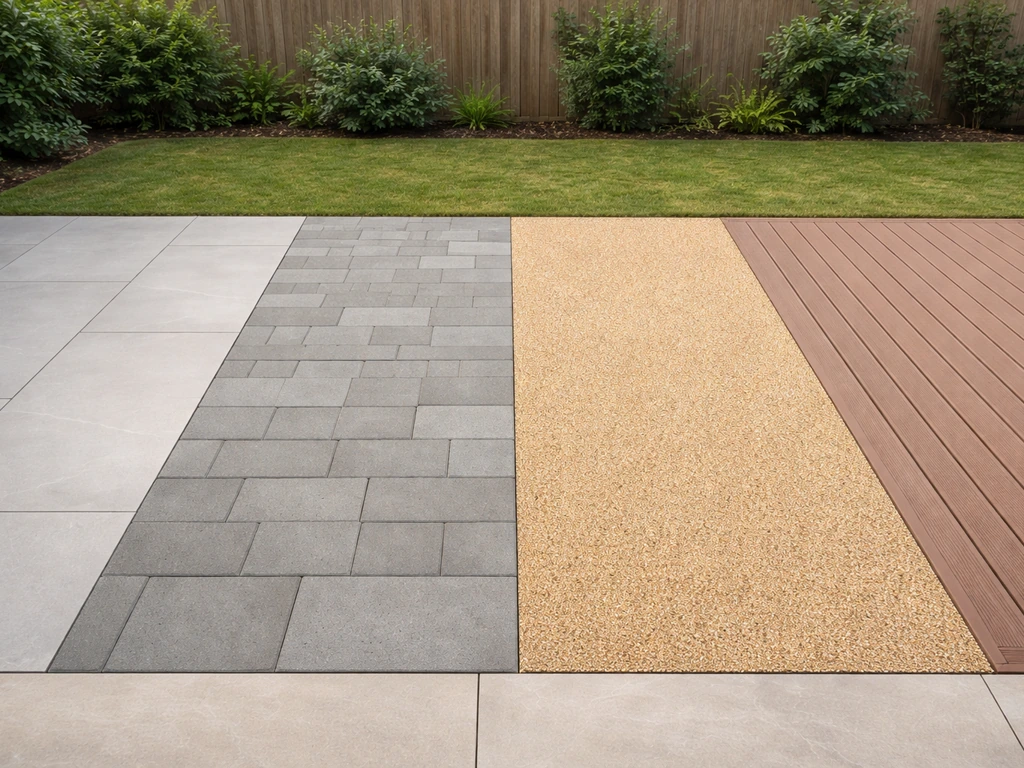
How to choose the right patio surface alternative
Before you price anything up, get clear on what actually frustrated you about your current surface. That narrows the field faster than any material comparison chart. If your old patio was slippery in rain, drainage and texture matter most. If weeds were the nightmare, a fully bonded surface like resin or porcelain on mortar is the answer. If it just looked tired but worked fine structurally, you might not need to dig anything out at all.
Here are the key questions to work through before you commit to a material:
- Who uses this space? Bare feet (poolside, hot days), dogs, elderly family members, and children all shift the priority toward softer, higher-grip surfaces.
- What's your climate like? Freeze-thaw cycles rule out some materials or require specific installation details. High rainfall makes drainage and slip resistance critical.
- How much upkeep are you genuinely prepared to do? Gravel needs raking and topping up. Timber decking needs annual oiling. Porcelain needs virtually nothing.
- Is this a DIY project or are you hiring? Some surfaces (loose gravel, rubber tiles, basic pavers on sand) are genuinely DIY-friendly. Others, like resin-bound systems or large-format porcelain, really benefit from professional installation.
- What's the existing base like? If your current slab is solid and level, you may be able to lay directly on top of it. If the ground is uneven or soft, you're looking at excavation and a new sub-base regardless of what you choose on top.
- What's the patio for? Dining and entertaining needs a flat, firm surface. Poolside needs maximum slip resistance. A fire pit zone benefits from non-combustible materials. A kitchen garden path is a different brief entirely.
If budget is your main driver, there's a whole separate conversation worth having around patio alternatives on a budget, where materials like gravel, bark chip, and stepping stones on compacted soil can get you a usable outdoor surface for very little. This guide focuses on genuine surface replacements that perform day-to-day as a proper patio floor.
Best low-maintenance patio surface options
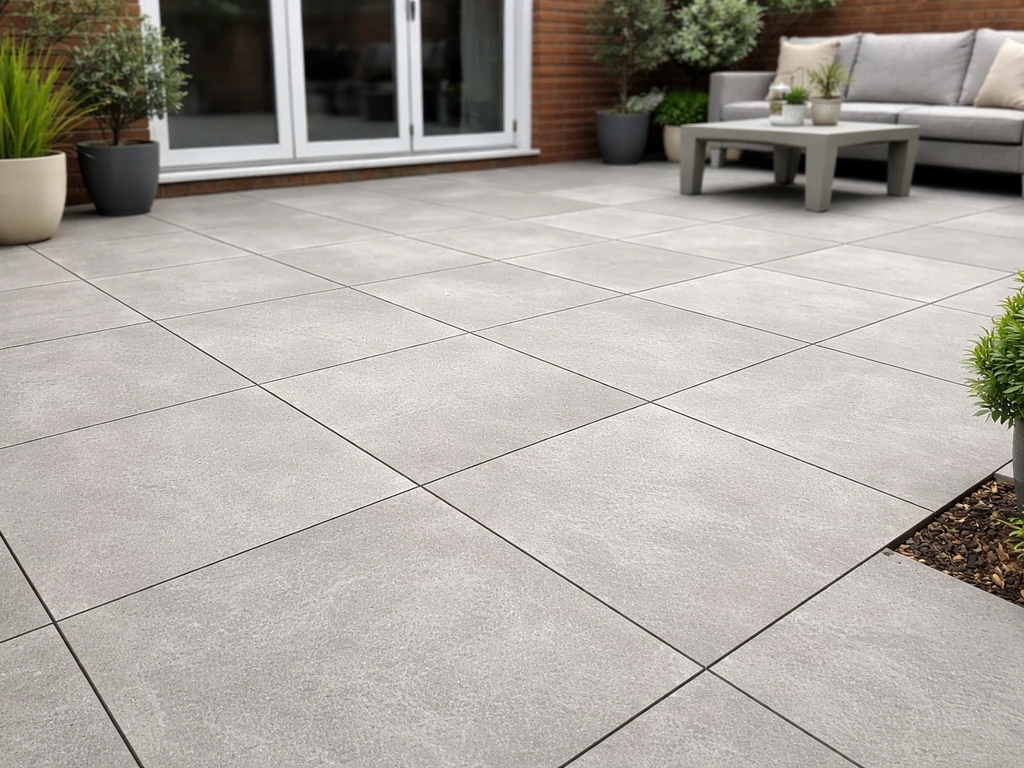
These are the surfaces most homeowners are actually choosing right now, with honest pros and cons for each.
Porcelain paving slabs
Porcelain has become the dominant choice for good reason. It's virtually impermeable, frost-resistant, stain-resistant, and you clean it with a hose and a brush. Large-format slabs (600x900mm and 900x900mm are common sizes) look genuinely impressive and don't date quickly. The downsides: it's expensive per square metre, requires a very flat, solid mortar bed because it has zero flex, and cutting it cleanly needs a good wet-saw blade. Don't try to lay it on a sand-only bed.
Concrete pavers and block paving
Concrete pavers are the workhorse of the patio world. They're cheaper than porcelain, come in a huge range of finishes, and are more forgiving to lay because you can lift and relay individual units if something shifts. Textured finishes give decent grip. The trade-off is that weeds will eventually find the joints, and some budget concrete pavers fade and spall in harsh winters. Stick to a reputable brand and use polymeric jointing sand to reduce weed intrusion.
Resin-bound gravel
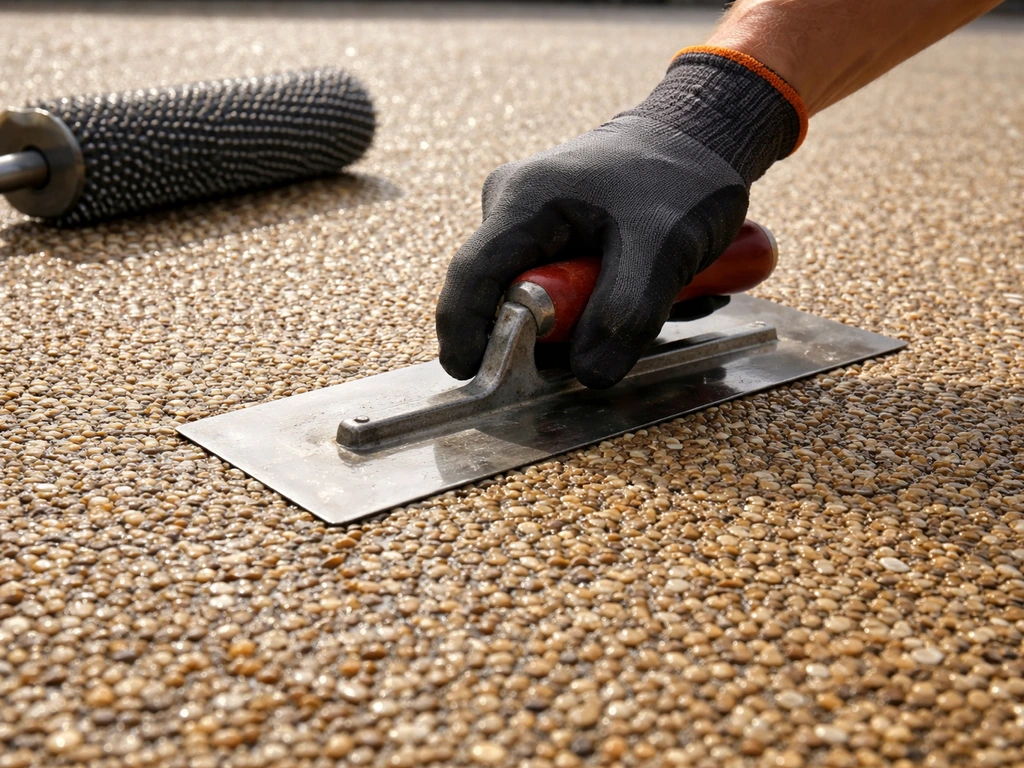
Resin-bound surfaces are poured aggregates mixed with a clear UV-stable resin and trowelled smooth. The result is a permeable, seamless surface that looks very tidy, drains freely through its surface, and won't shift or scatter like loose gravel. It's soft enough underfoot to feel comfortable barefoot and has good slip resistance when laid correctly at 15-18mm depth. The catch: it must be installed by an experienced contractor because mixing ratios and trowelling speed are critical, it can crack if the base beneath isn't stable, and repairs are visible. Costs are mid-to-high range.
Composite and hardwood decking
Decking is still a strong option where you need to deal with uneven ground or where a raised platform suits the garden layout. Composite decking (wood fibre mixed with recycled plastic) is the low-maintenance version: no staining, no annual oiling, and most brands now come with 25-year structural warranties. Hardwood decking (like Ipe or FSC-certified teak) looks beautiful but needs oiling every one to two years and will silver if you neglect it. Both get slippery when wet if algae builds up, so choose a grooved board profile and clean it annually.
Rubber paving tiles
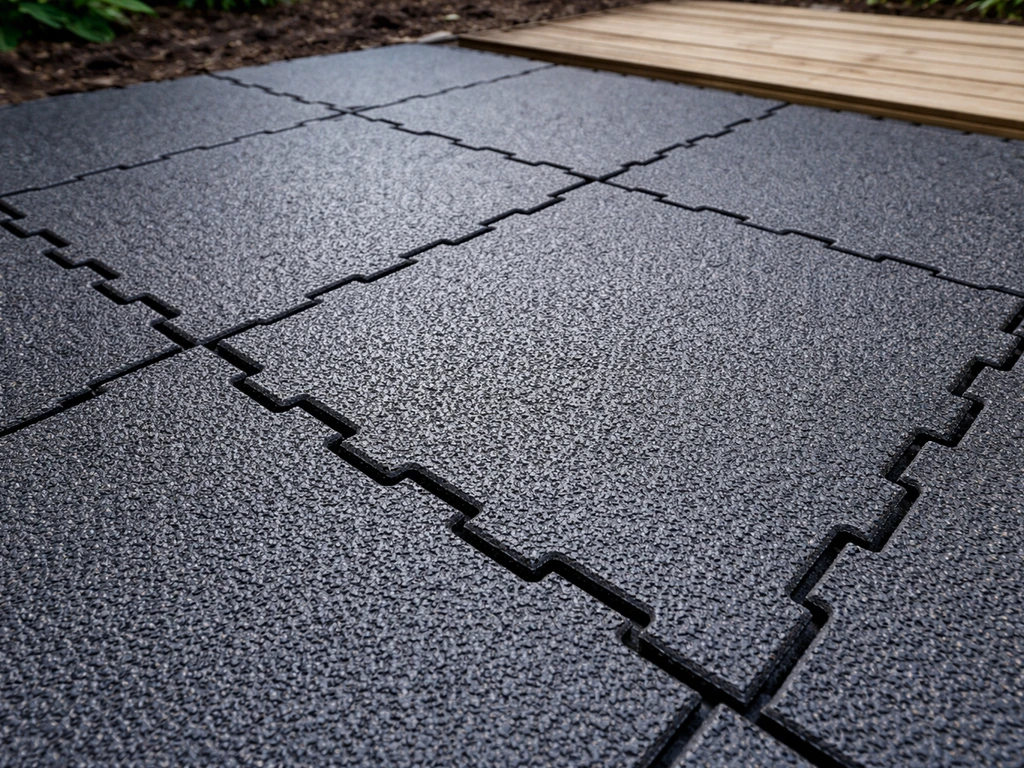
Interlocking rubber tiles made from recycled tyres are genuinely underrated. They're comfortable on bare feet, extremely slip-resistant, easy to cut and install yourself, and forgiving of minor base imperfections. They work particularly well around pools, in children's play areas adjacent to a patio, or as a secondary zone surface. The aesthetic is functional rather than aspirational, and they can degrade in prolonged direct UV if you buy cheap tiles, so look for UV-stabilised products.
Natural stone (sandstone, limestone, slate)
Natural stone offers the look that most people are actually trying to achieve with budget alternatives. Sandstone is warm-toned, widely used, and reasonably priced. Limestone is harder and more uniform in colour. Slate is striking but can be very slippery when wet if you choose a riven finish without adequate texture. All natural stone needs sealing on installation (and re-sealing every two to five years) to prevent staining and to reduce water absorption that leads to frost damage. Quality varies hugely, especially with imported Indian sandstone, so buy from a supplier who can show you the specific batch.
Loose gravel and decorative aggregates
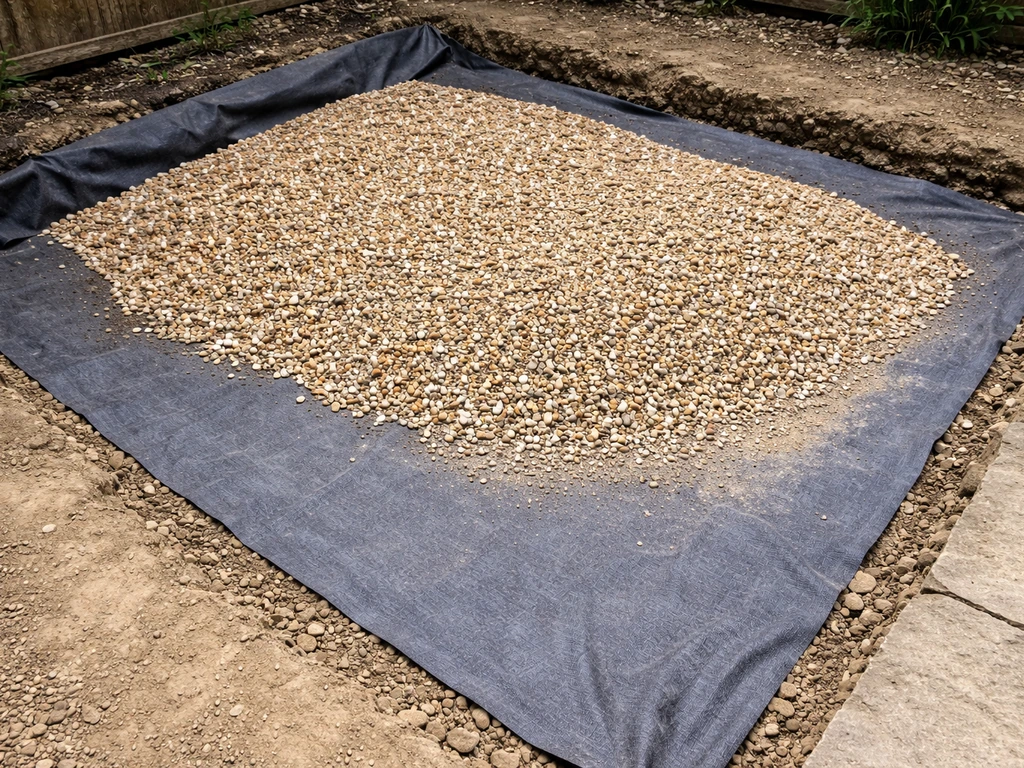
Loose gravel is the cheapest route in and the easiest DIY job. Lay it over a compacted sub-base and weed-suppressing membrane, and you're done in a weekend. The real-world problems: it moves under furniture legs, pebbles migrate into the lawn and flower beds, it's not comfortable for dining furniture or barefoot use, and it needs topping up every few years. It works better as a surrounding area or low-traffic zone than as a primary entertaining surface. If gravel appeals, resin-bound is the upgrade that solves most of those problems. If you are deciding between patio vs alfresco spaces, resin-bound surfaces are often chosen for their drainage and low-maintenance finish.
| Surface | Maintenance | DIY Friendly | Comfort Underfoot | Typical Cost (per m²) | Best For |
|---|---|---|---|---|---|
| Porcelain paving | Very low | Moderate (needs wet saw) | Firm, cool | £50–£120 supply + lay | Modern gardens, low-upkeep priority |
| Concrete pavers | Low | Yes | Firm | £25–£70 supply + lay | Budget-conscious, DIY, driveways too |
| Resin-bound gravel | Low | No (pro install) | Medium-soft | £60–£100 installed | Permeable drainage, smart finish |
| Composite decking | Low | Yes | Warm, comfortable | £50–£110 supply + lay | Uneven ground, raised platforms |
| Rubber tiles | Very low | Yes | Soft, cushioned | £20–£50 supply + lay | Poolside, play areas, safety zones |
| Natural stone | Medium (sealing) | Moderate | Firm, textured | £40–£120 supply + lay | Traditional gardens, premium look |
| Loose gravel | Low-medium (top-up) | Yes | Poor | £10–£30 supply + lay | Low-traffic zones, surrounding areas |
Comfort, safety, and traction
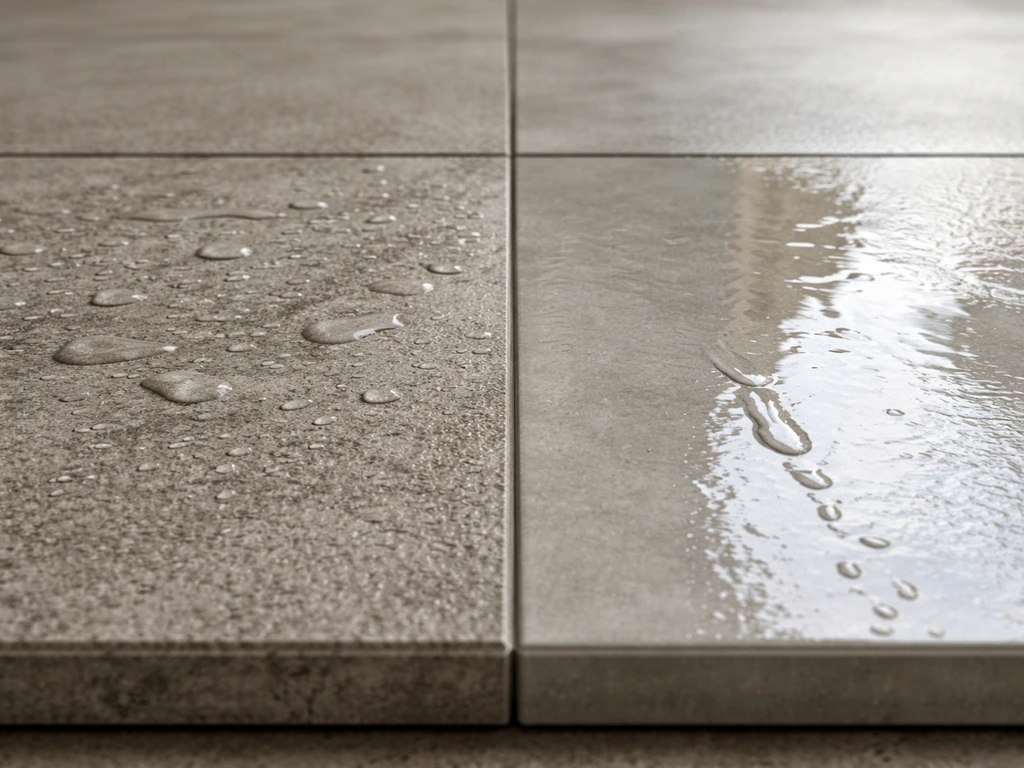
Slip resistance is the factor most people overlook until someone goes over on a wet surface. Any smooth, dense material, including polished porcelain, wet slate, and glazed ceramic, becomes genuinely dangerous when wet. Always check the slip resistance rating (R-rating or PTV value) when buying paving. For outdoor residential use, look for R11 or higher on the R-scale, or a Pendulum Test Value (PTV) above 36. Textured or sawn-finish porcelain, brushed natural stone, and grooved composite decking all perform well here.
For bare feet specifically, thermal comfort matters too. Dark-coloured porcelain and slate absorb heat in summer sun and can become uncomfortably hot. Light-toned materials, composite decking, and rubber tiles stay much cooler underfoot on a sunny day. Around pools or in climates with strong summer sun, this isn't a trivial point.
Pet owners should think about paw grip and surface heat in equal measure. Dogs on smooth pavers struggle to gain purchase, especially older dogs. Textured concrete, resin-bound aggregate, or rubber tiles are all more paw-friendly. Also worth checking: some sealants and joint compounds are toxic to dogs if licked, so confirm products are pet-safe before applying.
For high-traffic entertaining areas, you want a surface that stays stable under table and chair legs and doesn't chip or crack when furniture is dragged. Porcelain and concrete pavers win here. Composite decking can dent under heavy point loads over time if the joists beneath aren't closely spaced (400mm joist centres is a safe spec for heavy furniture).
Cost comparison and budgeting
Costs vary significantly by region, but the table above gives realistic ballpark figures for supply and installation combined. The biggest variable is almost always ground preparation, not the surface material itself. If you need to excavate 150–200mm of soil, hire a skip, and lay a compacted sub-base, that groundwork can add £20–£40 per square metre before you've bought a single paver. This is the cost that surprises most people when they get quotes.
DIY realistically saves you the labour cost, which for a competent contractor runs roughly £30–£60 per square metre for paving work. On a 30m² patio that's a potential saving of £900–£1,800, which is meaningful. However, DIY only makes sense if you have the time, the tools (a plate compactor hire alone is around £60–£100 per day), and the confidence to get the sub-base and drainage fall correct. Mistakes in the groundwork stage are expensive to fix later, far more so than mistakes in laying the surface itself.
A few honest pointers on where to spend and where to save:
- Don't skimp on the sub-base. A cheap surface on a properly prepared base will outlast an expensive surface on a poor one.
- Loose gravel and rubber tiles are genuinely cost-effective DIY materials with low skill barriers.
- Resin-bound and large-format porcelain are worth paying for professional installation because errors are costly to fix.
- Natural stone prices vary hugely. Get samples and check the actual batch, not just the catalogue image.
- Factor in jointing compound, sealant, edge restraints, and skip hire when budgeting. These extras typically add 10–20% to material costs.
Installation basics and prep for each surface
Whatever surface you choose, the groundwork underneath it determines how long it lasts. This is where most DIY patios fail, not in the surface laying itself. The standard domestic patio build-up used by professional installers involves excavating to formation level, then laying compacted MOT Type 1 (hardcore) as the sub-base. Universal Paving’s patio sub-base guide also specifies blank" rel="noopener noreferrer">MOT Type 1 as the standard material for the sub-base and recommends compacting each layer separately. The commonly specified depth for foot-traffic patios is blank" rel="noopener noreferrer">100mm of compacted MOT Type 1, laid in two separate lifts of around 50mm each, with a plate compactor run over each lift before the next is added. Don't dump all the aggregate in and compact it once; it won't consolidate properly through the full depth.
Drainage fall is non-negotiable. The finished patio surface needs to slope away from the house to shed water. A gradient of around 1:60 to 1:80 is the commonly used standard, which works out to roughly 15–17mm drop per metre of run. Direct the fall toward a lawn edge, a border, or an ACO channel drain rather than toward your house wall or a neighbour's boundary. Your finished patio level should also sit below your property's damp-proof course (DPC), typically at least 150mm below, to prevent moisture bridging into the wall.
Here's how the preparation varies by surface type:
- Porcelain and natural stone pavers: Full excavation, compacted MOT Type 1 sub-base, then a semi-dry mortar bed (or proprietary paving adhesive for porcelain). Porcelain in particular must be back-buttered with adhesive for full contact, as hollow spots cause cracking.
- Concrete pavers (block paving): Compacted MOT Type 1 sub-base, then a 50mm sharp sand laying course, pavers bedded and compacted in, kiln-dried or polymeric sand brushed into joints.
- Resin-bound gravel: Requires either a solid existing base (old concrete slab) or a new tarmac or concrete slab base. Cannot be laid on MOT Type 1 alone. This is why professional assessment of the existing base is important.
- Composite or timber decking: No excavation needed if ground is reasonably level. Posts or adjustable pedestals set on concrete pads or a compacted gravel base. Joists at 400mm centres for furniture loads.
- Rubber tiles: Flat, firm base needed (existing concrete, tarmac, or compacted sand). Tiles interlock and can be glued at perimeters. Very forgiving of minor imperfections.
- Loose gravel: Excavate 100–150mm, compact the formation, lay weed membrane, then a 75–100mm depth of 20mm angular gravel (not round pea gravel, which migrates and rolls). Edge restraints essential.
One point worth emphasising: inadequate compaction of the MOT Type 1 sub-base is the single most common cause of patio slabs becoming uneven within two to three years of laying. If individual slabs rock or the surface looks wavy after a winter, a poorly compacted sub-base is the likely culprit. This is the case even when the depth looks right. Proper compaction by layer, not just a single pass over the top, is what makes the difference.
Durability, climate suitability, and long-term upkeep
Climate is the factor that separates materials that look good in a showroom from materials that actually hold up. In the UK and similar wet, freeze-thaw climates, water absorption is the enemy. Any paving material that absorbs water and then freezes will eventually spall, crack, or lift. Porcelain and vitrified clay pavers have very low water absorption rates and handle freeze-thaw cycles extremely well. Natural stone varies: good quality limestone and granite are fine, but lower-grade sandstone (especially poorly-sealed Indian sandstone) can degrade within five to ten years in cold climates. Always ask the supplier for the water absorption rating and frost resistance classification before buying natural stone.
Here's what you can realistically expect from each surface over time:
- Porcelain paving: 25-40 years with minimal maintenance. Hose down annually, re-point joints every 8-10 years if needed. No sealing required.
- Concrete pavers: 15-25 years. Occasional pressure washing, polymeric sand joints may need refreshing after 5-7 years. Susceptible to algae in shaded, damp spots.
- Resin-bound gravel: 15-25 years if properly installed on a solid base. UV-stable resin holds colour well. Avoid high-heeled shoes which puncture the surface. Repair patches are noticeable.
- Composite decking: 20-30 years for premium brands. Annual clean to remove algae. No staining or oiling required. Check for any loose fixings annually.
- Hardwood decking: 20-30 years structurally, but needs oiling every 1-2 years to maintain appearance. Will silver naturally if left untreated.
- Rubber tiles: 10-20 years depending on UV exposure. UV-stabilised tiles last longer. Can discolour over time in full sun.
- Natural stone: Highly variable, 15-40 years. Seal on installation and re-seal every 2-5 years. Check for efflorescence (white salt deposits) in first two years and treat promptly.
- Loose gravel: Indefinite with annual topping-up. Weed control is the ongoing effort, even with membrane beneath.
For hot, sunny climates or patios in full sun all day, light-coloured materials reduce heat retention and UV degradation of any surface finishes or sealants. In heavily shaded damp spots, algae and moss are the main maintenance challenge: textured surfaces show it less, and adding a diluted sodium hypochlorite treatment annually keeps it in check without damaging most surfaces.
Design ideas: matching your surface to how the patio actually gets used
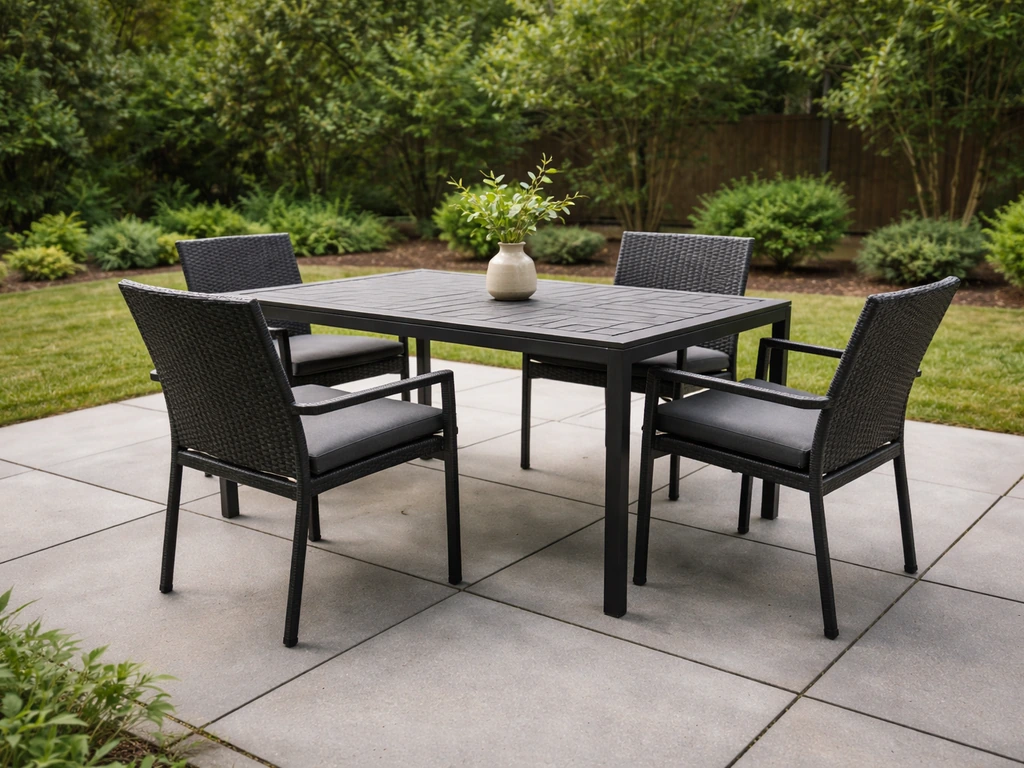
The surface material should follow the function, not the other way around. Here's how to think about it by use case.
Outdoor dining and entertaining
You need a flat, firm surface that furniture won't wobble on and that looks smart when dressed with a table and chairs. Large-format porcelain or natural stone slabs are the go-to here, especially in a light neutral tone that reads as a clean, intentional design choice rather than just the ground. A 600x600mm or 600x900mm format suits most domestic patios well. Keep the joint width tight (around 10mm) and use a matching grout for a seamless look.
Poolside and wet zones
Slip resistance is the priority. Choose a brushed or sawn-finish porcelain, a textured concrete paver, or rubber tiles. Light tones reflect heat and keep the surface cooler underfoot. Avoid riven slate and any polished or smooth-finish materials. Resin-bound aggregate in a light buff or grey also works very well around pools because it drains freely and stays cool.
Fire pit and BBQ zones
Use non-combustible materials near any open flame: concrete pavers, porcelain, or natural stone all work. Avoid composite decking and rubber immediately around a fire pit. A defined zone of contrasting paving within a larger decked or resin-bound surface can create a deliberate design feature while being practical and safe.
Cottage and traditional gardens
Natural stone, particularly warm-toned sandstone or tumbled limestone, feels authentic in a traditional garden setting. Reclaimed materials like old York stone or clay pavers suit period properties well. If budget is tight, good quality concrete pavers with a textured, aged finish can get close to the look for significantly less money. Natural stone can look like a premium option on a budget, and if you want more budget-friendly ways to compare finishes, see patio alternatives on a budget. Wide, planted joints (seeded with creeping thyme or mind-your-own-business) soften the look beautifully.
Contemporary and low-maintenance gardens
This is where large-format porcelain in a concrete-effect or stone-effect finish earns its place. Pair it with composite decking for a second zone, and keep the palette tight to two or three tones. Flush ACO drainage channels built into the surface look purposeful rather than utilitarian. Resin-bound gravel in a complementary tone works well as a surrounding area or path material connecting different zones.
Small patios and balconies
Weight and drainage matter here, especially on balconies with load limits. Porcelain tiles on adjustable pedestal supports (raised deck tile systems) are ideal: they're lightweight per unit, allow drainage beneath, and can be lifted to access waterproofing layers below. Rubber interlocking tiles are another practical option for renters or anyone who wants something reversible. Think carefully about patio alternative materials for constrained spaces, where a standard full excavation build-up may not be possible or practical. Choosing the right patio alternative for small spaces can make a big difference to drainage, comfort, and long-term maintenance.
Whichever surface you land on, the next practical steps are straightforward: measure your area accurately (add 10% for cuts and wastage), get three supply quotes so you can sense-check pricing, and if you're hiring a contractor, ask specifically what their sub-base specification is and whether the drainage fall is included in their quote. Those two questions alone will tell you whether you're dealing with someone who knows their trade.
FAQ
Can I put a new patio surface over my existing concrete slab or paving blocks?
Sometimes, but only if the existing base is sound and already flat. For bonded surfaces like porcelain on mortar or resin-bound, you generally cannot rely on uneven slabs or cracked joints, you need preparation to remove weak spots and achieve the right fall. If your slabs rock, or you have movement, the safer route is to excavate to formation level and rebuild the sub-base, otherwise new paving will inherit the problem.
What’s the difference between R11 and PTV for slip resistance, and which should I use when shopping?
R-rating is typically used to describe footwear slip resistance for specific test conditions, while PTV is a pendulum friction value used on many paving products. Retailers vary in what they publish, so use whichever is provided on the product data sheet, then match it to outdoor residential needs (for wet conditions, the article’s targets are a useful benchmark). If a product shows only “interior” ratings, assume it’s not suitable for wet outdoor use.
Is resin-bound the best patio alternative if I want great drainage, but I’m worried about cracking?
Resin-bound can be excellent for drainage, but cracking is mostly a base issue. Make sure the contractor specifies a stable, well-compacted sub-base and verifies that the existing ground will not move (settling, washout, or weak subsoil). Ask how they handle the perimeter edges and whether they will treat control joints or weak zones, repairs are usually more visible than with pavers.
How do I choose the right jointing sand for concrete pavers, and will it stop weeds for good?
Polymeric jointing sand reduces weed intrusion by locking joints, but it does not make weeds impossible forever. Use the correct grain size for your paver thickness and follow the manufacturer’s compaction and activation steps, typically with controlled watering. If weeds already established in joints before installation, you may need to treat and remove them first to prevent regrowth.
What’s the minimum patio fall I should plan for, and do I need to worry about where water ends up?
A common target is about 1:60 to 1:80 (roughly 15 to 17mm drop per metre), but the important part is directing flow away from the house, not just hitting a number. Plan where the water will go, toward a lawn edge, border, or an ACO channel, and ensure that your outlet will not saturate a boundary or cause pooling against foundations.
If my patio is on a slope already, can I still keep drainage “right” under different materials?
Yes, but you may need to adjust construction thicknesses so the finished surface follows the required fall. Materials that require a flat mortar bed, like large-format porcelain, often mean more rigid levelling, while pavers can sometimes be adjusted more easily by changing bedding and joint thickness. If you cannot achieve the fall without major height changes, consider a layout change (for example, adding a channel drain) rather than forcing the material to compensate.
Do dark porcelain, slate, or rubber tiles feel too hot in summer, and what are practical ways to handle heat?
Dark finishes can become uncomfortably hot under direct sun. Practical options are choosing lighter tones, using a grooved composite decking zone for seating, or adding shade structures near dining areas. If you must go dark, avoid polished finishes and use textured surfaces because they also improve wet grip, reducing the temptation to walk slowly and avoid the patio.
For pet owners, are all sealants and joint compounds safe around dogs?
Not all. Even “outdoor” products can be harmful if a dog chews or licks them before they fully cure. Confirm the pet safety and curing time on the specific sealant or joint compound before applying, and keep pets off the surface until the product has dried and reached full cure.
How long will a patio alternative last if I do minimal maintenance?
If you want low maintenance, surfaces that are inherently stable and sealed or bonded tend to perform best. Porcelain, properly installed concrete pavers with polymeric joints, and resin-bound are usually the lowest-maintenance options in the article’s list, provided the sub-base is built correctly. Loose gravel will look fine at first but typically needs periodic topping up and weed control even when installed over membrane.
Is decking a good patio alternative on uneven ground, and does it need the same sub-base as paving?
Decking can work on uneven or constrained areas because it uses a framework, but the base still needs to be stable and level enough to support joists. Composite decking can dent under heavy point loads if joist centres are too wide, so heavy furniture needs closer joists (the article’s guidance is a useful starting point). If you have existing waterproofing layers (like on a balcony), raised deck tile systems can be a better route because they allow access.
What’s the biggest DIY mistake when installing a patio alternative, and how can I avoid it?
The most common failure is incorrect sub-base compaction and drainage fall, not the top surface. Use correct layer depths and compact each layer, and check fall with a string line or laser, then verify the slope actually moves away from the house. If you’re unsure, hiring a plate compactor is not enough by itself, you need correct build-up and an understanding of how the base consolidates.
How many quotes should I get, and what specific questions should I ask to compare them fairly?
Aim for three supply-and-fit quotes so you can compare more than just the material price. Ask what the sub-base specification is (depth, type, and whether they compact in layers) and whether drainage fall and any channel drains are included. Also ask who supplies and installs edge restraints, because edge failure is a common reason paving shifts even when the field looks correct.
For small patio spaces or balconies, what changes in material choice and construction approach?
On balconies and constrained spaces, weight and access matter as much as comfort. Porcelain on adjustable pedestal supports can be ideal because it stays above waterproofing and still provides drainage beneath, whereas full excavation build-ups may be impossible. If you rent or want reversibility, interlocking rubber tiles can be easier to replace, but check UV stability for long sun exposure.