
The best patio alternative for most UK gardens is either resin-bound gravel, timber or composite decking, or porcelain paving slabs, depending on your budget, drainage situation, and how you want to use the space. Each one outperforms traditional concrete or cheap patio slabs in at least one meaningful way, whether that's drainage, looks, warmth underfoot, or long-term durability. While patio alternatives can vary a lot, choosing between patio vs alfresco comes down to how you want the space to feel and perform for your site conditions. The key is matching the material to your specific site conditions and use-case, because what works brilliantly on a flat, well-drained plot can fail fast on a sloped, clay-heavy garden.
Patio Alternatives UK: Best Surfaces, Costs and How to Install

Miles Sutton
16 Jun 2026
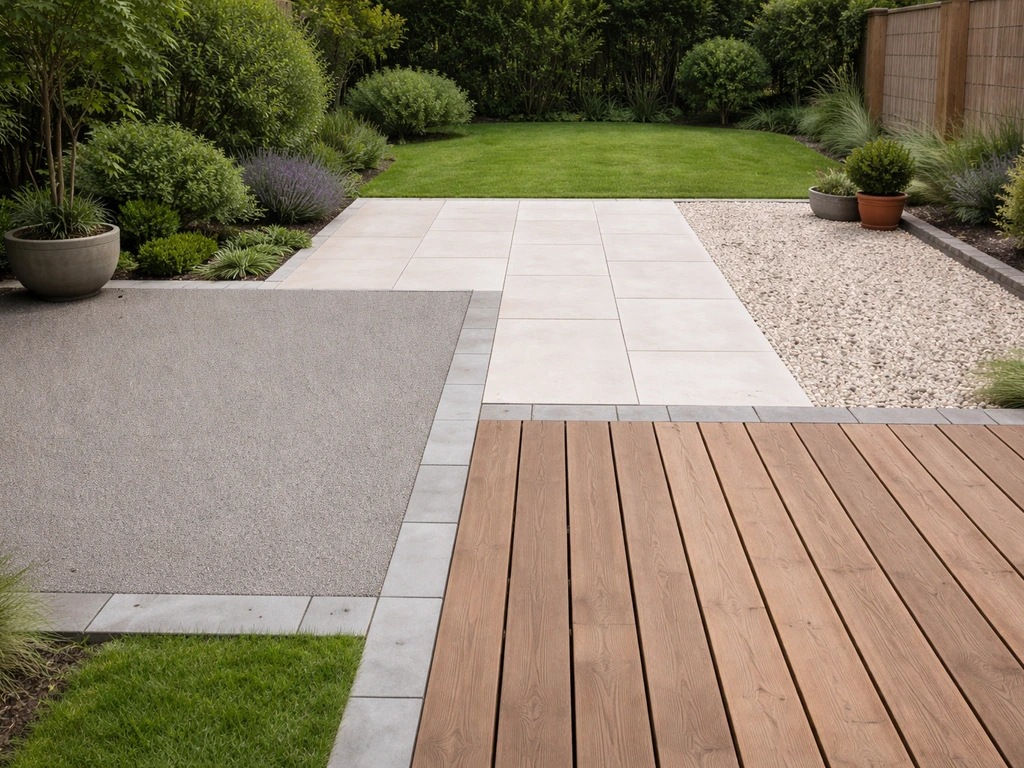
Which patio alternative fits your goal
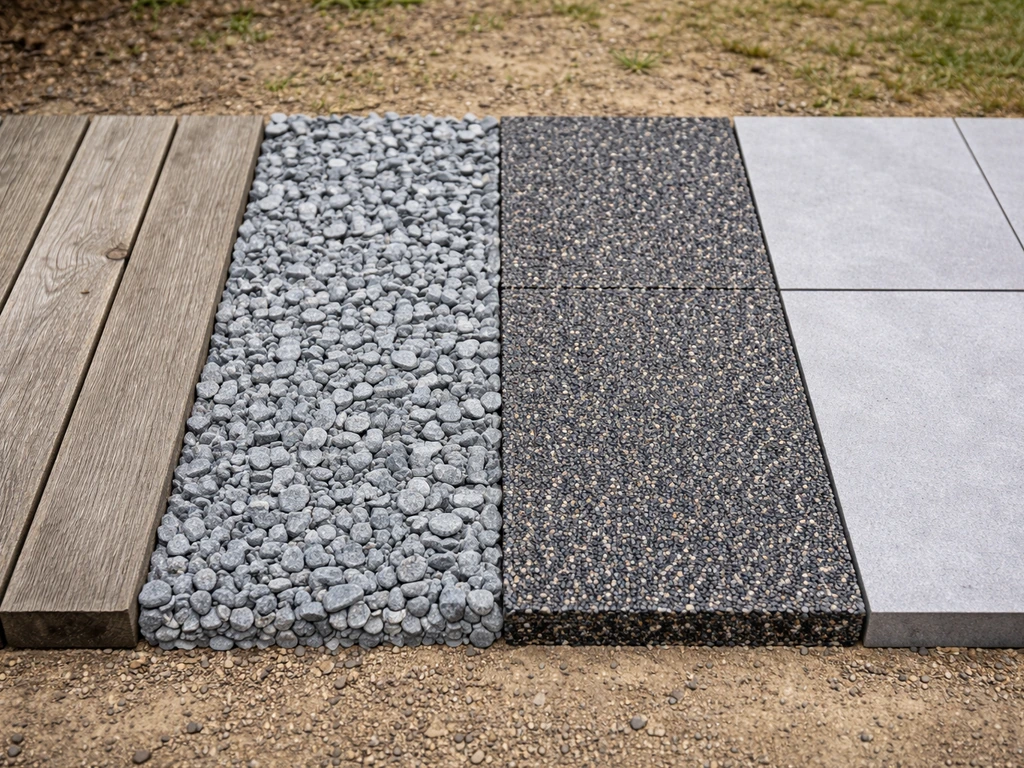
Before diving into comparisons, it helps to know which option is most likely to suit you based on what you actually need. Here's a fast-track guide:
| Your situation | Best-fit alternative | Why |
|---|---|---|
| Entertaining adults, clean look, low mess | Resin-bound gravel or porcelain slabs | Smooth, weed-resistant, drains well, easy to clean |
| Kids and pets using the space daily | Composite decking or resin-bound gravel | Splinter-free, soft-ish underfoot, hoseable |
| Hot tub or water feature installation | Composite decking or concrete block paving | Can be built with structural support; rated for load |
| Accessibility or step-free requirement | Resin-bound gravel or large-format porcelain | Flush, level finish; no trip edges; wheelchair-friendly |
| Tight budget, DIY-friendly | Gravel with weed membrane or bark chip areas | Very low cost, minimal groundwork, easy to install |
| Sloped or awkward garden shape | Decking on a subframe or gravel with edging | Can be levelled with frame; gravel fills irregular shapes |
| Natural or cottage garden style | Stepping stones, bark paths, or grass with edging | Blends naturally; low visual impact |
| High-traffic area, durable surface needed | Block paving or porcelain on a solid sub-base | Handles regular foot traffic and furniture weight |
If you're still deciding between a full hard-surface replacement and something softer and more informal, it's worth thinking about whether you actually need a rigid surface at all. A well-edged gravel or bark zone can serve as a genuine patio alternative for light use, especially in a cottage or wildlife garden setting. For an easy patio alternative that still feels natural, a well-edged gravel or bark zone can be a practical choice for light use.
The main UK patio alternatives compared
These are the options UK homeowners are actually choosing right now, along with an honest look at where each one works, and where it doesn't.
Resin-bound gravel
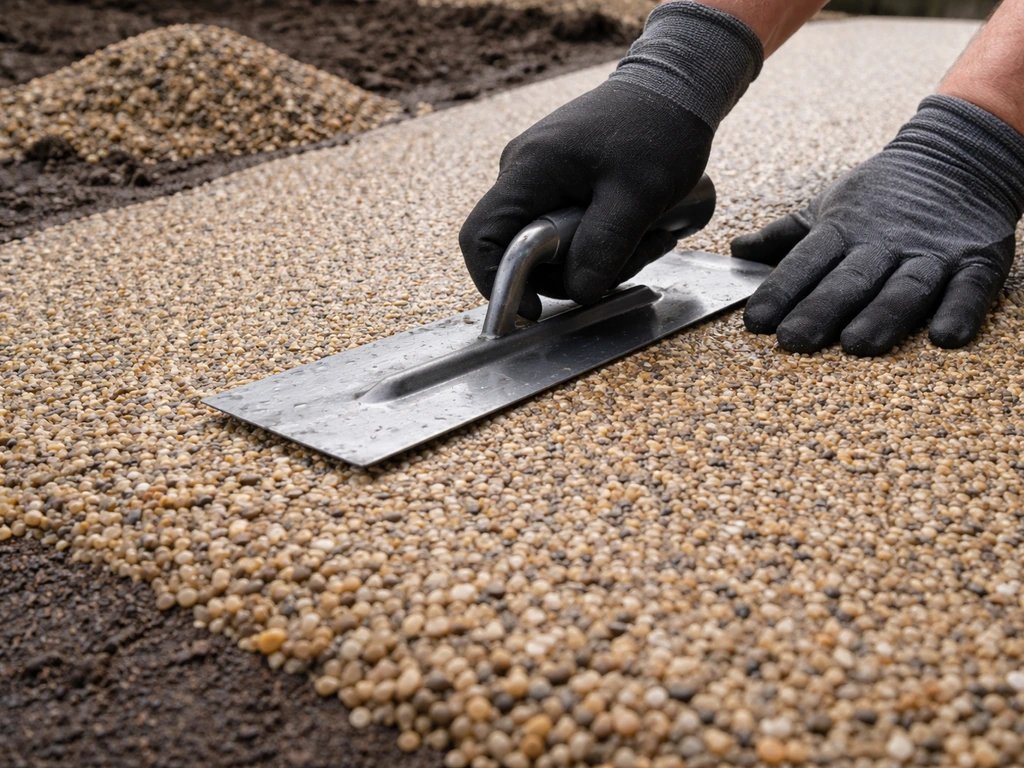
Resin-bound surfacing is genuinely one of the best all-round patio alternatives available in the UK today. A layer of aggregate (usually 6–18mm stone) is mixed with UV-stable polyurethane resin and laid onto a solid base, creating a smooth, permeable surface that looks smart and drains freely. It handles UK weather exceptionally well: freeze-thaw cycles don't crack it the way they crack concrete, moss is slow to establish, and it doesn't hold puddles. The finish looks clean enough for contemporary gardens but also suits more traditional settings depending on the aggregate colour chosen. The main downsides are cost (it's not cheap) and the need for a proper solid base underneath, if the base moves, the resin surface can crack.
Composite and timber decking
Decking is the obvious go-to when you need to level out a sloped garden or create a raised entertaining area. Composite decking (wood-fibre and recycled plastic boards) has largely replaced pressure-treated softwood for new installs because it doesn't rot, split, or need annual oiling. It's warmer underfoot than stone on a cool UK morning and works brilliantly for families with kids or dogs. The catch is the subframe: it needs to be built properly on a solid, level footing with adequate airflow underneath to prevent moisture build-up. Traditional softwood decking is still cheaper upfront but requires more maintenance and typically needs replacing within 10–15 years. Composite boards last 25 years or more with minimal effort.
Porcelain and natural stone paving slabs
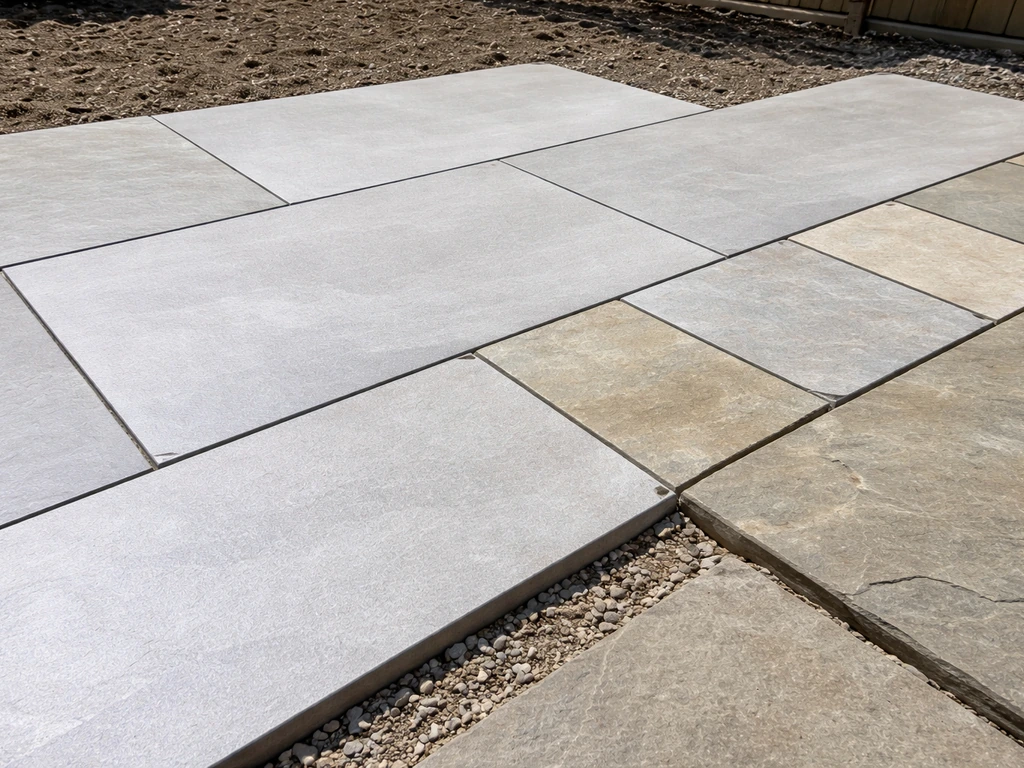
Large-format porcelain slabs have become enormously popular in UK gardens over the last five years, and for good reason. They're frost-proof, extremely low-maintenance, and available in a wide range of finishes including convincing stone and wood-effect options. Natural stone (sandstone, limestone, slate) is a more traditional alternative with genuine character, though it requires sealing and more careful cleaning to prevent algae and staining in damp conditions. Both options need a full mortar bed or pedestal system on a well-compacted sub-base to prevent movement and cracking. Done right, they last decades. Done badly, thin bed, poor sub-base, they'll rock and crack within a couple of years, which is one of the most common patio installation mistakes in the UK.
Gravel and loose aggregate
Plain gravel with a good weed-suppressant membrane underneath is the cheapest patio alternative you can install, and it's more versatile than people give it credit for. It drains naturally, fills any shape, and looks great in the right setting. The downsides are real though: gravel migrates onto lawns and paths, it's not great for furniture legs (use flat stepping stones or pads under them), and it can be awkward for anyone with mobility issues. It's best suited to informal seating areas, side-return spaces, or as a low-maintenance surround for a raised bed or water feature rather than a full primary patio area.
Block paving and permeable concrete
Traditional clay or concrete block paving is still a solid choice for a durable, load-bearing patio alternative, particularly if you need to park a vehicle or place heavy garden structures. Permeable block paving (where water drains through the joints) is a particularly good option in UK gardens where drainage is an issue, and it aligns with UK planning guidance around sustainable drainage. Construction specification details for permeable/porous pavement and related SuDS works are set out in CIRIA’s SuDS Manual update paper RP992/16 (hosted by SuDSdrain.org) blank" rel="noopener noreferrer">Permeable block paving. blank" rel="noopener noreferrer">SuDSdrain.org hosts the SuDS Manual update materials (CIRIA RP992), which are commonly referenced for UK permeable and porous pavement design considerations. It's harder to DIY than many homeowners expect because the sub-base build-up is critical, but a professionally laid block-paved area is practically indestructible and adds genuine kerb appeal and value.
Artificial grass and lawn alternatives
Artificial grass is increasingly used as a patio surface alternative, especially in small urban gardens where real grass struggles and a hard surface feels too harsh. Quality artificial turf is soft, clean, and looks good year-round. The environmental trade-offs are worth knowing: it contributes to microplastic pollution and reduces permeability, so it's not always the right call from a drainage or ecology perspective. If you go this route, use a permeable backing type and a sharp sand/grit base rather than rubber crumb to maintain some drainage. Real grass managed as a seating lawn with firm edging and stepping stones works beautifully for light use in larger gardens with decent soil drainage.
At-a-glance comparison
| Material | Approx cost (installed, per m²) | DIY-friendly? | Drainage | Maintenance | Best for |
|---|---|---|---|---|---|
| Resin-bound gravel | £60–£120 | No (specialist) | Excellent (permeable) | Low | Clean look, accessibility, drainage |
| Composite decking | £100–£180 | Yes (with skill) | Good (gaps) | Very low | Slopes, families, entertaining |
| Timber decking | £60–£120 | Yes | Good (gaps) | Medium–high | Budget-conscious, traditional look |
| Porcelain slabs | £70–£150 | Moderate | Moderate (jointed) | Very low | Contemporary gardens, durability |
| Natural stone slabs | £60–£130 | Moderate | Moderate | Medium | Traditional, character gardens |
| Gravel (loose) | £10–£30 | Yes (easy) | Excellent | Low–medium | Informal areas, low budget |
| Block paving | £60–£130 | Difficult | Good–excellent (permeable type) | Low | Heavy use, driveways, durability |
| Artificial grass | £30–£80 | Yes | Moderate (depends on base) | Low | Small urban gardens, pets |
Costs and value in the UK: what to budget realistically
The figures above give a rough installed price range, but real-world costs depend heavily on your location, the size of the area, and what groundwork is needed. A 20m² resin-bound patio in the South East might cost £1,800–£2,400 for materials and installation. The same area in composite decking might run £2,000–£3,600 depending on the deck height and subframe complexity. Porcelain slabs on a simple flat base could come in at £1,400–£3,000 for 20m² professionally laid.
What drives costs up beyond the material itself: removing an existing patio (add £200–£600 for skip hire and labour on a typical domestic area), significant sub-base build-up on soft or clay ground (can add £300–£800), and any drainage work like installing a channel drain or soakaway (£300–£1,000+). If your existing patio base is solid and level, you can sometimes lay new materials directly on top, which saves significant money.
From a value perspective, hard-landscaped outdoor space consistently adds value to UK properties when done well. A professionally installed, well-designed patio area is estimated to return 5–15% of its cost in added property value in typical UK markets, though this varies significantly by area and property type. More practically, a good patio alternative that you actually enjoy using is worth more than a cheap one you're replacing in five years.
If budget is your primary constraint, there are good options covered in more detail elsewhere on this site around patio alternatives on a budget, gravel, timber decking on a simple single-level frame, and stepping-stone setups are all genuinely effective and achievable for under £500 in materials on a typical garden area. If you want to keep costs down, it helps to compare patio alternatives on a budget like gravel, timber decking, and stepping stones.
Sub-base, drainage, and ground prep: the steps that make or break it
This is the section most DIYers skip or underestimate, and it's the single biggest reason patio alternatives fail prematurely in the UK. Get the groundwork right and most surfaces will last decades. Get it wrong and you'll have cracking, sinking, puddles, and regret within a couple of years.
Why UK ground conditions are particularly demanding
The UK has a high proportion of clay-heavy soils, which expand when wet and contract when dry. Combined with our frequent rainfall and freeze-thaw winters, this puts constant pressure on any surface laid on top. A surface that looks fine in summer can start rocking and lifting by the following spring if the sub-base wasn't properly compacted or if water is getting trapped beneath it. This is why drainage is treated as a design priority, not an afterthought.
Standard sub-base build-up for hard surfaces
- Excavate to the correct depth: typically 150–200mm below your desired finished surface level for a domestic patio (more if ground is soft or there's vehicle access).
- Compact the exposed sub-soil thoroughly with a plate compactor. Do not skip this step on clay soil.
- Lay a geotextile membrane over the compacted sub-soil. This prevents fine soil particles migrating up into your aggregate base (a step recommended in UK government guidance on permeable surfacing), and it extends the life of your base significantly.
- Add a 100–150mm layer of Type 1 MOT crushed limestone hardcore. Lay it in 75mm lifts and compact each layer.
- Add your bedding layer depending on surface type: sharp sand (for block paving or slabs), mortar bed (for slabs), resin base (for resin-bound), or concrete pads/posts (for decking).
- Install edge restraints before laying your final surface to prevent lateral spread.
Drainage: how to keep water moving
For permeable surfaces like resin-bound gravel or permeable block paving, water passes through the surface and sub-base into the ground. This is the ideal scenario for UK gardens and is actively encouraged in UK planning guidance for front gardens. The geotextile membrane at the base plays a key role here, it lets water pass through to the soil while preventing aggregate and soil mixing, which would eventually block drainage. If the underlying soil has very poor permeability (compact clay), you may need to connect the sub-base to a drain or soakaway rather than relying on natural infiltration, as noted in UK sustainable drainage design guidance.
For impermeable surfaces (solid mortar-bedded slabs, solid concrete), you need to ensure the surface is laid with a fall of at least 1:80 (roughly 12mm per metre) away from the house and towards a drain, soakaway, or planted area. A channel drain at the edge of the patio collecting runoff before it hits the lawn is a clean solution that prevents waterlogged borders.
On sloped sites, consider whether you need a retaining edge, a cut-and-fill approach, or whether decking on a subframe is actually easier than trying to level the ground. For decking, drainage isn't usually a problem as water runs off naturally, but you do need airflow beneath the boards to prevent moisture build-up and rot, leave at least 150mm of clear space under the frame where possible.
Weed membrane: where it helps and where it doesn't
A weed-suppressant geotextile membrane is essential under gravel and loose aggregate, and useful under block paving. For resin-bound surfaces, the resin itself acts as a barrier. For mortar-bedded slabs, it's less relevant since weeds grow in the joints rather than through the base, use a polymeric jointing compound in the joints instead to block weed growth and ant activity.
DIY vs hiring a pro: where the line is
Honestly, some of these installations are very DIY-able with average competence and the right tools. Others really aren't, not because they're technically impossible, but because the margin for error is narrow and the consequences of getting it wrong are expensive.
Genuinely good DIY options
- Gravel with weed membrane: almost anyone can do this with a spade, a rake, and half a day.
- Single-level timber or composite decking on flat ground: achievable with basic carpentry skills, a circular saw, and a drill. Budget a full weekend for a 20m² area.
- Laying large paving slabs on a bed of sand or mortar: doable with patience, a spirit level, and a rubber mallet — though getting consistent levels takes practice.
- Artificial grass: straightforward installation if the base prep is done correctly, which is the main skill requirement.
Where you should seriously consider hiring a professional
- Resin-bound surfacing: the mixing and laying window is very short (resin starts curing fast), the surface must be laid in one continuous pour to avoid visible joins, and a bad application cannot be easily fixed. This is specialist work.
- Multi-level decking with steps or significant height: structural considerations, balustrade requirements, and Building Regulations may apply for decks over 300mm above ground level.
- Any project involving drainage connections to existing drains or a new soakaway: connections to drainage systems are controlled work and should be done by a qualified professional.
- Porcelain slab installation on a large area: large-format porcelain is heavy, brittle, and unforgiving of uneven beds. An experienced landscaper will lay them far better and faster than most DIYers.
- Any site with significant ground movement history, tree roots nearby, or a high water table: these need professional assessment before you commit to any surface.
When hiring a landscaper or paving contractor, always ask to see examples of previous work (photos and ideally a site visit), get at least three quotes, and make sure the quote specifies the sub-base depth and materials used. Cheap quotes often leave out proper sub-base build-up. That's where corners get cut and problems start.
Keeping it looking good: maintenance, weeds, moss, and longevity
The UK climate is hard on outdoor surfaces. High moisture, shade from fences and walls, and leaf litter all create ideal conditions for moss, algae, and lichen. The good news is that a few simple habits will keep any patio alternative looking clean and prolong its life considerably.
Routine maintenance by surface type
| Surface | Annual maintenance | Moss/algae risk | Key longevity tip |
|---|---|---|---|
| Resin-bound gravel | Brush and occasional pressure wash | Low | Check edges for lifting; repair promptly to prevent water ingress |
| Composite decking | Brush, wash with soapy water, check fixings | Low–medium (in shade) | Clean twice a year; ensure drainage under frame is clear |
| Timber decking | Clean, sand if needed, re-oil or re-stain annually | Medium–high | Oil or treat every year without fail; inspect for rot |
| Porcelain slabs | Brush, pressure wash, re-point joints as needed | Very low | Use polymeric jointing sand to reduce weed/ant ingress |
| Natural stone slabs | Brush, pressure wash, re-seal every 2–3 years | Medium | Seal properly after installation; clean algae before winter |
| Gravel | Rake to redistribute; top up annually | Low | Replace membrane if weeds start coming through at scale |
| Block paving | Pressure wash, re-sand joints, treat moss | Medium | Re-sand joints after pressure washing every year or two |
| Artificial grass | Brush pile upright, rinse with water | Low | Avoid organic debris accumulating; it creates moss habitat |
Tackling moss and algae before they take hold
The most effective approach is preventative: don't let organic material sit on the surface. Sweep up leaves in autumn, clear debris from joints, and make sure there's good airflow and sunlight where possible. Where shade is unavoidable (north-facing patios are notorious for this), use a diluted patio cleaner or proprietary moss killer in early spring and again in autumn. Sodium hypochlorite diluted solutions work well on stone and block paving but can bleach some materials, always test on a small area first. A pressure washer is your best friend for annual maintenance, but on resin-bound surfaces keep the pressure moderate (below 150 bar) to avoid dislodging aggregate.
Long-term durability: what actually shortens the lifespan
- Water trapped beneath the surface: the single biggest cause of early failure on all hard surfaces. Get the drainage right at installation.
- Inadequate sub-base depth: leads to sinking and cracking as ground moves seasonally.
- Skipping joint sealing on slabs and block paving: joints fill with organic matter, weeds establish, and water gets in — destabilising the bed over time.
- Neglecting timber decking treatment: untreated softwood decking in a UK climate can begin to rot in as little as 3–4 years.
- Using the wrong cleaning products: acid-based cleaners damage resin-bound surfaces and certain natural stones; always check manufacturer guidance.
The right patio alternative, properly installed on a well-prepared base with decent drainage, should last 15–30 years with minimal effort. The investment in getting the groundwork right at the start is almost always cheaper than fixing a poorly laid surface a few years down the line. Choose the material that suits your site, your budget, and how you genuinely want to use the space, and you'll end up with an outdoor area that earns its keep in the UK climate for years to come.
FAQ
Can I install a patio alternative over an existing patio to save money in the UK?
Sometimes, but only if the existing base is sound, level, and well-drained. You should confirm there are no hollow spots or loose areas, and you may need a height check at door thresholds, steps, and damp-proof course levels. If you are layering onto an older patio, you also have to consider trapped water and joint drainage, which can shorten the life of resin, slabs, and block paving.
What’s the minimum fall (slope) I should aim for if I want to avoid water pooling?
A common rule for impermeable surfaces is at least a 1:80 fall away from the house, which is about 12 mm per metre. For wider areas, check the plan so the water has a clear path to a drain, channel, soakaway, or a planted area, not just toward the nearest edge where it can collect.
Do I need a soakaway or channel drain on clay soil, even with permeable patio alternatives?
Not always, but it depends on how quickly water can soak into your ground. On compacted clay, permeable surfaces can still work short-term, then struggle if infiltration is too slow. A practical decision aid is to test infiltration (or have it assessed) and, if rates are poor, plan a connection to an appropriate drain or soakaway rather than relying purely on permeability.
What sub-base depth should I ask a contractor to specify?
Ask for the specified build-up in writing, not just the finished surface type. A good quote will include base type (for example, MOT Type 1), compacted thickness, membrane details if relevant, and the target compacted density or method. If the quote only mentions the paving or resin surface, that’s a warning sign for early settlement and cracking.
Is resin-bound gravel always the right choice for every UK garden?
It is a strong all-rounder, but it is not ideal if you cannot build the correct solid base. If the sub-base is weak, resin can crack once the base moves, even if the surface itself is freeze-thaw resistant. It also needs correct edging and drainage planning so fines and water do not end up trapped at the borders.
Can I put porcelain slabs directly on sand or just a thin bed to keep costs down?
You generally should not. Large-format porcelain needs a proper mortar bed or a pedestal system on a well-compacted sub-base, otherwise you risk rocking slabs, cracking, and water getting underneath. If budget is tight, it is often better to reduce slab waste or adjust the layout than to cut the sub-base specification.
What are the biggest DIY mistakes with patio alternatives in the UK?
The top issues are poor groundwork (insufficient excavation, weak compaction, or thin build-ups), incorrect drainage fall, and inadequate edging so materials migrate or frames shift. Another common mistake is skipping geotextile where it is needed, or using the wrong jointing material between slabs and block paving, which can accelerate weeds and movement.
How do I stop gravel from migrating onto my lawn and paths?
Use a properly built edge restraint, for example concrete or metal edging set into a compacted base, and ensure the gravel depth is consistent. For the lawn side, consider a tighter border and, if the area is informal, add stepping stones or pads to concentrate traffic. Without restraint, traffic and freeze-thaw can push gravel outward over time.
Do I need weed control underneath artificial grass, and how should the base be prepared?
Yes, weed suppression still matters. The key is to remove topsoil and prepare a firm, graded base that drains, usually with a sharp sand and correct compaction so the turf does not become uneven. Also confirm you are using a permeable backing system and that the drainage strategy for the area matches your wider garden drainage, not just the turf layer.
Will decking or composite boards become slippery when wet?
They can, depending on board texture and local algae or moss build-up. Composite is often less prone to rot than timber, but it can still become slick in shaded, damp areas. If you have north-facing shade, consider boards with a more textured finish and schedule periodic cleaning to stop algae buildup.
What’s the best low-maintenance option for shady gardens?
For persistent shade and leaf litter, porcelain or properly installed resin-bound surfacing usually cope well because they resist moss establishment better than bare stone surfaces. If you choose natural stone, sealing and regular cleaning are more important to prevent algae staining. Whatever you pick, focus on airflow, debris removal, and keeping organic matter off joints and edges.
How do I choose between stepping stones, gravel, and a full patio for a small space?
A decision aid is how often you will want direct access. Stepping stones work well if you only need occasional routes, for example to a shed or side gate. Gravel or a gravel-based zone suits informal seating and circulation, while a full paved area is best if you want furniture, wheelchairs, or regular entertaining. Match the surface to foot traffic patterns rather than just the look.
What should I ask for in quotes to avoid unpleasant surprises later?
Ask the contractor to include excavation depth, sub-base layers and materials, drainage provision (fall and any channels or connections), and what edge restraints they will use. Also ask for a clear programme for removal and disposal of the old surface, and confirm who is responsible for groundworks if you uncover soft spots or unexpected clay conditions.