
You can replace a patio dining table's glass top yourself if you measure correctly, order tempered glass in the right thickness and edge profile, and handle the install carefully. If your setup also includes a patio railing bar top, make sure the measurements and glass thickness will match how the surface is supported outdoors patio dining table's glass top.
Patio Glass Top Replacement: DIY Patio Dining Table Fit Guide

Miles Sutton
6 Jun 2026
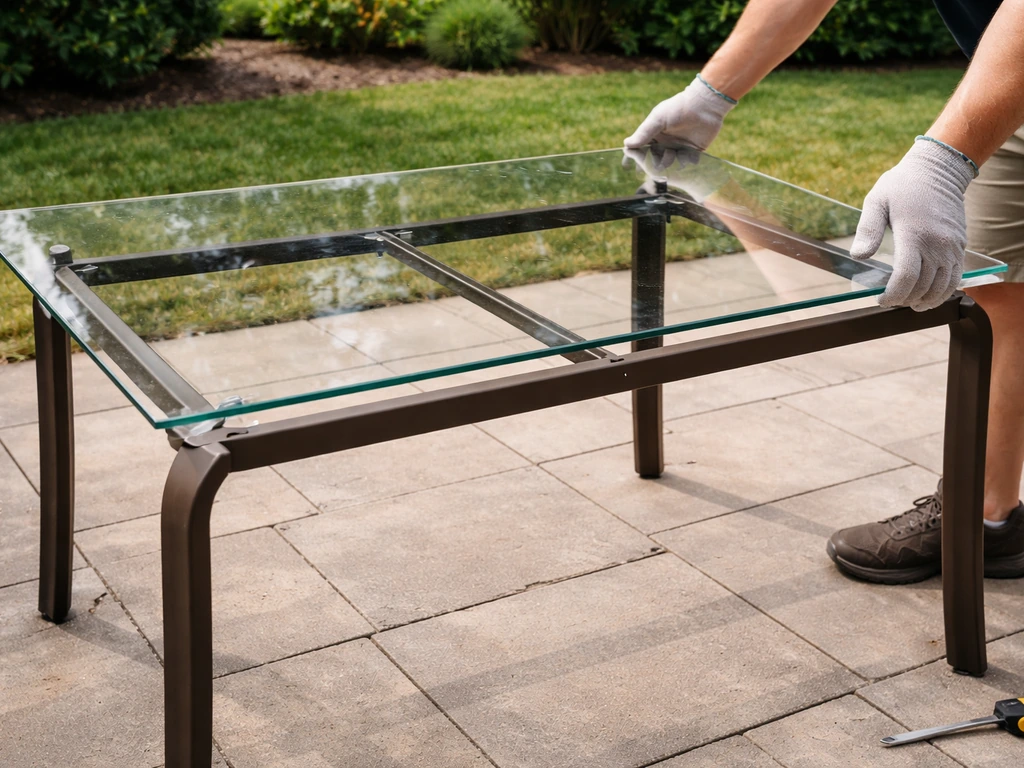
A patio bar top uses the same measurement and tempered-glass approach so it stays safe and stable during daily use. The key is getting three things right before you order anything: the exact dimensions of your current top, the edge and mounting style your table frame uses, and the right glass spec for outdoor use (almost always 3/8" or 1/2" tempered). Get those right and the rest is straightforward.
Identify your patio table glass top type and measurements
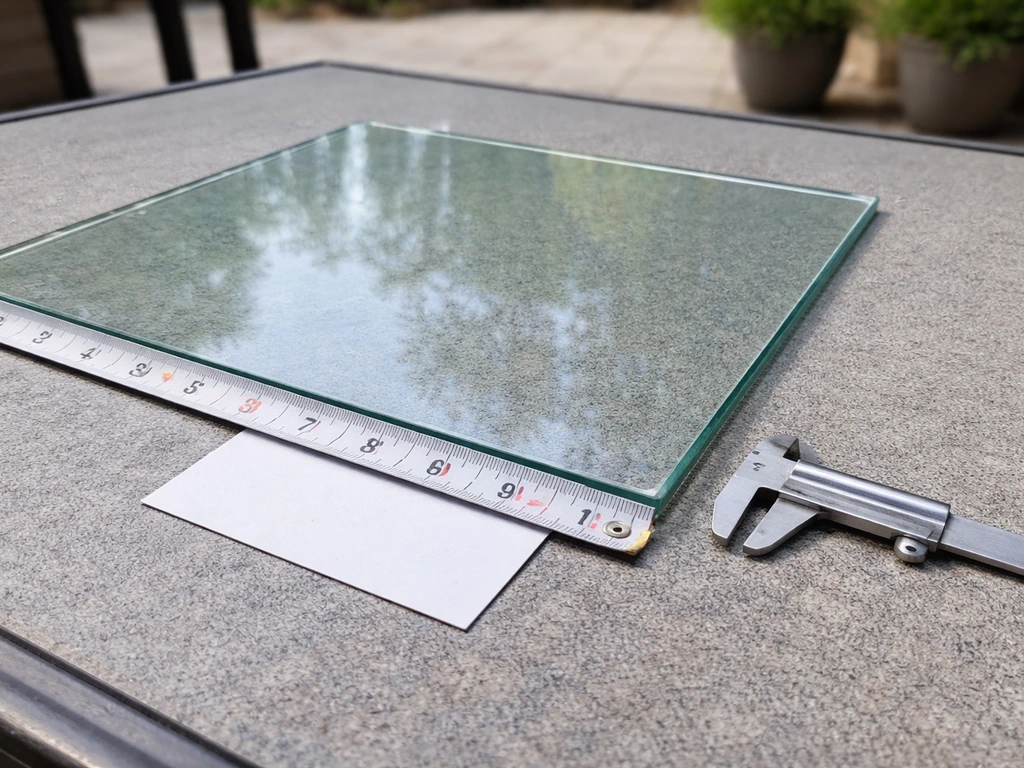
Before you order anything or even browse options, spend 15 minutes doing a proper assessment of what you currently have. This step saves you from receiving glass that doesn't fit, which is a frustrating and expensive mistake.
Measure the glass itself, not the table frame
If your old glass is still intact, measure it directly: length, width (or diameter for round tops), and thickness. Use a tape measure for the outer dimensions and a caliper or ruler for thickness. Common patio glass tops run 1/4", 3/8", or 1/2" thick. If the glass is already broken, measure the inner lip of the frame where the glass sat, then decide whether you need a snug fit inside the frame or a top that rests on top of the rim. For shapes, note whether you have a rectangle, square, oval, round, or something more unusual like a hexagon or teardrop.
Figure out your mounting style
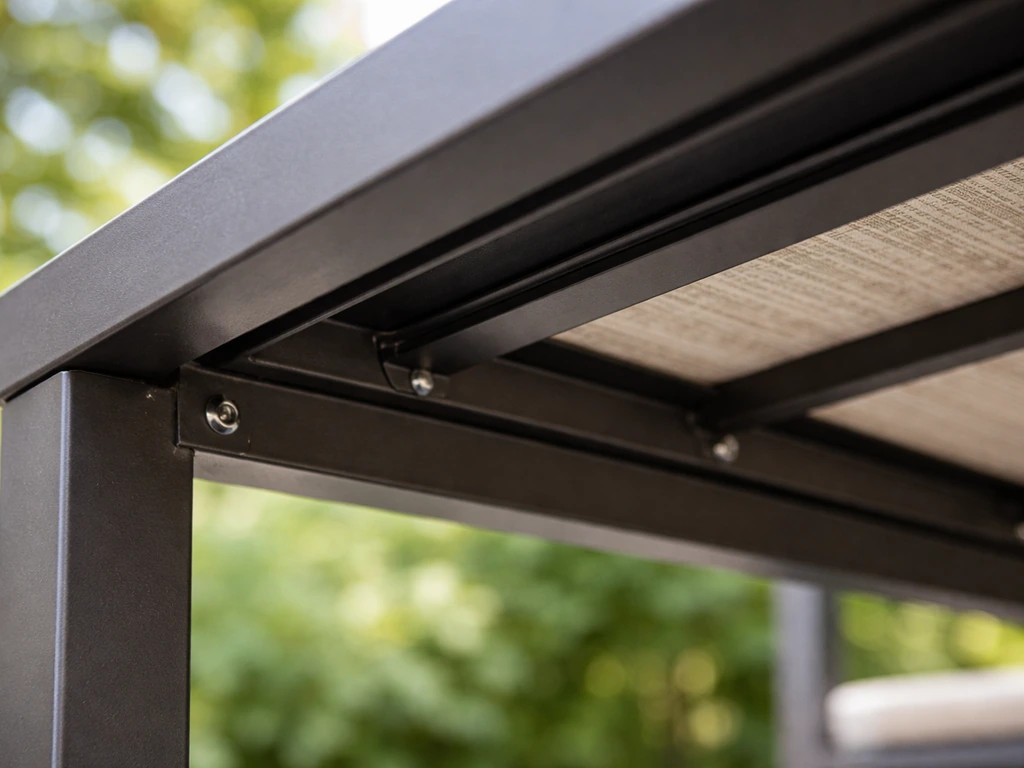
Patio tables use a few different ways to hold the glass in place. The most common are: a recessed channel or lip in the frame where the glass simply rests, metal spring clips that grip the underside of the glass around the perimeter, and a full rim that the glass sits flush inside. Some higher-end tables use rubber or silicone grommets in a center hole (umbrella hole) to anchor the glass.
Look underneath your table and check whether there are clips, a rubber gasket, a metal channel, or just open frame rails. If you see clips, try to identify the brand (Winston, Tropitone, Brown Jordan, and others all use proprietary clip styles). Replacement clips are model-specific, so note the brand name stamped into the frame if you can find it.
Check for an umbrella hole
Many patio dining tables have a center hole for a market umbrella, typically 1.5" to 2" in diameter. If your old top had one, your replacement needs to match. Note the diameter exactly. If you're not planning to use an umbrella, you can order the glass without a hole or pick up a small plastic cap plug to cover an existing one.
Document the edge profile
Run your finger along the edge of the existing glass (carefully) and look at it from the side. Common edge finishes on patio glass include flat polish (a clean, sharp 90-degree finish), pencil edge (a slight rounded profile, the most common on dining tables), and beveled edge (an angled ground face that gives the glass a decorative look on thicker pieces). Your replacement doesn't have to match the old edge exactly for functional purposes, but if the glass sits exposed on top of the frame, matching the profile keeps things looking intentional.
Choose the right replacement glass
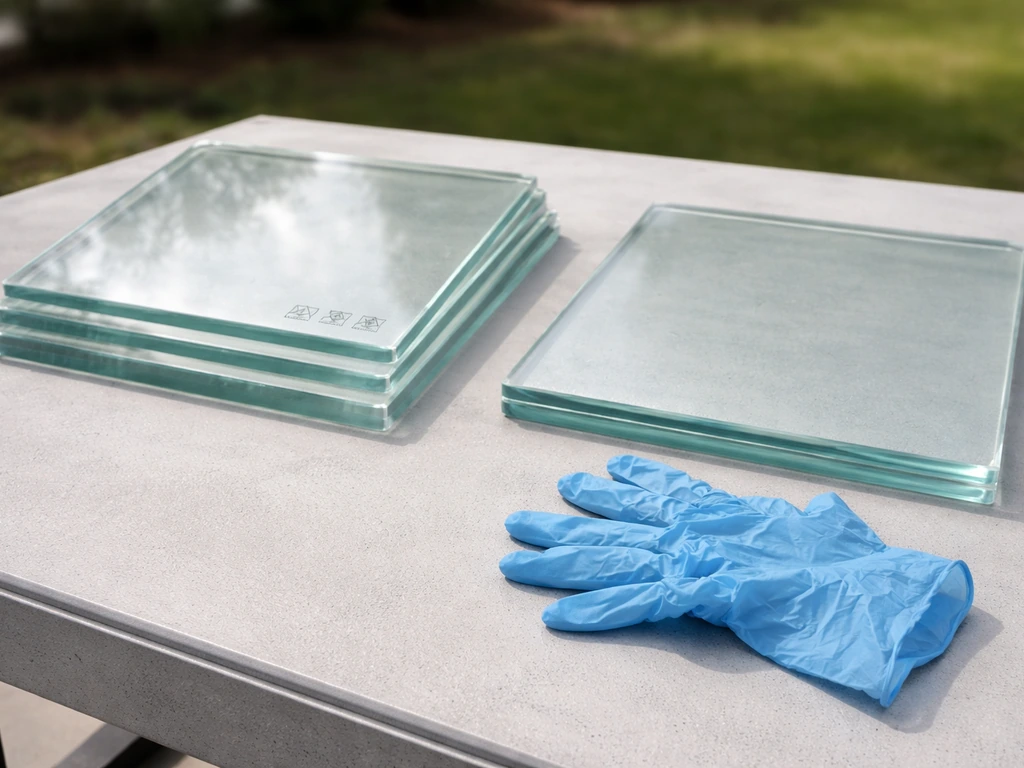
For any patio table that lives outdoors, tempered glass is non-negotiable. Standard annealed (regular float) glass breaks into large, sharp shards that are genuinely dangerous around bare feet and in the wind. Tempered glass, by contrast, is roughly four times stronger than annealed glass and when it does break, it shatters into small, granular pieces rather than jagged fragments. This is the safety difference that matters outdoors.
Thickness guide
Thickness is a function of how the glass is supported. If your table has a full-perimeter frame or channel that supports the glass all the way around the edge, 3/8" is the standard choice and handles normal dining loads without flexing. If your table has a pedestal base or open rails where the glass spans unsupported across a larger area, go with 1/2" for the extra rigidity. Avoid 1/4" glass on any patio dining table exposed to weather and wind load. It's too thin for outdoor conditions and more vulnerable to thermal stress from direct sun.
Tempered vs laminated
You'll occasionally see laminated safety glass offered as an alternative. Laminated glass uses a plastic interlayer (usually PVB) that holds broken pieces together after breakage, similar to a car windshield. The advantage is that a broken top stays in one piece instead of scattering. The trade-off is cost: laminated glass is noticeably more expensive and heavier. For most residential patio dining tables, tempered is the right call. If you have young children or pets and the table is in a high-traffic zone, laminated is worth considering.
Edge options for outdoor tables
The edge finish affects both looks and safety. A seamed edge is the most basic finish, where sharp arrises are lightly ground off but the edge is not polished. It's fine if the edge sits inside a frame and won't be touched. A ground or pencil-polished edge is the most practical choice for exposed edges on a patio table because it's smooth to the touch and durable.
The National Glass Association Engineering Standards Manual describes common edge preparation/finishes and notes that edge preparation quality affects edge chipping risk and durability edge finish affects durability and edge chipping risk.
A beveled edge looks elegant and is usually found on thicker glass (3/8" and up), but note that not all glass shops can bevel thinner glass. If you're ordering from an online customizer, pencil edge or flat polish is the safest default.
| Glass Type | Strength | Break Pattern | Best For | Relative Cost |
|---|---|---|---|---|
| Tempered (safety glass) | ~4x annealed | Small granular pieces | Most patio dining tables | Moderate |
| Laminated safety glass | Similar to tempered | Fragments held by interlayer | High-traffic or child/pet areas | Higher |
| Annealed (float) | Baseline | Large sharp shards | Not recommended outdoors | Low |
Where to source your replacement glass
You have three realistic options: order custom-cut glass online, go to a local glass shop, or track down an OEM replacement through the furniture manufacturer or a patio parts supplier. Each has real trade-offs.
Online glass customizers
Sites like Dulles Glass, Fab Glass & Mirror, and Sunset Glass let you enter exact dimensions, pick your shape, choose thickness, select edge finish, and add a hole if needed. You get a price instantly and the glass ships to your door on a pallet or in padded crating. This works well for standard shapes (rectangle, round, oval). Lead times typically run 5 to 10 business days. The downside is that if your dimensions are off by even 1/4", the glass may not fit and returns on custom-cut glass are rarely accepted.
Local glass shop
A local glass shop can measure the table in person (sometimes for a small fee, sometimes free), cut to fit, and often have the glass ready faster than online orders. If your table has an unusual shape, worn or missing mounting hardware, or you're not confident in your measurements, this is the better option. Local shops can also advise on whether your frame needs a gasket or rubber bumpers before the new glass goes in.
OEM parts and patio furniture suppliers
If you have a branded table from Winston, Tropitone, Brown Jordan, or a similar manufacturer, check with the brand directly or with specialty patio parts suppliers. Some brands sell replacement glass tops sized to their specific frames, along with any matching rim clips or gaskets. This is often the most reliable fit but can be the most expensive route, and availability depends on whether your model is still in production. If you are trying to match a specific setup like an east tea can patio table, check that the replacement glass size and mounting style align with that exact frame design.
DIY vs professional installation
If the glass is a standard shape, under about 48" in its longest dimension, and weighs under 60 lbs, you can handle installation yourself with a helper. Larger or irregularly shaped tops are harder to maneuver safely and it's worth paying a glass shop to deliver and install. A professional install typically adds $50 to $150 to your cost but eliminates the risk of breaking expensive glass during handling.
How to remove the old top and install the new one
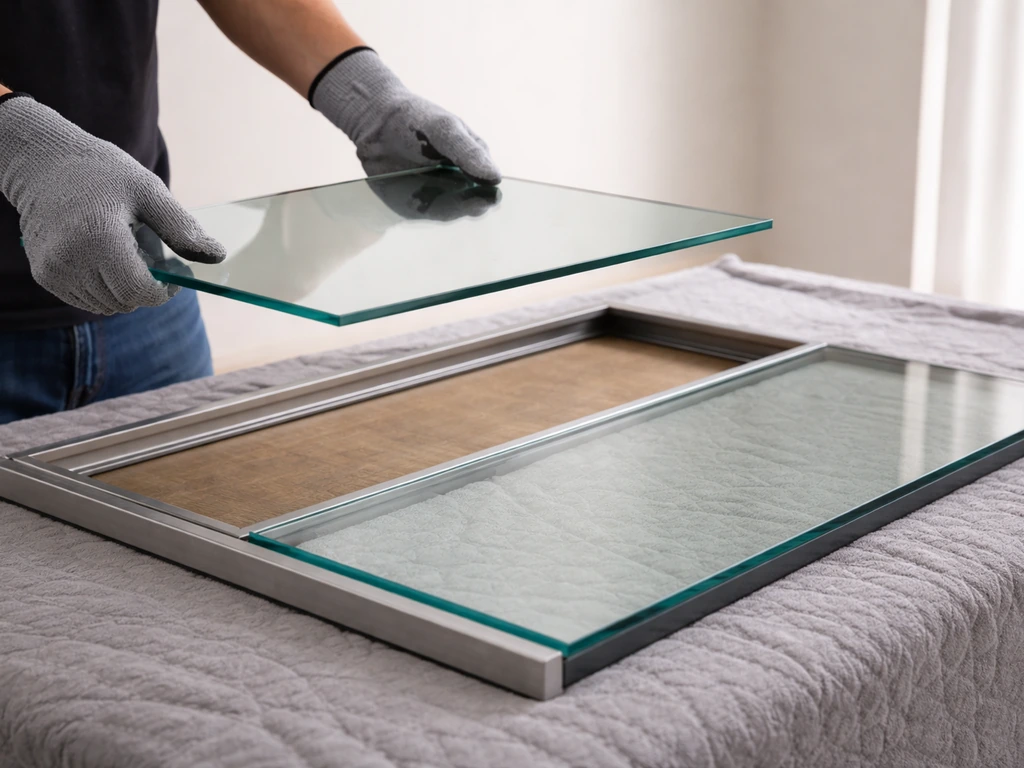
Do this on a calm day, not when it's windy. Have a helper available. Wear cut-resistant gloves throughout.
- Clear the table completely and move it to a flat, stable surface. If the table is on a deck or patio with gaps, lay a tarp or blanket underneath so that if anything slips it lands softly.
- Examine the mounting system before touching the glass. If there are spring clips, identify how many and where they are. If the glass sits in a channel, check for any sealant or adhesive tape around the perimeter.
- Release or remove any clips. Spring rim clips can usually be compressed with a flathead screwdriver to release them from the glass edge. Set the clips aside in a small container so they don't get lost.
- Carefully slide the old glass toward one end of the frame (for frames with a channel) or lift it straight up with a helper at each end. Carry it vertically rather than flat whenever possible. Set it aside leaning against a solid wall or fence, not flat on the ground where it can flex and crack.
- Clean the frame thoroughly. Remove any old gasket material, rubber bumpers, silicone residue, or debris from the channel or mounting points. Inspect the frame for rust, bent rails, or damaged clips and address those before the new glass goes in.
- If your table uses rubber bumpers or a foam gasket strip to cushion the glass, install that now before the new top goes in. Self-adhesive foam tape (1/4" thick, sold at hardware stores) works well in most channels and prevents the glass from rattling against the frame.
- With your helper, lower the new glass slowly into position. For clip-mounted systems, align the glass, then press each clip into place around the perimeter. For channel systems, lower the glass evenly so it settles flat into the channel.
- Check that the glass is level and centered. There should be even clearance (or even overhang, depending on design intent) on all sides. Press down gently on each corner and listen for rattling or rocking. If it rocks, a small additional strip of foam tape under a corner will stabilize it.
- If your table has a center umbrella hole, align it with the frame's hole and insert the rubber grommet or plastic cap before declaring the job done.
Safety, handling, and keeping it weatherproof
Tempered glass is tough, but it has one well-known vulnerability: edge damage. A sharp impact to the edge or corner, even from a tool dropped during installation, can trigger a spontaneous break. Handle the glass by the faces (flat sides), keep the edges away from hard surfaces, and never drop a corner onto concrete or metal.
Handling safely
- Always wear cut-resistant gloves, even with tempered glass.
- Carry large pieces vertically, not flat. A flat pane flexes under its own weight and can crack on the way to the table.
- Two people are required for anything over roughly 24" x 36" or 30 lbs.
- Keep the glass away from hard metal frame edges during positioning. Use a helper to guide it while you support the weight.
- If the old glass broke in place, clean up every shard before starting. Broken tempered glass leaves fine granular pieces that are easy to miss and painful to find later.
Preventing rattling and water intrusion
Wind is the main enemy of a glass table top. Even a well-fitted glass top can rattle or shift in strong gusts if there's no cushioning between the glass and the frame. Self-adhesive foam tape in the channel solves rattling and also prevents water from sitting in the gap between glass and frame, which accelerates frame rust over time. If your table is in a very exposed location, consider a small bead of clear paintable silicone along the interior edge of the channel after the glass is in place. Don't seal the glass fully on all four sides (you want some drainage), but a bead on the two ends reduces wind lift significantly.
Outdoor weathering and UV
Standard clear tempered glass holds up well outdoors. If your table gets direct afternoon sun and you want to reduce glare, low-iron glass (sometimes called ultra-clear or starphire) gives a cleaner, less green-tinted look. It's a cosmetic preference, not a performance requirement. For very sunny climates, a patio umbrella over the table is the most practical solution for both comfort and protecting items left on the table surface.
What it costs and how long it takes
Cost depends on size, thickness, and shape. A straightforward rectangle or round tempered top in the 36" to 48" range typically runs $80 to $200 from an online supplier or local shop. Larger tops (60"+ dining tables), unusual shapes, or low-iron glass push that to $200 to $400 or more. Laminated glass adds roughly 30 to 50 percent to the base price. Shipping on glass from online suppliers often adds $40 to $100 depending on size and distance.
| Scenario | Estimated Cost | Lead Time |
|---|---|---|
| Small round top (under 30" dia.), online order | $60–$120 | 5–10 business days |
| Standard rectangle (36"–48"), online order | $100–$200 | 5–10 business days |
| Large dining top (60"+), online order | $200–$400+ | 7–14 business days |
| Local glass shop, any size | $100–$350+ | 1–5 business days |
| OEM brand replacement (if available) | $150–$500+ | Varies widely |
| Professional delivery and install add-on | $50–$150 extra | Same as glass lead time |
If the replacement doesn't fit or the hardware doesn't match
This happens more often than you'd expect, and it's almost always a measurement or mounting-style mismatch. Here's how to work through it.
Glass is too large
If the glass overhangs the frame when it should sit inside it, you ordered to the outer frame dimension instead of the inner channel dimension. A local glass shop can sometimes grind down the edge slightly (a few millimeters) on a tempered piece, but this is limited and can compromise the temper integrity at the edge. Realistically, if it's more than 1/4" too large, you need a new piece. This is why measuring the channel interior (not the outer frame) matters so much before ordering.
Glass is too small
A top that's slightly too small for a channel mount can sometimes be shimmed with a thicker foam tape to take up the slack and prevent movement. More than about 1/2" of gap and the glass will feel wobbly and look wrong. Order a new piece. On open-frame designs where the glass rests on top, a slightly smaller top is usually fine as long as it's still well-supported.
Clips don't match
If the replacement glass is the right size but the existing clips won't engage it (often because the thickness is slightly different), you have two options. First, try sourcing replacement clips from the table manufacturer or a patio parts supplier. Clips are brand-specific and often sold individually. Second, if you can't find matching clips, a foam tape bed in the frame channel is a reasonable workaround for a table that doesn't see heavy use. For a more permanent solution, a glass shop can drill small holes in the frame and install universal clip hardware.
Frame is damaged
Sometimes the reason the old glass broke is that the frame is bent, rusted, or warped. Before spending money on replacement glass, set a straight edge across the frame rails and confirm the frame is flat. A warped frame puts uneven stress on glass and can cause a new top to crack prematurely. If the frame is salvageable, a metal fabricator or welder can often straighten or reinforce it for under $100.
If the frame is too far gone, it may be time to compare whether a new table is more cost-effective than a restored one. That's also a good moment to consider whether a different top material, like ceramic tile, might serve the space better long-term. A patio table ceramic tile top is a good alternative when you want a different look or better long-term durability than glass.
When to call a professional
If you've measured twice, ordered correctly, and the glass still doesn't fit or something about the frame or mounting feels wrong, stop and call a local glass shop or patio furniture repair service. A professional can also help you choose and install the right patio high top table with fire pit glass top for safe, even support outdoors patio furniture repair service. The consultation is usually free or low-cost, and an experienced eye can often spot a frame issue or measurement error in minutes. The cost of a professional assessment is always less than the cost of a second incorrect glass order.
FAQ
Can I replace patio glass top replacement with thicker glass to prevent breakage?
Yes, but confirm the original glass was tempered and check the frame design. Tempered glass must match the thickness used for the support style (channel or full rim), and you cannot “upgrade” to thicker glass if the clips, gaskets, or umbrella-hole opening will not accommodate it. If the top uses spring clips, even a 1/16" to 1/8" thickness mismatch can prevent proper clip engagement or create edge stress.
How can I tell if my replacement patio glass top is truly tempered safety glass?
Avoid using non-tempered window glass or mixed-annealed glass. If you are unsure about the glass type, look for labeling in packaging, ask the supplier to specify “tempered safety glass,” and keep the original carton or invoice. If the glass is unmarked and you cannot confirm it, treat it as unsafe for outdoor use and order tempered.
What should I do if the glass feels tight when I try to seat it?
No, a “snug” fit is different from a forced fit. If the glass binds during installation, it can create edge stress that later triggers breakage. Use foam tape only to remove rattling and small gaps, not to wedge the glass into a channel that is too small for the ordered dimensions.
If the old glass is shattered, where exactly should I measure for a patio glass top replacement?
Not always. When the old top is broken, measure the seating surfaces that define the contact area (inner lip/channel surfaces for a recessed mount, and the resting deck area for a top-on-frame mount). Measure in more than one location, because warped frames can make one dimension slightly smaller or larger than the other.
Do I need to replace gaskets or rubber bumpers when doing a patio glass top replacement?
If the glass sits on rubber or silicone gaskets, keep the gasket material intact and make sure it is oriented correctly. For clip-style mounts, do not replace rubber bumpers with rigid spacers, because it can transfer vibration directly to the glass edge. When in doubt, bring a photo of the mounting area to the glass shop so they match the seal or bumper type.
How do I prevent ordering the wrong size for a recessed channel patio glass top replacement?
Yes, and it’s a common mistake with channel mounts. If your order is based on the outer frame measurement instead of the interior channel dimension, the glass can overhang or bind. A quick check before ordering is to measure the interior lip width and compare it to the glass’s expected resting area depth, not the overall furniture frame.
My clips won’t grab the new glass, can I seal it with silicone instead?
If the clips do not engage, do not rely on silicone caulk to “hold it in place.” Caulk can lock the glass, trap moisture, and increase thermal stress. The better fix is to source the correct clips for your brand/model, or use foam tape as a bed only if the design allows it and the glass remains fully seated without binding.
What’s the safest way to handle and install a patio glass top replacement to avoid edge damage?
Plan for lifting and corner-first movement. Use cut-resistant gloves, keep fingers on the flat faces, and set the glass down on a padded surface before aligning it with the frame. Never carry it corner-down, and avoid sliding the edges across concrete, metal, or rough worktops.
Can I fully seal the gap between the glass and the frame after installation?
It depends on whether you can access the frame from below without loosening the support. If the table is stable and the clips or channel are reachable, you can often re-seal gaps after seating, but do not create a full perimeter seal. Leave drainage paths and avoid coating the bottom edge where water can become trapped.
If my patio table has an umbrella hole, how precise do the diameter and placement need to be?
For umbrella holes, match the diameter and the hole’s position relative to the glass edge. A hole that is too large can allow wobble, and a hole that is too small can create stress around the opening when the umbrella adapter is installed. If you are not using the umbrella, use the correct cap plug size for a clean fit.