
Concrete is the most cost-effective and durable choice for most homeowners, running about $6 to $16 per sq ft installed depending on finish. But it is not automatically the right choice for every yard, climate, or lifestyle. Pavers, flagstone, porcelain tile, and gravel all have genuine advantages depending on what you need. This guide walks through each major patio type, what it actually costs, where it shines, where it fails, and how to pick the one that fits your situation.
Patio Types Pros and Cons: Choose the Right Material

Miles Sutton
29 Apr 2026
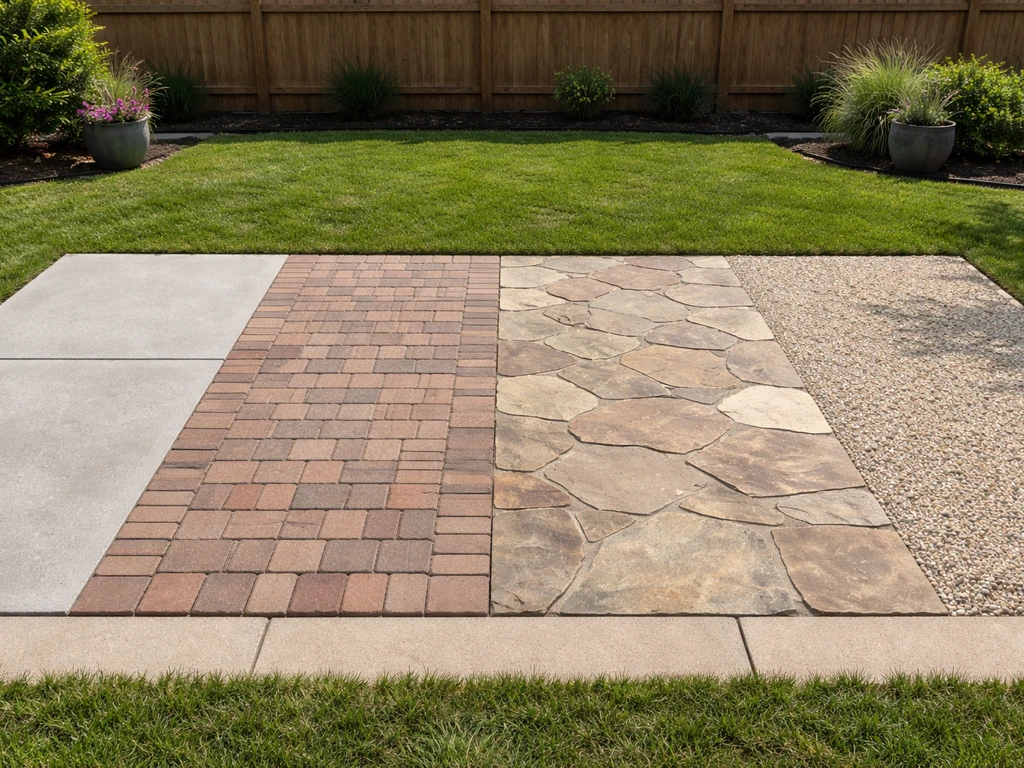
The main patio material types explained
Before comparing pros and cons, it helps to understand what each material actually is and how it gets used. These are the six surface types you will realistically encounter when planning a residential patio.
Poured concrete
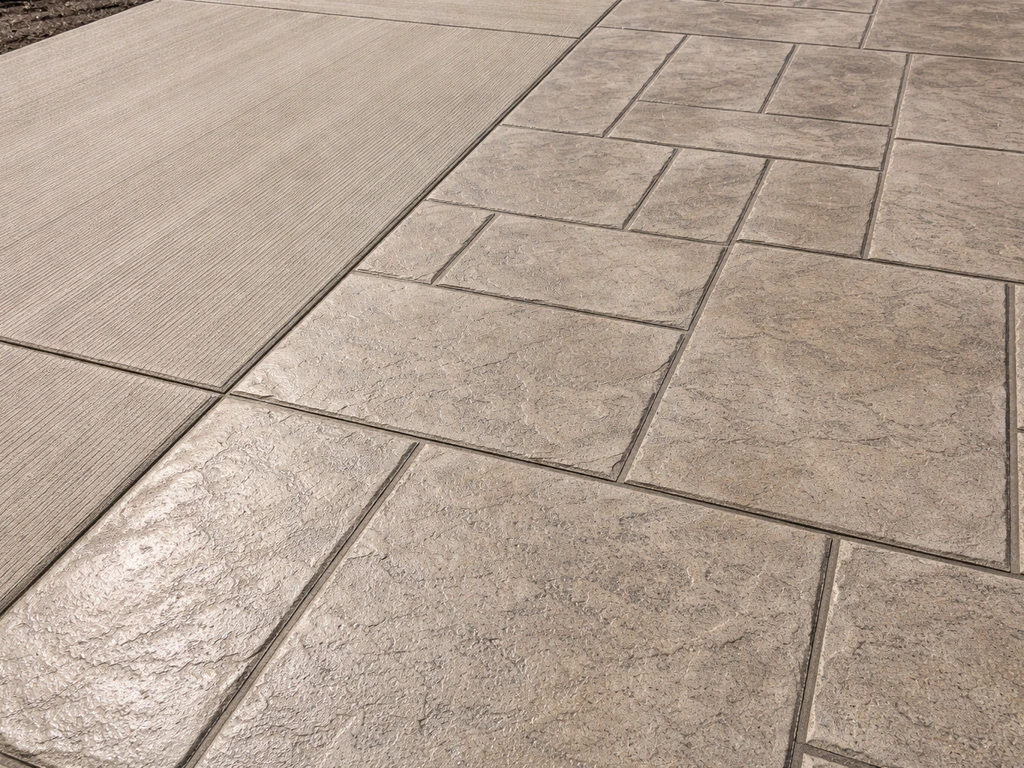
Poured concrete is a single continuous slab. It is the most common residential patio surface in North America, finished either with a broom texture (the budget option), stamped patterns that mimic stone or brick, or exposed aggregate. A typical 288 sq ft patio costs around $3,200 on average, with installed prices ranging from about $6 to $16 per sq ft depending on finish and site conditions. Broom-finish concrete falls at the lower end, roughly $6 to $10 per sq ft.
Concrete or brick pavers
Interlocking concrete pavers (and traditional clay brick) are individual units set over a compacted gravel base and bedding sand layer. The joints between units are filled with polymeric or regular sand. Because the units are not bonded together, the surface flexes slightly under ground movement rather than cracking into large pieces. Installed costs typically fall in a similar or slightly higher range than poured concrete.
Natural stone (flagstone)
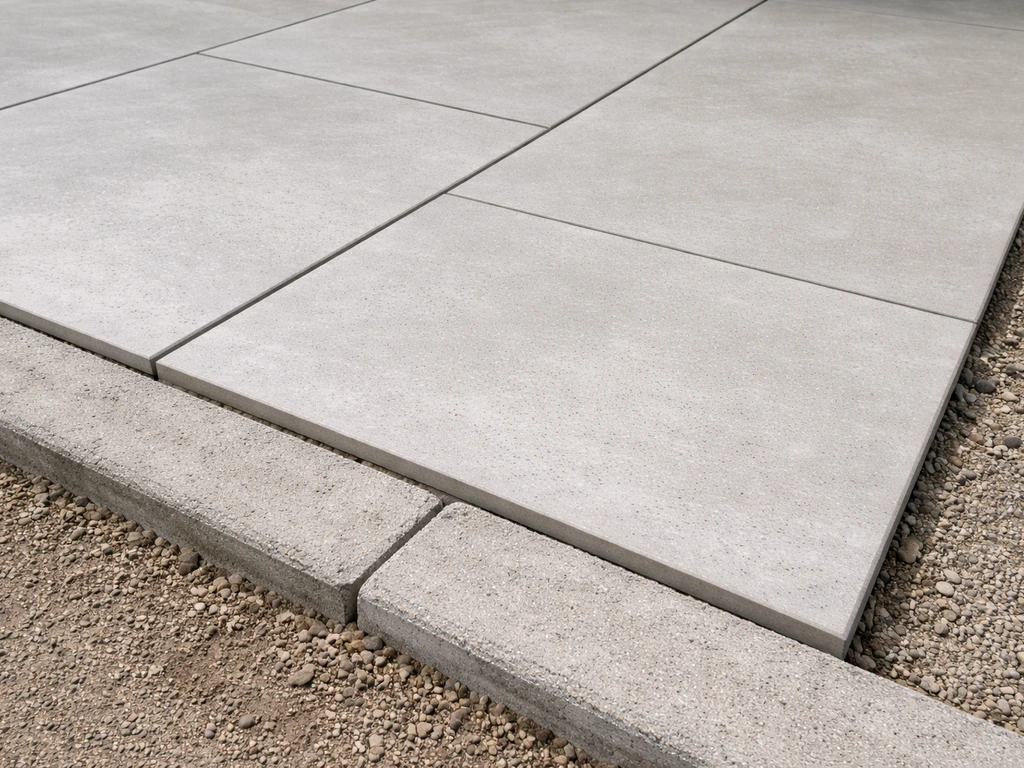
Flagstone means irregular or cut slabs of natural stone, most commonly bluestone, travertine, slate, or limestone. It can be dry-laid over compacted sand or set in mortar over a concrete base. Dry-laid flagstone costs roughly $15 to $27 per sq ft installed. Mortared flagstone over concrete runs higher. The look is hard to beat, but the irregular surface and variability in stone quality mean it takes more skill to install well.
Porcelain pavers
Outdoor porcelain pavers are large-format ceramic tile units (often 24x24 inches or bigger) engineered specifically for exterior use. They are frost-resistant and handle freeze-thaw cycles without cracking, making them a strong choice in cold climates. For outdoor porcelain tile and porcelain pavers, freeze-thaw guidance commonly points to very low water absorption (often cited as below 0.5%) as a key indicator of frost resilience. They come in wood-look, stone-look, and concrete-look finishes and are set in mortar or on pedestals over a concrete base or deck.
Gravel and decomposed granite
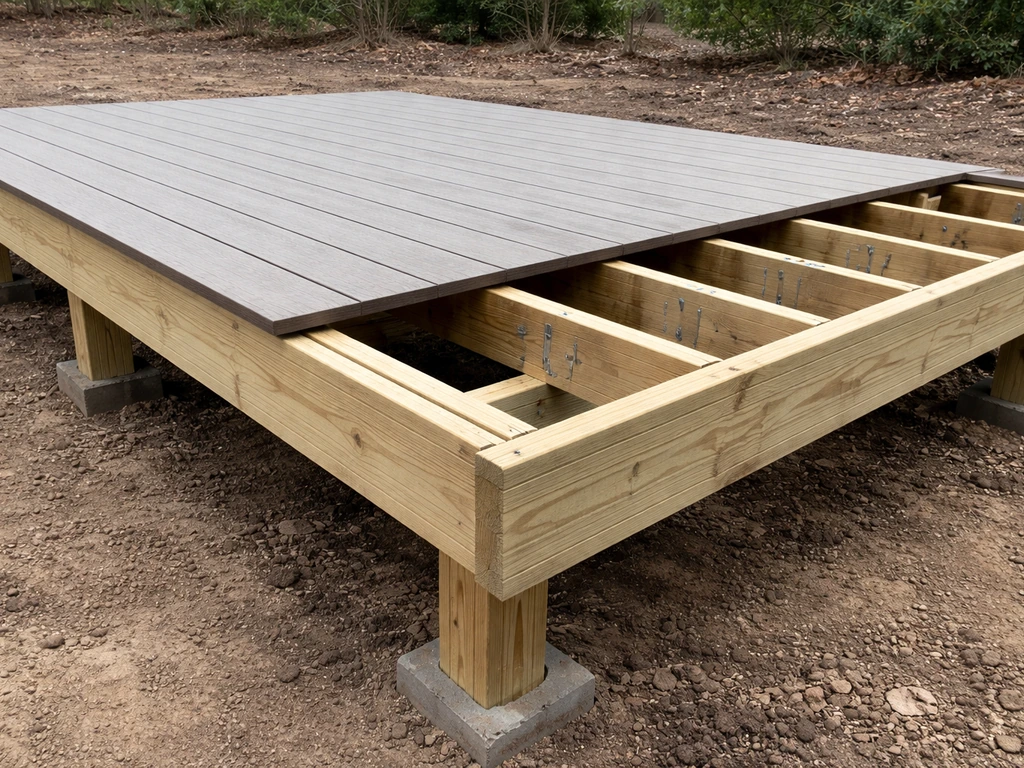
Loose gravel or decomposed granite (DG) is the most affordable patio option and the easiest DIY project. It drains exceptionally well, works in almost any climate, and installs in a weekend. For a practical comparison in Rochester specifically, rochester patio pros can help you match material and layout to your yard’s sun, drainage, and maintenance needs. The tradeoffs are ongoing raking, potential migration into the yard, and a surface that is harder to use with wheeled items like furniture or grills.
Wood and composite decking
Technically a deck material rather than a ground-level patio surface, wood and composite boards are worth including because many homeowners use them interchangeably with patio surfaces. Pressure-treated wood needs staining or sealing annually to prevent rot. Composite materials require far less maintenance but cost more upfront. If your patio is at grade level on a solid base, wood or composite is rarely the most practical choice compared to a hard surface.
Pros and cons by surface type
| Material | Durability | Comfort underfoot | Slip resistance | Drainage | Maintenance level |
|---|---|---|---|---|---|
| Poured concrete | 25-50+ years with proper joints | Hard; gets hot in sun | Good with broom finish; slippery when smooth and wet | Sheds water via slope; no infiltration | Low to moderate (seal every 2-5 years) |
| Concrete/brick pavers | 30-50 years; individual units replaceable | Slightly softer than slab; textured surface | Good; joint texture helps traction | Joints allow some infiltration; permeable options excellent | Moderate (replenish joint sand, occasional resetting) |
| Flagstone | Decades if well-set; variable by stone type | Irregular surface; some stones cool underfoot | Variable; rough stones grip well, smooth slate slippery wet | Dry-laid drains well; mortared sheds via slope | Moderate to high (reseat shifting stones, repoint mortar, seal some stones) |
| Porcelain pavers | Extremely hard; frost-resistant | Hard; stays cooler than concrete in sun | Must verify: look for R11 or DCOF 0.42+ rating for wet use | Mortar-set sheds via slope; pedestal systems drain between units | Low (wipe clean; no sealing needed) |
| Gravel / DG | Surface degrades; replenish every 2-5 years | Soft/loose underfoot; hard on bare feet | Good traction when fresh; slippery when packed or icy | Excellent; drains immediately | Low cost but ongoing (raking, replenishing, edging) |
| Wood / composite | Wood: 15-25 years; composite: 25-30 years | Warm and comfortable; some give underfoot | Composite: CoF ratings available; wood: slippery when wet/mossy | Gaps drain well if elevated; at-grade traps moisture | Wood: high (annual seal/stain); composite: low |
A note on heat retention
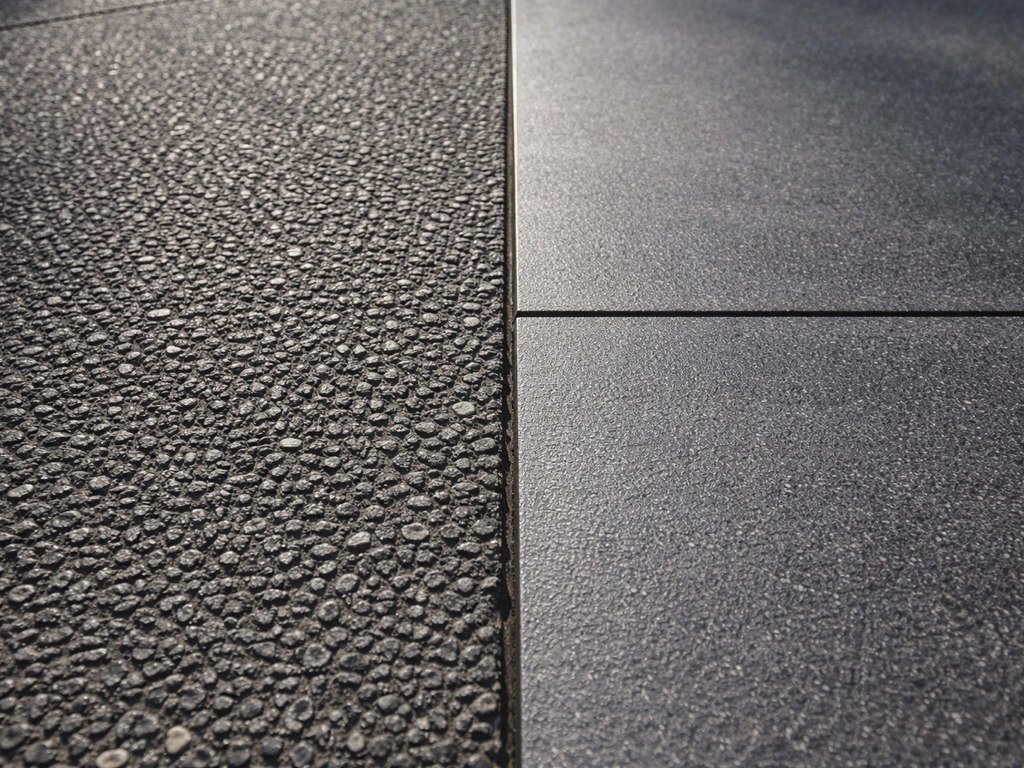
Dark concrete, dark pavers, and exposed aggregate all absorb and radiate significant heat in direct sun. This is one of the most underestimated comfort issues homeowners run into. Light-colored concrete, porcelain with a reflective finish, or light natural stone stay noticeably cooler. If your patio gets afternoon sun in a hot climate, the color and material you choose will affect whether you can walk barefoot on it in July. Local patio pros can help you pick the right material and color for comfort in hot or sunny locations.
Weed and moss growth
Pavers with open sand joints are the most vulnerable to weed growth. Polymeric sand in the joints suppresses weeds significantly better than regular sand. Poured concrete is fairly resistant but can develop moss or algae in shaded, moist areas. Flagstone set over soil or sand is the most susceptible, especially dry-laid. Porcelain and mortared applications are the most weed-resistant because there are virtually no open joints for seeds to establish.
Cost and budgeting tradeoffs
Here is the honest breakdown of what each surface type costs and whether doing it yourself actually saves money.
| Material | Installed cost (pro) | DIY realistic? | Long-term cost consideration |
|---|---|---|---|
| Poured concrete | $6–$16 per sq ft | Not really (requires mixer, forms, finish skill) | Low ongoing cost; reseal every 2-5 years |
| Concrete/brick pavers | $10–$20 per sq ft | Yes, with effort (labor-intensive but forgiving) | Replace individual units vs. whole slab; moderate long-term |
| Flagstone (dry-laid) | $15–$27 per sq ft | Yes, for smaller areas (irregular fitting takes patience) | Occasional resetting; moderate long-term |
| Porcelain pavers | $15–$30 per sq ft | Experienced DIYers only (mortar work, heavy units) | Very low ongoing cost |
| Gravel / DG | $1–$4 per sq ft | Yes, easy DIY | Replenish material every few years; low overall |
| Wood (pressure-treated) | $8–$20 per sq ft | Yes, for basic platforms | Annual sealing adds up; higher long-term than composite |
| Composite decking | $15–$35 per sq ft | Possible for experienced DIYers | Low maintenance but high upfront |
Poured concrete is the best value for most homeowners who want a permanent, low-maintenance surface. The catch is that DIY concrete flatwork is genuinely difficult to do well. Mixing, pouring, finishing, and adding control joints all need to happen quickly and in the right sequence. A botched slab is expensive to fix. For most people, this is a job worth hiring out. For Utah homeowners weighing whether to hire out a concrete slab or tackle it themselves, patio pros utah can explain what to expect and help you compare total costs.
Pavers are the friendliest DIY option for a hard surface. If you set a unit unevenly, you pull it up and re-bed it. There is no irreversible moment the way there is with poured concrete. The labor is significant (excavating, compacting base material, screeding sand, setting each unit), but the skill ceiling is manageable for a motivated homeowner. If you are in a region with experienced local patio contractors, getting a few quotes and comparing them against DIY materials cost is always worth doing before you commit to either path.
Installation: what actually needs to happen under your patio
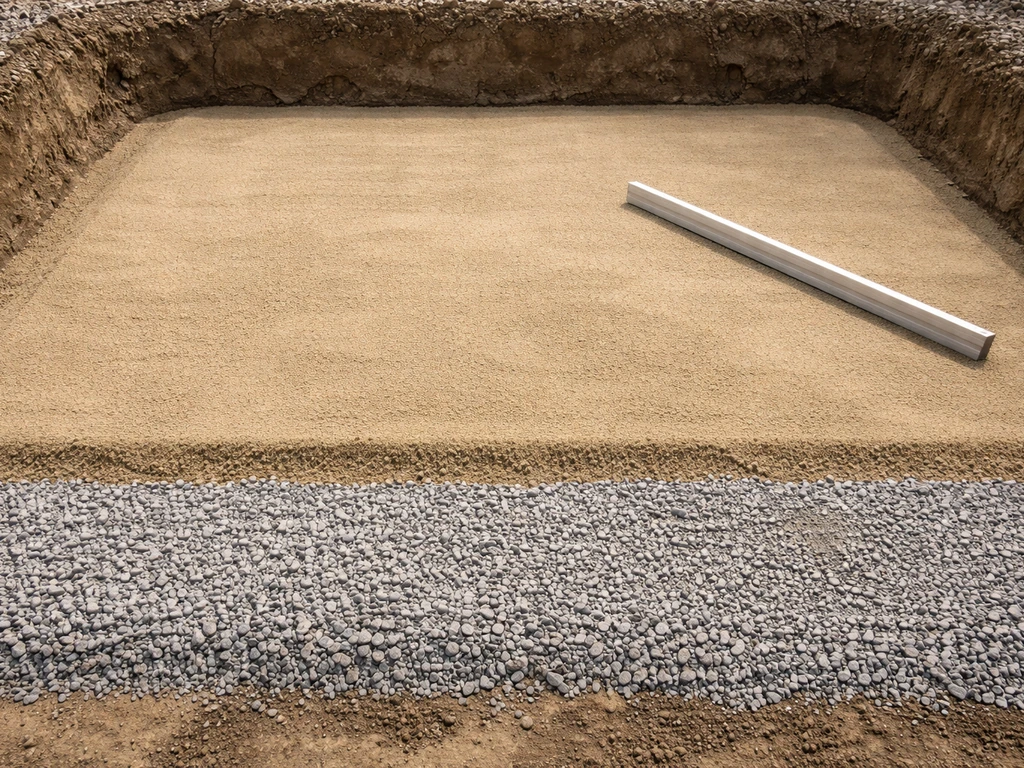
The surface you see is only part of the job. What goes underneath determines whether the patio stays flat and drains properly for 30 years or starts heaving and cracking within five.
Base preparation
Every hard patio surface needs a properly compacted sub-base. For pavers, that typically means 4 to 6 inches of compacted crushed stone topped with a 1-inch bedding sand layer, screeded flat. For poured concrete, the sub-base is typically 4 inches of compacted gravel. Skipping the base or under-compacting it is the number-one cause of patio failure. Soft spots in the sub-base show up as settled areas and cracks within a few years.
Slope and drainage
Any hard surface needs to shed water away from the house. The standard recommendation is a slope of 1/8 inch per foot (1%) minimum, up to 1/4 inch per foot (2%). That means a 10-foot-wide patio should drop between 1.25 and 2.5 inches from the house to the outer edge. This is not optional. Water pooling against a foundation causes serious damage over time. When you or your contractor sets the forms or grade stakes, verify the slope with a level before any material goes down.
Control joints in concrete
Poured concrete will crack. The goal of control joints is to tell it where to crack in a controlled, straight line rather than randomly. Control joints should be cut or formed at regular intervals, generally no more than 10 to 12 feet apart in each direction. A 12x24 foot slab needs at minimum one control joint running lengthwise and likely two or three crosswise. Many homeowners are surprised when their slab cracks along the control joint and call it a defect. It is actually the system working correctly.
Climate and material compatibility
Freeze-thaw cycles are the enemy of poorly installed hard surfaces. Water gets into cracks or joints, freezes, expands, and widens the damage. Porcelain pavers are specifically engineered to be frost-resistant and handle thermal shock well, making them a smart pick for cold climates. Standard concrete performs fine in freeze-thaw conditions if properly installed and sealed. Natural stone varies significantly: some stones absorb more moisture and are more vulnerable. Dry-laid flagstone over a gravel base actually handles freeze-thaw better than mortared flagstone because the surface can flex with ground movement rather than cracking at the mortar joints.
Design and performance factors that matter day-to-day
Slip resistance
Slip resistance matters most in areas that get wet: near pools, under roof drip edges, or in shaded spots where algae grows. For tile and porcelain products, the industry standard for wet-use exterior surfaces is a Dynamic Coefficient of Friction (DCOF) of 0. The Daltile/American Olean DCOF 0. 42 reference document notes that a DCOF threshold of 0.
42 (wet) is referenced for tiles expected to be walked on when wet, consistent with ANSI A137. 1 [a DCOF of 0. ](https://digitalassets. daltile.
com/content/dam/AmericanOlean/website/documents/content/AO_DCOF. pdf). 42 or greater per ANSI A137. 1.
When shopping for porcelain pavers or outdoor tile, ask specifically for the DCOF rating. The broom finish on poured concrete provides good natural traction. Smooth stone, polished pavers, and wood decking when wet all become slippery and deserve extra caution or a non-slip treatment in high-traffic wet zones.
Accessibility
If anyone in your household uses a wheelchair, walker, or has mobility limitations, surface smoothness and slope matter a lot. Accessible route standards require that running slope stays at or below 1:20 (5%) and cross slope stays at or below 1:48. Thresholds and level changes should be 1/2 inch or less for accessible routes. Smooth poured concrete, large-format porcelain pavers, or cut-stone flagstone with tight joints are the most wheelchair-friendly surfaces. Irregular dry-laid flagstone with large gaps between stones is the worst choice for accessibility.
Pets and kids
For pets and children, think about three things: traction, heat, and joint size. Light-colored concrete or pavers with a textured finish are forgiving on both counts. Dark surfaces in full sun can burn paw pads or bare feet. Gravel and decomposed granite are uncomfortable for most dogs and can be tracked inside. Irregular flagstone gaps can catch small fingers and toes. Pavers with tight polymeric-sand joints, or broom-finish concrete, tend to be the most family-friendly hard surfaces.
Maintenance and repair: what to expect each year
Sealing concrete
Concrete should be allowed to cure for a minimum of 28 days before applying a sealer. After that, resealing is an ongoing task, not a one-time treatment. Sealers degrade with UV exposure and traffic. For a standard broom-finish slab, resealing every 3 to 5 years is typical. Stamped or colored concrete needs more attention, generally every 2 to 3 years, because the sealer is also part of what makes the finish look good. Clean the surface thoroughly before resealing. Applying sealer over dirt or existing flaking sealer traps problems underneath.
Paver joint maintenance
The joint sand in paver systems is what keeps the surface locked together and helps suppress weeds. It depletes over time through rain wash-out and foot traffic. Inspect joints annually and replenish polymeric sand wherever it has dropped below the chamfer edge of the pavers. For permeable paver systems specifically, joint material maintenance is even more critical because clogged joints reduce the system's drainage capacity, which is the whole point of using permeable pavers. Check infiltration performance periodically and vacuum or jet-wash the surface if debris is reducing drainage.
Efflorescence
Efflorescence is the white powdery or crusty residue that sometimes appears on concrete, pavers, or natural stone. It is caused by water carrying minerals from within the material to the surface. It is not a structural problem, but it is unsightly. It typically appears in the first year or two after installation and often fades on its own. You can accelerate removal with an efflorescence cleaner or diluted muriatic acid solution, followed by sealing to reduce future moisture movement. Good drainage and a proper base reduce how often it appears.
Weed and moss control
For paver joints, polymeric sand is your first line of defense. For any surface with moss or algae buildup, a 50/50 water and white vinegar solution or a dedicated patio cleaner applied in spring handles most cases. Pressure washing works well but use a fan tip at a reasonable distance (12 to 18 inches) to avoid blasting out joint sand or etching concrete. Avoid using bleach on natural stone, as it can cause discoloration.
Repairing cracks and settling
Cracks in poured concrete along control joints are expected and manageable with polyurethane or epoxy crack filler. Random cracks in the middle of a slab indicate base failure or insufficient reinforcement and may need professional assessment. Settled paver sections can be lifted, the base re-graded, and the pavers reset, which is a significant advantage over concrete where a settled section typically means grinding or demolishing and reppouring. Natural stone that has shifted in a dry-laid application is similarly easy to reset.
How to pick the right patio type for your yard
Work through these questions in order and the right material usually becomes obvious. For landscaping and design planning around your new patio, work with patio pros landscape & design to coordinate the layout, materials, and outdoor living details. If you want help choosing materials and avoiding common installation mistakes, consider getting input from patio pros in your area. If you are searching for patio pros near me, getting local input can also help you choose the right surface and avoid costly mistakes. For Utah homeowners, experienced Utah patio pros can help you select the right surface, slope, and base so it holds up to local conditions.
- What is your budget per square foot? Under $5 means gravel or DG. $6 to $12 points to concrete. $10 to $20 opens up pavers. $15 and above makes flagstone and porcelain realistic.
- How much ongoing maintenance can you handle? If the honest answer is very little, concrete or porcelain win. If you enjoy periodic outdoor projects, pavers or flagstone are manageable.
- What is your climate? If you get hard freezes, porcelain pavers, concrete with proper joints, or dry-laid flagstone over gravel base all handle freeze-thaw well. Mortared flagstone without a solid concrete base is the most vulnerable.
- Do you need good drainage? If your yard has poor drainage or you want to manage stormwater, permeable pavers or gravel are the only options that actually help. Solid surfaces like concrete and porcelain just move water elsewhere.
- Is accessibility a priority? If yes, smooth poured concrete or large-format porcelain with tight joints is your best choice. Avoid irregular flagstone.
- Do you want to DIY? If yes, pavers and gravel are your most forgiving options. Concrete flatwork is best left to professionals for most homeowners.
- How important is aesthetics versus cost? If the look is the top priority and budget allows, natural flagstone or high-end porcelain is hard to beat. If value is the priority, broom-finish concrete delivers the most surface area per dollar.
Quick recommendation by situation
| Your situation | Best choice | Why |
|---|---|---|
| Tight budget, any climate | Broom-finish concrete | Lowest installed cost per sq ft, durable, low maintenance |
| Cold climate, high-end look | Porcelain pavers | Frost-resistant, easy to clean, design flexibility |
| DIY weekend project | Concrete or brick pavers | Forgiving, fixable, no irreversible steps |
| Poor drainage / stormwater concern | Permeable pavers or gravel | Only surfaces that actually improve drainage |
| Accessibility needed | Smooth concrete or large-format porcelain | Flat, consistent, meets slope standards easily |
| Best natural look, moderate budget | Dry-laid flagstone | Beautiful, flexible in freeze-thaw, DIY possible |
| Lowest maintenance possible | Porcelain pavers or concrete | Minimal sealing, easy cleaning, no joint replenishment |
What to do next
Before you call a contractor or order materials, measure your space accurately and sketch the layout including any obstacles, slopes, or drainage directions. Know your sq ft number before getting quotes. When talking to installers, ask specifically about their base preparation process, what thickness of compacted gravel they use, how they handle drainage slope, and what control joint spacing they use for concrete.
If you are comparing patio pros, also ask how they plan for drainage, base thickness, and joint or control joint layout so the project lasts base preparation process. These questions will tell you quickly whether you are talking to someone who does quality work. Get at least three quotes for any hard-surface installation over 200 sq ft. The cheapest quote is often cheap because the base preparation is being cut short.
If you are going DIY, start with a rental plate compactor (not just hand tamping), buy more polymeric sand than you think you need, and rent a wet saw for cutting pavers or stone. The prep work, compaction, and drainage slope are what determine whether your patio looks great in year ten. The surface itself is just the last step.
FAQ
Can patio types pros and cons change if I’m placing heavy items like a grill or hot tub?
If you plan to add a grill, fire pit, or heavy planters, treat the area like a mini structural zone. Ask whether the contractor is planning extra sub-base thickness (and consistent compaction) where the load concentrates, then confirm the surface type is appropriate (pavers can handle it well if the base is right, concrete needs proper reinforcement and joint planning, loose gravel can shift under repeated point loads).
How do I confirm the drainage will be correct before the installer covers everything up?
For drainage, the minimum recommended slope is 1/8 inch per foot (about 1%), up to 1/4 inch per foot (about 2%). But also verify the outlet path, where the water goes after it leaves the patio, since slope alone will not fix a bad tie-in to lawn grading or existing drains. Use a level at layout time, then re-check after base material is installed but before the surface goes down.
What are the most common base-prep mistakes that make patios fail early?
Yes, you can have a durable surface that still fails if the base is wrong. Two common mistakes are skipping the sub-base entirely or under-compacting it, and failing to keep the patio elevation from rocking at the edges. Soft spots usually show as settling and cracking later, so look for proof of compaction process (plate compactor used, number of passes, and correct material thickness).
How do I maintain paver joint sand so weeds do not come back?
Polymeric sand generally needs to be kept clean and then activated with the right amount of water, and it should not be over-wetted. If it washes out or stays loose, you may have gaps that lead to weeds and shifting. Replenish polymeric sand before it drops too far below the paver chamfer edge, and avoid heavy sweeping during the stabilization period.
Is white powder on concrete or pavers a sign the patio is structurally failing?
Efflorescence is usually a cosmetic, early-appearing moisture-mineral issue rather than a structural defect. It commonly fades as the patio season cycles out moisture, especially when drainage and base are correct. If it keeps coming back after the first season, it can indicate ongoing water movement, so focus on improving drainage and consider professional assessment before repeatedly sealing.
Do patio types pros and cons matter for freeze-thaw climates, or is it mostly about installation?
In freeze-thaw areas, installation details matter as much as material choice. Porcelain is engineered for cold climates, but standard concrete can still perform well if the base is properly built and water does not pool in joints. For natural stone, dry-laid setups often tolerate movement better than mortared joints, which can be where freeze-thaw damage first shows up.
Which patio materials are safest when the surface gets wet, and how do I check before buying?
In wet, shaded, or pool-adjacent areas, traction becomes a bigger factor than looks. For porcelain or outdoor tile, ask for a DCOF rating of 0.42 or greater for wet-use. For other surfaces, prioritize a finish that is intentionally textured or broom-like, since smooth stone and polished finishes can become slippery when algae forms.
What patio type is best for wheelchair or walker access, and what should I avoid?
If accessibility is a priority, avoid surfaces with large gaps and uneven rise between stones. Smooth poured concrete or large-format porcelain tends to provide a more continuous walking plane, and tight-joint flagstone can work better than dry-laid irregular stone with wider spacing. Also plan transitions carefully, since thresholds and any steps should stay within the low-change limits used for accessible routes.
If I want a pet-friendly patio, how do heat and traction trade off between the different materials?
For pet and kid comfort, the heat issue is real. Dark colors absorb and radiate more heat, so choose lighter concrete, lighter stone, or reflective finishes if you expect direct sun. Also consider that gravel and DG can be uncomfortable and get tracked indoors, so pavers with textured finishes or broom-finish concrete are often more forgiving for bare feet.
When should I seal a concrete patio, and how often will I need to reseal it?
Sealing frequency depends on finish and sun exposure, and doing it too early or over dirty surfaces can cause problems. Concrete generally needs at least 28 days to cure before sealing, then broom-finish slabs often reseal every 3 to 5 years, while colored or stamped finishes may require more frequent resealing. Clean thoroughly and avoid sealing over flaking sealer.
Which patio type is easiest to repair if it settles or cracks in the future?
The right material depends on how you intend to repair later. Paver and dry-laid stone systems allow localized fixes, you can lift a section, rebuild the base, and reset the surface. With poured concrete, settlement or many cracking patterns usually mean larger-scale repair options like grinding or partial replacement, so base quality and control joints become even more critical.