
If you searched 'Rochester Patio Pros,' you are most likely looking for one of two things: the specific company called Rochester Patio Pros (a Rochester, NY contractor that installs stamped concrete, paver patios, and related hardscapes), or a local patio builder in the Rochester area more broadly. Either way, this guide covers both. You will learn what these contractors actually do, what materials work best in Rochester's freeze-thaw climate, what to pay, and how to hire without getting burned. If you are also weighing different materials, reviewing patio types pros and cons can help you pick the best option for your yard and budget.
Rochester Patio Pros Guide: Costs, Quotes, and How to Choose

Miles Sutton
29 Apr 2026
What 'Rochester Patio Pros' Actually Means
There is some name overlap worth knowing about. Rochester Patio Pros is a real company (findable at rochesterpatio.com) that markets paver installation, stamped concrete, and standard concrete patios. A second web presence under a similar name exists too, so search results can mix these up. The short version: if you call one and get voicemail, try the other. Beyond the brand itself, 'Rochester patio pros' is also just the natural phrase people type when they want a reputable local hardscape contractor. This guide serves both audiences.
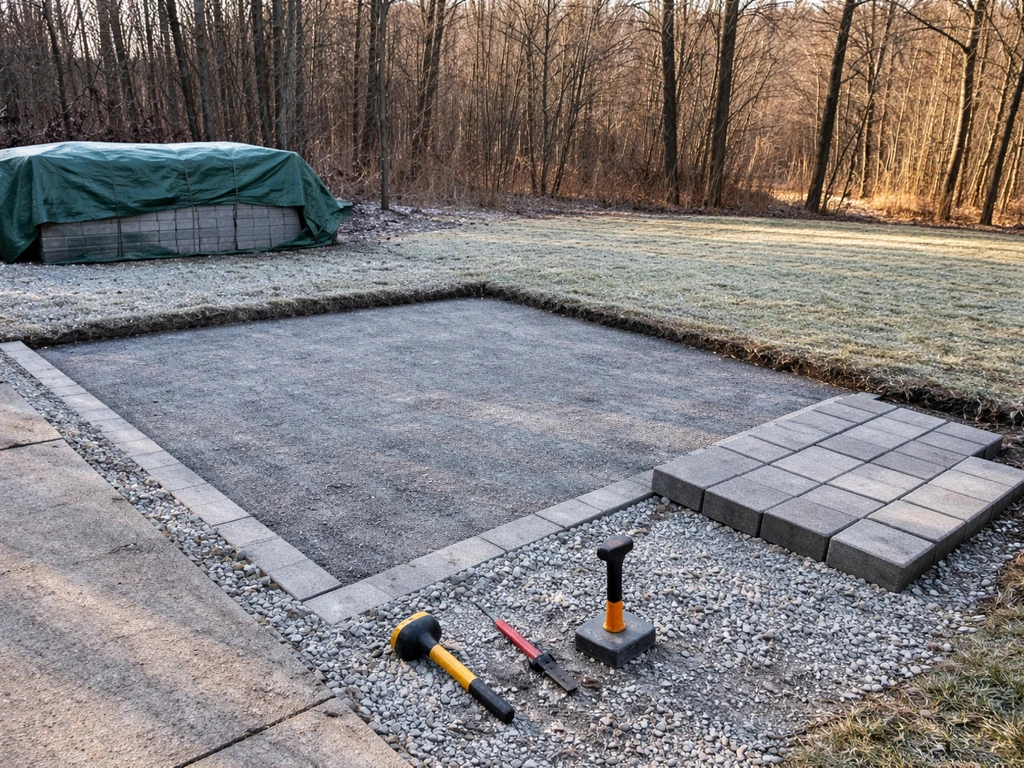
What these contractors do in practice: they grade and excavate your backyard, build a properly layered base suited to upstate New York soil and climate, then install the patio surface you choose (pavers, stamped concrete, or plain concrete). Good ones also handle drainage swales, steps, retaining walls, outdoor kitchens, fire pits, and lighting hookups. The company specifically references working with premium paver brands like Techo-Bloc, Unilock, and Banas Stone, which are solid mid-to-upper-market choices.
Services Checklist: What Rochester Patio Contractors Typically Offer
Before you call anyone, it helps to know the full menu so you can define your scope clearly. Rochester patio pros generally offer the following, though not every company does all of them. If you are comparing contractors in other regions, also review how utah patio pros structure their estimates and scopes so you can spot similar red flags. Patio pros in Utah can help you choose materials and build a patio that holds up in your specific climate and soil conditions Rochester patio pros.
Patio Surface Types
| Surface Type | Freeze-Thaw Performance | Repairability | Typical Cost Range (installed) | Best For |
|---|---|---|---|---|
| Concrete pavers (interlocking) | Excellent (controlled joint movement) | Very good (individual units replaced) | $15–$18/sq ft | Long-term durability, classic look |
| Stamped concrete | Moderate (can crack at slab joints) | Difficult (color/pattern matching is hard) | ~$15/sq ft and up | Decorative look on a tighter budget |
| Plain/brushed concrete | Moderate (same crack risk as stamped) | Moderate (patch or reseal) | ~$15/sq ft (comparable to driveway pricing) | Low-maintenance, budget-conscious |
| Natural stone / flagstone | Good with proper base | Good (individual stones reset) | Varies widely, typically higher | Premium aesthetic, unique character |
| Gravel/aggregate | Excellent (fully permeable) | Easy (top-dress and rake) | Lowest cost | Informal areas, drainage-sensitive yards |
Common Add-Ons
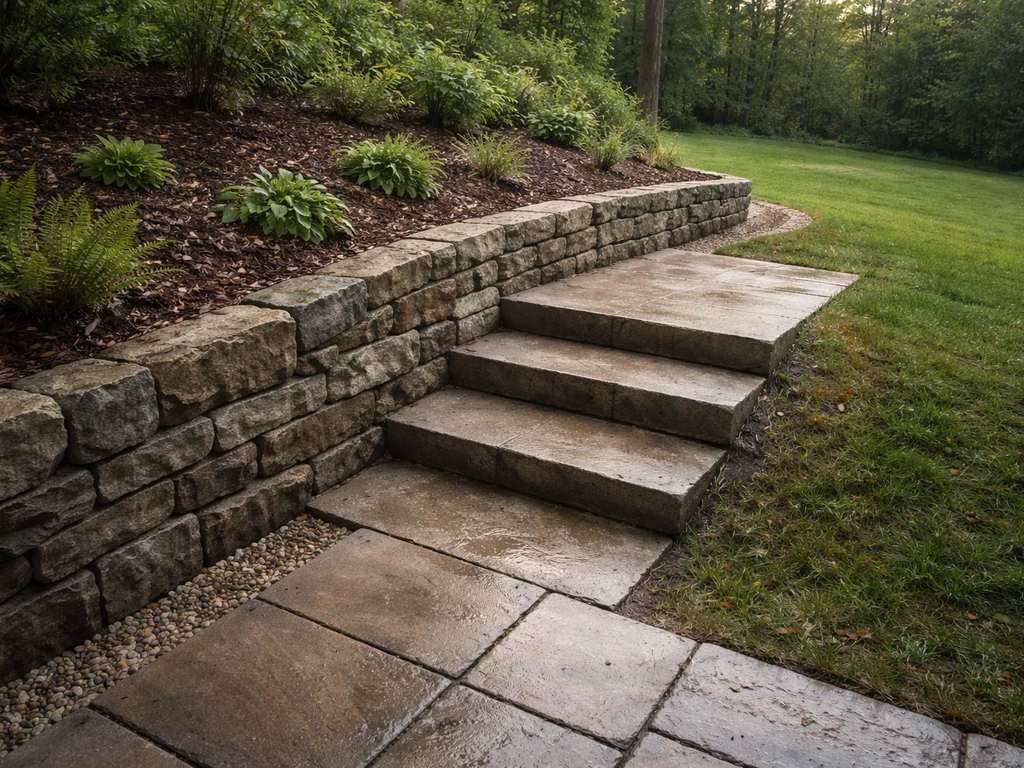
- Retaining walls (especially relevant on sloped Rochester lots)
- Steps and stair landings connecting patio to house or yard
- Drainage swales, French drains, or dry creek beds
- Outdoor kitchen or built-in grill pad
- Fire pit pad or built-in fire feature
- Landscape lighting rough-in or full installation
- Pergola footings or post anchors
- Edge restraints and transition strips
- Sealant application (pavers or stamped concrete)
Not every add-on is worth the same investment. In Rochester specifically, drainage and grading are never optional extras. Flat, poorly draining lots will push frost movement into your base year after year. If a contractor does not mention grading and drainage during the estimate, that is a red flag.
How to Choose the Right Pro
The Rochester area has plenty of hardscape contractors, ranging from one-person crews to established companies with showrooms. Here is how to filter for quality without wasting a week of your time.
Licensing
New York State does not require a single statewide general contractor license the way some states do, but the City of Rochester and Monroe County may have local registration or licensing requirements depending on project scope. Note that New York City requires a Home Improvement Contractor License for residential work, so if you are comparing practices from NYC-area contractors, those rules differ from upstate. For Rochester specifically, ask the contractor directly what license or registration they hold for residential home improvement work, and verify it. When in doubt, call the City of Rochester Permit Office at 585-428-6526 and ask what they require for a contractor doing patio or hardscape work on your property.
Insurance (This One Is Non-Negotiable)
New York State law requires virtually all employers to carry workers' compensation coverage for their employees. Before anyone sets foot on your property, ask for a certificate of insurance showing both general liability and workers' compensation. If a crew member gets hurt on your job and the contractor has no workers' comp, you could be on the hook. This is not a formality. Request the actual certificate, check the expiration date, and call the insurer to verify it is current if the document looks old or unofficial.
Portfolio and References
Ask to see completed paver or concrete projects in the Rochester area specifically, not generic stock photos. Local projects mean they understand Monroe County soil conditions and drainage patterns. Ask for two or three references from jobs done at least two winters ago. That gap matters because Rochester's freeze-thaw cycles will expose bad base work within one or two seasons. If a patio looked fine in October but heaved in February, a two-year-old reference will tell you that.
Online Reviews
Check Google, Yelp, and the Better Business Bureau. Look specifically for mentions of how the contractor handled problems, not just five-star praise. A company that has addressed complaints professionally tells you more than a company with nothing but glowing reviews and no complaints at all. Also search the contractor's business name plus 'Rochester, NY' to catch any news or forum mentions you would not find on review sites.
How to Get Accurate Quotes
Getting three competitive quotes is the standard advice, and it is right. But the quotes are only useful if you are comparing the same scope. Here is how to set that up so the bids are actually comparable.
Before the Estimator Arrives
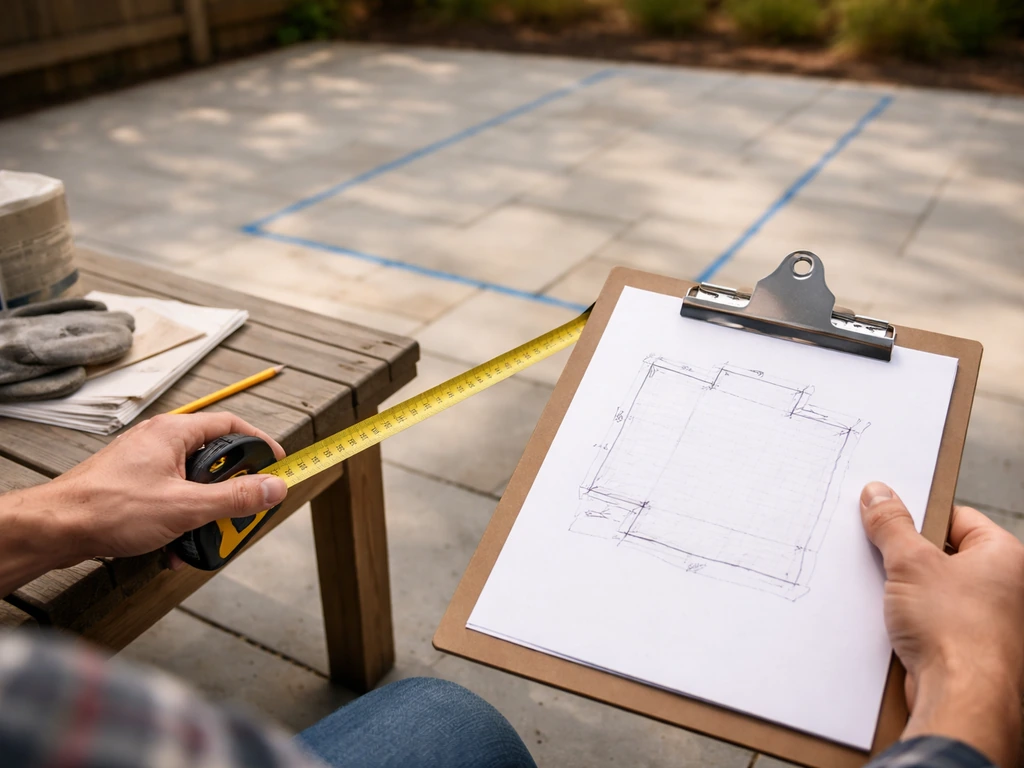
- Measure the footprint you want: length times width in feet. If the shape is irregular, sketch it on paper and include rough dimensions for each section.
- Note any existing structures that need to be demo'd or removed (old concrete slab, wooden deck, etc.).
- Mark or photograph any drainage problem areas: spots where water pools after rain.
- Know your underground utilities. Call 811 (New York's Dig Safe line) before the estimate so the contractor can see any flags during the walkthrough.
- Decide roughly on your material preference (pavers vs. stamped concrete vs. plain concrete) so you can ask for like-for-like comparisons.
What to Request in Every Quote
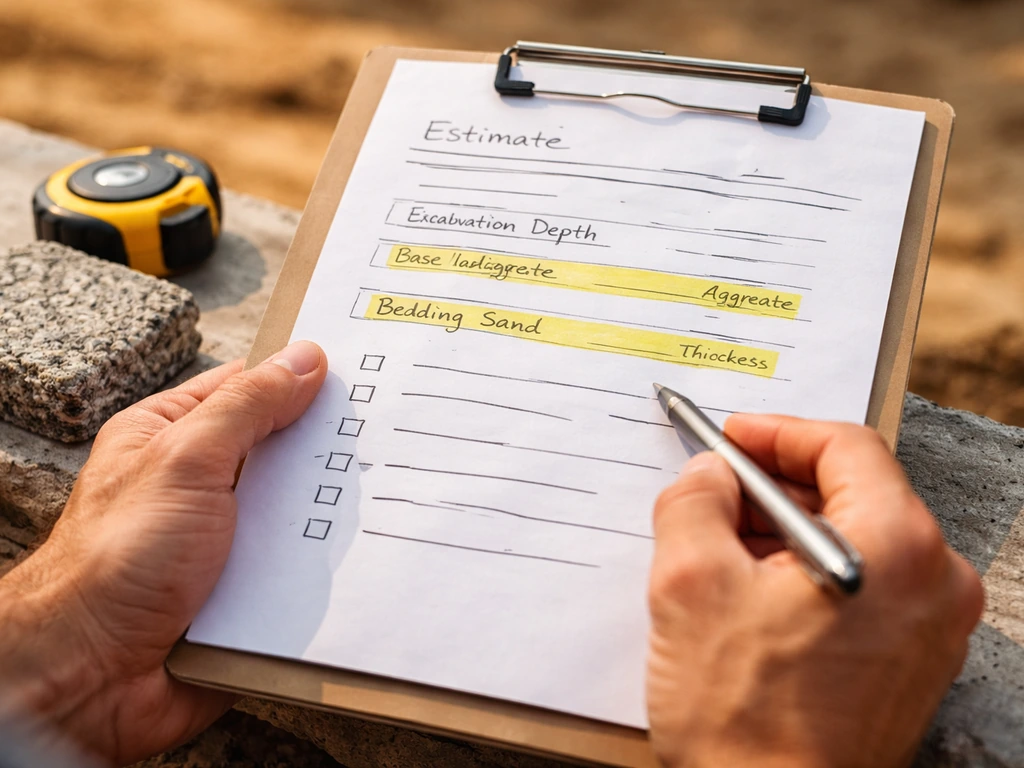
- Total square footage and per-square-foot unit cost broken out
- Excavation depth and base layer specification (aggregate type, thickness, compaction method)
- Bedding sand type and depth (if pavers)
- Jointing sand type (polymeric vs. standard) for paver joints
- Edge restraint specification and brand
- Drainage/grading plan and any additional drainage work included or excluded
- Demo and haul-away of existing material (confirm it is included or itemized)
- Material brand and product line (e.g., Techo-Bloc, Unilock, Banas Stone)
- Sealant application: included, optional, or not offered
- Timeline and crew size
- Payment schedule and terms
- Warranty on labor and on materials separately
If a quote just says '$X total, paver patio installation' with no breakdown, push back. You need enough detail to compare bids and to hold the contractor accountable if something is not done as discussed.
Cost Expectations in Rochester
For concrete paver patios in Rochester, NY, installed costs run roughly $15 to $18 per square foot for sand-based concrete pavers at the entry-to-mid level. That means a 200-square-foot patio (a modest but functional size for a table and a few chairs) will typically land in the $3,000 to $3,600 range before any add-ons. A more comfortable 400-square-foot outdoor space doubles that to roughly $6,000 to $7,200. Stamped concrete and plain concrete come in at similar per-square-foot starting points around $15, though stamped work often runs higher with more complex patterns or color layers.
What Drives the Price Up
- Demo and removal of an existing slab or deck (adds labor and dump fees)
- Poor drainage requiring French drains or regrading before patio work begins
- Deep excavation needed due to compacted clay soil (common in many Rochester-area lots)
- Premium paver brands (Techo-Bloc and Unilock cost more per unit than builder-grade pavers)
- Complex shapes, curves, or custom patterns that require more cuts and labor time
- Steps, walls, or built-in features added to the patio scope
- Sealant application (usually an add-on at $0.50 to $1.50/sq ft or more)
- Smaller project size: mobilization costs are roughly fixed, so smaller patios have higher per-square-foot overhead
One thing worth noting: drainage and proper base preparation are not optional cost lines you should try to negotiate away in Rochester. Upstate New York's freeze-thaw cycles are aggressive. A base that works fine in Virginia will fail here within two or three winters. The excavation, base thickness, and compaction are where contractors cut corners when prices get squeezed. If a bid is dramatically lower than others, ask specifically what base depth and compaction method they are using.
The Installation Process from Start to Finish
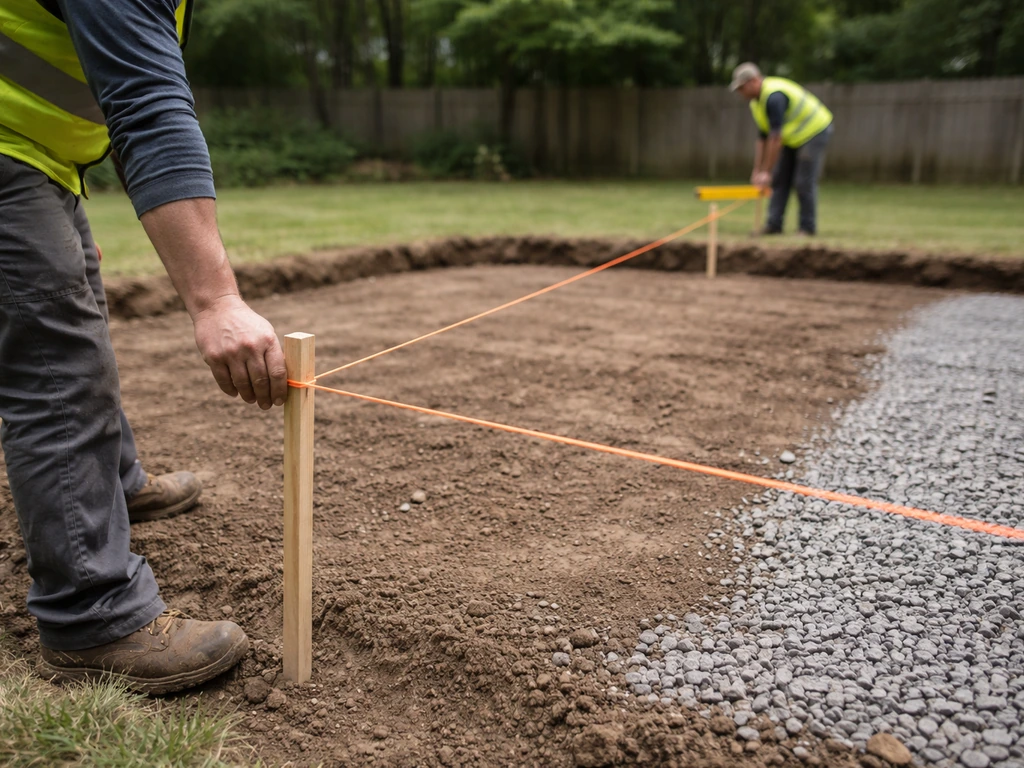
Knowing what happens on your property helps you spot problems early and set realistic expectations with your family about noise, access, and timeline. Here is a typical paver patio installation sequence.
- Site layout and marking: The crew strings lines, marks the patio boundary, and confirms grade and drainage slope (minimum 1/8 to 1/4 inch per foot away from the house foundation).
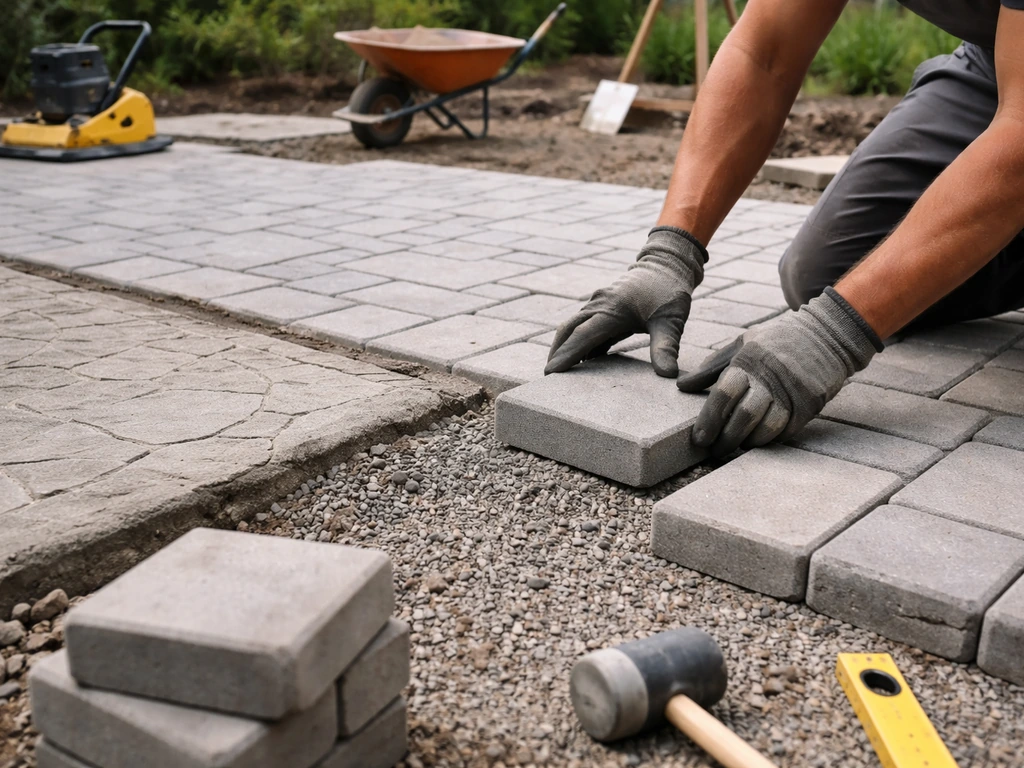
- Excavation: Equipment or hand tools remove topsoil and subsoil to the required depth. In freeze-thaw-active areas like Rochester, the aggregate base alone is often 6 to 8 inches, plus bedding sand, plus paver thickness, meaning total excavation of 10 to 12 inches is not unusual.
- Subbase preparation: Unstable soil may be stabilized or a geotextile fabric layer placed to separate subgrade from aggregate.
- Aggregate base placement and compaction: Crushed stone is placed and compacted in lifts (typically 2- to 3-inch layers each) using a plate compactor. This step is the single most important part of freeze-thaw performance.
- Bedding sand placement: A 1-inch layer of coarse sand is screeded flat to receive the pavers.
- Paver installation: Pavers are laid to pattern, cut at edges as needed, and kept tight to layout lines.
- Edge restraints: Plastic or metal edge restraints are secured with spikes to lock the border in place permanently.
- Joint sand: Polymeric sand or standard jointing sand is swept into the joints and compacted, then activated (polymeric) with water.
- Final cleanup: Excess material, cut debris, and equipment are removed. Contractor walks through the finished area with you.
- Sealant (if included): Applied after the surface has cured and dried, typically a separate visit.
Timeline: A typical 300 to 500 square foot patio with no major demo or drainage complications takes one to three days of active work. Add time for permit approval if required, material lead time (some paver styles are special-order), and weather delays. From signed contract to finished patio, four to six weeks is a realistic planning window during the busy season (May through September).
Contracts, Permits, and Protecting Yourself
Permits: Do You Need One?
For most ground-level paver or concrete patios, a building permit is not required in Rochester, but there are exceptions. Patios that are part of a deck structure, elevated structures, or projects that significantly change impervious surface coverage (affecting stormwater runoff) may trigger permit requirements. The clearest rule to know: a deck that is less than 18 inches from grade still requires a building permit in Rochester. If your project involves any structural element or is elevated, call the City of Rochester Permit Office at 585-428-6526 before starting. Do not assume your contractor will handle this without you asking directly. Permit responsibility should be written into your contract.
What Your Contract Must Include
- Full scope of work with material specifications (brand, product, dimensions, layer thicknesses)
- Total price and payment schedule (be cautious of any contractor asking for more than 30 to 40 percent upfront)
- Start date and estimated completion date
- Change order procedure: all scope or cost changes must be written and signed before work proceeds
- Permit responsibility: who pulls the permit if one is required
- Insurance and license confirmation (or copies attached)
- Labor warranty terms: length and what is covered
- Material warranty: what the manufacturer covers and how claims are handled
- Cleanup and disposal terms: what debris is removed and who is responsible
- Dispute resolution process
Never pay in full before the job is complete. A common and safe structure is one-third at signing, one-third at midpoint (materials delivered and base complete), and the final third on your walkthrough approval. Keep that final payment until you are satisfied.
Warranty: What to Expect
Paver manufacturers like Techo-Bloc, Unilock, and Banas Stone offer product warranties (typically lifetime against cracking or structural defects on the paver units themselves). Labor warranties vary by contractor: one to two years is common for installation workmanship, with better contractors offering longer. Ask specifically what the warranty covers and what voids it. Using non-approved sealants or improper maintenance can void some material warranties, so get the care instructions in writing at project completion.
Maintenance, Repairs, and When to Call Your Installer Back
Paver systems are designed to be maintained and repaired, which is one of their genuine advantages over poured concrete. Here is what realistic ownership looks like.
Routine Maintenance
- Reapply jointing sand (particularly polymeric sand) every few years as it wears or washes out from rain and freeze-thaw movement. This is normal and expected.
- Reseal paver or stamped concrete surfaces every two to three years if you want color protection and stain resistance.
- Rinse pavers with a garden hose to remove debris; use a pressure washer carefully and only at low settings to avoid dislodging joint sand.
- Keep edge restraints secure: check annually that the border spikes have not worked loose.
- Clear debris from drainage channels and check that slope away from the foundation is maintained.
When to Call the Installer Back
If individual pavers rock or become uneven within the first one to two winters, that is a base problem, not normal settling, and it should be covered under your labor warranty. The repair process for pavers is the 'unzip and zip' method: affected pavers are lifted, the base underneath is re-compacted or rebuilt, and the pavers are relaid. This is one of the real advantages pavers have over concrete slabs, where cracks require cutting, patching, and often color-matching that never looks quite right.
For stamped concrete, call the installer if cracks appear that are wider than a hairline, if color is peeling or flaking rather than just fading, or if sections are lifting. Some cracking is expected in stamped concrete in Rochester's climate, which is why the control joint placement in the original pour matters so much. If your installer placed joints thoughtfully, cracks tend to follow them and stay manageable.
A Brief Note for the DIY-Inclined Reader
If you are trying to understand this work well enough to manage a contractor or tackle a smaller project yourself, the core process is: excavate to depth (10 to 12 inches in Rochester for pavers), compact a gravel base in layers, add a 1-inch sand bedding layer, lay pavers, install edge restraints, and sweep in polymeric sand. The labor is accessible; the equipment (plate compactor, laser level or screed rails) is rentable. Where DIY frequently goes wrong is underestimating the excavation volume and skimping on base compaction. Those mistakes show up in the second or third winter as rocking or sunken pavers.
Your Next Steps Right Now
Here is the practical sequence to get moving today. First, sketch your space and measure it so you walk into every conversation with a real number. Second, call 811 to get utilities flagged before any estimator visits. Third, shortlist three contractors: Rochester Patio Pros is a logical starting point given the search, but also check Google Maps for 'patio contractor Rochester NY' and ask neighbors who had recent work done.
Fourth, request itemized quotes from all three using the checklist above. Fifth, before signing anything, confirm insurance certificates and ask permit questions. If you do all five of those things before committing to anyone, you will be in a much stronger position than most homeowners who just pick whoever calls back first. If you want a broader comparison of how patio pros work across the region, also review other patio pros resources alongside this guide Rochester Patio Pros.
If you are still exploring whether a full patio build is right for your space, it is worth comparing the general landscape of local patio pros, regional specialists, and the full range of patio types and their trade-offs before locking in a design direction. If you are specifically trying to find patio pros near me, start by confirming drainage, grading, and licensing so you do not get mismatched bids.
To make the right choice, compare patio types pros and cons for materials like pavers, stamped concrete, and plain concrete. Comparing different patio pros landscape & design providers can also help you see what design options, materials, and execution styles fit your goals. If you are searching beyond New York and into Utah, look for Utah patio pros who understand local soil conditions and permit requirements.
The more clarity you bring to the first conversation with a contractor, the more accurate and useful that initial estimate will be.
FAQ
Can Rochester patio pros quote a lower price and then add charges later?
Yes, but only when the pricing is structured correctly. Ask whether the quote includes the base prep (excavation depth, base thickness, compaction method), bedding sand, edge restraints, and polymeric sand. If a contractor provides a “material-only” price or leaves out base and drainage details, the final cost can jump after demo.
What should I expect to pay for demo and disposal when hiring Rochester patio pros?
It is common to pay for demo and haul away separately, especially if you have an existing patio, shrubs, or an older slab. Request a line item for demolition scope (what gets removed), disposal fees, and what is included in site grading afterward.
If my pavers start rocking in year two, will Rochester patio pros fix it or is it normal settling?
A “rocking” section usually points to base failure or inadequate compaction, not normal movement. For pavers, verify whether the contractor will lift affected pavers, recompact or rebuild the base, then reinstall (the unzip and zip repair). Make sure this is covered under the labor warranty and documented in writing.
How do Rochester patio pros handle drainage if my yard slopes toward the house?
Ask about the exact drainage approach for your lot slope. For example, do they plan a swale, connect to an existing drain line, or build to a specific slope away from the house? Also ask what they will do to prevent water from undermining the base near doors and garage walls.
What control-joint details should I request for stamped concrete in Rochester?
Many stamped concrete contractors include control joints, but you should still ask where joints will land relative to your patio edges, steps, and any openings. If you have frequent freeze-thaw and frequent temperature swings, poor joint planning can lead to wider cracking, so require a joint layout in the estimate or specs.
How can I avoid polymeric sand washing out after installation?
Polymeric sand can fail if it gets too wet during or right after installation, or if the surface is not swept and compacted properly. Ask what weather conditions they use as acceptance criteria (for example, no rain for a defined window) and how they plan to activate the sand with water.
If I change the patio design after the estimate, how are change orders usually handled?
You can, but you need a clear contract statement about changes. Ask whether change orders are priced at labor hourly rates plus a materials markup, or if they quote per-item. If you want pattern or color upgrades later, confirm lead time and whether the contractor will keep the original schedule.
How do I make sure quotes from different Rochester patio pros are truly apples-to-apples?
For comparability, you want bids that include the same patio area and the same thickness specifications. Ask each contractor to state the paver system build-up (base depth, gravel type, sand bedding thickness), the jointing material, and whether they include edge restraints and leveling tolerances.
If my patio includes steps or a small retaining wall, do Rochester patio pros always need a separate permit?
Yes. If trenching or grading is needed for drainage lines, steps, or retaining walls, those areas can require separate permits. Ask the contractor to confirm permit triggers for your exact scope and to list which permits they will obtain, then ensure the responsibility is in the contract.
Do Rochester patio pros handle outdoor kitchen and electrical setup, or should I hire specialists?
If you expect a large outdoor cooking area, ask whether they will design heat-safe setbacks and account for the base and insulation needs under equipment. Also request how electrical outlets for lighting or kitchens are routed, whether they include conduit, and whether any power work is done under an appropriate electrician arrangement.
Should I seal pavers or stamped concrete in Rochester, and will sealing affect warranties?
Before sealing, ask what product they recommend for your specific surface, and confirm whether they’ll test a small patch first. Some sealers can change slip resistance or trap moisture, so you want the contractor to explain cure times, application temperature range, and whether sealing is optional or required for warranty coverage.
Is there a payment schedule I can use to protect myself when hiring Rochester patio pros?
If a contractor is asking for full payment up front, or if the contract does not tie progress payments to milestones like materials delivery, base completion, and a final walkthrough, that is a warning sign. Keep a final retainage until you confirm the surface level, drainage slope, joint sand condition, and cleanup details.