
Finding a reliable Utah patio pro comes down to three things: knowing what scope you actually need, verifying the contractor's license through Utah's DOPL portal before you sign anything, and getting line-item bids so you can compare apples to apples. Utah's freeze-thaw cycles, clay-heavy soils, and drainage quirks mean you can't just hire whoever is cheapest, a poorly built base will heave and crack within a season or two, and fixing it costs more than doing it right the first time.
Utah Patio Pros: How to Choose and Plan Your Patio Project

Miles Sutton
29 Apr 2026
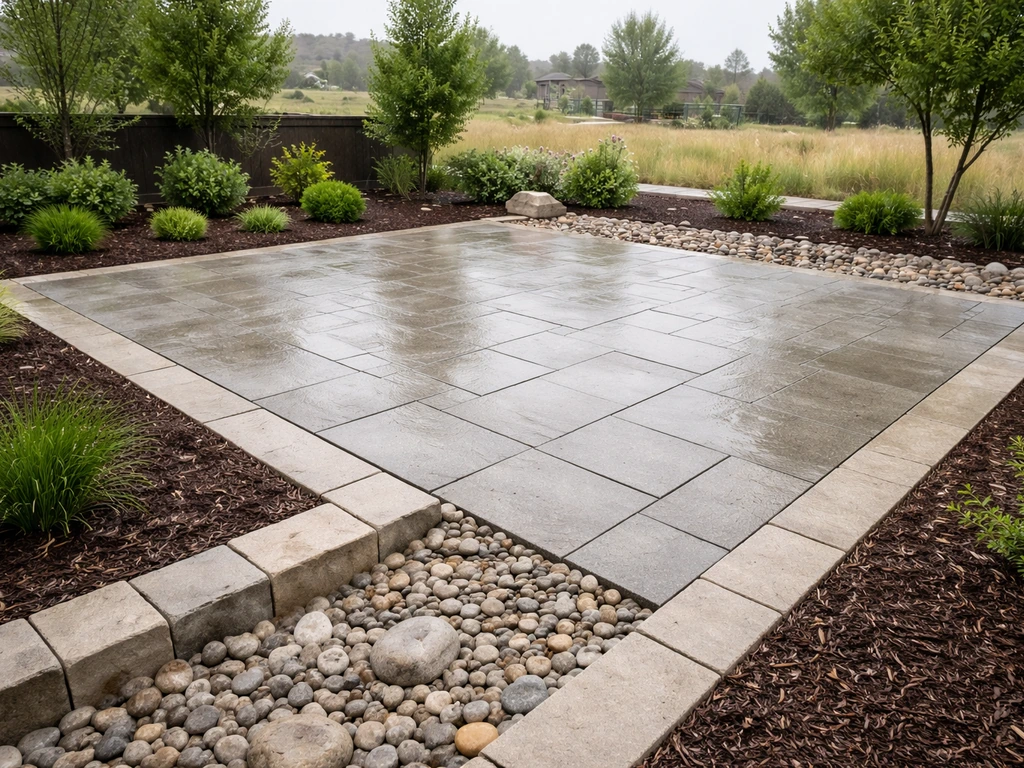
What Utah patio pros actually handle
A full-service Utah hardscape contractor handles a lot more than just laying pavers. Understanding the scope helps you have a smarter conversation from the first phone call and avoid surprises on the invoice.
- Utility locating: arranging public utility marking (call 811) before any excavation starts—this is standard practice for reputable installers and protects both you and the crew
- Site assessment and soil evaluation: checking for clay content, groundwater issues, existing drainage patterns, and grading before a single measurement is taken
- Excavation and haul-off: removing existing material, shaping the subgrade, and hauling debris off-site
- Base installation and compaction: laying a properly compacted aggregate base, typically 6–8 inches for Utah conditions, sloped a minimum of 2% away from the house for drainage
- Geotextile installation: placing a fabric barrier between native soil and the aggregate base in clay-heavy or unstable soils to prevent intermixing and frost heave
- Surface material installation: pavers, natural stone, poured concrete, exposed aggregate, or stamped concrete
- Jointing and polymeric sand: filling joints with water-activated polymeric sand to lock pavers and resist weed intrusion
- Drainage features: swales, French drains, catch basins, or channel drains where water pooling is a concern
- Add-ons: pergolas, shade structures, privacy screens, wind barriers, string lighting, recessed lighting, fire pit pads, outdoor kitchen bases, and retaining walls
- Cleanup and finishing: removing equipment, cleaning the surface, and walking you through maintenance expectations
Some contractors are pure hardscape specialists, while others are landscape and design firms that include hardscape as part of a broader outdoor living package. Some firms that do patio pros landscape & design also bundle hardscape into an outdoor living package, so compare their paver or concrete experience specifically. Either can do excellent work, what matters is that whoever you hire has verifiable experience with paver or concrete installation specifically, not just general landscaping.
Utah-specific challenges every good pro plans for
Utah is not a forgiving climate for patios. If a contractor doesn't bring up any of the following during your first conversation, that's a red flag.
Freeze-thaw cycles
Most of Utah, Salt Lake Valley, Utah Valley, Cache Valley, goes through dozens of freeze-thaw cycles every winter. Water gets into the base, freezes, expands, and pushes material upward. The only real defense is a properly compacted aggregate base that doesn't hold water. Density matters: a well-compacted base minimizes the voids where water can sit and freeze. Any contractor quoting you a 3-inch base on native Utah clay soil is cutting corners.
Clay soils and drainage
Clay-heavy soil is common throughout the Wasatch Front. Clay doesn't drain well, which means water tends to sit beneath your patio rather than percolate away. Good pros address this in two ways: geotextile fabric between the subgrade and the base layer to prevent clay from migrating up into the aggregate, and a consistent slope of at least 1-2% across the entire paved surface so water moves away from your foundation rather than pooling. If your yard already has drainage issues, this is the right time to add a French drain or channel drain, not after the patio is in.
Snow load and surface durability
Structures attached to or adjacent to your patio, pergolas, overhead covers, shade sails, need to be sized for Utah snow loads. A covered structure changes the permit picture too. Uncovered patios and driveways are often exempt from permit requirements in Utah jurisdictions (the Greater Salt Lake MSD explicitly notes this exemption), but once you add a roof or attached structure, you're typically in permit territory. A good contractor will tell you this upfront and either pull the permit or help you understand what you need to do.
Efflorescence: the white haze problem
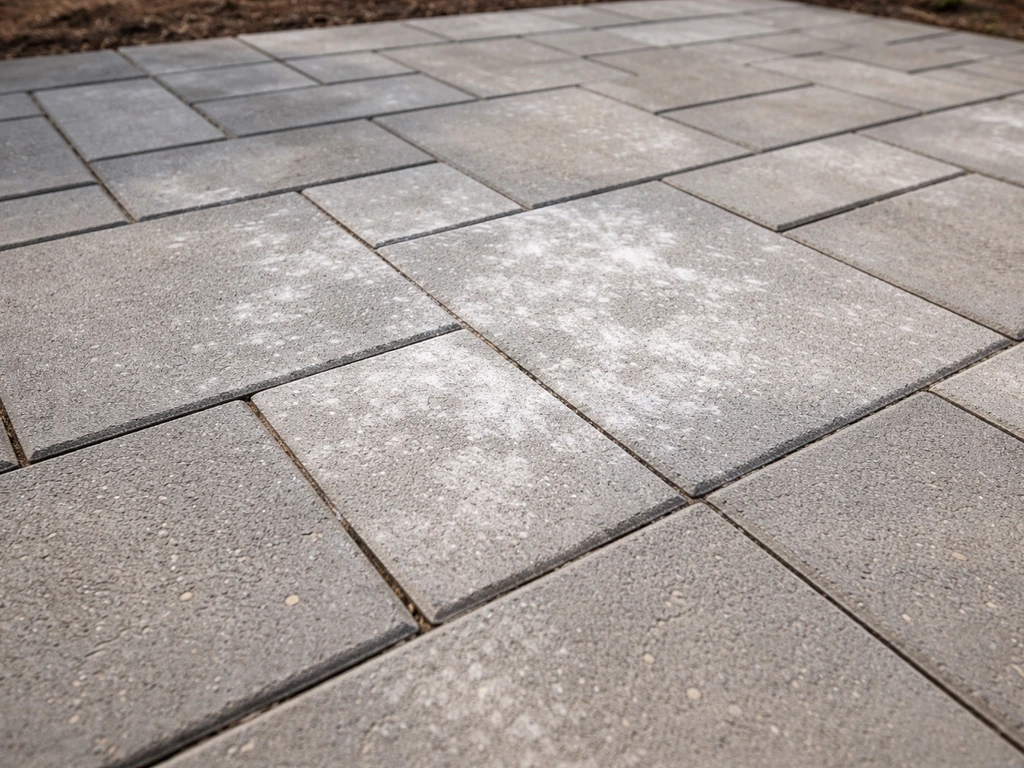
If you've seen chalky white patches on pavers or concrete in Utah, that's efflorescence, mineral salts drawn to the surface by moisture movement. It's especially common after the first winter. It's not a structural problem, but it looks bad and worries homeowners. Good pros will warn you it can happen, explain that it's cleanable with paver-safe products (not pressure washing or bleach, which can make it worse), and may recommend a quality sealer after initial curing. Ask about this specifically during your consultation.
DIY planning vs. hiring a pro: how to decide
Honest answer: most Utah homeowners should hire out the base work even if they handle design decisions themselves. Here's why. Proper excavation, base compaction, and drainage slope aren't difficult concepts, but they require equipment, plate compactors, laser levels, and sometimes mini excavators, plus the physical labor of moving hundreds of pounds of aggregate. The install itself (laying pavers, cutting, jointing) is something skilled DIYers can tackle. But if the base fails, everything above it fails.
| Task | DIY-Friendly? | Why It Matters |
|---|---|---|
| Design and layout planning | Yes | You know your space best; pros can refine it |
| Measuring and marking | Yes | Simple with a tape measure and spray paint |
| Utility locating (call 811) | Yes, but required | Legal requirement before digging—do not skip |
| Excavation and subgrade shaping | Possible but equipment-intensive | Mistakes here affect everything above |
| Base compaction (aggregate) | Rent equipment, possible | Improper compaction causes frost heave in Utah |
| Geotextile installation in clay soils | Yes | Straightforward if you know to include it |
| Paver or stone laying | Yes for simple patterns | Complex patterns or large areas benefit from pro experience |
| Polymeric sand and jointing | Yes, but technique-sensitive | Water control during activation is critical |
| Drainage features (French drains) | Hire out | Requires grading expertise and understanding of soil |
| Pergola or covered structure | Hire out or get permits | Usually requires permits and structural knowledge |
If your budget is tight and the project is small (under 200 square feet, flat ground, good soil), a confident DIYer can do solid work with rented equipment and careful research. For anything larger, sloped, clay-heavy, or involving drainage features, the cost of professional base work is worth every dollar.
How to get quotes fast: measure, document, and define your scope
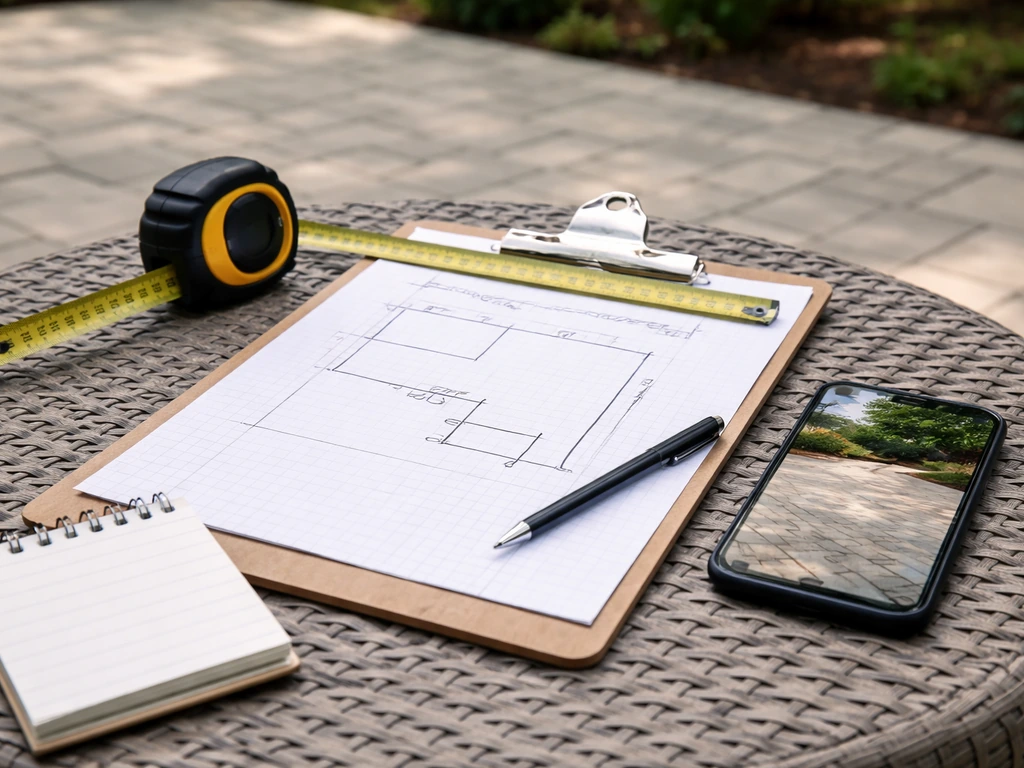
Contractors give faster, more accurate bids when you show up prepared. If you call three contractors and describe your patio as 'medium-sized, kind of square, maybe some pavers,' you'll get three wildly different quotes that have nothing to do with each other. Here's what to prepare before you reach out.
- Measure the area: Length times width in feet, plus any irregular shapes sketched on paper or photographed. Even a rough drawing speeds everything up.
- Photo documentation: Take current photos of the space from multiple angles, including any existing concrete, drainage issues, slopes, or landscaping that will need to be removed or worked around.
- Note your soil: If you know you have heavy clay (common in the Wasatch Front), say so. If there's standing water after rain, flag it.
- Define your wish list vs. must-haves: Know the difference between 'I want pavers with a pergola and lighting' (full scope) and 'I need a functional patio slab with good drainage' (core scope). This prevents scope creep.
- Set a rough budget range: You don't need an exact number, but knowing whether you're working with $5,000 or $25,000 helps contractors propose appropriate materials and designs.
- Identify access constraints: Is there a gate the equipment needs to fit through? Overhead wires? A dog or garden bed that needs protection? Mention these upfront.
- Know your timeline: 'I want this done before summer' is useful. 'Whenever' leads to deprioritization.
With this information ready, you can send it to multiple contractors at once and reasonably expect comparable, line-item bids within a few days rather than weeks of back-and-forth.
Contractor vetting checklist: licenses, insurance, references, portfolio, warranty
This is where most homeowners either get burned or get lucky. Don't leave it to luck. Utah gives you real tools to verify contractors before you commit.
License verification
Utah's Division of Professional Licensing (DOPL) has a free online license lookup tool at utah.gov. Before you sign any contract, search the contractor's name or business and confirm their license is active and in good standing. The City of Springville's own contractor verification guidance explicitly frames this as a pre-contract step, 'Licensed = Legal.' For hardscape work involving significant excavation, grading, or drainage, the relevant license is typically a General Contractor or Specialty Contractor license. Utah’s DOPL explains that Specialty Contractor classifications are part of a defined specialty license pathway with scope-of-work set out in Utah licensing rules hardscape work involving significant excavation, grading, or drainage. If a contractor can't tell you their license number or gets evasive, stop there.
Insurance
Ask for a certificate of general liability insurance and workers' compensation before work begins. General liability protects you if the crew damages your property or a neighbor's. Workers' comp protects you from liability if a worker is injured on your property. Any legitimate contractor carries both, if they don't, you're the one holding financial risk.
Portfolio and references
Ask to see photos of completed Utah projects specifically, not generic stock images. Ask for two or three references from jobs done in the last 12-18 months and actually call them. Ask the references: Did the final price match the bid? Were there delays, and how were they handled? How did the patio hold up through winter? Would you hire them again?
Warranty
A solid Utah hardscape warranty covers workmanship for at least three to five years. Some contractors (like Kingdom Landscaping, for example) offer explicit five-year installation warranties. Read the fine print: understand what's covered (base failure, settling, improper drainage) versus what's excluded (joint sand erosion from power washing, or issues caused by your sprinkler system saturating the base). A contractor who offers no warranty or only a 90-day warranty is telling you something about their confidence in their own work.
Quick vetting checklist
- License verified on Utah DOPL portal (utah.gov) and currently active
- General liability insurance certificate provided
- Workers' compensation coverage confirmed
- Portfolio of Utah-specific completed hardscape projects reviewed
- At least two references contacted and asked about winter performance
- Written warranty terms (duration and what's covered) reviewed before signing
- Physical address or verifiable business presence (not just a phone number)
Materials and design choices for Utah's climate
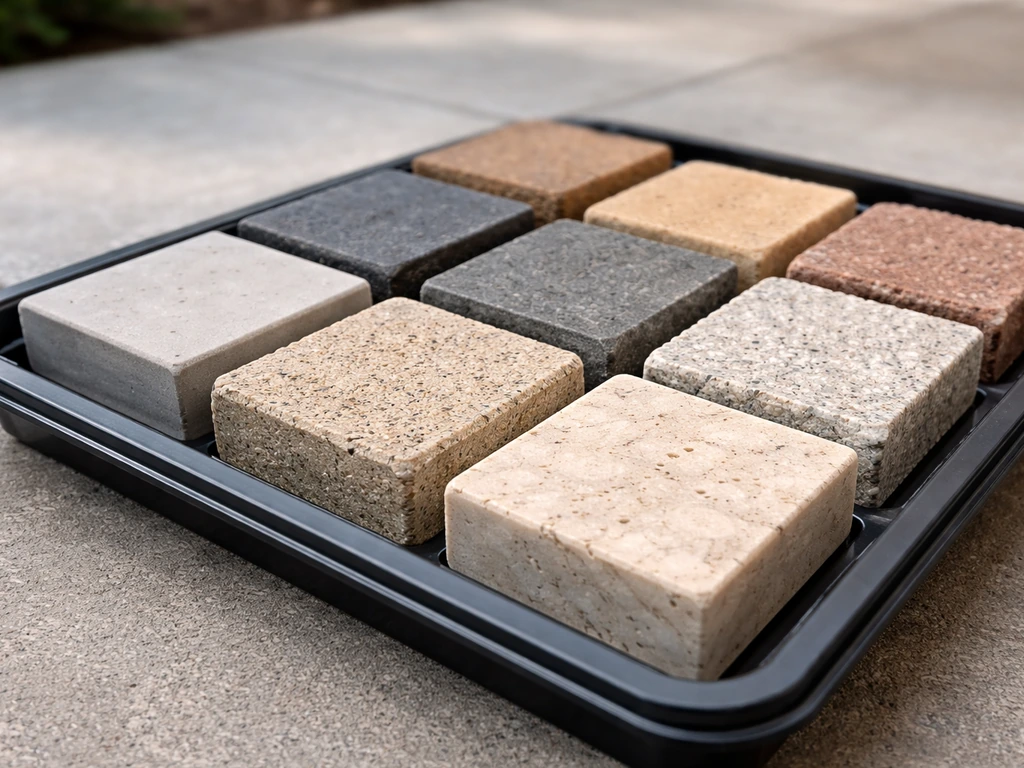
Material choice affects maintenance, durability, and how your patio survives Utah winters. Here's a practical comparison of the main options.
| Material | Freeze-Thaw Performance | Maintenance | Cost Range (installed) | Best For |
|---|---|---|---|---|
| Concrete pavers | Excellent if base is right; individual units can be replaced | Low; annual joint sand inspection, seal every 3-5 years | $15–$30/sq ft | Most Utah patios; versatile and repairable |
| Natural stone (flagstone, travertine) | Good with proper base; some stone is more porous | Moderate; seal porous stone, inspect joints seasonally | $20–$40/sq ft | High-end look; mountain and foothills properties |
| Poured concrete (brushed or stamped) | Moderate; monolithic slabs can crack with heave | Low initially; cracks need sealing or repair over time | $8–$18/sq ft | Budget-conscious; simpler maintenance if cracking is acceptable |
| Exposed aggregate concrete | Same as poured concrete | Low; occasional resealing | $10–$20/sq ft | Texture and slip resistance; practical finish |
| Porcelain pavers | Good if rated for freeze-thaw; check manufacturer specs | Very low; stain-resistant surface | $25–$50/sq ft | Modern aesthetic; low maintenance priority homeowners |
For most Utah homeowners, concrete pavers are the best balance of durability, repairability, and cost. If a paver settles or cracks after a brutal winter, you can lift and relay that section without tearing out the whole patio. With poured concrete, a heave crack means grinding, patching, or full replacement. That repairability factor is worth a lot in a freeze-thaw climate.
On the design side, keep patterns relatively simple for DIY-friendly maintenance and repair: running bond or herringbone patterns are easier to match and re-lay than complex medallions if a section ever needs to be redone. For color, lighter neutrals tend to show efflorescence less dramatically than very dark pavers.
Questions to ask and how to compare bids without scope creep
The biggest mistake homeowners make is comparing the bottom-line number across three bids without checking whether those bids cover the same work. One contractor may include geotextile, proper compaction, and drainage slope. Another may quote a 3-inch sand base with no fabric and no drainage consideration. The second quote will be cheaper. It will also fail.
Questions to ask every contractor
- How deep will you excavate, and what base depth are you proposing for my soil type?
- Will you use geotextile fabric, and why or why not?
- How will you handle drainage—what slope are you targeting, and is any drainage infrastructure included?
- Who arranges utility locating, and is that included in the bid?
- What does haul-off of existing material cost, and is it in this bid?
- What kind of polymeric sand will you use, and is re-sanding covered under warranty if it fails?
- Do I need a permit for this project, and if so, who pulls it?
- What does your warranty cover, and what voids it?
- Have you done projects in my specific area of Utah, and can I see them or contact those clients?
How to read a bid
Insist on line-item bids, not a single lump sum. You want to see excavation, base material, geotextile (if applicable), surface material, installation labor, drainage, haul-off, and cleanup listed separately. This lets you compare contractor by contractor on each component and ask questions like: 'Your base material line is 40% lower than two other bids, is that a difference in depth, material quality, or something else?' A contractor who refuses to break out line items is either hiding margin or unsure what the project actually involves.
Also ask how changes are handled mid-project. Scope creep usually happens through verbal agreements on-site, 'while we're at it, let's extend it another four feet', and those add-ons rarely get written down until the final invoice. Agree upfront that any change to the original scope requires a written change order with a price before work proceeds.
Project kickoff and what to expect from start to finish
Once you've chosen your contractor and signed a contract, here's a realistic picture of how a Utah patio project unfolds.
Pre-construction
Your contractor should arrange utility locating (call 811) at least three business days before excavation. Blue Stakes of Utah 811 also emphasizes that utility locating is a free service and directs excavators to call 811 before digging. This is a legal requirement, not optional. If you're in a jurisdiction where your project requires a permit, that should be pulled before work begins, not during or after. Confirm the materials and delivery timeline, and clear the work area of furniture, planters, and anything fragile within 10 feet of the work zone.
Excavation and base work (Days 1-3 for most projects)
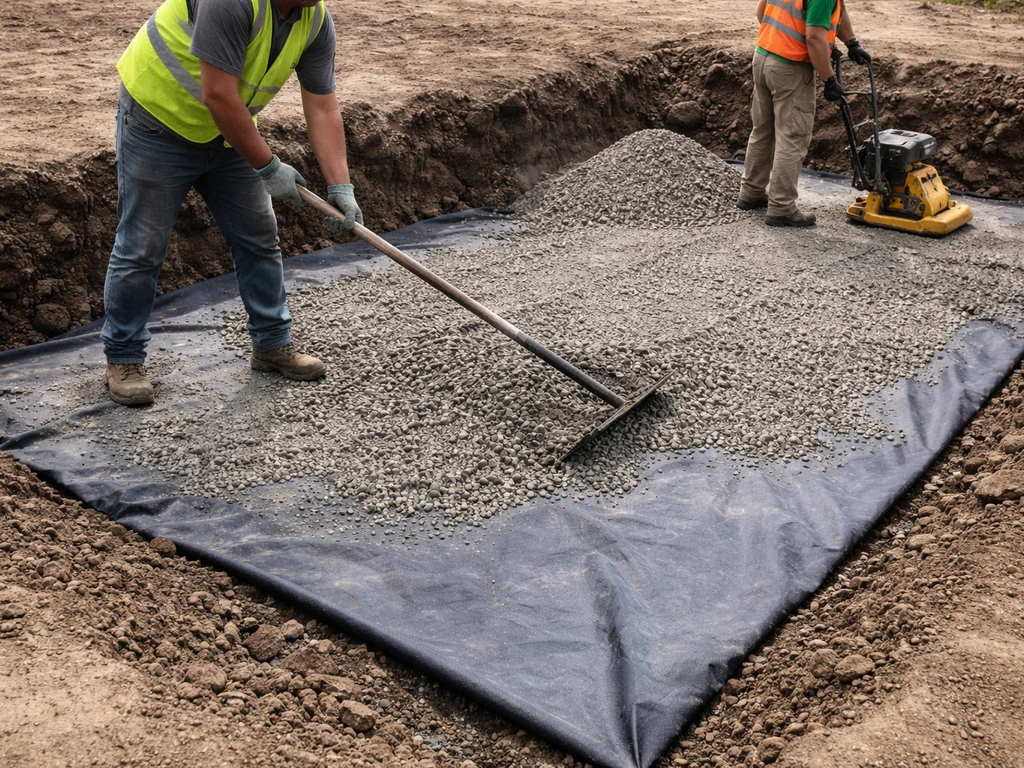
This is the noisiest, messiest phase. Expect equipment, a dumpster or haul-off truck, and a lot of disturbed soil. The crew will excavate to the required depth, shape the subgrade for drainage slope, lay geotextile if applicable, install and compact the aggregate base in lifts, and confirm slope with a level before moving on. Do not let anyone rush this phase. It's the foundation of everything.
Surface installation (Days 2-5 depending on size)
Pavers or stone go in after the base is confirmed. Edge restraints get installed at the perimeter to keep everything from spreading. Polymeric sand gets swept in and activated with water, this process is technique-sensitive, so make sure your crew knows to follow manufacturer guidance on moisture control and curing time before opening the surface to foot traffic or furniture.
Cleanup and walkthrough
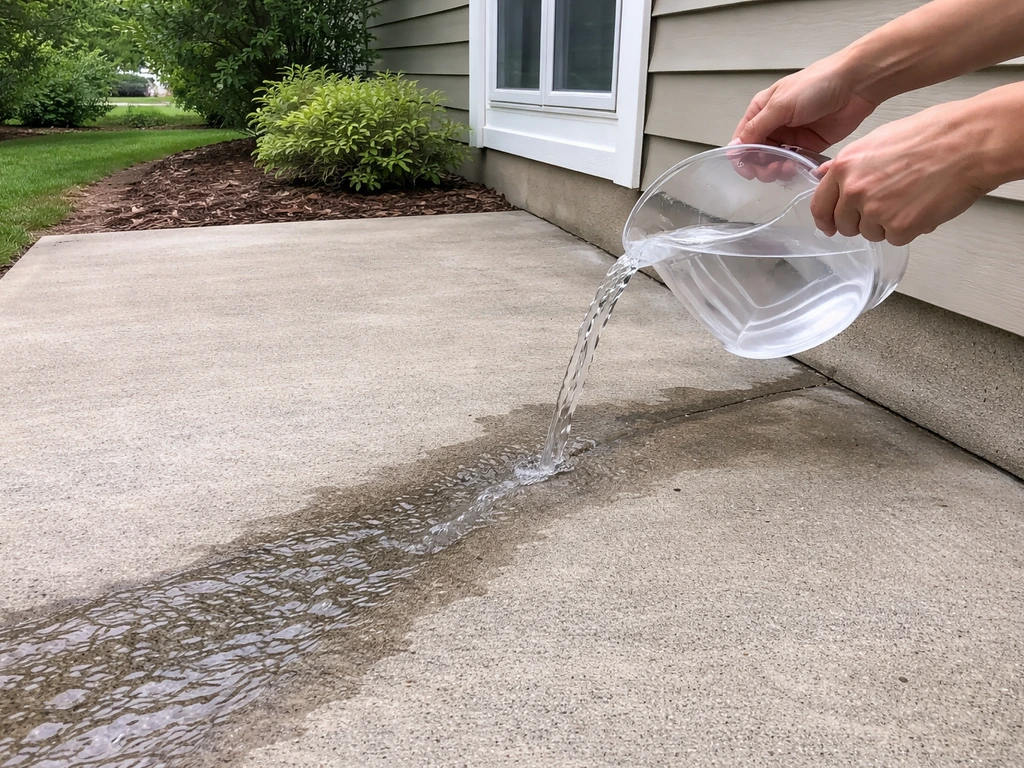
A good contractor does a final walkthrough with you before leaving. Check the surface slope yourself: pour a cup of water at the high point near the house and watch it move away from the foundation. Check joint sand coverage. Ask about the first-winter expectations, including the possibility of minor efflorescence, any settling that might need addressing in spring, and how to contact them if a warranty issue comes up.
Typical project timeline
| Phase | Timeframe |
|---|---|
| Getting and comparing bids | 1-2 weeks |
| Contract signing to project start (scheduling queue) | 2-8 weeks depending on season |
| Utility locating before dig | 3+ business days (required) |
| Permit (if required) | 1-4 weeks depending on jurisdiction |
| Excavation and base work | 1-3 days for most residential patios |
| Surface installation | 1-4 days depending on size and pattern complexity |
| Polymeric sand curing before use | 24-72 hours (follow product specs) |
| Total project duration (site work) | 3-7 days for most residential projects |
Your pre-hire checklist to use right now
- Measure your patio area and sketch the layout
- Take photos of the current space including drainage issues, slopes, and access points
- Define your scope: surface only, or does it include drainage, structures, or lighting?
- Set a realistic budget range based on square footage and material preference
- Contact three or more Utah hardscape contractors for line-item bids
- Verify each contractor's license on the Utah DOPL portal before the estimate visit
- Ask for proof of general liability and workers' comp insurance
- Request a portfolio of Utah-specific projects and call at least two references
- Review warranty terms in writing before signing
- Confirm that utility locating, permits (if needed), haul-off, and drainage are in the bid
- Agree in writing that any scope changes require a written change order with pricing
- Confirm your start date and materials delivery timeline in the contract
Utah has a lot of capable hardscape professionals, from solo operators who do excellent work to full landscape and design firms handling complex outdoor living projects. The key is doing the 20 minutes of upfront homework (DOPL check, references, line-item bid review) that separates a great outcome from an expensive regret.
If you want to start with local options, searching for patio pros near me can help you build a short list before you compare base work, drainage slope, and warranty terms. When you have that shortlist, compare patio pros by their base work, drainage slope, and warranty terms so you know you are getting the right scope.
You may also want to compare patio pros utah options in your area to make sure they price the same base work, drainage slope, and warranty coverage Utah patio pros. If you are still deciding between materials, review patio types pros and cons so you can compare durability, repairability, and maintenance expectations before you lock in a design.
If you want a narrower, Utah-local comparison point, you can also review patio pros az for how other pros handle base work, drainage slope, and winter durability. If you want a narrower comparison point, look at rochester patio pros as a related example of how base work, drainage slope, and warranty terms should stack up.
Get your measurements ready today, reach out to a few contractors this week, and you can realistically have a patio that handles Utah winters for decades.
FAQ
How can I tell if two bids really include the same base work and drainage slope?
Many contractors will list “base” as a single number unless you ask. Request the depth by layer (excavation depth, aggregate depth, and any sand bedding) and confirm whether they include geotextile and edge restraints in that same line item. If one bid is cheaper, it is often because they reduced depth or omitted the separation fabric and restraints.
What should I ask about polymeric sand installation so it holds up in Utah winters?
Polymeric sand performance depends on joint fullness and the timing of water activation. Ask your contractor what weather conditions they will not proceed in, how long they wait before opening the surface to foot traffic, and whether they use a plate compactor on the paver surface or only on the base. Skipping curing time or overcompacting pavers can lead to joint erosion.
If efflorescence shows up after winter, will my contractor treat it as a warranty issue?
Efflorescence can be cosmetic and still return after freeze-thaw, especially on concrete or in shaded areas that stay damp longer. Ask whether they recommend a specific sealer, what date after installation they will apply it, and whether they will warranty appearance issues versus structural problems. This helps you set expectations for what might be normal.
Do I need a French drain or is slope and geotextile usually enough?
Drainage features often change the cost dramatically, so confirm whether they are proposing surface grading only or adding a drain system (like a French drain or channel drain). If your yard already has poor runoff, ask if they will tie drainage to an existing outlet or propose a new discharge location. “Good enough” drainage descriptions are a common cause of repeat failures.
What questions should I ask if my new patio will connect to existing concrete or pavers?
Yes, but the key is the interface. Ask how they handle expansion and transitions where the patio meets the house, existing sidewalks, or driveway surfaces (for example, whether they use proper leveling, edging, and separation). Without these details, you can get cracking at the transition even if the patio field is built correctly.
Why do projects sometimes “get messy” on the invoice, what should be clarified upfront about cleanup and haul-off?
A reputable crew can explain who is responsible for cleanup, how haul-off works, and where material ends up (on-site reuse versus disposal). Ask whether the bid includes disposal fees and whether the area is left with topsoil and final landscaping touch-ups or if you must handle that separately.
My yard is fairly flat, how do I ensure the patio will not hold water near my foundation?
Under Utah conditions, “flat” can still collect water if the patio area is not built to move flow away from the foundation. Before signing, ask the contractor to show you the proposed grade direction and how they will confirm slope on-site (laser level check). If they cannot explain the slope plan, assume it was not fully scoped.
What details matter most to keep a 3 to 5 year workmanship warranty valid?
For warranty validity, ask what they require you to do for maintenance, such as joint maintenance, resealing schedule, and restrictions on cleaners. Also ask whether the warranty starts at substantial completion or final punch list sign-off, and get the warranty terms in writing with coverage limits.
If I might need repairs later, how should I design the patio so it is easier to fix?
DIY-friendly design is not just about pattern complexity. Ask if they will include an installation method that supports future repairs, such as modular paver sections and accessible edges. For concrete, ask how they would handle a localized heave crack and whether they plan joint placement to reduce random cracking.
What credential checks beyond DOPL license verification should I do before work starts?
License status is not the only credential. Ask whether they are a bonded contractor, whether subcontractors are used for base and drainage work, and to confirm the insurance certificates name the correct entity and cover the full project period. If subcontractors are involved, request their credentials as well.