
For most patios, a gray 20 to 32-gallon resin trash can with a snap-fit or latching lid is the right call. If you want the bin to blend even better with your space, a garage can patio setup with gray resin and a secure lid is often the cleanest way to avoid visual clutter gray 20 to 32-gallon resin trash can with a snap-fit or latching lid. It blends with concrete, pavers, and neutral decor without looking like an eyesore, holds up to sun and rain without rusting or fading badly, and the lid keeps animals out and smells in. Place it at least 5 to 10 feet from your back door or grill, on a hard surface like concrete or pavers, out of direct wind paths, and you will deal with almost none of the common complaints: tipping, pests, odors drifting inside, or a bin that looks out of place. If you are shopping specifically for a trash can for patio use, focus on weatherproof resin and a lid that seals well.
Gray Patio Trash Can: How to Choose, Place, Maintain

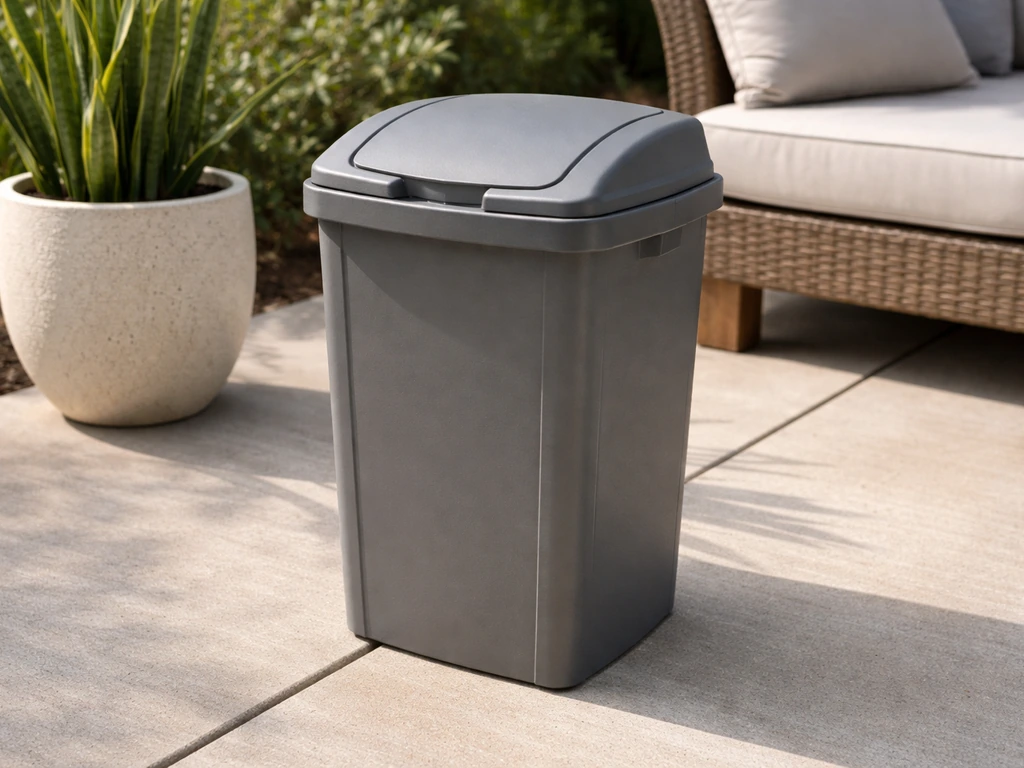
What to look for in a gray outdoor patio trash can
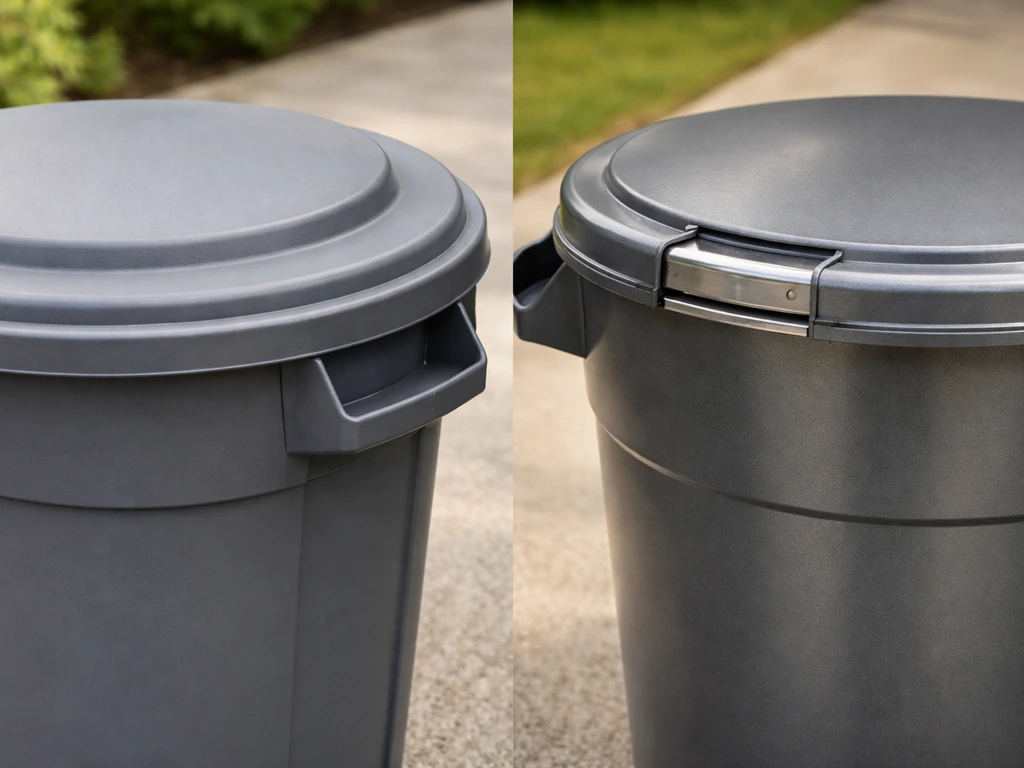
Material is the first thing to nail down. Resin (high-density polyethylene or injection-molded plastic) is the clear winner for outdoor patio use. It does not rust, does not dent, resists UV degradation far better than thin plastic bins, and cleans up easily. Rubbermaid's Roughneck line and Suncast's injection-molded utility cans both use quality resin for exactly this reason. Avoid metal bins for patios unless they are powder-coated stainless, because exposed steel edges corrode fast in wet or humid climates.
After material, focus on the lid. A lid that just rests on top is a liability outdoors: wind lifts it, animals push it, and rain fills the can. Look for snap-fit lids (like Rubbermaid's Roughneck design) or latching lids (like Suncast's Hideaway series). Both are specifically engineered to keep animals out and stay put in wind. Rubbermaid even builds in tether holes so you can optionally run a bungee or cord through the lid if you are in a particularly windy area.
A bag cinch or bag retainer is a small but genuinely useful feature. Without it, the liner bag slides down inside the can and you end up with loose trash hitting the bare walls of the bin, which makes cleaning much harder. Rubbermaid's Roughneck includes a bag cinch built in. If your chosen bin does not have one, just hang the bag over the outer rim and use a bungee to hold it, though a built-in solution is cleaner.
- Material: high-quality resin or injection-molded plastic, not bare metal
- Lid type: snap-fit or latching, not just resting/friction-fit
- Bag retention: built-in cinch or wide-mouth rim that holds a bag in place
- Venting: some bins include vents to reduce pressure buildup that can pop lids
- Warranty: a 10-year limited warranty (like Rubbermaid Roughneck offers) signals genuine outdoor durability
- Color stability: gray resin holds color better in UV than painted finishes; check if it is UV-stabilized
Sizing and measurements for your patio setup
The two most common sizes for patio trash cans are 20-gallon and 32-gallon, and choosing between them is mostly a question of how often you want to empty it and how much space you have. A 13 gallon patio trash can is a good fit when you want a smaller footprint or less frequent emptying than the common 20 to 32-gallon sizes discussed above. A 20-gallon can (like the HDX 20 Gal. or Suncast 20-gallon utility can) works well for smaller patios, apartment balconies, or households that take trash out frequently. A 32-gallon can (like Rubbermaid's Roughneck at 26 in x 22 in x 27.5 in) is better for families who entertain or barbecue regularly and want fewer trips to the curb.
Before you order anything, measure your available footprint. The Rubbermaid Roughneck 32-gallon is 26 inches wide and 22 inches deep, so it needs at least a 27 x 23-inch clear area on your patio floor, plus a few extra inches on each side so the lid can be removed without banging into furniture or fencing. The Suncast Hideaway enclosure-style bin is slimmer at roughly 16 inches wide and 15.75 inches deep but stands 31.6 inches tall, making it a better fit for narrow corners where floor space is tight but vertical space is open.
| Model / Style | Capacity | Footprint (W x D) | Height | Best For |
|---|---|---|---|---|
| Rubbermaid Roughneck (resin, vented) | 32 gal | 22 in x 26 in | 27.5 in | Families, frequent entertaining, larger patios |
| Suncast 20-gal Utility Can (resin) | 20 gal | Approx. 16-18 in x 16 in | ~28 in | Smaller patios, balconies, light use |
| Suncast Hideaway Enclosure (resin wicker) | 33 gal | 16 in x 15.75 in | 31.6 in | Design-forward patios, narrow corners, hiding the bin |
One thing people overlook: if you are going with an enclosure-style bin like the Suncast Hideaway, the exterior clearance is larger than the liner volume suggests. The outside dimensions matter for door swing clearance, gate width if you are rolling it out, and whether it blocks a walking path. Measure twice, especially near sliding doors and grill stations.
Placement and setup: odor, pests, foot traffic, and drainage
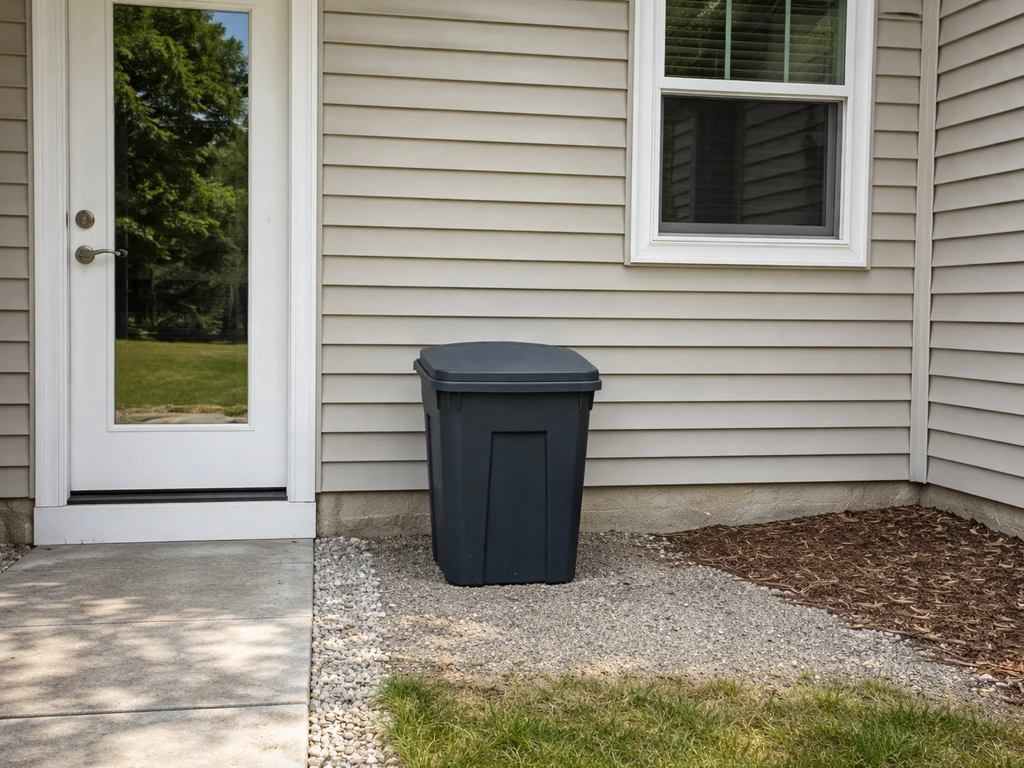
Where you put the bin matters almost as much as which bin you pick. The most common mistakes are placing it too close to the back door (smells drift in every time you open it), right next to the grill (heat and grease make odors worse fast), or in a spot where it blocks a walking path and gets knocked constantly.
Aim for at least 5 to 10 feet from any door or window that opens into a living space. This is not just about smell: if your trash can is positioned near an A/C unit or HVAC intake, the system can literally pull garbage odors into your house through the ductwork. Keep the bin on the opposite side of the patio from any HVAC equipment.
Surface matters for both stability and hygiene. Hard surfaces like concrete or pavers are strongly preferred. Soft ground, grass, or mulch lets the bin sink, tilt, and creates drainage problems where liquid from the can soaks into soil. A bin sitting on concrete or asphalt drains better, is easier to hose down, and stays level so lids seal properly. If your only option is a soft surface, place a concrete paver or rubber mat under the bin.
Wind is a real problem, especially on open decks or elevated patios. A can with a latching or snap-fit lid helps enormously, but if the whole bin tips over, you need an anchor. The most stable approach is a permanent weighted anchor system, either a ground stake through a tether hole or a concrete anchor puck that the bin sits against. Rubbermaid's Roughneck includes tether holes specifically for this purpose. You can also place the bin in a corner formed by two walls or fencing, which blocks wind from at least two directions.
- Keep the bin at least 5 to 10 feet from doors, windows, and HVAC intakes
- Place it away from the grill or outdoor kitchen to avoid accelerated odor buildup
- Use concrete, pavers, or a rubber mat as the base, not grass or soil
- Position in a sheltered corner or against a wall to reduce wind exposure
- Use the tether holes (if your bin has them) or a ground anchor if tipping is a recurring issue
- Leave a clear path so the bin does not interrupt foot traffic between the door and seating area
Choosing features that solve common problems: wheels, lids, and durability
Wheels sound convenient but are a trade-off on patios. They make it easy to roll the bin to the curb on pickup day, but they also mean the can rolls away in wind and can scratch patio surfaces. For most patio setups, a stationary non-wheeled bin is more practical because it stays put and is easier to anchor. If you go with wheels, look for a model with a wheel lock or plan to use an anchor strap on non-pickup days.
Lid design is the single most important feature for preventing the two biggest patio trash can complaints: pests and smells. A snap-fit lid (Rubbermaid Roughneck style) snaps down firmly and requires deliberate force to remove, which means raccoons, squirrels, and wind all struggle with it. A latching lid (Suncast Hideaway style) goes one step further with a mechanical closure. Either is dramatically better than a friction-fit lid. If you are in an area with bears or persistent raccoons, add a bungee cord through the tether holes as an extra layer.
Durability for outdoor use comes down to the resin quality and warranty. Rubbermaid backs the Roughneck with a 10-year limited warranty, which is a meaningful signal that the material is engineered for sustained outdoor exposure. Suncast's injection-molded resin is built not to rust, dent, or bend, which matters when the bin takes impact from kids, lawn equipment, or delivery boxes stacked on top of it. Avoid thin-walled plastic bins that flex when you press them, as they crack faster under freeze-thaw cycles and UV exposure.
Liners and odor control accessories
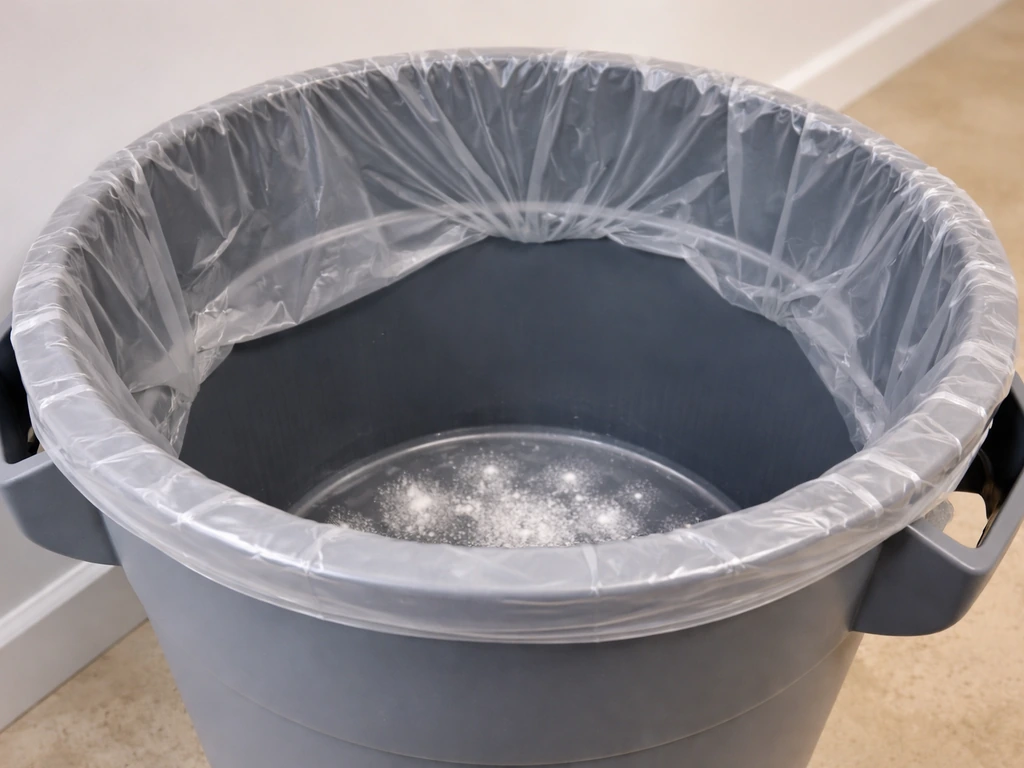
Always use a liner bag that fits properly. A 32-gallon bin needs a 30 to 33-gallon bag. An undersized bag slides down and leaves the bin walls exposed to direct contact with food waste, which leads to stains and persistent smell. An oversized bag bunches up and can block the lid from sealing properly. The Suncast Hideaway and Rubbermaid Roughneck are both designed around standard 30 to 33-gallon liners. Tuck excess bag material down the sides rather than folding it over the top rim.
For odor control between cleanings, sprinkle baking soda in the bottom of the bin under the liner, or use a deodorizer disk or EPA-registered trash can deodorizer product. An EPA-registered product label PDF also describes using a cleaner or deodorizer on trash and garbage cans and other surfaces blank" rel="noopener noreferrer">EPA-registered trash can deodorizer product. These are cheap and genuinely effective at cutting the sour smell that builds up in warm weather. Replace the baking soda every two weeks in summer.
Matching your patio design: gray styling and bin enclosures
Gray is genuinely one of the easiest patio trash can colors to work with. It reads as neutral against concrete, natural stone, composite decking, and most furniture in charcoal, beige, or white. A plain gray resin can like the Rubbermaid Roughneck does not scream "trash can" the way a bright blue or orange bin does, but it is still clearly a functional utility item. If you want it to disappear into the patio aesthetic entirely, you have two options: a bin enclosure or a design-forward can like the Suncast Hideaway's wicker-textured exterior.
The Suncast Hideaway is worth considering for design-conscious patios. Its wicker-textured resin exterior looks like patio furniture at a glance, and the slim 16-inch footprint means it fits into tight spots. It is available in shades that coordinate with common deck furniture tones. This approach lets you have a 33-gallon capacity bin sitting openly on the patio without it looking out of place. If you are comparing options like a standard patio garbage can with a lid versus an enclosure-style unit, the enclosure wins on aesthetics but costs more.
If you want to go further, a DIY or prefab bin enclosure cabinet can make a gray trash can essentially invisible. Basic wood or composite enclosures with a hinged top or front-opening door can be built for under $100 in materials, or purchased as prefab kits. When designing one, follow the principle used in commercial trash enclosure guidelines: include solid covers and screened sides to prevent wind-blown litter and contain odors. Do not fully seal the enclosure airtight, as that traps heat and accelerates odors instead of containing them. Leave ventilation gaps at the top or sides.
Maintenance and cleaning to keep it looking new
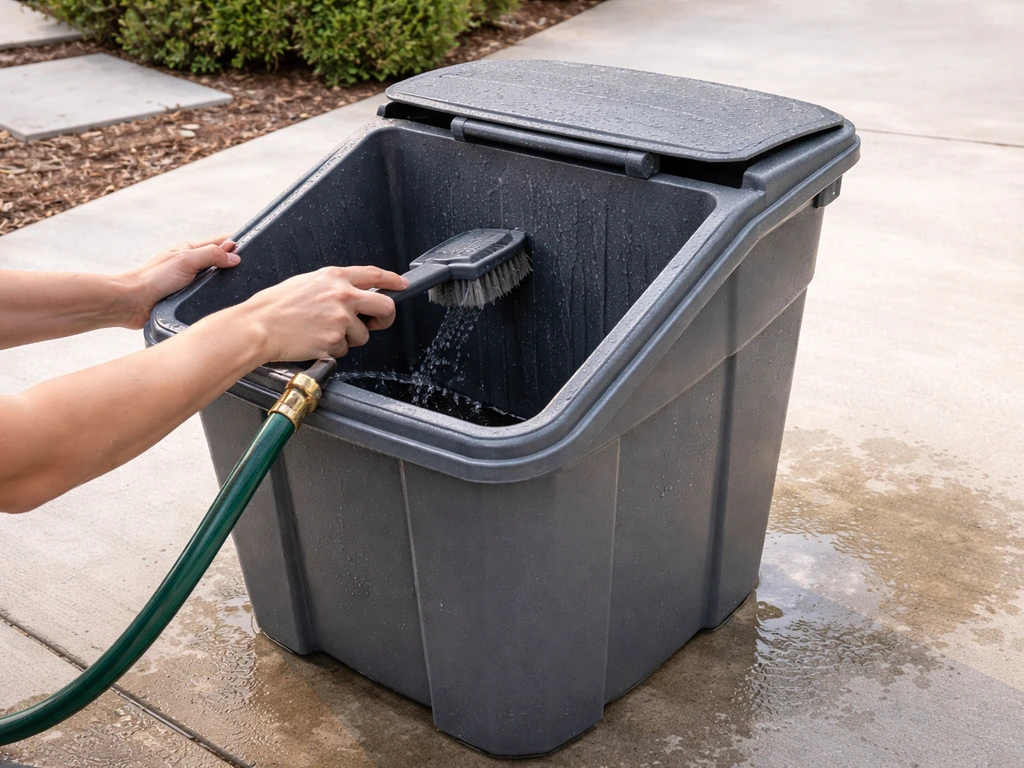
Resin bins are low-maintenance but not no-maintenance. Build a cleaning routine around once a month in mild weather and every two weeks in summer, when heat speeds up bacterial growth and odor. The process is simple: remove the liner, rinse the inside with a garden hose, scrub with a brush and a white vinegar and water solution (roughly 1 part vinegar to 3 parts water), rinse again, and let it dry fully before putting in a new liner. The vinegar solution cuts through residue and neutralizes odor without bleaching or discoloring the gray resin. Lowe's specifically recommends vinegar over bleach for this reason: bleach can cause color changes on plastic bins, especially with repeated use.
For heavily soiled bins, pre-rinse with the hose first to remove loose debris, then apply a dish soap scrub before the vinegar step. If you do use a bleach-based cleaner on a stubborn stain, test a small hidden area first and rinse thoroughly. On a gray bin, bleach residue tends to leave lighter spots over time.
To slow down exterior fading from UV exposure, wipe the outside of the bin once or twice a year with a plastic protectant spray (the kind used for outdoor furniture or car plastic trim). This will not make an old faded bin look new, but it will slow the process on a new one significantly. For the lid, check the snap or latch mechanism once a season. Resin can become slightly brittle in very cold climates, and a lid that is hard to open in fall may crack by spring if forced. A light wipe with silicone lubricant on the latch keeps it moving smoothly.
DIY fixes vs. when to call in help
Most gray patio trash can problems are completely solvable with simple DIY fixes. Here is a quick breakdown of what you can handle yourself versus when it actually makes sense to bring in a contractor or professional.
| Problem | DIY Fix | When to Get Help |
|---|---|---|
| Bin keeps blowing over | Use tether holes with a ground stake or bungee; position in a sheltered corner | If you want a permanent concrete anchor installation on a finished patio surface |
| Persistent odor | Vinegar wash, baking soda under liner, proper-fitting 30-33 gal bags, snap-fit lid | Rarely needed; if odor is entering the house, check HVAC placement first |
| Pests getting in | Switch to a snap-fit or latching lid; add bungee through tether holes for extra resistance | If wildlife damage is extensive, contact local animal control for deterrent advice |
| Bin looks out of place on patio | Buy a wicker-texture enclosure-style bin or build a simple wood surround enclosure | Hire a carpenter or contractor for custom built-in enclosures integrated into deck structure |
| Bin sitting on soft or uneven ground | Add a concrete paver or rubber mat under the bin | If you need a poured concrete pad, hire a concrete contractor |
| Lid cracked or latch broken | Replace lid only (many brands sell replacement lids) or replace the full bin if repair cost is high | Not usually a contractor job; contact manufacturer for warranty replacement first |
The honest truth is that almost every common gray patio trash can problem, from tipping to smells to pests, can be solved with the right bin and a couple of small accessories. The only scenarios where professional help genuinely saves you time and money are permanent anchor installations on finished concrete or pavers, and custom built-in enclosures that need to be integrated into a deck structure or fence. For everything else, start with the right bin, place it on a hard surface in a sheltered spot, use a properly sized liner, and keep up with monthly cleanings.
If you are still narrowing down your options, it helps to think about what specific problem you are prioritizing. A small patio trash can in the 13-gallon range is worth considering for compact spaces or balconies where a 32-gallon footprint is simply too large. And if black is a better match for your furniture than gray, a patio garbage can in black works the same way functionally, just with a different aesthetic trade-off. The core criteria for choosing, placing, and maintaining the bin are the same regardless of color or size.
FAQ
How do I choose the right bag size for a gray patio trash can if the liner label is confusing?
Match the liner volume range to the bin’s stated capacity, then do a fit test with the liner empty. For a 32-gallon gray patio trash can, use a 30 to 33-gallon liner so the bag can tuck down the sides without bunching up at the rim, if it is too large the lid may not seal properly.
What is the best way to stop raccoons or squirrels even if the lid seems secure?
Prioritize a lid with a real closure (snap-fit or latch) and add a tether or bungee through the tether holes. Also keep the bin area well-lit at night if you have motion lights, because animals are more likely to linger and push at lids they can reach easily.
Can I put a gray patio trash can on a wooden deck or balcony instead of concrete or pavers?
It is possible, but you need a stability layer. Use a heavy-duty rubber mat or a flat, rigid paver underneath to prevent sinking and to keep the bin level for a good lid seal, and consider anchoring if wind is common where the deck is elevated.
Do wheels really make sense for a gray patio trash can?
They can help on pickup day, but they add two risks, rolling in wind and surface scuffing. If you go with wheels, choose one with a wheel lock or plan to anchor it on non-pickup days, otherwise you may find the bin shifted after gusts.
How far should a gray patio trash can be from a door, grill, or HVAC intake if my patio is small?
Use the 5 to 10 feet guideline when you can, but in tight layouts, place it farther from the exact opening or intake and keep it out of the direct line of wind. If it must be close, use stronger odor control (baking soda or a deodorizer disk) and ensure the lid seals fully so odors do not escape when the door opens.
What should I do if the bin tips over during storms even with a secured lid?
Lid security does not prevent tipping, anchoring does. Install a tether with a ground stake through the tether hole, or use a concrete anchor puck against the bin. If you cannot anchor into the ground, corner the bin between two walls or panels so wind is blocked from two directions.
How do I clean a gray patio trash can if it has stains or sticky residue?
Pre-rinse to remove loose debris, scrub with dish soap first, then use the vinegar and water step before the final rinse. On stubborn residue, let the soap sit for a few minutes before scrubbing, this reduces the number of times you have to use stronger cleaners on the gray resin.
Is vinegar really safe for gray resin, and how should I apply it?
Yes, vinegar and water is a good routine for neutralizing odor and residue without bleaching. Use about 1 part vinegar to 3 parts water, scrub with a brush, then rinse thoroughly, and fully dry the bin before putting in a new liner to prevent lingering smell.
How often should I check the lid hardware on a gray patio trash can?
Check the snap or latch mechanism once per season and before peak weather (summer heat, winter cold). If the latch feels stiff, lubricate lightly with silicone lubricant on the moving points, and avoid over-lubing because excess residue can attract grime.
What’s the best approach for storing the bin in winter or freezing weather?
Prevent freeze-related stiffness by keeping the bin clean and dry so residue does not freeze into the lid area. If you cannot bring it indoors, avoid forcing the lid open when it is frozen, and inspect the lid for cracks in spring before it is used frequently.
My liner bags keep sliding down inside the gray patio trash can, what’s the fix?
First confirm you are using the right bag size, undersized bags slide and oversize bags bunch up and interfere with sealing. If the can lacks a built-in bag cinch, use a bungee or strap over the outer rim so the liner stays taut while the lid remains fully closed.
Will a gray patio trash can deodorizer interfere with trash pickup or the liner?
Use deodorizer products intended for trash cans and keep them placed under or within the liner bottom so they do not contact the lid seal area. If you use baking soda, do not overfill it, a thin layer under the liner works and reduces dust or residue that can spill when you remove the bag.
When is it worth considering a bin enclosure cabinet instead of a standard gray trash can?
Choose an enclosure if aesthetics or pest control is a constant problem, especially on visible patios or where animals can access the bin easily. For enclosures, include solid covers and screened or ventilated sides, do not seal it airtight because trapped heat can intensify odors and speed up residue buildup.