
For most small patios, a 7-to-13-gallon bin is the sweet spot. It holds enough for a few hours of outdoor entertaining without taking over your space, and it's light enough to carry inside or to the curb without hassle. If you're hosting regular backyard gatherings or have a larger covered patio, stepping up to 20 gallons still counts as compact compared to a full-size 32- or 64-gallon curbside can. The key is matching the bin's capacity to your actual patio use, not guessing big because bigger feels safer.
Small Patio Trash Can Guide: Size, Placement, and Features

Miles Sutton
11 Jun 2026
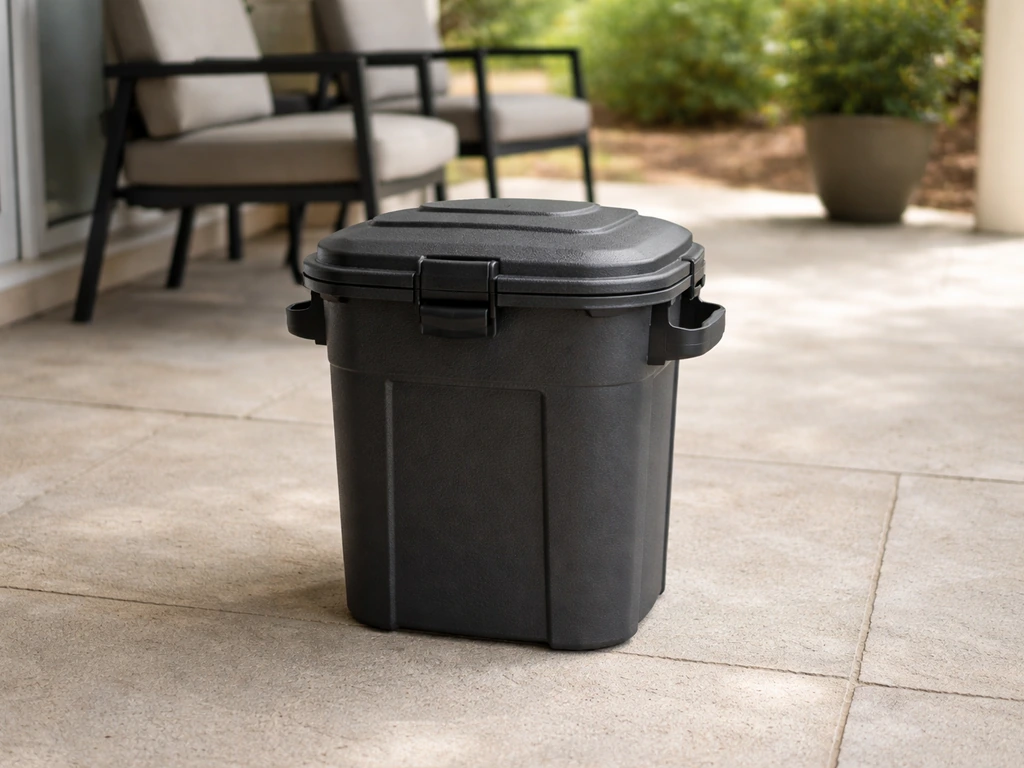
Choosing the right size for a small patio
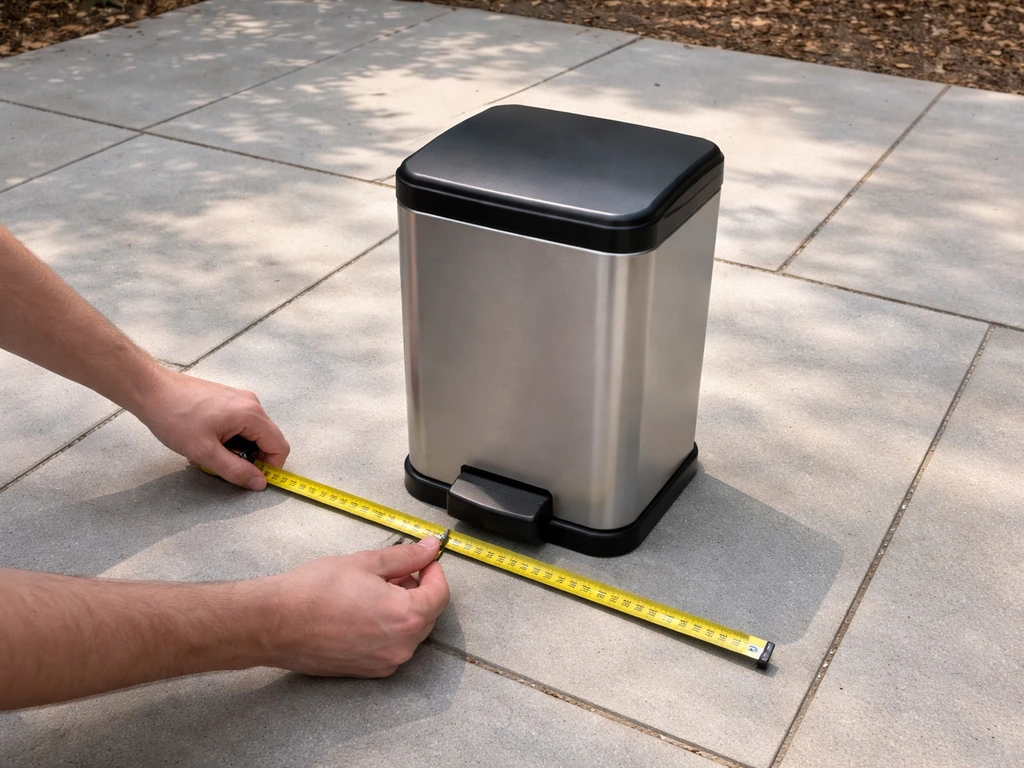
Start by thinking about how you use your patio, not just how big it is. A reading nook or a two-chair coffee spot generates very little waste, so a 7-gallon pedal-top bin is genuinely enough. An outdoor dining area where you're eating and entertaining a few nights a week needs more like 10-to-13 gallons. If you're regularly grilling or hosting groups, a 20-gallon round bin like the Rubbermaid BRUTE (about 19.5 inches in diameter and 22 inches tall) keeps up with the volume while still staying compact enough to tuck into a corner.
A quick rule of thumb: measure the footprint you're willing to dedicate to the can before you shop. The BRUTE's 19.5-inch diameter footprint, for example, fits neatly beside a standard 24-inch grill cart with room to spare. A 35-gallon hideaway-style deck bin runs closer to 16.5 inches wide by 35 inches deep, which is still manageable but noticeably larger. Write down the available width and depth before you order anything online, because photos are deceiving.
| Capacity | Best for | Approximate footprint | Notes |
|---|---|---|---|
| 7 gallon | Solo use, low-traffic patio | Under 12 in diameter | Easy to carry inside; empties frequently |
| 10–13 gallon | Daily family use, casual dining | 12–15 in diameter | Most versatile for small patios |
| 20 gallon | Frequent entertaining, grilling area | ~19.5 in diameter, 22 in tall | BRUTE-style round cans fit well in corners |
| 35 gallon | Large covered patio, multi-day use | ~16.5 in W x 35 in D | Hideaway deck styles reduce visual clutter |
Where to place a small patio trash can
Placement matters more than most people expect. The goal is a spot where someone can toss something in without interrupting what they're doing or walking around furniture to get there. Near the grill and the dining table is almost always the right call, because that's where food waste actually originates. If you only have one can, position it roughly halfway between the two zones.
Avoid placing the bin in direct sun if you can help it. UV exposure degrades plastic faster, and a sun-baked can full of food waste creates serious odor problems. A shaded corner, the side of a privacy screen, or against a fence line keeps the can accessible without it becoming an eyesore or a hot box. If your patio has a pergola or overhang, putting the bin under that structure also helps protect it from direct rain, which reduces water pooling inside and spill runoff that can attract pests.
Think about wind too. An uncovered or lightweight bin placed in an exposed corner can tip over and scatter trash. City guidance from municipalities like Santee, CA specifically calls out keeping lids closed and preventing wind scatter as a basic requirement for outdoor waste management. Weight the can down with a heavy liner bag when it's empty, or choose a bin with a locking lid and enough base weight to resist tipping. Stash it behind a planter or patio wall when high wind is expected.
- Position within arm's reach of your main eating and grilling zones
- Avoid full-sun spots to slow odor buildup and protect the bin's material
- Use a shaded corner, fence line, or overhang location when possible
- Keep at least a few inches of clearance so the lid can open fully without hitting furniture
- In windy areas, choose a heavy or lidded bin and anchor it against a wall or planter
Types of small patio bins: what actually works outdoors
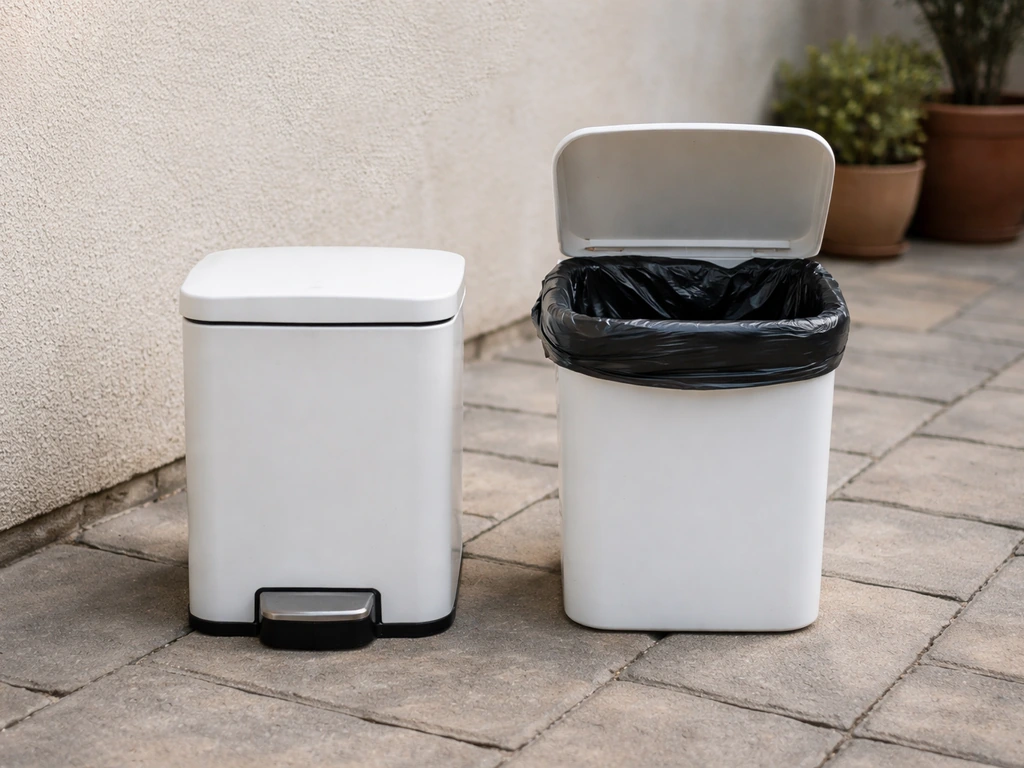
Not every trash can is built for outdoor conditions. Here's how the common types stack up for patio use specifically.
Compact lidded bins
This is the most practical choice for most small patios. A step-pedal or push-top lid keeps bugs out without making disposal annoying, and a tight-fitting lid does real work on odor control. Look for bins with a secure snap or latch mechanism rather than a loose-fitting lid that the wind can pop off. A patio garbage can with a lid is genuinely one of the most useful features you can buy, not just a nice-to-have.
Wheeled options
A small wheeled bin in the 20-gallon range makes sense if you need to roll the can to the curb or move it around a larger patio regularly. The Rubbermaid BRUTE 20-gallon configuration is available with wheels, which makes it far easier to manage when full. The trade-off is a slightly larger footprint and less stability on uneven pavers. Wheels also collect grime quickly, so factor that into your cleaning routine.
Hideaway and deck-style bins
Hideaway bins are designed to look like deck furniture and blend into the patio aesthetic. The 35-gallon Hearth & Harbor-style deck bin (roughly 16.5 inches wide and 35 inches tall) is a good example: it holds a lot, looks tidy, and the double-latch lid concept keeps pests and odors contained. These are worth the extra cost if your patio is visible from the street or you're proud of how the space looks and don't want a utilitarian gray can as a focal point.
Recycling and compost setups
If you're sorting waste outdoors, a two-bin side-by-side setup in a compact hideaway cabinet works well. For compost specifically, choose a bin with a very tight lid and, ideally, a carbon odor filter, because food scraps attract pests faster than dry waste. A dedicated small compost pail with a charcoal filter insert (like those from Joseph Joseph) is worth it if you're serious about diverting food waste. Keep the compost bin in shade and empty it more frequently than your regular trash.
Weather resistance and durability: what to actually check
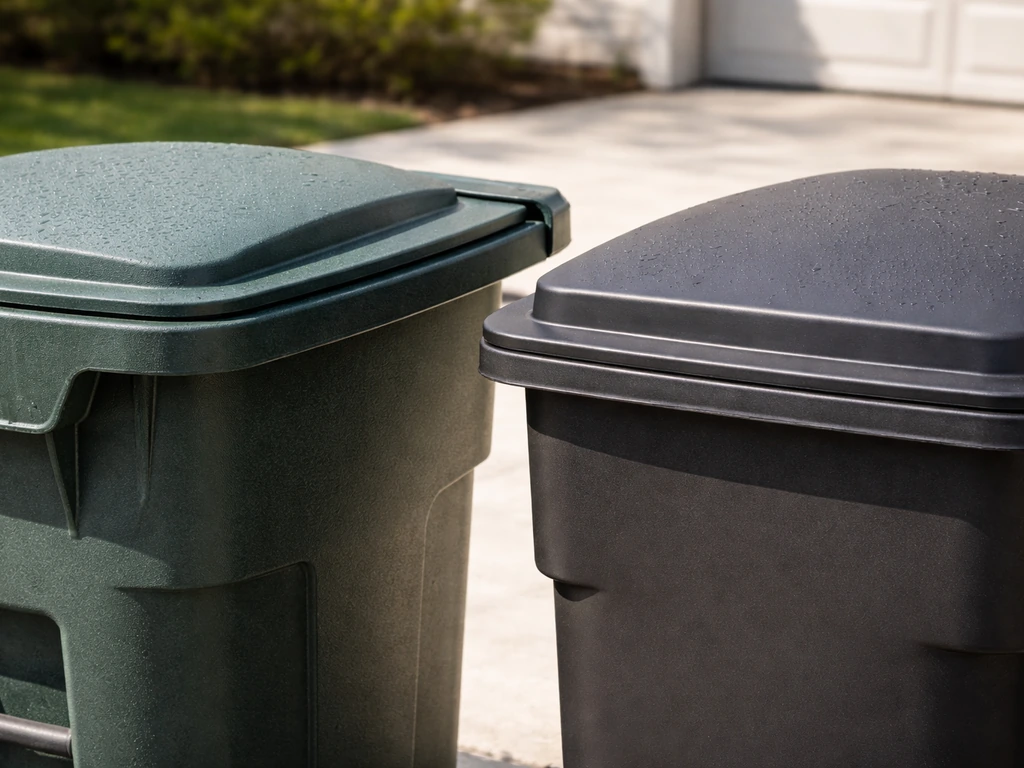
Outdoor bins take a beating. Sun fades and warps cheap plastic, rain fills lidless cans with standing water, and temperature swings crack materials that aren't rated for outdoor use. The features that genuinely matter are UV inhibitors built into the plastic, HDPE (high-density polyethylene) construction, and a lid that resists denting, warping, and cracking over time. The Rubbermaid BRUTE line, for example, uses HDPE with a UV inhibitor and is specifically rated to resist denting, fading, warping, cracking, and crushing, which is why it shows up on patios, job sites, and commercial kitchens alike.
Powder-coated steel bins are another option if you want a more decorative look. They hold up well in mild climates but can rust at the seams in wet or coastal environments over a few seasons. Wicker-look resin bins are attractive but check that the inner liner is solid and removable for cleaning. Avoid thin injection-molded plastic bins that flex when you push on the sides: they'll crack within a year of outdoor use.
- HDPE construction: resists cracking, warping, and UV degradation
- UV inhibitor in the material (check product specs, not just the color)
- Snap-lock or latching lid to resist wind and pests
- Smooth interior walls with no seams or crevices where waste can collect and bacteria can grow
- Rust-resistant hardware if the bin uses any metal components
- Drainage hole or plug at the base (helpful for rain-exposed outdoor use)
Odor control, liners, and keeping the bin clean
Odor is the number one complaint with outdoor bins, and it's almost always a combination of the wrong liner, infrequent emptying, and skipping the cleaning routine. Use a liner bag with odor protection for any bin that holds food waste outdoors, and size the bag properly so it doesn't slip down into the can and leave residue on the walls. For outdoor use, go with a heavier mil-count bag (at least 1.2 to 1.5 mils for a kitchen-style bag, higher for a larger outdoor bin), because thin bags tear against rough plastic edges and create a mess.
If odor is a real problem, add an activated carbon filter to the lid or bin interior. Products like the HALO deodorizer carbon filter (available at Home Depot in 3-packs) or the Joseph Joseph replacement carbon filters work by neutralizing odor molecules rather than just masking them. Replace the filter every few months or sooner if you notice odors returning. This is especially useful for a patio trash can that sits in a warm spot or holds food waste for more than a day or two. A good trash can for patio use should also have a tight, latching lid to control pests and odor.
For cleaning, follow a two-step process: pre-clean first, then disinfect. Don't just spray bleach into a dirty can. Empty the bin fully, rinse it out with a hose, then spray the interior with a disinfectant or a diluted bleach solution and let it sit for 5 to 10 minutes. Scrub the walls and bottom with a long-handled brush, rinse thoroughly, then tip the can upside down and let it dry completely in the sun before putting a new liner in. Skipping the drying step is what causes that persistent sour smell: lingering moisture lets bacteria and mold grow back immediately. Undiluted white vinegar sprayed inside after cleaning and left to air-dry is a solid natural deodorizer if you want to avoid bleach.
- Empty the bin completely and shake out any loose debris
- Rinse the interior with a garden hose
- Spray with a disinfectant or diluted bleach solution and let it sit 5–10 minutes
- Scrub the interior walls and base with a brush
- Rinse thoroughly until all cleaner is removed
- Tip upside down and let dry completely in sunlight before relining
How often? For a small patio bin that holds food waste, a full clean every two to four weeks is realistic. A bin used only for dry waste (napkins, packaging) can go six to eight weeks between deep cleans. The more frequently you empty the bin, the less often you'll need to scrub it.
Safety, pest prevention, and a few local considerations
Food waste in an outdoor bin is a direct invitation to pests if you're not managing it well. The EPA is clear on this: garbage containing food scraps should always be in a tightly covered trash can to reduce pest access. That means a lid that actually latches, not one that just rests on top. Rodents and raccoons can flip a loose lid in seconds, and once they've found a food source on your patio, they'll keep coming back.
The CDC recommends disposing of trash and garbage frequently and regularly as one of the core steps for keeping outdoor areas rodent-free. On a small patio, that translates to emptying the bin at the end of every outdoor gathering rather than leaving food waste outside overnight. The NYC Department of Health similarly advises keeping food in sealed containers and disposing of waste promptly and regularly to reduce pest attraction to accessible food sources dispose of trash and garbage frequently and regularly. Don't leave pet food or bird seed near the bin either, since these attract the same pests. If you're dealing with raccoons specifically, a bin with a double-latch lid and some base weight is usually enough to deter them.
Local regulations are worth a quick check if you're in a municipality with strict trash enclosure requirements. Cities like Palo Alto and Woodland, CA have explicit guidelines about how outdoor waste receptacles must be managed to prevent runoff, leakage, and scavenging. Most residential patios fall outside commercial enclosure codes, but HOA rules sometimes mirror them. If your patio is in a shared-wall or townhome community, confirm whether a lidded bin on the patio complies with your association's waste storage rules before you buy.
For a compact patio in an urban or suburban setting, a gray or black lidded bin in the 10-to-20-gallon range is usually the safest, most versatile choice. It blends into almost any patio color scheme, holds enough waste for regular use, handles the weather with the right material specs, and keeps pests and odors manageable. If the color or aesthetic matters to you, a black patio garbage can or a darker gray version is widely available and tends to hide scuffs and sun fade better than lighter colors over time.
Quick decision guide before you buy
Here's how to make the call in about five minutes. Measure the space where the bin will live (width, depth, and how much height clearance you have under any shelf or overhang). Decide on capacity based on your patio use: 7-to-10 gallons for light use, 13 gallons for regular family use, 20 gallons for regular entertaining. Check that any bin you're considering is HDPE or equivalent, has a UV inhibitor in the spec sheet, and comes with or supports a locking or snap-fit lid. If you want a patio garbage can in black, focus on UV-resistant plastic or HDPE and a tight-latching lid to keep odors and pests under control locking or snap-fit lid. Budget for a box of appropriate liner bags and at least one carbon filter if you'll be putting food waste in it. Then pick a placement spot that's shaded, wind-sheltered, and within arm's reach of your main eating zone, and you're set.
If you're choosing between specific styles, the classic round lidded bin in a 13-to-20-gallon size handles almost every small patio scenario without overthinking it. Hideaway deck-style bins are worth the upgrade if aesthetics matter or you're housing a recycling split. Wheeled bins make sense only if you're regularly moving the can to a distant pickup point. Skip thin decorative bins with ill-fitting lids: they look fine in a product photo and fall apart or cause odor problems within a season outdoors.
FAQ
What’s the smallest size that still works as a small patio trash can if I mostly throw away dry waste?
For napkins, packaging, and light scraps, 7 gallons is usually enough if you empty it frequently. If it will ever hold food waste from grilling or entertaining, consider 10 to 13 gallons instead, because the lid stays shut longer before it needs emptying, which reduces odor and pest risk.
How do I choose between a 10-gallon and a 13-gallon small patio trash can?
Pick 10 gallons if you have low traffic use and you plan to empty after each gathering. Choose 13 gallons if you expect multi-day use between cleanouts, since a slightly larger bin can hold more before moisture and food residue start building up on the bottom.
Can I use a regular indoor trash bag for a small patio trash can?
You can, but indoor bags are often thinner and tear faster on rough outdoor bin walls. For outdoor use, use a heavier liner (about 1.2 to 1.5 mils for kitchen-style outdoor bags, higher for larger bins) so it doesn’t rip and leave residue behind.
My small patio trash can smells even when I use a lid. What’s the most common mistake?
Most of the time it’s either the bin is still wet inside after cleaning, or food waste is staying in it too long without emptying. Dry the can completely before re-lining, and empty at the end of gatherings rather than waiting overnight, especially in warm weather.
How can I keep a small patio trash can from tipping in windy conditions?
Use a bin with a lid that actually latches, and place it in a sheltered corner. If your can tends to be light, weigh it down with a heavy liner bag when empty, or stash it behind a planter or patio wall where gusts can’t hit it directly.
Is it better to put a small patio trash can directly next to the grill, or farther away?
Keep it within arm’s reach of the main eating and grilling zone, but avoid placing it right where you’re actively moving hot items. A spot between dining and grill works well, but keep it away from direct splash zones so grease and liquid don’t saturate the liner and lid.
Do I need a carbon filter for a small patio trash can if I only use it occasionally?
If it never holds food waste for more than a day or two, you may manage odors with proper emptying and regular cleaning. If it will sit warm for longer periods or you regularly discard food scraps, an activated carbon filter is a practical add-on because it neutralizes odor molecules instead of just covering them.
What’s the best way to clean a small patio trash can to prevent recurring sour smells?
Do a rinse first, then disinfect, scrub the bottom and sides, rinse again, and let it dry fully before adding a new liner. If you skip the drying step, moisture lets bacteria and mold come back quickly, which is why odors return soon after cleaning.
How often should I empty and clean a small patio trash can used during weekends?
Empty at the end of each outdoor gathering. For a bin holding food waste, plan a deep clean every two to four weeks. If you only use it for dry waste and keep it relatively empty, you can extend deep cleaning to about six to eight weeks.
Can I store a small patio trash can under a pergola or overhang safely?
Yes, shade and shelter help reduce UV damage and rain pooling. Just ensure the area is still ventilated enough that the bin can dry after rinsing, and confirm nothing blocks airflow around the lid so it closes and latches properly.
Will powder-coated steel or wicker-look resin work for a small patio trash can?
Powder-coated steel can work in mild climates but may rust at seams in wet or coastal environments. Wicker-look resin units can be fine if there’s a solid, removable inner liner for cleaning. For durability, confirm the bin is rated for outdoor use and has a lid that dents and warps less than thin plastic.
What lid type is safest for keeping pests out of a small patio trash can?
A latching or locking lid is the safer choice. Lid that merely sits on top can be flipped quickly by rodents, and once pests learn food is available, they typically keep returning to the same spot.
Do I need to check HOA or local rules for a small patio trash can?
Often yes, especially in townhome, shared-wall, or HOA-managed communities. Some rules govern how outdoor bins must be stored to prevent leakage, runoff, and scavenging, so confirm compliance before buying a large or hideaway-style bin.
Should I choose a round small patio trash can or a hideaway deck-style bin?
Choose a classic round lidded bin for simplicity and reliable fit in tight spaces. Choose a hideaway deck-style bin if the bin needs to blend into visible patio furniture areas or if you want a larger capacity with a more finished look, but be mindful it may take more footprint.