
Outdoor patio rules fall into three buckets: local government requirements (permits, zoning, setbacks), HOA or community association rules (approvals, materials, usage limits), and practical safety and maintenance standards that keep your patio safe and neighbor-friendly. If you want a quick checklist, reviewing patio rules in your area and with your HOA (if you have one) helps you avoid common missteps. Which ones apply to you depends on where you live and whether you have an HOA. Most homeowners need to check at least two of the three, and skipping any of them can mean fines, forced removal, or a patio that creates real hazards. Here is exactly how to figure out what applies to your property and what to do about it.
Outdoor Patio Rules: HOA, Permits, Safety and Maintenance Checklist

Miles Sutton
6 Jul 2026
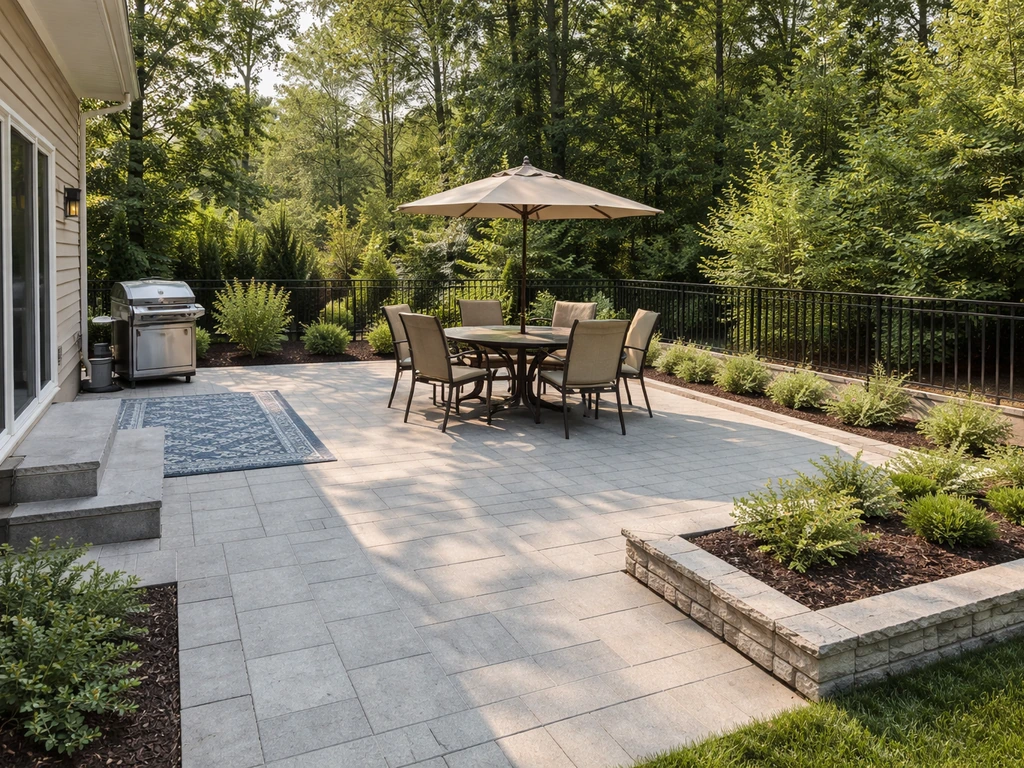
What people mean when they search 'outdoor patio rules'
The phrase means different things to different people, and that matters because the rules you need to follow depend entirely on your situation. A homeowner in a suburban subdivision with an HOA faces a completely different set of requirements than someone on a rural lot with no association. Here is how the three categories break down.
- Municipal/legal rules: These are the official laws and building codes your city, county, or township enforces. They cover permits, zoning, setbacks from property lines, easements, drainage, and construction standards. Violating them can result in stop-work orders, fines, or being required to tear out what you built.
- HOA or community rules: If your property is governed by a homeowners association, you also have a second layer of approval requirements on top of local law. HOAs set their own standards for materials, colors, placement, size, and even when and how you use your patio. HOA approval and a municipal permit are separate processes and you often need both.
- Practical guidelines: These are not laws, but they represent industry best practices for safety (railings, slip-resistant surfaces, proper drainage), fire and grilling clearances, and maintenance schedules. Ignoring them does not usually trigger a fine, but it can lead to injuries, water damage, or neighbor disputes.
There are also topic-specific angles that come up in searches, like patio slope drainage codes, specific design rules for proportion and layout, and even community posting signs for shared patios. This guide focuses on the rules that apply to homeowners building or maintaining a private outdoor patio, which is where most people get stuck.
Permits, zoning, setbacks, and easements: the planning basics
Before you dig a single post hole or lay one paver, spend an afternoon checking your local requirements. This is not exciting, but it saves you from the nightmare of building something you have to partially demolish later.
Do you need a permit?
Most municipalities require a building permit for attached patios, covered structures, raised decks, and any patio that includes electrical work, gas lines, or a permanent roof. Ground-level open patios made of pavers or poured concrete on grade are often exempt from permits in many jurisdictions, but 'often' is not 'always. If you need a quick, shareable way to communicate your patio requirements, a patio rules SVG can help standardize the signage for your space. ' The only way to know for sure is to call or visit your local building department, or check their website. Ask specifically about your project type, square footage, and whether it is attached to the house. Some areas set a square footage threshold, like 200 square feet, below which a permit is not required, but those rules vary enormously by location.
Zoning, setbacks, and easements
Zoning rules determine what structures are allowed on your property and where. Setbacks are the minimum distances a structure must sit from your property lines, the street, and neighboring structures. A common residential setback for a rear patio might be 5 to 10 feet from the rear property line and 5 feet from the side line, but your local code sets the actual numbers. Before you finalize any patio layout, pull your property survey (or request one) and physically measure from the proposed patio edge to each property line.
Easements are a separate issue that trips up a lot of homeowners. An easement is a section of your property that someone else, typically a utility company, has the legal right to access or run infrastructure through. Building a permanent structure over a utility easement is usually prohibited. Check your property deed, your survey plat, or call 811 (the national dig-safe line in the US) before you break ground. Utility companies can and will remove anything built over their easement if they need to access it, and you will not be reimbursed.
Your pre-construction checklist
- Pull your property survey or plot plan and identify all property lines, easements, and setback lines.
- Call 811 to have underground utilities marked before any digging.
- Contact your local building or planning department to ask whether your specific project requires a permit.
- Check your local zoning code for allowed uses, structure height limits, and impervious surface coverage rules (some areas cap how much of your lot can be paved).
- If a permit is required, submit your application with a site plan showing the patio's dimensions and its distance from property lines, the house, and any easements.
- Wait for permit approval before starting construction, and schedule any required inspections during and after the build.
HOA rules: approvals, restrictions, and what gets flagged
If you live in an HOA community, you need written approval from the Architectural Review Committee (ARC) or Architectural Control Committee (ACC) before starting any patio work. This is not optional, and 'I did not know' does not protect you. HOAs can issue violation notices, levy fines, and require you to undo unpermitted changes at your own expense. The approval process is separate from any municipal permit, so even if your city says you do not need a permit, your HOA may still require formal sign-off. If your HOA posts patio rules signs for shared areas, follow what they specify about permitted uses and placement HOA may still require formal sign-off.
How the approval process works
Most HOAs require you to submit a written request before any work begins, and that request typically needs to include the patio's dimensions, the materials you plan to use, and a diagram or plot plan showing the patio's location relative to your property lines, your home, and any easements or setback lines. Some associations want scaled drawings or blueprints. The review period commonly takes four to six weeks, and possible outcomes include approval as submitted, approval with required changes, a request for more information, or a flat denial. Do not schedule your contractor until you have written approval in hand.
What HOAs typically regulate for patios
- Materials and finish: Many HOAs require that patio materials match or complement the home's existing exterior. Concrete, pavers, and natural stone are commonly approved; brightly colored materials or certain composite products may be restricted.
- Placement and size: HOAs may have their own setback rules that are stricter than local code, and they may cap the total square footage of covered or paved surfaces.
- Covered structures: Pergolas, patio covers, and shade sails often require separate approval and may need to match the home's roofline, color, or material.
- Lighting: Outdoor lighting is frequently regulated, including brightness, direction, and whether string lights or decorative fixtures require approval.
- Noise and usage hours: Some HOAs have quiet hours that directly affect how late you can use outdoor sound systems or host gatherings on your patio.
- Trash and storage: Visible trash containers, stored equipment, or furniture that looks cluttered or detracts from the neighborhood appearance can trigger violation notices.
If you already built without approval
If you discover your patio was built without HOA approval, either by you or a previous owner, your best move is to proactively contact the HOA and submit a retroactive approval request. Document everything with photos and written communication. HOA enforcement typically follows a notice, hearing, and cure process. You usually get a written description of the violation, an opportunity to be heard, and a set timeline to fix the issue. Ignoring violation notices escalates quickly and makes the eventual outcome more expensive.
Safety and compliance: railings, stairs, surfaces, drainage, and fire basics
Even on a patio that does not require a permit, these safety standards reflect building code requirements and practical risk management. A ground-level patio on grade has a different set of concerns than a raised deck or a patio attached to a second-story door.
Guards and railings
If your patio surface is elevated 30 inches or more above the ground, building codes generally require a guard rail. Under the International Residential Code (IRC), guards must be at least 36 inches high for residential use; under the International Building Code (IBC), the threshold is 42 inches. The openings between balusters matter too: the standard test is that a 4-inch sphere should not be able to pass through any opening in the guard. This prevents small children from getting stuck or falling through. If you have a raised patio or an attached deck with a patio below, measure your existing guard height and check your baluster spacing before assuming you are compliant.
Steps and stairs
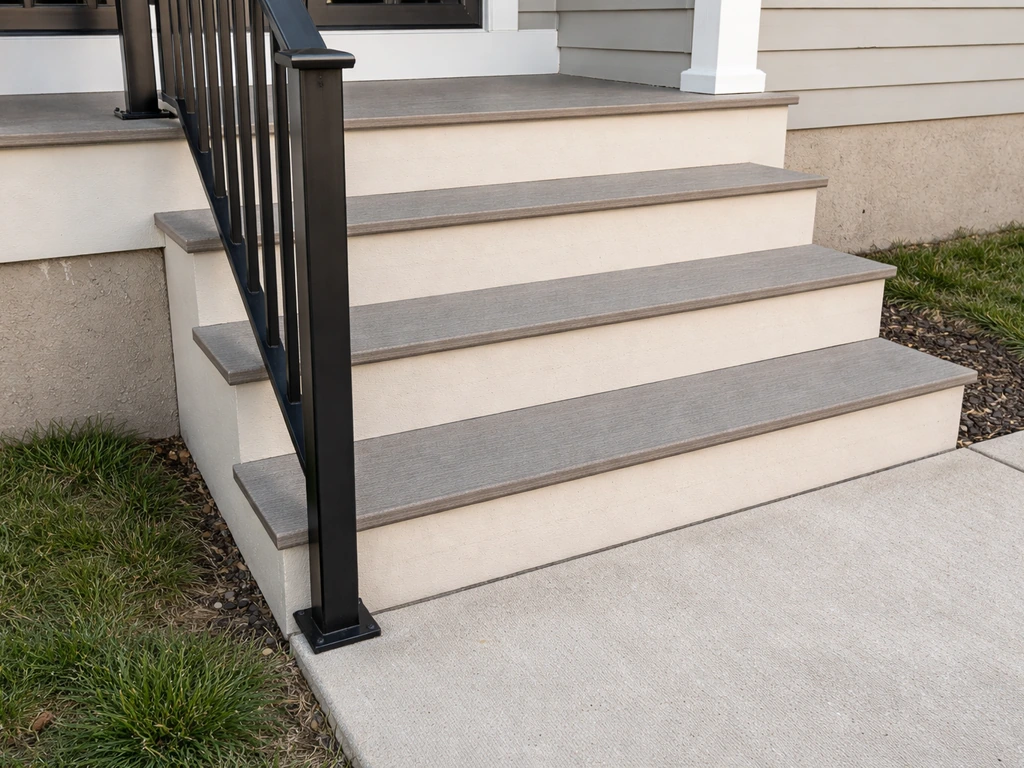
Under the IRC, the maximum riser height for exterior stairs is 7-3/4 inches, and a handrail is required when you have four or more risers. Consistent riser heights matter because uneven steps are a leading cause of falls. If you are building or rebuilding patio steps, measure every riser and keep them within 3/8 inch of each other. Also check that your treads provide enough depth for a full footstep.
Surface slip resistance
Patio surfaces should be stable, firm, and slip resistant, particularly in wet conditions. This is codified in ICC A117.1 accessibility standards, and the testing framework references ASTM standards like F1678 and C1028 for measuring slip resistance. In practical terms, this means avoiding high-gloss or highly polished surface finishes on areas that get wet. Brushed or broom-finished concrete, textured pavers, and natural stone with a non-polished face all perform better underfoot when wet than smooth sealed surfaces. If you have an existing patio that becomes slippery when it rains, an anti-slip additive mixed into a sealer coat is a simple fix.
Drainage
Water that pools on or around your patio damages the surface, the foundation, and your neighbor's yard if it drains toward them. The standard slope recommendation is 1/8 inch to 1/4 inch of drop per foot of patio width, directing water away from the house. This is sometimes called the patio slope code and is a point worth measuring before you finalize a layout. Drainage concerns also come up in HOA applications: many associations require approval before any grading or drainage structure changes because what you do on your lot affects adjacent properties.
Fire pits and grilling clearances
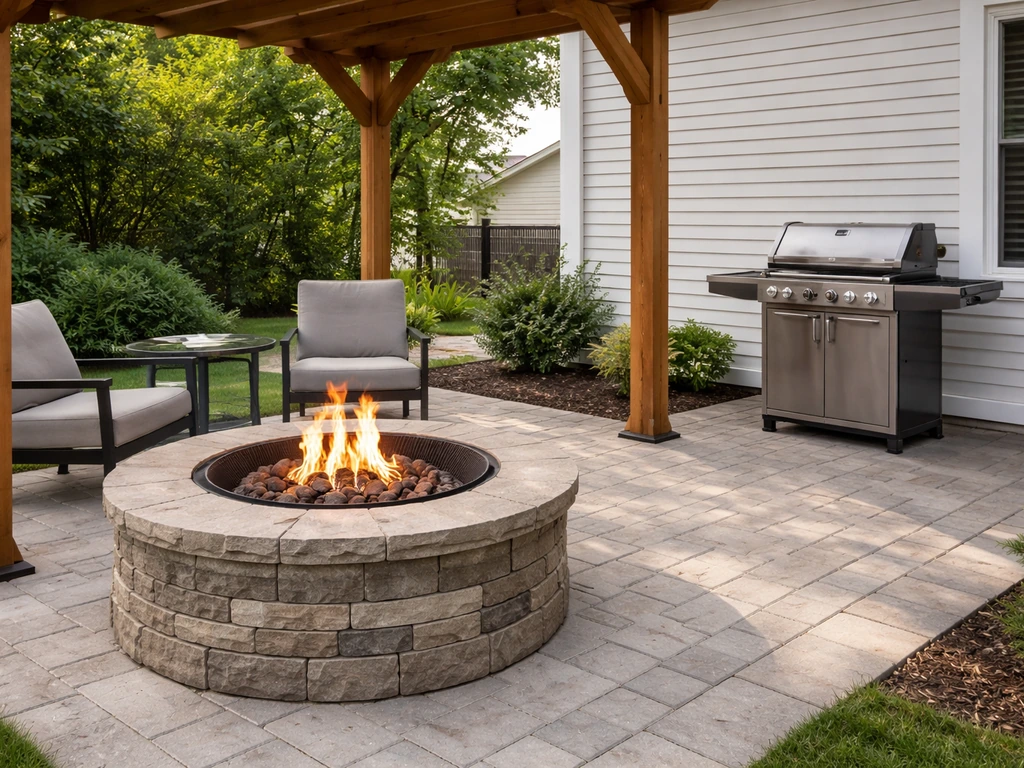
For fire pits and grills, the general rule of thumb is a minimum 10-foot clearance from any combustible structure, including your house, wood fencing, pergola, or overhead umbrella. Many manufacturers actually recommend more. Local ordinances may set their own minimums, and some municipalities ban wood-burning fire features entirely in certain zones. Gas-powered fire features on patios also fall under the IRC for outdoor kitchens: a gas pipe stub should extend above the finished decking surface with a minimum length of exposed unthreaded pipe. Have a licensed plumber or gas fitter handle gas connections.
Construction and installation standards: what to get right before you build
Whether you are doing this yourself or hiring a contractor, understanding the installation standards helps you catch mistakes before they become expensive problems or safety hazards.
Electrical requirements
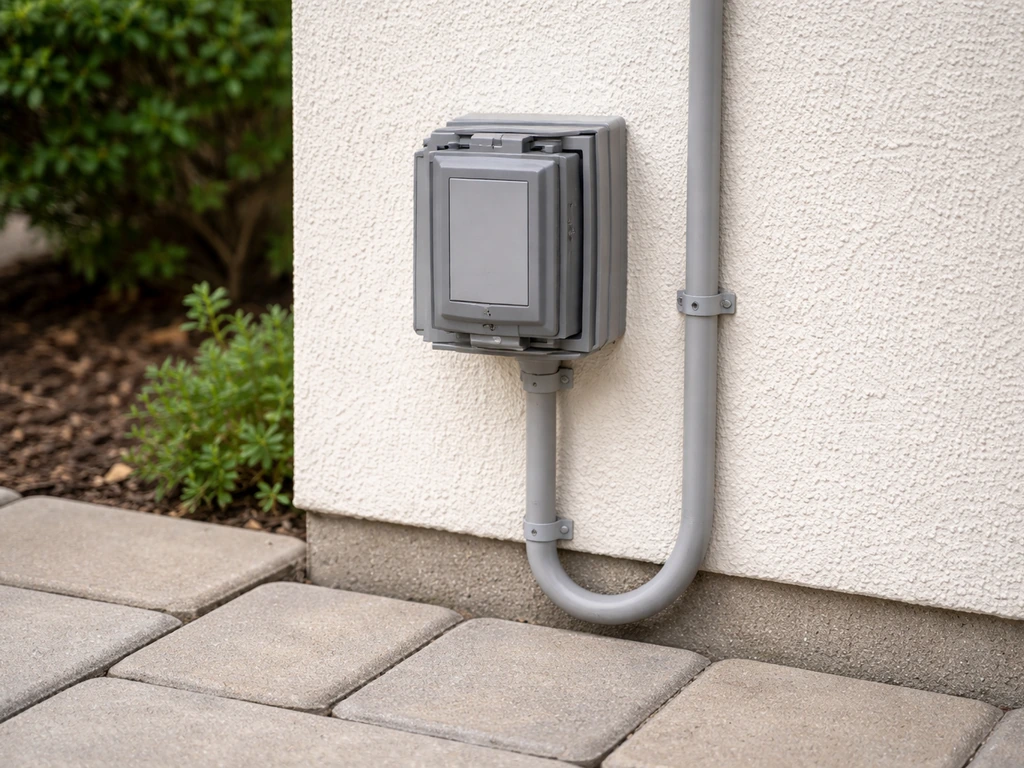
Any electrical outlets on or near your patio must have GFCI (ground fault circuit interrupter) protection. This is required under NEC 210.8(A)(3) for outdoor dwelling-unit receptacles, and NEC 210.8(F) extends GFCI protection to certain outdoor outlets supplied by qualifying branch circuits. In wet or damp locations, outlets also need weatherproof 'in-use' covers, the kind that stay closed even when a cord is plugged in. These are sometimes called bubble covers and are required under NEC 406.9(B). If you are adding outlets to an existing patio, hire a licensed electrician: outdoor wiring involves conduit, weatherproof boxes, and panel work that is not a good DIY project for most homeowners.
Material choices and their trade-offs
| Material | Durability | Maintenance | Cost range (installed) | Best for |
|---|---|---|---|---|
| Poured concrete | High, 25+ years with care | Seal every 2-5 years, repair cracks | $6-$12/sq ft | Large flat areas, low maintenance preference |
| Stamped concrete | Moderate-high | Seal every 2-5 years, more sensitive to deicers | $12-$22/sq ft | Decorative look on a mid-range budget |
| Concrete pavers | Very high | Reseal every 4-5 years, reset settled pavers | $10-$20/sq ft | DIY-friendly, repairable, classic look |
| Natural stone (flagstone, slate) | Very high | Seal periodically, re-point joints | $15-$30/sq ft | High-end aesthetic, unique patterns |
| Composite/wood decking | Moderate | Clean annually, inspect for rot/fasteners | $15-$35/sq ft | Raised platforms, warm underfoot feel |
| Gravel/decomposed granite | Moderate | Rake, top off, weed control | $2-$6/sq ft | Budget-friendly, good drainage, casual spaces |
For most homeowners who want low long-term maintenance, concrete pavers are the strongest all-around choice. Individual pavers can be lifted and replaced if they settle or crack, no jackhammer required. Stamped concrete is beautiful but less forgiving of freeze-thaw cycles and requires diligent sealing to maintain its appearance. If your HOA has specific material requirements, check those before you fall in love with a particular surface.
HVAC and mechanical clearances
If your patio placement is near an HVAC condenser unit or a mechanical exhaust, check the manufacturer's required clearance before finalizing the layout. Building a patio cover or pergola too close to an AC unit restricts airflow and reduces efficiency, and it may void the equipment warranty. A typical rule of thumb is at least 24 to 36 inches of open clearance around a condenser, but check your specific unit's documentation.
Maintenance rules of thumb: keeping your patio compliant and in good shape
A patio that was installed correctly can deteriorate quickly without basic upkeep. These are not legal requirements in most cases, but neglecting them leads to real problems: water damage, weed overgrowth, pest harborage, and surfaces that become dangerous when wet.
Cleaning
Plan to give your patio a thorough cleaning at least once a year, ideally in spring. For concrete and pavers, a pressure washer on a low-to-medium setting (around 1200 to 1500 PSI) removes organic buildup, mildew, and debris without damaging the surface. Avoid high-pressure settings on stamped concrete because they can strip sealer and erode surface texture. For natural stone, use a pH-neutral cleaner to avoid etching. Let everything dry fully before any sealing work.
Sealing schedules
Stamped concrete typically needs resealing every two to five years depending on traffic, climate, and sealer type. Pavers have a slightly longer cycle: industry guidance generally puts it at every four to five years, though high-traffic areas or patios in full sun may need it more frequently. If you recently installed polymeric sand in your paver joints, wait at least 30 days before applying a sealer or restorer product. Applying too soon can trap moisture and cause haze. When in doubt, do a simple water-bead test: if water soaks in rather than beads up, it is time to reseal.
Weed and pest control
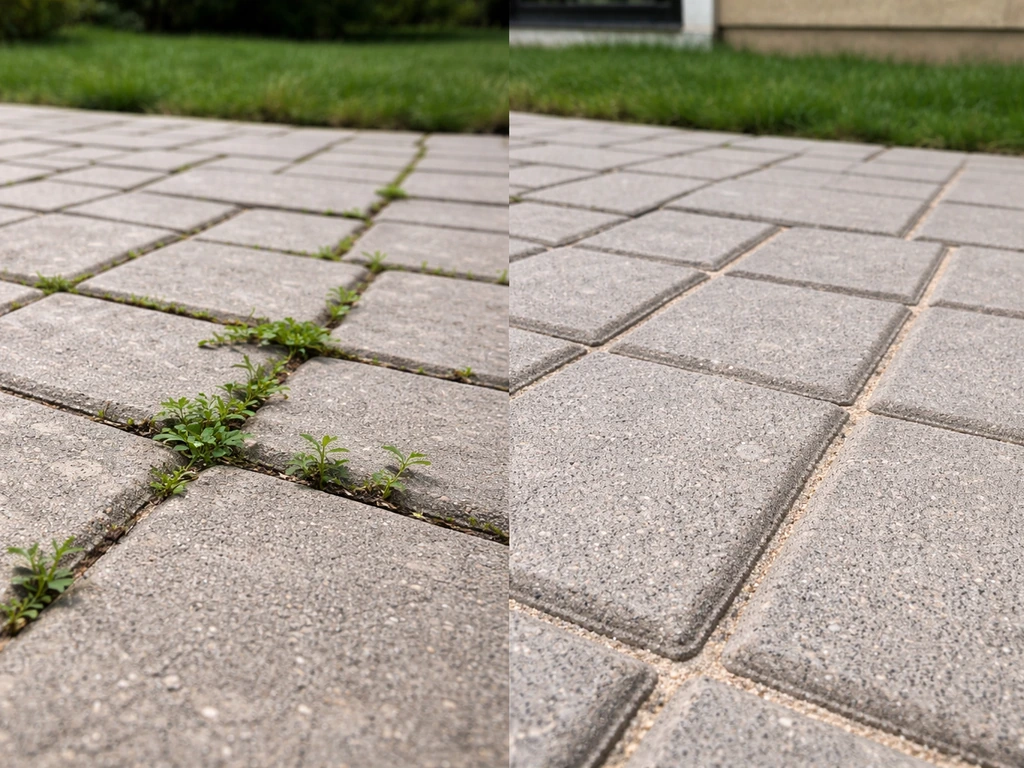
Weeds growing through paver joints or along patio edges are not just ugly: they accelerate joint erosion and can destabilize the surface. Polymeric sand in the joints is your best first defense because it hardens to resist weed germination. For existing growth, pull weeds manually or use a targeted contact herbicide along the edges; avoid blanket spraying near garden beds. For pest control, keep the area under and around the patio clear of organic debris, standing water, and woodpiles, all of which attract insects and rodents.
Winterizing
In freeze-thaw climates, a few seasonal steps protect your investment significantly. Avoid using rock salt or chloride-based deicers on concrete or pavers: they accelerate surface deterioration and are a major source of spalling damage over time. Sand is a safer traction option. Cover or store furniture and fabric items before the first freeze. If you have a gas fire feature or outdoor kitchen, have the gas line winterized and protected. Inspect for any cracked or heaved pavers or concrete after the thaw season and address them before they worsen.
Community etiquette and keeping the peace with neighbors
Even a fully compliant patio can create friction with neighbors if you are not thoughtful about how you use it. These are not rules in a legal sense, but they matter a lot for actually enjoying your outdoor space long-term without ongoing conflict.
Privacy
If your patio is close to a property line or overlooks a neighbor's yard, consider adding natural screening like plantings, a lattice panel, or a privacy fence, where your local code and HOA allow it. This benefits both parties. Discuss significant changes like a tall pergola or fence addition with adjacent neighbors before building: a two-minute conversation heads off months of resentment. Many patio design rules around proportions and siting also address visual impact, which ties into keeping the overall neighborhood look cohesive.
Lighting
Direct your patio lighting downward and inward. Lights aimed toward neighboring windows or yards are a common source of complaints and may actually violate your HOA's rules. Solar-powered post lights, string lights mounted under a pergola, and low-voltage path lighting all work well without spilling light onto adjacent properties. If you use any smart or motion-activated lighting, test it at night to confirm what direction the light actually goes.
Noise and gathering hours
Most municipalities have noise ordinances that set decibel limits or quiet hours, commonly 10 PM or 11 PM on weeknights. If your HOA has its own quiet hours policy, those may be stricter. Outdoor speakers, subwoofers, and late-night gatherings are the most frequent source of neighbor complaints about patios. Pointing speakers toward the house rather than outward reduces sound bleed significantly. When you are hosting a larger gathering, a quick heads-up text to immediate neighbors goes a long way.
Trash and storage
Many HOAs specifically regulate trash container visibility, including whether bins stored near a patio are visible from the street or neighboring properties. If your patio area doubles as storage, keep equipment, seasonal items, and bins screened or enclosed. HOA trash guidelines often specify enclosure color, material, and placement, and these violations are among the most commonly cited. Even outside of HOA communities, a tidy patio perimeter is simply better for everyone.
Resolving disputes
If a neighbor raises concerns about your patio, respond directly and calmly first. Most issues, a light that shines into their bedroom or a grill too close to a shared fence, can be resolved with a small adjustment. If the dispute escalates to HOA involvement, document everything: photos with dates, written communications, and a log of what was said and when. Follow the HOA's formal dispute resolution process before any escalation. HOA enforcement typically moves through a notice and cure sequence, and you generally have the right to a hearing and a written decision. Skipping steps or ignoring notices makes the outcome worse, not better.
FAQ
Do outdoor patio rules apply if my patio is already built, but I did not get any approvals?
Yes, HOA and some municipal rules still apply after the fact. If your patio predates current HOA enforcement, ask the HOA whether they have a grandfathering policy for existing patios, and request a retroactive review with photos, dimensions, and material specs. For municipal compliance, check whether your city treats unpermitted patios as a nuisance or a permit correction case, and get guidance before you start changes.
What if my patio is “ground level,” but it is still not on grade (for example, built on a raised base or retaining wall)?
Treat it as potentially permit-relevant and code-relevant. A patio on a retaining wall, even if it looks “low,” can trigger rules tied to elevation, retaining structure design, and drainage control. In practice, measure the height difference from finished grade to the patio walking surface and ask the building department or architect whether that counts as raised construction for permit or guard requirements.
How do I handle setback measurements if my property line is not perfectly clear or the survey is old?
Use the latest survey plat if you have one, and confirm the location of corner pins before you build. If the survey is outdated, order a property stakeout or have a surveyor re-mark the lines, then measure from the proposed patio edge to the marked points. This prevents “close enough” layouts that later fail setbacks or easement boundaries.
Is there a difference between an easement and a setback, and can I ignore setbacks if there is no easement?
Yes. Setbacks regulate where improvements must be placed relative to property lines and other reference points, while easements are legal rights for someone else to access utilities or infrastructure. Even if you have no easement over your proposed patio, you can still violate setbacks. Conversely, a setback violation may be curable, but building over an easement is often not.
Do I need HOA approval for landscaping changes around an existing patio, like adding pavers or a fire feature?
Often yes, because many HOAs treat hardscape, grading, drainage modifications, and any permanent accessory as “exterior modifications.” Even if you are only adjusting edges or adding stones, submit a short request that includes a small site diagram showing placement relative to the patio and any drainage direction changes.
What should I include in an HOA patio approval request to avoid delays or denials?
Include a scaled plan that shows the patio footprint, attachment points to the home (if any), distances to property lines, the location of any doors or windows, and how runoff and drainage will be directed. List exact materials and colors, and add details on barriers like railings or privacy elements if they are part of the plan. Having these items up front reduces multiple “request for more information” cycles.
Can I start work while waiting for HOA approval if the municipality says no permit is needed?
In most HOAs, no. HOA sign-off and city permits are separate tracks, and starting work before written approval can still lead to fines or a required undo. Wait for the written approval letter, not just a verbal confirmation, and keep a copy on site for your contractor.
How can I tell if my patio needs guardrails if it is part of a patio-deck combination?
Use the finished surface measurement. If the walking surface is 30 inches or more above grade at any edge where someone could fall, you need to plan for guardrails and compliant guard spacing. If you have multiple levels, evaluate each potential drop edge, then verify baluster opening limits and rail height against your local adoption of the code.
What are common slip-resistance mistakes for patio finishes?
Avoid assuming that “looks non-slip” is enough. High-gloss sealers and overly smooth stone can become dangerously slick when wet, especially near shade or downspouts. If you are using a sealer, choose one designed for exterior slip resistance (and apply according to label coverage), and test a small area for wet traction before coating the whole patio.
How should I prove drainage compliance to my HOA or building department?
Provide a simple drainage narrative and a small diagram showing the direction of water movement from the patio surface. Include whether you will use a slope to daylight away from the home, a drain/line if applicable, and where the water will end up. If you already built and you are worried about pooling, take photos after a rain and note the time it took for water to clear.
What is the safest way to place a grill or fire pit when my patio is close to fences or a pergola?
Do not rely only on a single “10-foot rule” number. Confirm clearance to each combustible item, including overhead pergola members, umbrellas, fence boards, and any siding projections. Check your local fire code for any additional bans or distance requirements, and keep the cooking appliance centered on a noncombustible base area if required.
Can I add outdoor outlets or lighting myself, or do I need a licensed electrician?
If you are adding or relocating outlets near a patio, a licensed electrician is strongly recommended because you typically must use outdoor-rated weatherproof boxes, conduit, and proper GFCI protection. A common mistake is using non-weatherproof covers or skipping the “in-use” cover requirement in wet locations, which can fail inspection and create shock hazards.
When is it too late to fix polymeric sand issues in paver joints?
It depends on how it was installed and how long it has cured. If joints were filled recently, avoid sealing or restorer products too soon, because trapped moisture can cause haze and joint breakdown. If polymeric sand is washing out or weeds are returning, plan to re-fill joints with the correct product and verify the patio is not draining toward joint lines.
What deicer should I use on a concrete or paver patio in freeze-thaw areas?
Use traction-friendly alternatives like sand rather than chloride-based deicers. Chlorides can accelerate surface deterioration and contribute to spalling, especially on concrete and some paver systems. Also avoid chipping ice aggressively, because that can damage edges and widen joint gaps over time.
How do I reduce neighbor complaints caused by patio lighting, especially with motion or smart lights?
Test the lights at night from the neighbor’s side and adjust aiming before the final setup. If you use motion-activated fixtures, adjust the sensitivity and direction so they trigger at your walkway area rather than across windows. Many disputes are caused by upward or outward aiming, even when the brightness seems “reasonable” to you.
If a neighbor complains, what documentation is most useful before HOA involvement?
Start a simple log with dates and times, keep clear photos or short videos showing the specific issue (for example, light direction at night or distance of furniture), and save any written messages you send or receive. If you change something promptly, note the change and date, then follow up in writing. This helps you demonstrate good faith if the HOA requests evidence.