
The best patio decorating tip anyone can give you is this: start with how you actually use the space, not with a Pinterest board. If you want patio do it yourself ideas that look intentional and not random, start with how you’ll actually use the space patio decorating tip. Once you know whether you need a dinner table for six, a cozy lounge for two, or a little of both, every other decision, furniture scale, lighting zones, color choices, plants, privacy screens, falls into place naturally. This guide walks you through that process start to finish, with real dimensions, specific material recommendations, and a simple seasonal maintenance plan so your patio stays looking good year after year.
Patio Decorating Tips: Step-by-Step Layout, Decor, and Maintenance

Miles Sutton
26 Jun 2026
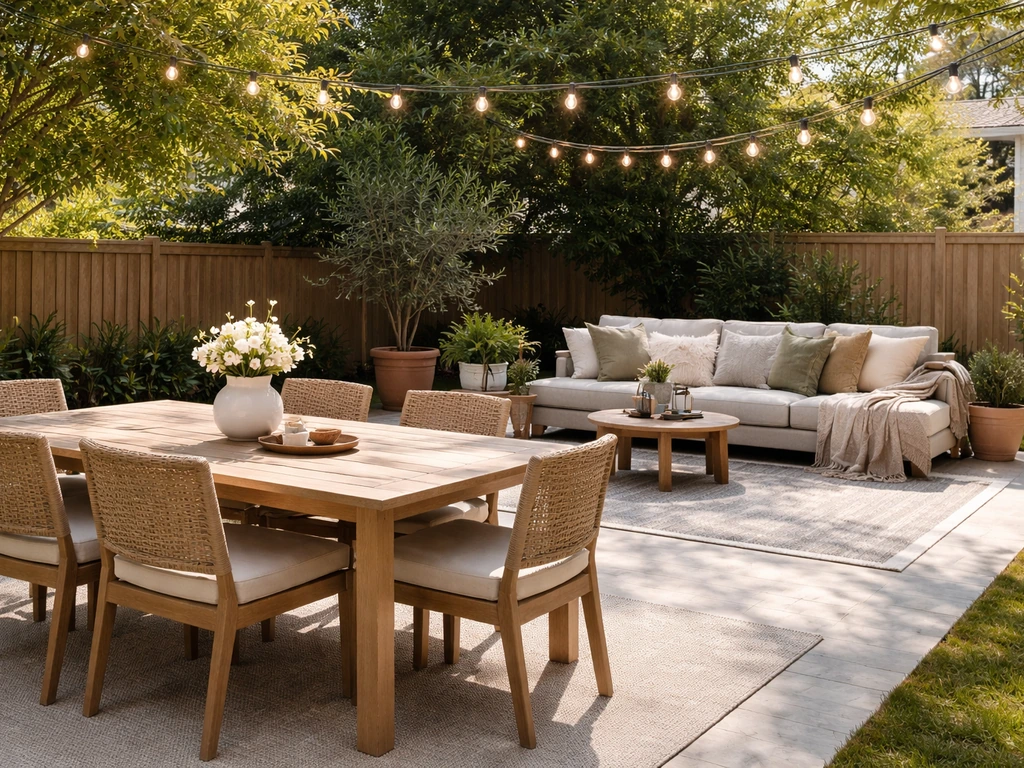
Start with patio size, style, and how you'll actually use it
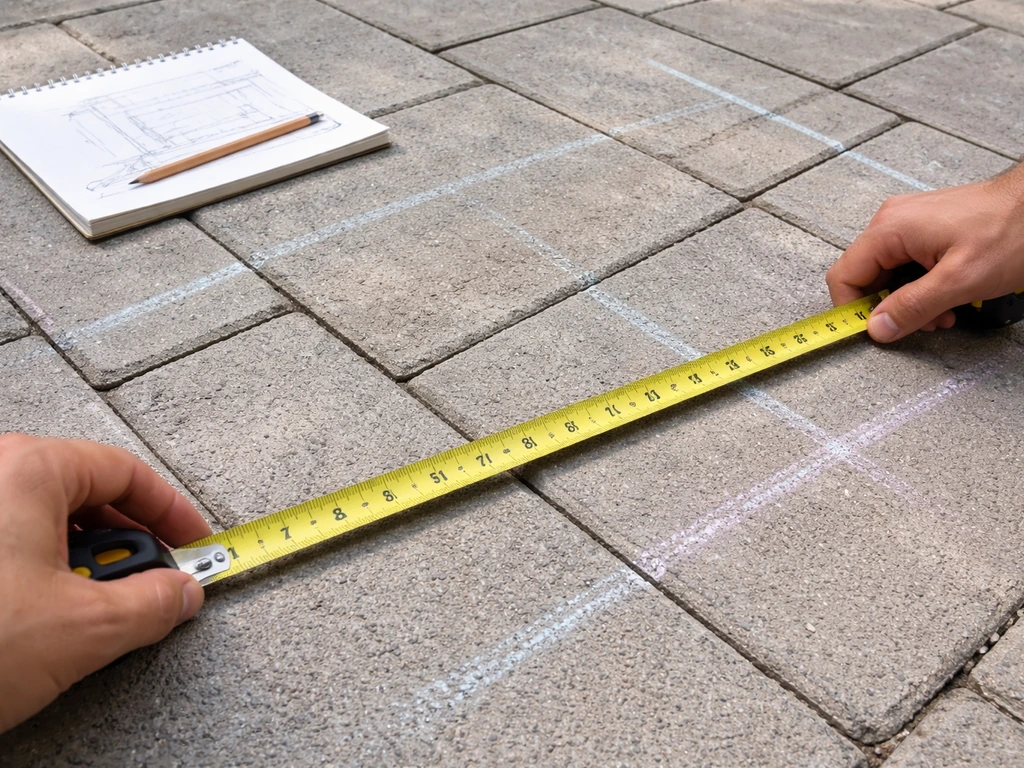
Before you buy a single cushion, measure your patio as a living space, not just a rectangle of concrete or pavers. That means accounting for doorways, any steps or grade changes, the direction the sun hits in the afternoon, and which views you want to face or block. A 10x12-foot patio is a genuinely small footprint, you can fit either a compact lounge cluster or a small dining set, but trying to cram in both without protecting the main circulation path turns the whole space into an obstacle course.
Once you have your measurements, pick a single primary use. Ask yourself honestly: do you eat outside more than you sit and relax, or the other way around? That answer determines your focal point and drives everything else. Once you know your patio must haves, everything else becomes easier to plan and style. Secondary uses can layer in around it, but one function needs to anchor the layout or the space will feel purposeless and cluttered.
Style comes third, not first. These patio tips and tricks will help you turn your outdoor space into something cohesive and comfortable. Once you know the size and the primary use, look at your home's exterior and interior style and carry that language outside. A craftsman bungalow pairs well with natural wood tones, warm metals, and lush greenery. A modern stucco house works better with clean lines, concrete planters, and a limited palette. You don't need a label like 'coastal' or 'farmhouse', you just need your patio to look like it belongs to your house.
Pick a layout and focal point that earns its spot
A great patio layout is really about zones. Even on a small patio, defining two areas, one for dining, one for lounging, makes the space feel organized and intentional rather than like furniture just got dropped there. The Oklahoma Cooperative Extension recommends planning the furniture first and then sizing the space around it, using implied edges like a rug, a row of potted plants, or a low screen to signal where one zone ends and another begins.
Your focal point is the thing your eye lands on when you step outside. It could be a fire pit, a dining table with a statement umbrella, an outdoor sofa facing a garden view, or even a well-lit accent wall. Settle on one. Everything else in the space should support that focal point, not compete with it.
Keep pathways clear. A minimum 36-inch walking path between furniture pieces is the standard recommendation for comfortable movement, and 42 to 48 inches is better around a dining table where people push chairs back. On a small patio, protecting that circulation corridor is more important than adding extra seating.
Common patio layout configurations
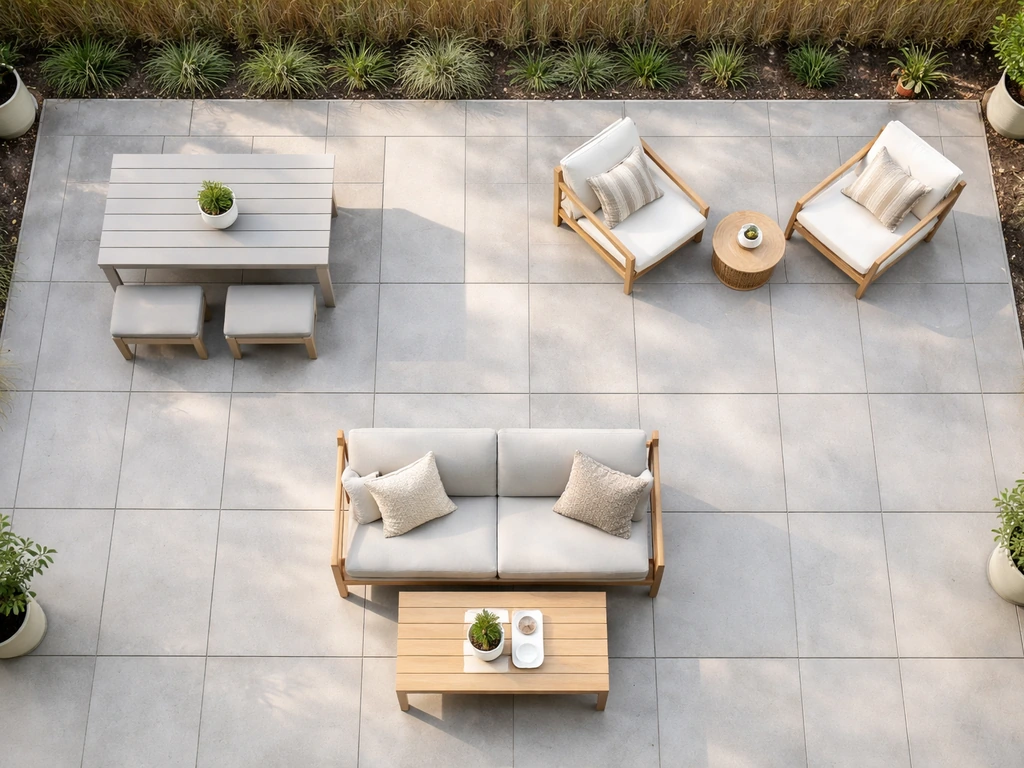
| Layout Type | Best Patio Size | Focal Point | Key Constraint |
|---|---|---|---|
| Dining-only | 10x10 or larger | Table and chairs | Chair clearance: 36–42 in. from table edge to wall |
| Lounge-only | 8x10 or larger | Sofa or loveseat | Coffee table distance: 14–18 in. from sofa |
| Dining + lounge combo | 12x16 or larger | Fire pit or view | Clear 36-in. path between zones |
| Dining + outdoor kitchen | 14x20 or larger | Grill station or island | Counter clearance: 42 in. for cook movement |
| Small relaxation nook | 6x8 minimum | Single chair + side table | Wall-mounted lighting keeps floor open |
Weather-proof materials and color combinations that actually hold up
Outdoor decor fails in two ways: it fades in the sun or it falls apart in the rain. The good news is that a handful of material choices eliminate most of those problems. For cushions and upholstery, solution-dyed acrylic fabric, Sunbrella is the most well-known brand and offers a 5-year limited warranty on upholstery fabric, is worth the premium because the color is locked into the fiber, not just coated on the surface. Cheaper polyester cushions will fade noticeably within a single season in a sunny yard.
For hard surfaces and furniture frames, teak, powder-coated aluminum, and all-weather wicker over an aluminum frame are the three most reliable choices. Teak is beautiful but needs annual oiling if you want to maintain its color (otherwise it weathers to a silver-gray, which some people love). Powder-coated aluminum doesn't rust, weighs less than steel, and is the best choice for coastal or humid climates. Steel is fine if it's properly powder-coated and you touch up chips before rust sets in.
For color, the cleanest approach is a base of two neutrals, think charcoal gray furniture frames with natural tan cushions, or white with warm greige, and then one accent color in pillows, a rug, or planters. That accent can change seasonally without requiring you to replace anything expensive. Avoid more than three colors in a small space; it reads as chaotic rather than curated.
Material comparison at a glance
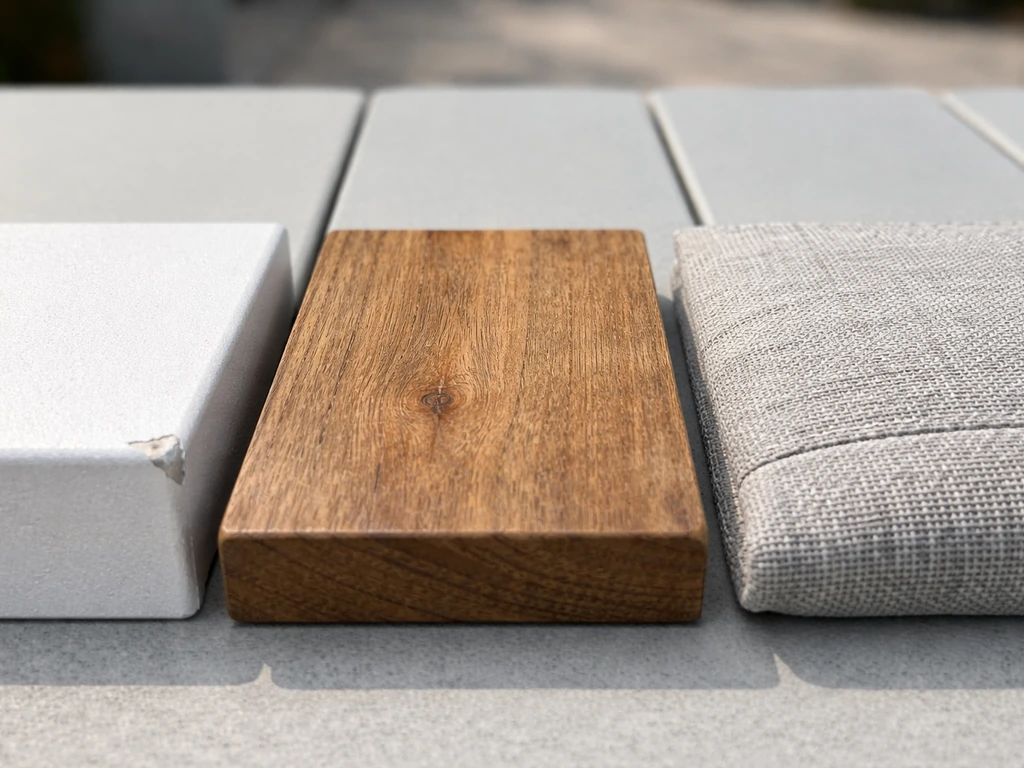
| Material | Durability | Maintenance | Best For |
|---|---|---|---|
| Powder-coated aluminum | Excellent | Wipe clean, touch up chips | Coastal, humid, or low-maintenance patios |
| Teak wood | Excellent | Annual oiling or let it silver naturally | Traditional and transitional styles |
| All-weather wicker (aluminum frame) | Very good | Rinse with hose, avoid standing water | Casual and bohemian styles |
| Steel (powder-coated) | Good | Touch up paint chips annually | Modern and industrial styles |
| Concrete / stone decor accents | Excellent | Seal every 1–2 years | Planters, side tables, fire bowls |
| Solution-dyed acrylic (Sunbrella) | Excellent | Spot clean, machine wash covers | Cushions, pillows, rugs |
Outdoor lighting that looks good and actually functions
Most people make the same lighting mistake: they hang one string of lights across the patio and call it done. It's better than nothing, but you end up with one bright zone and everything else in shadow. Good outdoor lighting is layered across zones, just like the layout itself. Plan at least three light types: ambient (string lights or a ceiling fixture under a pergola), task (a pendant or sconce near a dining table), and accent (low-voltage path lights or uplights on planters or a feature wall).
Color temperature matters more outside than inside. Stick to 2700K to 3000K (warm white) for any fixture that's part of the 'living' area, dining table, lounge zone, pergola. Save cooler, brighter light (4000K range) only for practical spots like a grill area or steps. Mixing warm and cool temperatures in the same seating area creates an uncomfortable, unflattering look that no amount of nice furniture will fix.
Don't overestimate brightness. Outdoor designers consistently note that homeowners over-light patios and create glare rather than ambiance. Use dimmable fixtures wherever possible, and position lights so the source is hidden or diffused rather than shining directly into eye level. For string lights, go with globe-style bulbs at 1 watt to 2 watts per bulb; the glow reads as warm and social rather than harsh.
For candles and fire-safe alternatives outdoors, flameless LED candles in lanterns are the safest option on a windy patio. If you use real candles, anchor them in weighted lanterns with enclosed sides and never leave them unattended. If you're adding a fire pit, Consumer Reports recommends placing it at least 20 to 25 feet from any structure and keeping a garden hose nearby, and always check your local ordinances before lighting up.
Comfort and visual texture: rugs, cushions, curtains, and planters
This is where the space goes from 'patio with furniture' to 'outdoor room,' and it's also where most people either nail it or completely overdo it. The goal is layered texture without visual noise.
Start with an outdoor rug. It does two jobs: it anchors the furniture zone and softens the space visually. Size it so all four legs of every piece of furniture in that zone sit on the rug (or at minimum the front two legs). A rug that's too small makes furniture look like it's floating. For material, polypropylene rugs are the most practical, they handle rain, dry quickly, resist mold, and are easy to hose down. Expect to pay $80 to $250 for a quality 8x10 outdoor rug.
Cushions and throw pillows add color and comfort, but keep the count reasonable. A two-seat outdoor sofa needs two seat cushions and two to four throw pillows, that's it. More pillows create a staging-for-sale look rather than a space you actually want to sit in. Mix one solid and one pattern per zone; if you're nervous about pattern mixing, choose a stripe and a solid in the same color family.
Outdoor curtains on a pergola or shade structure add enormous visual softness and frame the space without requiring permanent construction. Use curtain panels rated for outdoor use (solution-dyed or solution-coated polyester) and hang them from a tension wire or a simple ceiling-mounted curtain rod. White or off-white panels work in almost every setting and make the space feel airy.
Planters are the most versatile decorating element on a patio. They can define zone edges, soften hard corners, add vertical interest, and introduce seasonal color with almost no permanent commitment. Use at least one large planter (16 inches or wider) as an anchor near the focal point, and group smaller planters in odd numbers for a natural, collected look. Vary heights, tall grasses or a small ornamental tree in a tall planter, a trailing plant at medium height, and a ground-level succulent or annual at the base.
Privacy and shade: functional decor that earns its place
Privacy and shade aren't just practical problems, handled well, they're also major decorating opportunities. A bamboo privacy screen along a fence line adds texture and warmth while blocking a neighbor's sightline. A shade sail in a bold color becomes a design feature overhead while cutting afternoon sun significantly. These elements do real work and look intentional at the same time.
For privacy, the most flexible options are freestanding privacy screens, tall planter boxes with evergreen shrubs, lattice panels with climbing plants, or outdoor curtains hung from a pergola. Freestanding screens are the easiest to reposition and store seasonally; they run from about $80 for a simple bamboo folding screen to $300 or more for powder-coated metal designs. Living privacy walls (tall grasses like Miscanthus, bamboo in containers, or columnar evergreens) look the best but take one to three seasons to fill in and require regular watering.
For shade, a cantilever umbrella gives the most flexibility for smaller patios because it doesn't require a center pole through your table. Look for a base weight of at least 50 pounds, lighter bases tip in wind. Shade sails work well for larger areas and are more affordable per square foot covered; tension them tightly and use stainless steel hardware to prevent rust staining on your patio surface. A pergola with shade cloth or outdoor fabric panels is the most permanent and polished option, and it becomes the structure everything else hangs from.
If you're adding a patio heater for shoulder-season use, check the NFPA guidelines for propane and electric outdoor heaters before installation. NFPA’s Outdoor Heaters Fact Sheet (aligned to NFPA 1) is intended to help ensure propane and electric outdoor heater use is safer and compliant blank" rel="noopener noreferrer">check the NFPA guidelines for propane and electric outdoor heaters before installation. Keep heaters away from curtains, cushions, and overhead structures, and never use an unvented propane heater in an enclosed pergola space.
Budget-friendly upgrades, smart splurges, and a seasonal maintenance plan
Where to spend and where to save
Not every line item deserves the same budget. The honest breakdown is this: spend more on the things that get constant sun, rain, and physical use; save on things that are easy to replace or don't take abuse.
| Item | Spend More | Save Here |
|---|---|---|
| Cushion fabric | Yes — solution-dyed acrylic lasts 5+ years | Cushion inserts can be mid-range foam |
| Furniture frames | Yes — aluminum or teak outlasts cheap steel | Side tables and accent pieces can be budget finds |
| Outdoor rug | Mid-range polypropylene is fine ($100–$200) | No need to spend above $250 for most patios |
| String lights | Yes — commercial-grade wire lasts outdoors | Bulb style is personal preference, not a durability factor |
| Planters | Splurge on one or two large anchor planters | Small filler planters can be terracotta or budget resin |
| Privacy screens | Spend on a pergola or living wall for permanence | Folding bamboo screens work fine for renters or short-term |
Quick wins under $100
- Add a set of outdoor throw pillows in a new accent color to refresh existing furniture
- Hang a string of warm-white globe lights from your fence posts or pergola beams
- Paint terracotta pots with exterior masonry paint to create coordinated planters
- Use a tension rod and outdoor curtain panels to create an instant privacy screen on a covered patio
- Place a large outdoor lantern with an LED candle as a focal point on a side table or step
- Buy a polypropylene outdoor rug to anchor the seating zone and instantly define the space
Maintenance routine to keep the decor looking sharp
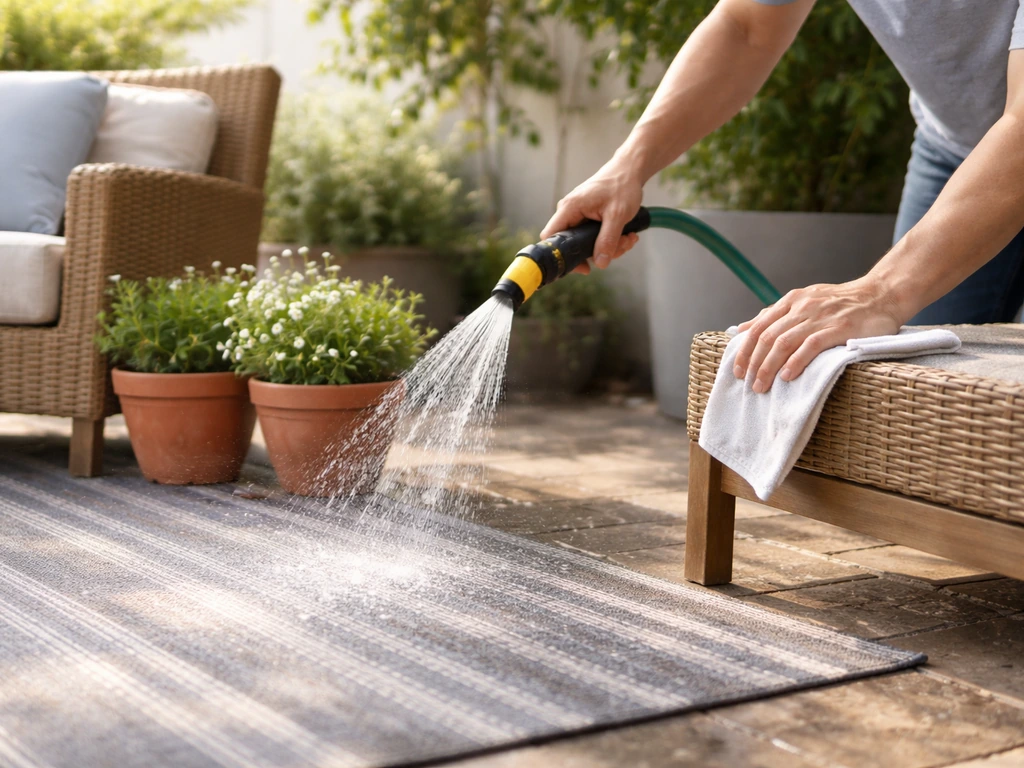
The biggest reason patios look neglected by August isn't that the homeowner stopped caring, it's that there was no maintenance routine built in. Here's a simple schedule that takes less than two hours a month.
- Monthly: Hose down the outdoor rug and let it dry fully; wipe down furniture frames with a damp cloth; check that string lights are secure and no bulbs need replacing.
- Every 6 weeks: Spot-clean cushion covers with a mild soap solution; rinse planter saucers to prevent standing water and mosquito breeding; tighten any hardware on umbrellas or shade structures.
- Seasonally (spring and fall): Remove and store cushions in a breathable storage bag or deck box; clean the patio surface with a deck cleaner appropriate for your material (pressure washing at low PSI is fine for concrete and stone pavers, but avoid it on wood); reapply sealant to concrete planters and stone accent pieces every one to two years.
- End of season: Bring in any decor items that aren't rated for freeze-thaw cycles (terracotta pots crack when wet soil freezes); store umbrella fabric rolled or in a bag; cover or store cushions; drain and cover any water features.
Seasonal refresh ideas
You don't need a complete overhaul every season. Swapping throw pillows and planter contents twice a year, once in spring and once in early fall, is enough to make the patio feel fresh and current. In summer, lean into bold color and lush greenery. In fall, shift to warm tones (amber, rust, deep olive) and swap out annuals for ornamental kale, mums, or small pumpkins in your planters.
The furniture, the rug, and the structure stay the same; only the accents change. That's a genuinely low-cost way to keep the space feeling alive through multiple seasons, which ties into the broader idea of building a patio that's truly enjoyable to use, not just one that looks good in a single photo. If you're looking for more practical patio gardening tips, focus on container placement, soil quality, and plant choices that match your sunlight and watering routine.
If you're just starting out and the whole project feels overwhelming, begin with the three things that create the fastest visible improvement: an outdoor rug to define the space, cushions in a cohesive color palette to make the furniture inviting, and at least one layer of warm lighting. Once you know your patio must haves for 2023, it becomes easier to build a layout that feels intentional instead of cluttered patio must haves 2023. From that foundation, every other upgrade, privacy screens, planters, curtains, better furniture, is additive rather than corrective, and you'll have a clear sense of what the space actually needs rather than guessing.
FAQ
How do I choose between a full dining set and a lounge setup on a small patio without making the area feel cramped?
Treat it as a circulation problem first. Keep one clear walking corridor (aim for at least 36 inches) from the door to the seating area, then pick a single anchor zone. If you do both, use a compact dining table with chairs that tuck in, and let the lounge sit along a perimeter rather than blocking the main path.
What outdoor rug size should I buy if my furniture sizes are unusual or chairs vary in width?
Use a practical rule: all seat-adjacent legs should land on the rug, not just the sofa frame. For a dining zone, make sure front chair legs are on the rug when chairs are pulled out. If you are between sizes, choose the larger rug to prevent the “floating furniture” look.
Can I mix patio furniture materials (for example aluminum frames with a teak table) without the space looking mismatched?
Yes, but repeat at least one visual cue. Match the metal finish family (for example, warm vs cool tones) and keep cushion colors in the same palette. If teak is part of the mix, plan how you will handle its color change (annual oiling for golden, or accept silver-gray weathering).
What’s the biggest mistake with outdoor lighting placement, even if I’m using the right bulbs and fixtures?
Placing everything at one height and one direction. Layering matters, but so does shielding, position, and dimming. Put task lighting closer to functional surfaces (dining) and route accent lighting upward or along edges so the light source is not visible at eye level.
How do I keep string lights from looking messy or sagging across different heights?
Anchor them at two solid points with a slight tension and avoid spanning long distances without support. If your patio has uneven columns or a step up, use small extension hooks or a discreet guide cable so the line stays level and doesn’t create uneven “droop” that draws attention.
What color temperature is best if my patio shares fixtures with the indoor space and I don’t want the areas to clash?
Choose one warm range for the main seating and dining area (2700K to 3000K) and keep porch or step lights similarly warm. Use cooler light (around 4000K) only for clearly defined practical spots like steps or grill prep, so you don’t create two different “lighting moods” in the same zone.
How do I select patio fabric that won’t fade quickly if my space gets intense afternoon sun?
Prioritize solution-dyed or solution-coated performance fabrics, not just water resistance. Also check the cushion construction, if the fabric is only coated on the surface, it will likely fade sooner. For the most demanding sun exposure, plan on rotating cushions seasonally and storing or covering them in extreme weather.
What’s a safe way to use candles outdoors if wind is common?
Use flameless LED candles in lanterns for the lowest hassle and safest setup. If you prefer real candles, choose lanterns with enclosed sides and place them on stable, weighted bases, then never leave them unattended. Avoid setting candles near fabric curtains, cushions, or overhead structures.
How far should I place a fire pit from nearby furniture and structures, and what else should I plan for?
At minimum, keep it about 20 to 25 feet from structures, and give it extra clearance from umbrellas, curtains, and overhangs. Keep a garden hose or approved fire extinguisher nearby, check local burn ordinances, and avoid adding flammables like dried plant mulch right next to the fire area.
What’s the best privacy solution if I want the space to look good immediately, not in a year?
Choose freestanding screens, tall planter boxes with evergreen shrubs, or outdoor curtains on a pergola. Living privacy walls look great but often take multiple seasons to fill in. If you want fast coverage, plan for a non-living option and, if desired, layer in planters for softness.
How do I prevent planters from causing water damage to my patio surface?
Use saucers or risers so water can drain without pooling against pavers or wood. If you’re placing planters on slabs, consider using a drip tray, and avoid overflowing saucers into grout lines. Also make sure your pot has drainage holes, so you are not trapping water under decorative containers.
What’s a realistic maintenance routine that won’t take more than a couple of hours a month?
Build it around two seasonal refreshes plus quick monthly checks. In spring and early fall, swap accent pillows and replant seasonal containers, then monthly do a fast clean of cushions and rugs and remove debris from seams and planters. Reapply oil to teak only if you are maintaining its color, otherwise you can let it weather naturally.
If my patio feels boring despite buying decent furniture, what should I adjust first?
Start with the “soft goods” and light, not the big-ticket pieces. Add an outdoor rug large enough to anchor legs, then update pillow colors and texture within the same palette. Finally, ensure there is ambient lighting plus at least one task light for dining, so the space looks intentional after dark.