
The right patio safety lock depends on what you're securing: a sliding glass door needs a different solution than a swinging patio door, a gate, or a nearby window. Adding a solid patio warning sign can also help remind everyone to keep the area secure and watch for hazards when the door is left open. For most homeowners dealing with young kids or pets, a combination of a primary lock (pin lock, surface-mounted deadbolt, or keyed handle) plus at least one backup device (door alarm, secondary bar lock, or childproof latch) gives you the protection the CPSC actually recommends, especially when that door leads to a pool or elevated deck. This guide walks you through picking the right lock for your exact setup, installing it correctly, and making sure it holds up over time. If you're still deciding what to buy, focus on patio safety essentials like the right lock type, correct placement, and at least one backup device.
Patio Safety Lock Guide: Choose, Install, and Maintain

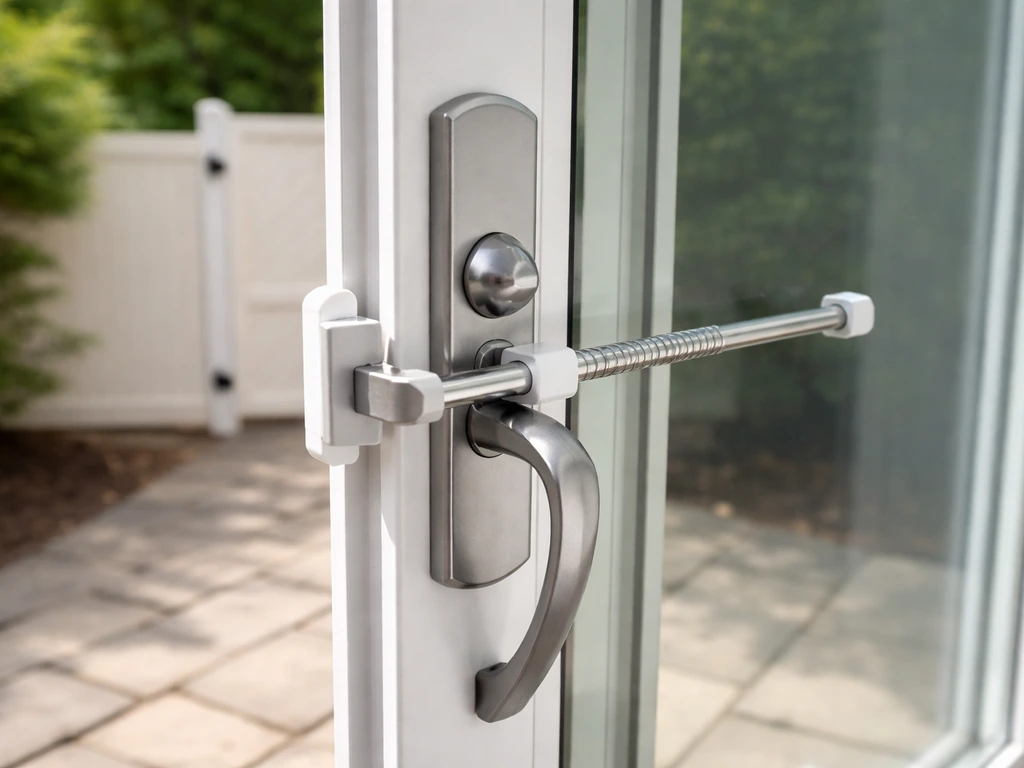
Why patio safety locks actually matter
Most patio doors and gates come with basic hardware that's designed for convenience, not security or child safety. The standard thumb-turn latch on a sliding door, for example, can often be flipped open by a determined toddler in seconds. That's a real problem when the patio leads to a pool, a raised deck, or a busy street.
The CPSC is direct about this. Their pool barrier guidelines (Pub. 362, updated April 2023) specifically state that blank" rel="noopener noreferrer">if your house wall forms part of the pool barrier, every door leading to the pool area should have a door alarm AND a self-closing, self-latching mechanism. The CPSC also advises that doors leading to a pool should be equipped with a door alarm and a self-closing, self-latching mechanism. A standard lock alone isn't considered adequate, because children can sometimes manipulate simple latches. The underlying logic applies beyond pools too: any access point that leads to a hazard deserves a layered approach.
There's also the flip side to keep in mind. Patio doors are egress doors, meaning they're part of your emergency escape route. Whatever lock you choose, you need to be able to get out fast in a fire without fumbling with complicated hardware. That's why the best patio safety locks are secure against children from one direction but quick-release for adults from the inside.
Choosing the right type of patio safety lock
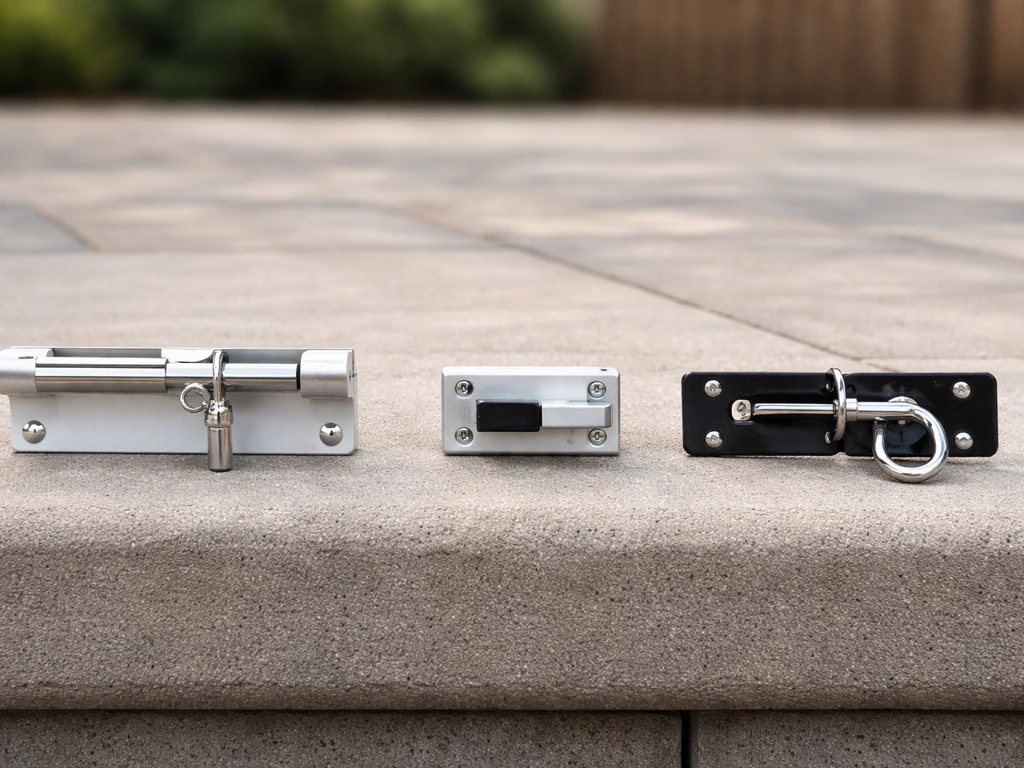
There's no single best lock for every patio. The right choice depends on your door type, frame material, and who you're locking out. Here's how the main options compare:
| Lock Type | Best For | Approx. Cost | DIY-Friendly? | Child-Resistant? |
|---|---|---|---|---|
| Sliding door pin/bar lock | Sliding glass/aluminum doors | $5–$20 | Yes | Moderate (place high) |
| Secondary foot/floor lock | Sliding doors, in-track blocking | $10–$30 | Yes | Good |
| Surface-mounted deadbolt | Swinging patio doors (wood/vinyl) | $20–$60 | Yes | Very good |
| Keyed patio handle set | Swinging doors needing key access | $40–$120 | Moderate | Very good |
| Gate latch with self-latch | Patio gates (wood, aluminum, vinyl) | $15–$50 | Yes | Good (use MAGNA-LATCH style) |
| Double-key deadbolt | High-risk patio/pool doors | $30–$80 | Moderate | Excellent |
| Window pin/sash lock | Windows adjacent to patio | $5–$15 | Yes | Moderate (place high) |
| Smart/electronic lock | Sliding or swinging doors | $80–$250 | Moderate | Excellent (code-required) |
For sliding glass doors, a pin lock or a dedicated bar lock (sometimes called a Charlie bar) is the most reliable DIY fix. A pin lock is a metal or hardened rod that drops into a drilled hole in the frame track, physically preventing the panel from moving. It costs almost nothing and takes about 20 minutes to install. A bar lock sits in the track and blocks the door from sliding open even if the built-in latch fails. These two together are a solid baseline.
For outward or inward swinging patio doors, a surface-mounted deadbolt is the cleanest upgrade. Mount it at adult shoulder height (around 54 to 60 inches from the floor) so children can't reach it. If the door leads directly to a pool area or elevated deck, consider a double-key deadbolt, which requires a key from both sides. Just make sure everyone in the household knows where the key is kept in an emergency.
For patio gates, a self-latching, self-closing gate latch mounted on the inside of the gate at adult height is what the CPSC recommends as part of a pool barrier. If you're securing a patio gate, choose a self-latching, self-closing latch to help meet pool barrier safety needs patio gates. Magnetic latches (like a MAGNA-LATCH or similar) are excellent because they require deliberate two-handed pressure to release, something most young children can't manage. Pair it with spring-loaded hinges so the gate closes on its own every time.
Where to install: doors, sliders, gates, and windows
The placement of a lock matters just as much as the type. A lock installed at the wrong height or position is almost as bad as no lock at all.
Sliding patio doors
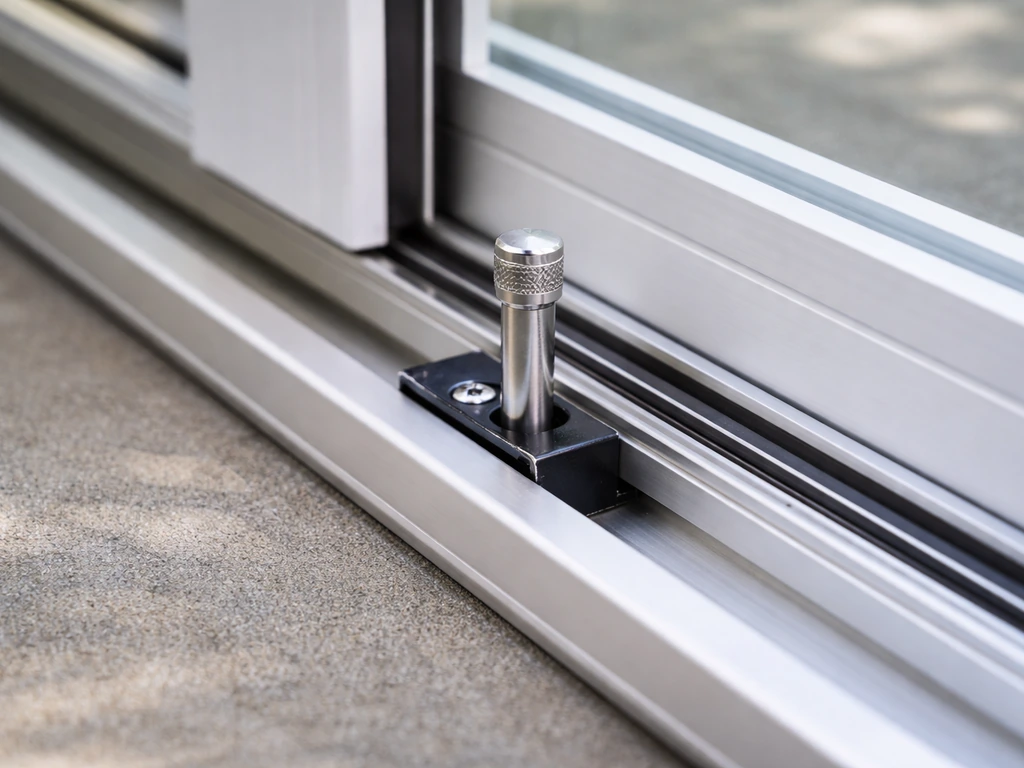
Install your primary lock (pin or bar) in the lower track, but add a second pin in the upper track as well. Upper track pins are nearly impossible for a child to reach and add a serious obstacle even for adult intruders. The pin hole in the frame should be drilled at a point where the door is fully closed, typically 1 inch back from the edge of the sliding panel into the fixed frame section. Drill at a slight downward angle (about 10 to 15 degrees) so the pin stays put from gravity alone.
Swinging patio doors
Mount any additional deadbolt or latch at a minimum of 54 inches from the floor. This keeps it above the reach of most children under age 6. For double-door setups, install flush bolts on the inactive door panel (top and bottom) before adding a deadbolt to the active door. This prevents the doors from being spread apart at the center.
Patio gates
The latch mechanism should be on the pool-side or interior face of the gate, mounted at 54 inches or higher. This prevents a child from reaching through the slats or under the gate to trigger the release. The gate itself should have a gap of no more than 4 inches between vertical slats to prevent a child from squeezing through or getting an arm in to reach the latch. Patio gates are closely related to the broader topic of patio safety fences and patio safety gates, where full perimeter planning can make a big difference.
Windows near the patio
Don't overlook windows that a child could use to access or fall from a patio area. A window pin lock (a small screw or key-operated pin through the sash frame) limits how far the window can open. The National Safety Council recommends that fall-prevention devices meet ASTM F2090, which covers window fall guards that allow emergency escape while preventing accidental falls. On upper-level patios or raised decks, this is especially important and connects to the wider concerns around raised patio safety.
Step-by-step installation and fitment checks
Before you buy anything, measure first. Most lock installation failures come from buying hardware that doesn't fit the door thickness, frame material, or track width. Here's how to approach the installation for the two most common setups.
Installing a pin lock on a sliding glass door
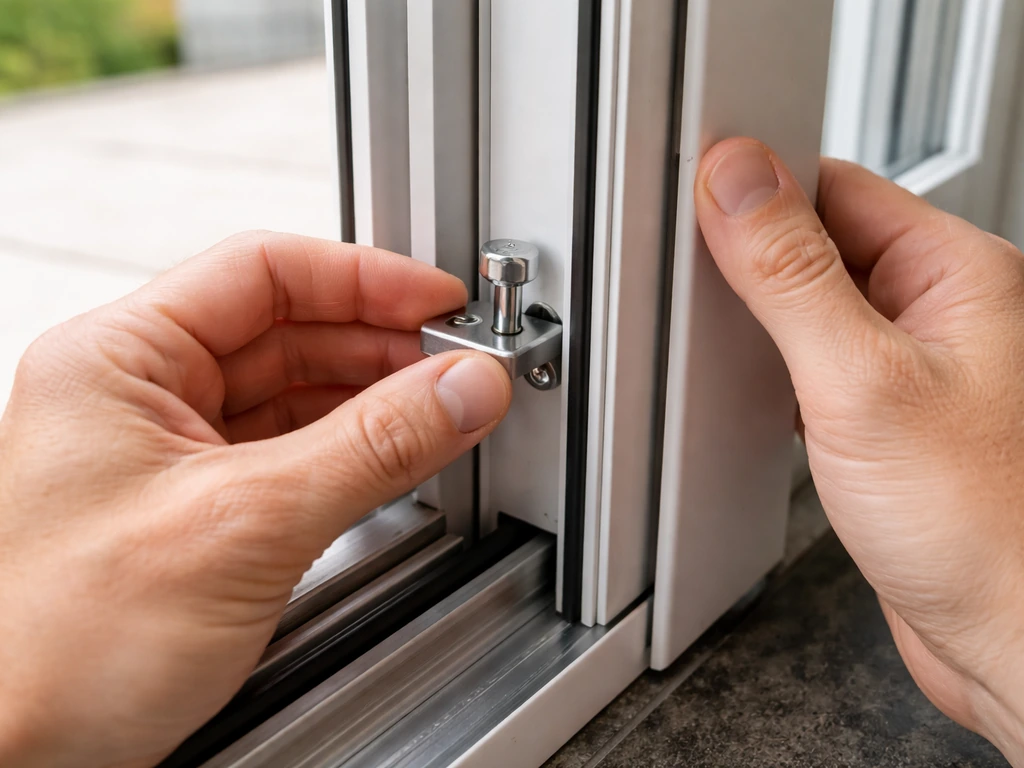
- Close the sliding panel fully and confirm it sits flush with the frame. If there's a gap or the panel rattles, adjust the roller height first (there are adjustment screws in the bottom of most sliding door panels).
- Measure and mark a drill point on the upper track, 1 inch back from the edge of the sliding panel. Repeat for the lower track if installing a second pin.
- Use a 3/8-inch drill bit for standard aluminum tracks. For vinyl frames, use a slightly smaller bit (5/16-inch) to avoid cracking. Drill at a 10-degree downward angle.
- Insert a 3/8-inch steel rod or a purpose-built locking pin into the hole. It should drop in with light resistance and not rattle. If it's loose, wrap the tip with a layer of electrical tape until it fits snugly.
- Test by pulling the door firmly. It should not budge. Then test that an adult can extract the pin quickly (within 3 seconds) with one hand for egress purposes.
- If the frame is hollow aluminum, insert a steel sleeve or grommet into the hole before the pin to prevent the pin from enlarging the hole over time.
Installing a surface-mounted deadbolt on a swinging patio door
- Mark the mounting position at 54 to 60 inches from the floor on the door edge. Hold the deadbolt body against the door and trace the screw hole positions with a pencil.
- Check the door thickness. Most deadbolts fit doors 1-3/8 to 1-3/4 inches thick. If your door is thicker (some solid wood patio doors run to 2 inches), buy a long-throw or adjustable backset deadbolt.
- Pre-drill screw holes with a bit that's slightly smaller than your screws to prevent wood or vinyl splitting. For wood doors, use 3-inch screws into the door stile for maximum holding strength.
- Mount the deadbolt body on the interior face, then close the door and use the bolt tip to mark where the strike plate should land on the door frame or jamb.
- Chisel a shallow mortise for the strike plate so it sits flush, then attach with the longest screws that will reach the structural framing behind the jamb (3-inch screws minimum).
- Test the bolt throw: it should extend and retract smoothly without scraping. If it binds, loosen the mounting screws slightly and realign the body before re-tightening.
- Apply a small amount of graphite lubricant to the bolt mechanism. Do not use oil-based lubricant outdoors as it attracts dirt and degrades faster in weather.
Fitment checks for all lock types
- Weather exposure: Any lock on an exterior patio door should be rated for outdoor use or made from stainless steel, zinc alloy, or brass to resist rust. Avoid uncoated steel hardware.
- Screw length: Screws that only reach the thin door frame casing will pull out. Use 2-1/2 to 3-inch screws wherever possible to reach the structural stud or door stile.
- Frame material compatibility: Vinyl frames can crack if you overtorque screws. Use a hand screwdriver for final tightening, not a drill on full torque.
- Alignment: Check alignment after the first week of use. Thermal expansion in aluminum and vinyl frames can shift the lock position by 1/16 inch or more, enough to cause sticking.
Childproofing add-ons and fallback safety measures
A single lock is a single point of failure. The CPSC's own guidelines acknowledge this by recommending layered barriers rather than relying on one device. Here are the most practical add-ons to pair with your primary lock.
Door and gate alarms
A door alarm doesn't prevent access, but it alerts you within seconds if a door is opened. Wireless magnetic contact alarms run on a single battery, install with adhesive in about 2 minutes, and sound a 100 to 110 dB alarm the moment the door moves. Place one on every patio door and gate leading to a pool or elevated area. This is one of the specific measures the CPSC recommends for pool barrier compliance.
High-mounted lever or door knob covers
For toddlers, even a locked lever handle can be tempting to pull on. A doorknob safety cover slips over round knobs and requires simultaneous side-squeeze pressure to turn. For lever-style handles, a lever lock cover prevents downward pressure from releasing the handle. These are inexpensive (under $10) and add a meaningful layer for children under age 4.
Door positioning and furniture strategy
If a patio door doesn't get frequent daily use, consider placing a piece of patio furniture (like a planter or bench) close to the door on the inside. This isn't a substitute for a lock, but it slows down access enough to give you reaction time. For gates specifically, make sure the gate itself swings away from the pool (inward toward the house side) so a child falling against it doesn't accidentally push it open.
Window guards and restrictors
For any window within reach of a patio or that overlooks a drop, a window restrictor cable or hinged guard limits opening to 4 inches or less. The Child Injury Prevention Alliance is clear that window screens provide zero fall protection. Use hardware that meets ASTM F2090 and make sure any guard has a quick-release for fire escape. This is also worth combining with proper patio safety railings and patio safety netting for elevated spaces. Patio safety railings are another key part of making elevated areas safer for kids and pets.
Maintenance, troubleshooting, and when to replace
Patio locks take more abuse than indoor hardware. UV exposure, rain, temperature swings, and constant use degrade even quality locks faster than you'd expect. Plan to inspect everything twice a year, once in spring before heavy outdoor use and once in fall before winter.
Common problems and how to fix them
- Sticking or binding bolt: Usually caused by frame expansion in heat or minor door sag. Loosen the strike plate screws, apply graphite lubricant to the bolt, and retighten. If the bolt consistently misses the strike, use a metal file to enlarge the strike opening by 1/16 inch.
- Pin lock falls out or rattles: The drill hole has widened from repeated use. Insert a rubber grommet or wrap the pin tip with plumber's tape to restore a snug fit. If the aluminum track is cracked around the hole, it's time to replace the track section or switch to a bar-style lock.
- Gate latch failing to catch: Spring tension has weakened. Most self-latching gate mechanisms have an adjustment screw on the spring housing. Tighten it incrementally and test after each adjustment. If the spring is visibly corroded or broken, replace the latch, not just the spring.
- Corrosion on screws or hardware: Surface rust on visible parts is mostly cosmetic, but internal mechanism corrosion affects function. If the bolt or pin is pitting or the internal mechanism feels gritty, replace the unit. Wire-brush the mounting area before installing the new hardware.
- Door alarm not triggering: Usually a depleted battery or a gap between the magnet and sensor that's too wide. Replace the battery first. If the door has shifted so the two pieces are more than 3/4 inch apart, reposition the sensor piece.
When to replace rather than repair
Replace any lock immediately if the bolt or pin no longer engages reliably on the first try, if the mounting screws spin freely (meaning the substrate has failed), or if the frame around the strike plate shows visible cracking or deformation. A lock that requires two or three attempts to engage is a safety risk and a frustration that will cause people in your household to skip using it altogether.
For sliding door pin locks specifically, plan to replace them every 3 to 5 years in climates with heavy rain or salt air exposure. Surface-mounted deadbolts in protected areas can last 10 or more years with basic maintenance. Gate latches on pool barriers deserve annual replacement inspection regardless of appearance, since the CPSC treats pool barriers as a life-safety system.
When to call a professional
Most patio safety lock upgrades are genuine DIY projects. But call a locksmith or door specialist if your door frame is visibly rotted, warped, or out of square, since no lock installs correctly in a compromised frame. Also get professional help if you're installing a smart lock and need to run wiring, or if local pool safety codes in your area require inspected and permitted barriers. A professional installation for a full patio door lock upgrade typically runs $80 to $200 in labor, which is worth it if the alternative is a poorly seated lock on a door that leads to a pool.
FAQ
Do I need two separate locking devices for a patio safety lock, or is one enough?
For access points that lead to a pool, deck, or other serious hazard, plan on layering. A single lock is a single point of failure, especially if a child can defeat a simple latch. Pair your primary lock (pin, bar, deadbolt, or keyed handle) with at least one backup device, typically a door alarm plus a self-closing, self-latching mechanism on the barrier-side.
What’s the safest way to handle keys for a double-key deadbolt on a patio safety lock?
Store keys in a consistent, adults-only location that everyone can access during an emergency (for example, a lockbox mounted inside, with a known combination or code). Also teach household members a “fire plan” path that does not depend on reaching the key if a quick exit is needed.
Are patio door alarms required if I already install a patio safety lock?
In many pool-barrier situations, alarm-only is not enough, and lock-only is not considered adequate. Alarms add a different layer by alerting you within seconds when someone opens the door, which helps you respond faster even if the lock is manipulated. Use alarm plus a proper self-latching/self-closing mechanism where applicable.
Can I use a smart lock as my patio safety lock?
You can, but only if you still meet the same layered protection and egress needs. Smart locks must reliably unlock from the inside without delays, and you should plan for battery failure (choose models with low-battery alerts and spare batteries). For wiring or exterior power access, professional installation is often the safest route.
How do I choose a pin lock or bar lock if my sliding patio door track is different than the typical one?
Before buying, confirm the track dimensions and whether the fixed frame section is compatible with the lock’s drilled hole or track-blocking design. If the pin cannot seat fully when the door is fully closed, it may not stop movement reliably. For stubborn alignment, check for debris in the track and ensure the door panel sits flush before installation.
My sliding door pin doesn’t line up every time, what should I do?
First, ensure the door closes fully and sits correctly in the track. Then inspect the drilled hole depth and angle, and verify that the strike alignment matches when the panel is fully closed. If engagement requires multiple tries or the pin bounces out, replace the lock or re-install rather than leaving it “almost working.”
Where should a patio safety lock be installed on a gate, and which side should the latch face?
For gates used as part of a pool barrier, mount the latch on the pool-side or interior face at adult height (at least 54 inches). This reduces the chance a child can reach through openings or under the gate to trigger the release. Also verify the latch release motion is deliberate (two-handed is best for young children).
What gate gaps are safe for a patio safety fence gate latch area?
Keep the gap between vertical slats to no more than 4 inches so children cannot squeeze through or get an arm inside to reach the latch mechanism. If your gate has larger gaps, address the barrier at the gate or add an appropriate barrier insert that maintains child-safety spacing.
Are window screens enough for patio safety near doors and raised decks?
No. Window screens do not provide fall protection. Use a window fall guard or restrictor that limits opening to 4 inches or less and that allows quick release for emergency escape. For higher patios or raised decks, verify the product is suitable for emergency egress while preventing accidental falls.
What’s the best approach if the patio safety lock keeps loosening because screws won’t hold?
If mounting screws spin freely, the substrate behind the screws has likely failed, even if the lock looks “mounted.” Remove the hardware, inspect for rot, cracking, or soft material, and repair or reinforce the mounting area before re-installing. A loose strike or shifting frame can make the lock unreliable and unsafe.
How often should I inspect or replace a patio safety lock outdoors?
Inspect everything twice a year, once in spring and once in fall. Replace promptly if engagement becomes inconsistent, visible cracking or deformation appears around the strike plate, or the lock no longer fully engages on the first attempt. In heavy rain or salt-air climates, sliding door pin locks often need replacement around every 3 to 5 years.
When should I stop DIY and hire a locksmith or door specialist for a patio safety lock?
Get professional help if the door frame is rotted, warped, or out of square, since a compromised frame prevents correct installation and reduces lock reliability. Also consider a specialist for smart lock wiring, or if local pool safety requirements mandate inspected and permitted barriers beyond standard hardware.
What’s a quick way to improve patio safety if I can’t add another lock right now?
If the door is not frequently used, you can add a temporary friction barrier inside, such as keeping furniture placed close to the door to slow down access. This is not a substitute for a proper patio safety lock, but it can buy response time while you complete the layered barrier plan.