
A raised patio is safe when its edges are guarded, its surface is slip-resistant and drains properly, its stairs have consistent treads and graspable handrails, and its fasteners and boards are checked at least once a year. If yours is missing any of those things right now, this guide walks you through exactly what to look for and what to fix, in the right order.
Raised Patio Safety: Fix Hazards and Prevent Falls

Miles Sutton
29 Apr 2026
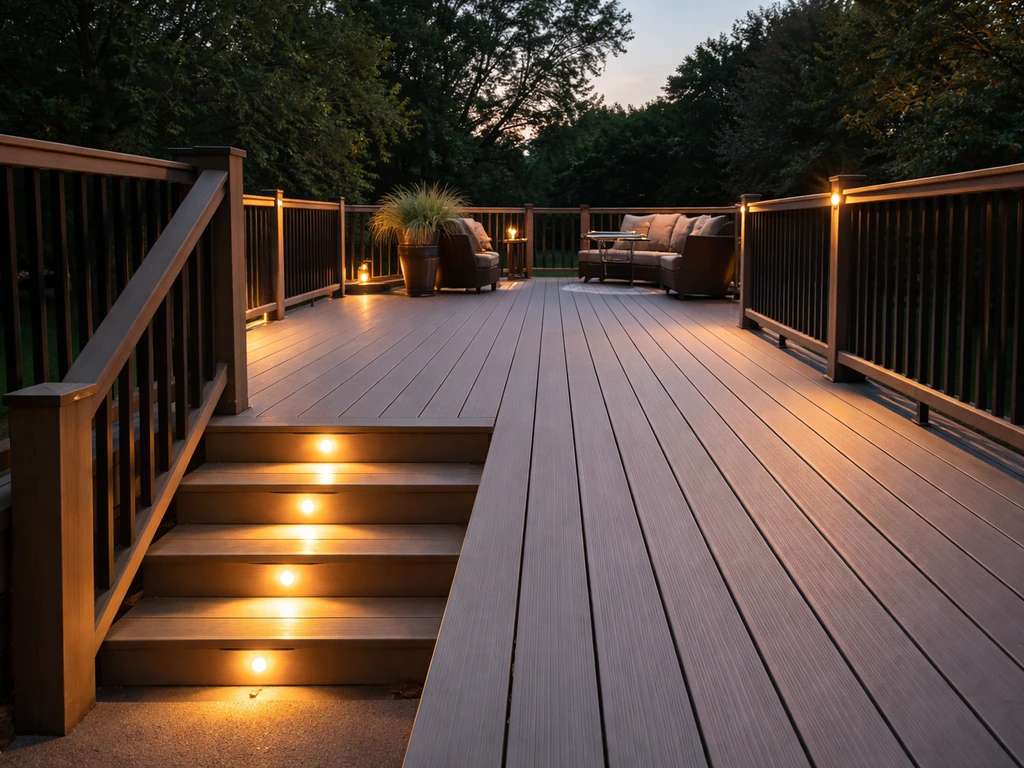
Start here: how to assess the hazards on your raised patio
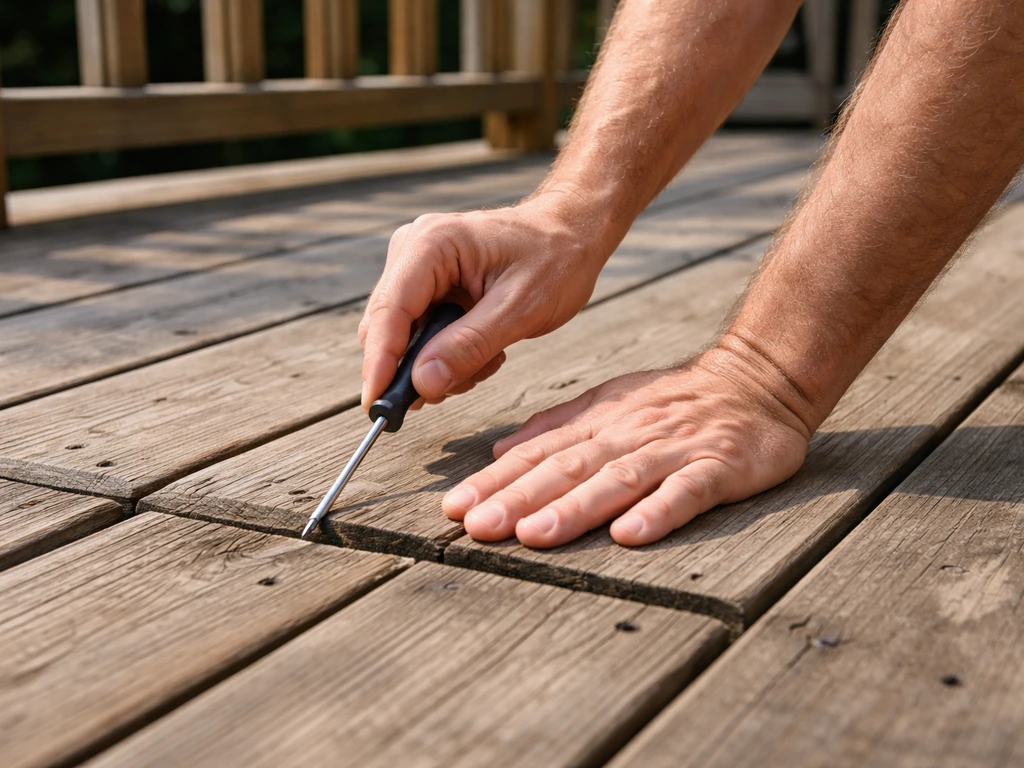
Before you fix anything, do a slow, deliberate walkthrough. Bring a flathead screwdriver and a notepad. The goal is to catch every hazard category in one pass so you can prioritize repairs instead of discovering them one twisted ankle at a time.
The screwdriver test for rot
Press the tip of a screwdriver firmly into every board, especially near the ledger, posts, and any area that stays shaded or wet. If it sinks more than about 1/8 inch, the wood is rotted and that board needs to come out. Soft, spongy resistance is your warning sign. Solid wood pushes back.
Fasteners, boards, and surface hazards
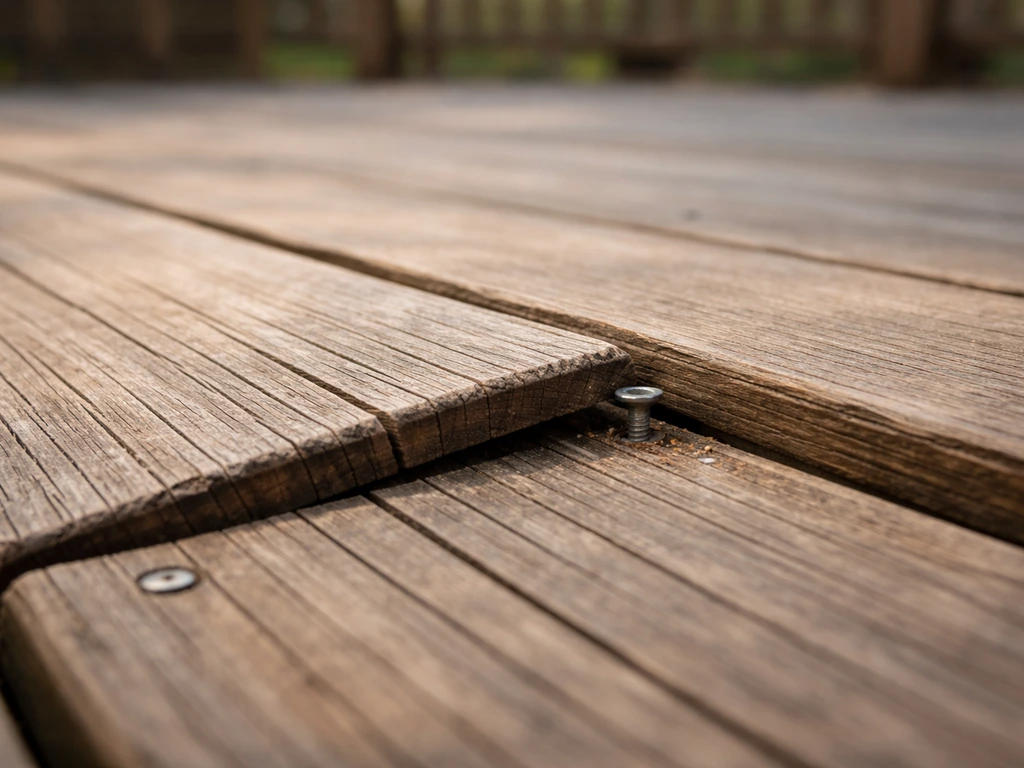
Walk every inch of the deck surface and look for boards that spring, rock, or feel hollow underfoot. Those are loose or poorly supported. While you're down there, scan for nail or screw heads that are sitting proud of the surface rather than flush or countersunk. Protruding fasteners are a toe-catch waiting to happen. Also check for rust and corrosion on fasteners, especially at post bases and the ledger board connection. A ledger bolted to the house is much safer than one that's just nailed. If yours is nailed, add it to the pro-call list.
Edge and drop hazards
Measure the height from your deck surface to the ground below. If any portion of your raised patio is 30 inches or more above grade within a 36-inch horizontal distance, building codes require a guardrail. Many older decks and patios were built without them or have rails that have since loosened. Give every rail post a firm shake. Any wobble means the connection at the base has failed or is failing, and a wobbly post is not a fall-prevention device.
Drainage and slip spots
Look for low spots where water puddles after rain. Standing water grows algae and moss, both of which turn a deck into a skating rink. Note any areas where debris collects between boards, which can trap moisture and accelerate rot. Also check the door threshold from the house onto the patio. A raised threshold of more than 1/2 inch is a trip hazard, particularly for anyone using a cane, walker, or wheelchair.
Fixing trip hazards, loose boards, and unsafe edges
Once you have your list, tackle the surface-level and edge hazards first because they affect everyone every time the patio is used. To complete patio safety, make sure any patio safety lock you use for gates or doors is installed correctly and functions reliably surface-level and edge hazards.
Dealing with protruding fasteners and springy boards
For screws or nails sitting above the surface, the fix is straightforward: drive them back down and slightly below the surface so they're countersunk. Fill the hole with wood filler matched to your deck color to keep the surface smooth and reduce future water intrusion at that point. If a board springs back up after you fasten it, the underlying joist may be warped or the board itself is cupped. In that case, flip the board over (crown down) before re-fastening, or replace it if it's too far gone.
Replacing rotted boards
Any board that failed the screwdriver test gets replaced, not patched. Cut out the affected section back to the nearest healthy joist on each side. When you put new boards in, use stainless steel or coated deck screws rather than nails, which back out over time. If the rot has reached a joist or post, that's a structural issue and should be evaluated by a professional before you put any weight on that section.
Edge protection and guardrails
If your patio is 30 inches or more above grade and has no guardrail, installing one is non-negotiable. When you install new patio safety railings, double-check guard height, post spacing, and that the rails do not wobble after installation. Under residential building code (IRC guidelines), guards need to be at least 36 inches tall measured from the deck surface to the top of the rail. The openings between balusters and between the bottom rail and the deck surface blank" rel="noopener noreferrer">must not allow a 4-inch sphere to pass through. That 4-inch rule is specifically about preventing children from slipping through or getting their heads entrapped. For a significant railing rebuild, a permit is typically required. Pull one. It's worth it.
Surface, lighting, drainage, and weatherproofing
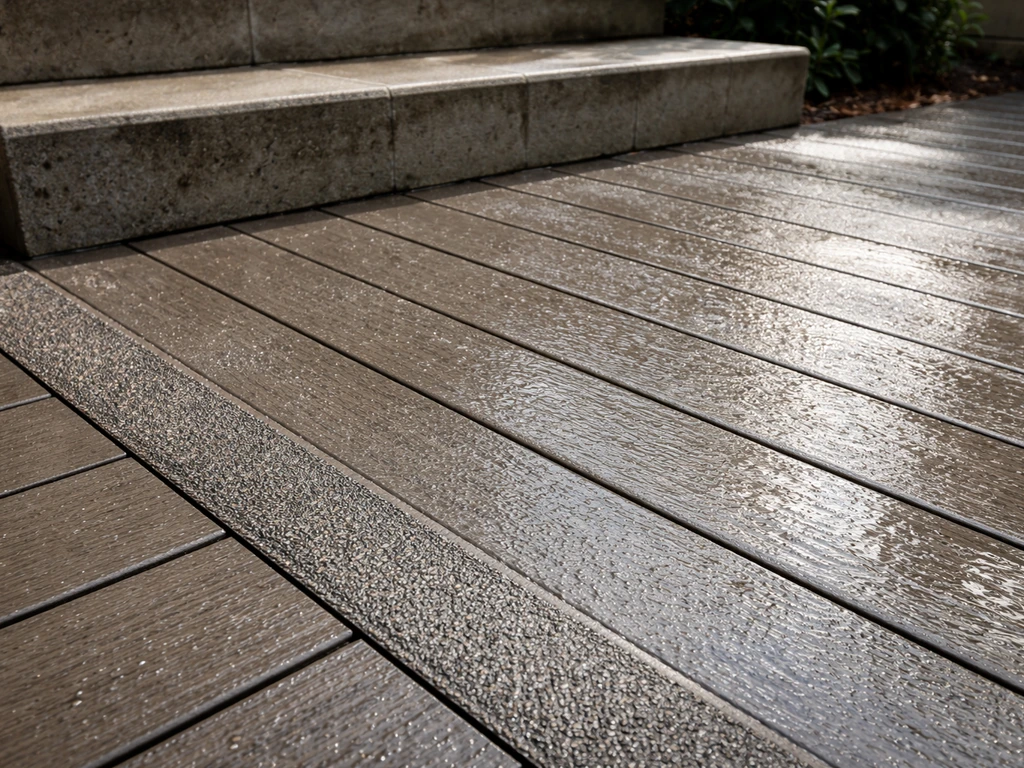
Making the surface slip-resistant
If your patio surface gets slick when wet, the most practical upgrade is a non-slip deck coating or anti-slip strips on high-traffic zones. These are especially important near stairs and door thresholds. For composite or wood decks, look for coatings with grit added. Per ADA guidance, slip-resistant finishes do require periodic maintenance and reapplication to stay effective, so don't treat it as a one-and-done fix. For algae and moss, a stiff brush and a deck cleaner rated for your surface material (wood or composite, not the same product) handles most of it. Follow up with a sealer to slow re-growth.
Drainage slope
A properly built deck or patio surface should slope about 1/4 inch per foot away from the house. That gentle pitch keeps water moving off the surface instead of pooling. If yours is flat or slopes toward the house, and you're seeing puddles or water intrusion at the ledger, you've found a structural drainage problem. For minor pooling on an existing deck, an under-deck drainage channel system can redirect water. For significant or whole-surface slope issues, you're into a rebuild conversation with a contractor.
Lighting
Poor lighting on a raised patio is a night-time fall hazard, particularly at stairs and edges. Low-voltage LED step lights installed at riser level are the most effective solution because they illuminate exactly where feet land. Post-cap lights and perimeter rope lights add visibility to the edges. Solar options have improved a lot and require no wiring, but hardwired low-voltage systems are more reliable in all seasons. At minimum, make sure every stair tread and the top landing are clearly lit from above or the side.
Weatherproofing wood surfaces
Seal or stain a wood deck every one to three years depending on your climate and sun exposure. A quality penetrating sealer reduces moisture uptake, which is the main driver of board warping, rot, and the freeze-thaw cracking that creates surface trip hazards over time. Before you apply anything, clean the surface thoroughly and let it dry completely.
Stair and railing safety: the numbers that matter
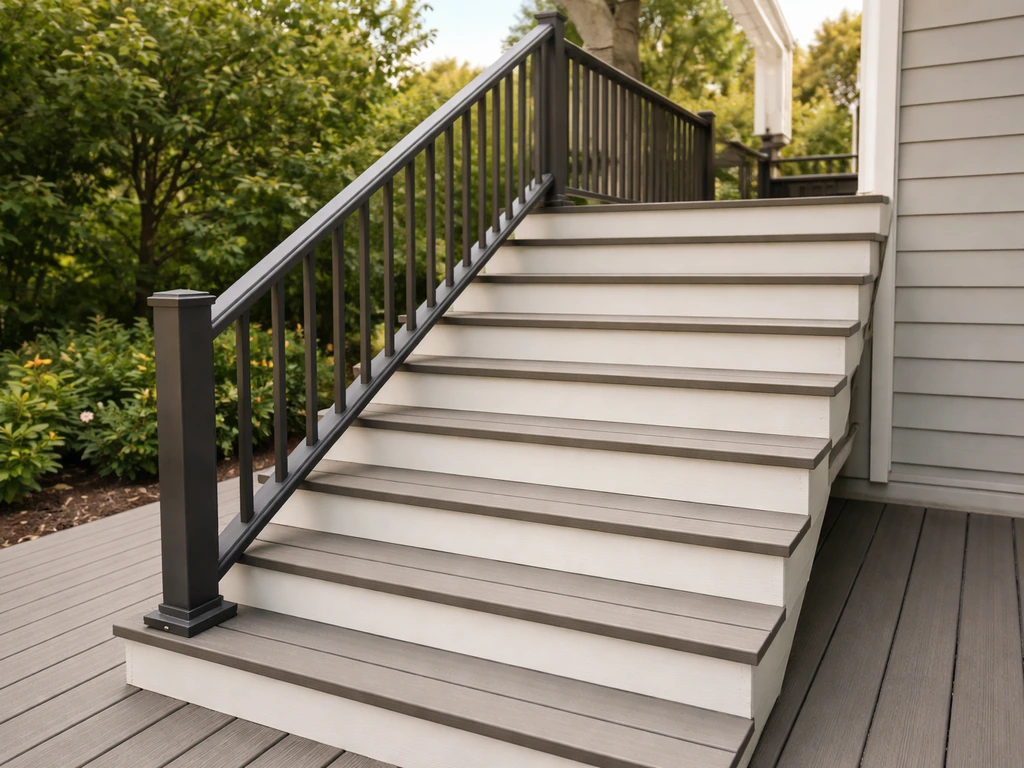
Stairs are statistically where most deck falls happen, and most of those falls trace back to inconsistent tread geometry or a handrail that isn't graspable. Here's what to check and what the code-aligned targets look like.
Tread and riser consistency
Every tread on a flight of stairs should be the same depth and every riser the same height. Under IRC guidelines, tread depth should be at least 10 inches. The problem with older patios is that treads are often inconsistent because boards were replaced over time without careful measurement. Walk down your stairs with your eyes closed for one step. If you stumble because the step felt different from the last one, you have a uniformity problem. Fix it by pulling and re-cutting or shimming treads to match.
Handrail graspability and height
A handrail that can't actually be gripped is one of the most common inspection failures. Flat 2x4 top rails look fine but offer no real grip in a fall. A graspable handrail has a round or contoured profile you can wrap your hand around. Handrail height for stairs should be installed between 34 and 38 inches above the stair nosings, which is consistent with both IRC and ADA-aligned guidance. If your stair handrail is outside that range or is just a flat top rail, it needs to be corrected.
Guard height and baluster spacing on stairs
The 36-inch minimum guard height applies to the deck surface. Along stairs, the geometry gets slightly more complex because you're measuring from the stair nosing, and the triangular opening formed at the base of a stair guard (where the stringer meets the bottom rail) has its own code limits. The practical takeaway: keep baluster spacing tight enough that blank" rel="noopener noreferrer">a 4-inch sphere can't pass through any opening, including along the rake of the stair.
| Safety element | Code-aligned target | Common problem found |
|---|---|---|
| Guard height (deck surface) | 36 inches minimum (residential) | Rail too short or missing entirely |
| Baluster/infill opening | No opening larger than 4 inches | Gaps too wide, especially on older installs |
| Stair tread depth | 10 inches minimum (IRC) | Shallow or inconsistent treads |
| Handrail height (stairs) | 34 to 38 inches above nosing | Too high, too low, or flat ungraspable rail |
| Handrail profile | Graspable/contoured | Flat 2x4 top rail with no grip |
Making your raised patio safer for kids, pets, and people with mobility needs
A raised patio safe for an adult isn't automatically safe for a toddler, a dog, or someone using a walker. These three groups have very different exposure points and need specific attention.
Child safety
Children are at risk from two things on a raised patio: falling through or between rails, and accessing the stairs unsupervised. The 4-inch baluster spacing rule directly addresses the entrapment and fall-through risk. Also look at whether any nearby furniture, planters, or built-ins create a climbable step-up that lets a child get over a guardrail. Rearranging furniture away from railings removes that risk without a single tool.
For stair access, a gate designed specifically for the top of stairs is the right solution. The CPSC is clear that pressure-mounted gates (the kind you squeeze in without hardware) should never be used at the top of stairs because they can be pushed out. Use a hardware-mounted gate only. Patio safety gates are a dedicated product category worth looking into if you have young children.
Pet safety
For dogs, the key risks are gaps in railings or patio fencing large enough to squeeze through, and the fall hazard at open edges. Check baluster spacing at the lower section of your rails because smaller dogs can fit through gaps a child cannot. One firm rule worth knowing: never tether a dog to a raised deck or its stairs. A tethered dog that goes over an edge can strangle before you reach them. Patio safety fencing and netting are both practical options for containing pets on a raised patio without blocking sightlines entirely. Patio safety netting can also be used to help contain pets on a raised patio while keeping an open look Patio safety fencing.
Mobility accessibility
For anyone using a walker, wheelchair, or cane, the biggest hazards on a raised patio are threshold height, surface texture, and turning space. The threshold from the house to the patio should be 1/2 inch or lower. A beveled transition strip can bridge a slightly raised threshold without a full structural fix. Surface slope matters too: cross-slope (side to side) should not exceed about 2 percent so wheeled mobility aids don't drift sideways.
If you're adding a ramp to access the raised patio, ADA ramp guidance calls for a running slope no steeper than 1:12 (about 8. 3 percent) and a cross-slope no steeper than 1:48.
Finally, think about turning space on the patio surface itself. A 60-inch square minimum clearance allows a wheelchair to turn around comfortably.
Keeping it safe over time: your inspection checklist and when to call a pro
A raised patio isn't a set-it-and-forget-it structure. Seasonal temperature swings, moisture cycles, and simple UV exposure all work against it. The good news is that a consistent inspection routine catches problems when they're cheap fixes, not expensive rebuilds. If you are unsure whether your raised patio is safe to use right now, treat it like a patio warning and pause until the hazards are identified and fixed. Following the patio safety inspection routine helps you catch loose boards, slip risks, and railing issues before they cause a fall.
What to check and when
- Every spring: run the screwdriver rot test on boards, posts, and the ledger connection. Check all fasteners for loosening or corrosion. Shake every rail post. Test gate latches and hinges.
- Every fall: clean debris from between boards and from under the deck structure. Apply fresh sealant if the wood is due. Check drainage slope and clear anything blocking water flow.
- After any major storm: walk the entire structure looking for displaced boards, shifted posts, or debris impact damage. Check that guardrails are still plumb and posts still solid.
- Annually: check stair tread consistency by measuring tread depth and riser height on each step. Walk stairs at night to confirm lighting is adequate and nothing has burned out or shifted.
- Every few years: check the ledger board bolts for tightness and look for rust staining on the house siding below the ledger, which signals water is getting behind it.
When to stop DIYing and call a professional
Most surface-level repairs are solid DIY territory: replacing a board, countersinking fasteners, adding anti-slip coating, improving lighting. But there are situations where calling a licensed contractor or structural engineer is the right call, not just the cautious one.
- Any post, joist, or ledger board that has failed the rot test or shows structural movement. A wobbly ledger is a collapse risk.
- A guardrail or stair railing that needs to be fully rebuilt or newly installed. Permits are typically required, and an improper install is a liability.
- Widespread rot or a deck that has shifted or settled noticeably. These are structural problems, not surface problems.
- Any situation where you're unsure whether your patio meets current local code. Codes vary by municipality, and a contractor familiar with your area can tell you quickly whether you're compliant or not.
- Adding a ramp or significantly modifying the patio for accessibility. Getting the slope, surface, and clearances right for mobility aids is easier with someone who has done it before.
The practical rule: if the fix involves the structural frame, the ledger, or a full railing system, get a professional set of eyes on it first. For everything else, this guide gives you what you need to work through it yourself this weekend.
FAQ
How often should I inspect my raised patio safety features like rails, stairs, and fasteners?
At least once a year, do a full slow walkthrough (including tug-shaking rail posts). In addition, after major storms or freeze-thaw seasons, do a quick spot check for new wobble, fresh protruding fasteners, and any new wet or shaded areas that start holding water.
What’s the safest way to test whether a guardrail or post is truly secure?
Use a firm shake at the top of each rail post, not a light tap. If you feel any vertical or sideways movement, treat it as a base connection failure and stop using that side until the connection is re-secured or rebuilt.
If I find wood rot, is it ever okay to patch it instead of replacing the board?
No, for raised patio safety, a board that fails the screwdriver test should be replaced. Patching with filler or partial repairs tends to hide the real extent of damage, and rot near the ledger or joists usually means the problem extends beyond the visible soft area.
How do I handle protruding nails or screws without making the surface worse?
Remove risk first by driving the fastener fully back down and countersinking it, then fill and let it cure before you walk on it. If the same fastener repeatedly backs out after re-fastening, replace it with appropriate coated or stainless deck hardware and recheck the underlying support.
Are deck coatings and anti-slip strips safe for every deck material?
Choose the product for your surface type (wood vs composite). Wrong chemistry can reduce adhesion, leaving a rough but ineffective finish. Also plan for maintenance, since slip resistance can wear down, especially on stairs and high-traffic zones.
What’s the best way to improve drainage if my patio slopes toward the house?
Minor pooling on an otherwise sound deck can sometimes be improved with under-deck drainage channels. If the whole surface slope is incorrect or water is affecting the ledger area, treat it as a structural drainage problem and get an evaluation before adding coatings or patching boards.
How can I reduce trip risk at the door threshold beyond just cleaning it?
Keep the transition height at 1/2 inch or lower. If you have a slightly raised threshold, use a beveled transition strip designed for exterior use, and verify wheelchair or walker turning behavior so the user doesn’t catch a wheel or toe on the edge.
What lighting should I add if my raised patio is hard to see at night, especially near stairs?
Use low-voltage LED step lights mounted at riser level so they illuminate where feet land. Confirm lighting also covers the top landing and the first and last step, since poor edge visibility is a common cause of falls even when the stairs look “bright enough” from a distance.
What’s a quick way to check whether my stair treads are too inconsistent to be safe?
Perform the uniformity test: walk down and notice whether any step feels different from the previous one. If you stumble or even feel a noticeable change, measure tread depth and riser height and then correct by re-cutting or shimming to make every tread and riser consistent.
How do I know if my handrail is actually graspable and at the right height?
A graspable rail has a profile you can wrap your hand around (round or contoured), not a flat top that slides under grip. Verify height is roughly 34 to 38 inches above the stair nosings, and rework the rail if it sits outside that range or you cannot hold it comfortably in one hand.
Do the 4-inch opening rules apply to entire guardrails, including along stair sections?
Yes. The 4-inch sphere limit applies to openings anywhere someone could pass through or become entrapped, including along the rake of stairs. If a dog, child, or small object can fit through a gap at the railing line, it is not compliant and needs spacing changes.
What’s the safest gate option for top-of-stairs access?
Use a hardware-mounted gate specifically designed for the top of stairs. Avoid pressure-mounted, squeeze-in gates, because they can be pushed out and create a serious raised patio safety risk.
Is it safe to tether a dog near a raised deck or stairs?
No. Never tether a dog to a raised deck or its stairs. A tethered dog can move into a position where it goes over an edge and becomes dangerously entangled, so use containment options like fenced barriers or netting instead.
What wheelchair or walker measurements should I think about on a raised patio?
Focus on turning space and side-to-side stability. Provide about a 60-inch square turning area, keep cross-slope low (around 2 percent or less), and ensure threshold height stays at 1/2 inch or lower so wheels and feet do not catch at transitions.
When should I stop DIY and call a professional for raised patio safety?
Call a licensed contractor or structural expert if the fix involves the structural frame, ledger board, or a significant railing rebuild. Also get help if rot appears to extend into joists or posts, since those areas affect load capacity and can fail suddenly if only boards are replaced.